Trying to master a new language often feels overwhelming, especially when traditional methods leave you struggling with pronunciation, forgetting new words, and losing motivation. Staring at vocabulary lists or repeating textbook dialogues rarely delivers the fluency and confidence you want. The good news is that learning through music can make a real difference in your progress. Songs provide repeated, authentic language input that not only improves pronunciation but also helps you remember vocabulary and better understand speech. Get ready to discover practical strategies that will make language learning more fun, effective, and unforgettable. The following list will reveal specific ways music and songs can transform how you practice, memorize, and communicate in a new language.
Table of Contents
- Boosts Pronunciation With Real-World Practice
- Makes Vocabulary Easy and Fun to Remember
- Improves Listening and Ear Training Skills
- Enhances Cultural Understanding Through Lyrics
- Encourages Daily Practice and Motivation
- Builds Confidence for Speaking and Singing
- Creates Opportunities for Social Interaction
Quick Summary
| Key Message | Explanation |
|---|---|
| 1. Enhance Pronunciation with Music | Engaging with songs improves pronunciation through natural sound exposure and enjoyable practice. |
| 2. Make Vocabulary Fun and Memorable | Songs transform vocabulary learning into a dynamic experience by embedding words in engaging contexts. |
| 3. Develop Sharper Listening Skills | Listening to songs creates opportunities for improved auditory processing and comprehension of spoken language. |
| 4. Gain Cultural Insights Through Lyrics | Analyzing song lyrics uncovers rich cultural narratives and societal values beyond just language. |
| 5. Increase Motivation for Daily Practice | Utilizing music for language learning turns practice into a fun routine, enhancing engagement and consistency. |
1. Boosts Pronunciation With Real-World Practice
Learn a language through music and transform your pronunciation skills from textbook monotony to vibrant, authentic communication. By integrating songs into your learning journey, you can dramatically improve how you sound and speak in your target language.
Research consistently demonstrates that music provides a powerful pathway for language learners to enhance their pronunciation. Experimental studies confirm that students who engage with songs exhibit notable gains in pronunciation accuracy compared to traditional classroom methods.
Why do songs work so effectively for pronunciation? Here are key reasons:
- Natural sound exposure: Songs offer authentic spoken language rhythms
- Lower anxiety levels: Music creates a relaxed learning environment
- Repetitive sound patterns: Lyrics help internalize complex pronunciation
- Melodic context: Rhythmic structures support sound production
Musical learning transforms pronunciation from mechanical practice to an enjoyable, immersive experience.
Practical application is straightforward. Choose songs in your target language that match your current skill level. Start by listening passively, then progress to singing along, focusing on matching the singer’s pronunciation precisely.
Advanced learners can take this further by recording themselves singing and comparing their pronunciation against native speakers. This technique provides immediate feedback and helps identify areas for improvement.
Pro tip: Select songs with clear diction and practice singing along while watching lyrics with phonetic breakdowns to accelerate your pronunciation skills.
2. Makes Vocabulary Easy and Fun to Remember
Discover a revolutionary way to expand your language skills that turns boring vocabulary drills into an exciting musical journey. Learning new words through songs transforms the tedious process of memorization into an engaging and enjoyable experience.
Research confirms that songs provide a powerful method for vocabulary acquisition by embedding new words in memorable melodies and meaningful contexts.
Why are songs so effective for vocabulary learning? Here are the key reasons:
- Emotional engagement: Music connects words with feelings
- Contextual learning: Lyrics provide real-world word usage
- Repetitive exposure: Songs naturally repeat vocabulary
- Reduced learning stress: Musical approach makes learning enjoyable
Music transforms vocabulary learning from a chore into an adventure of sound and meaning.
Practical strategies can help you maximize vocabulary learning through music. Start by selecting songs in your target language that match your current skill level. Create a vocabulary journal where you track new words, their meanings, and the context in which they appear.
Advanced learners can take this further by analyzing song lyrics line by line. Break down unfamiliar words, understand their grammatical structure, and practice using them in your own sentences.
Pro tip: Create a playlist of songs with lyrics that include vocabulary related to a specific theme or professional field to accelerate targeted language learning.
3. Improves Listening and Ear Training Skills
Turn your language learning journey into an auditory adventure that transforms how you hear and understand spoken language. Music offers a powerful pathway to developing razor-sharp listening skills that traditional learning methods simply cannot match.
Comprehensive research confirms that songs provide authentic auditory input rich in varied speech sounds, intonation, and rhythm.
Why are songs so effective for ear training? Here are the critical advantages:
- Natural sound exposure: Authentic pronunciation and speech patterns
- Rhythmic learning: Improved auditory processing through musical patterns
- Contextual comprehension: Understanding language in real-world scenarios
- Reduced listening anxiety: Enjoyable approach to sound discrimination
Music transforms listening from a passive skill to an active, engaging experience.
Practical strategies can help you maximize your listening skills through music. Start by selecting songs slightly above your current language comprehension level. Listen multiple times progressively reducing visual lyric support to challenge your ear.
Advanced learners can take this further by practicing active listening techniques. Try transcribing lyrics, focusing on understanding nuanced pronunciations and identifying individual words within rapid musical passages.
Pro tip: Create a dedicated playlist with songs from different genres and regions to expose yourself to varied accents and speech patterns.
4. Enhances Cultural Understanding Through Lyrics
Language is more than words it is a window into the soul of a culture. Songs offer an unparalleled journey into the heart of a society revealing insights that textbooks and traditional learning methods could never capture.
Research demonstrates that song lyrics provide deep insights into social and cultural contexts, offering learners authentic examples of language use in diverse settings.
Why are songs so powerful for cultural understanding? Consider these critical aspects:
- Authentic cultural expression: Lyrics reveal societal values and perspectives
- Social context insights: Understanding language beyond literal meanings
- Emotional connection: Music bridges cultural communication gaps
- Nuanced communication: Learning cultural subtleties and communication styles
Music transforms language learning from mechanical translation to profound cultural connection.
Practical strategies can help you maximize cultural learning through music. Choose songs from different regions and genres. Analyze lyrics not just for language but for the stories they tell about social norms, historical contexts, and cultural experiences.
Advanced learners can take this further by researching the background of songs. Understand the historical moment, social movement, or personal story that inspired the lyrics. This approach transforms songs from mere linguistic exercises into rich cultural narratives.
Pro tip: Create a music journal where you document cultural insights discovered through song lyrics, tracking not just language but the deeper stories behind the music.
5. Encourages Daily Practice and Motivation
Unlock the secret to consistent language learning that feels more like fun than work. Music transforms the often tedious journey of language acquisition into an exciting daily adventure that keeps you motivated and engaged.
Research highlights that songs increase learners’ motivation by making language practice enjoyable and accessible beyond traditional classroom settings.
Why are songs so effective at maintaining motivation? Consider these key motivational drivers:
- Emotional engagement: Music connects learning with positive feelings
- Low-pressure practice: Enjoyable method reduces learning stress
- Constant accessibility: Practice anywhere with headphones
- Dopamine boost: Music triggers pleasure centers in the brain
Motivation is not about forcing yourself to learn. It is about making learning irresistible.
Practical strategies can help you transform music into a daily learning ritual. Create themed playlists for different language skills. Dedicate specific times for active listening such as during workouts, commutes, or morning routines.
Advanced learners can design personalized language challenges. Track the number of songs you understand each week. Set progressive goals like mastering one new song’s complete lyrics monthly, gradually increasing difficulty and complexity.
Pro tip: Integrate music learning into your existing daily routines by creating specific language playlists for different activities to make practice feel natural and effortless.
6. Builds Confidence for Speaking and Singing
Break through the barriers of language learning anxiety and transform your speaking skills from timid whispers to confident melodies. Music offers a magical pathway to unleashing your inner language performer without the paralyzing fear of making mistakes.
Research demonstrates that songs create a safe and enjoyable environment that nurtures learners’ willingness to speak and dramatically reduces communication anxiety.
Why are songs so powerful for building speaking confidence? Consider these transformative aspects:
- Playful learning environment: Reduces fear of making mistakes
- Repetitive practice: Builds muscle memory for pronunciation
- Emotional safety: Music creates a judgment-free zone
- Performance simulation: Singing mimics real-world speaking skills
Confidence is not about being perfect. It is about being brave enough to try.
Practical strategies can help you leverage music to build speaking confidence. Start by singing along with lyrics in a private space. Use headphones or closed rooms where you feel completely comfortable. Gradually increase your comfort level by recording yourself and tracking improvement.
Advanced learners can challenge themselves by joining online language exchange communities that use music as a learning tool. Participate in karaoke sessions or virtual singing groups where language learning meets performance.
Pro tip: Choose songs with clear pronunciation and gradually increase complexity to build your confidence systematically, treating each song as a small performance that showcases your growing language skills.
7. Creates Opportunities for Social Interaction
Language learning does not have to be a solitary journey. Music transforms communication practice from isolated study into a vibrant, collaborative adventure that connects you with people around the world.
Research demonstrates that songs foster social interaction by encouraging group singing, lyric discussions, and collaborative music-based tasks.
Why are songs so powerful for social interaction? Consider these engaging aspects:
- Global connection: Music transcends language barriers
- Shared experience: Creates common ground for communication
- Interactive learning: Encourages group participation
- Cultural exchange: Introduces diverse perspectives through music
Music is the universal language that brings people together beyond words.
Practical strategies can help you leverage music for social connections. Join online language exchange groups focused on music. Participate in virtual karaoke sessions, collaborative lyric interpretation workshops, or international music discussion forums where language learners gather.
Advanced learners can challenge themselves by creating cross-cultural music projects. Form international study groups where members share songs from their native cultures and discuss lyrics, meanings, and linguistic nuances.
Pro tip: Use music-based language learning platforms that specifically connect you with native speakers for interactive, song-driven language exchanges.
Below is a comprehensive table summarizing the benefits and strategies of using music as a language learning tool as discussed in the article.
| Aspect | Key Benefits | Strategies for Implementation |
|---|---|---|
| Boosts Pronunciation | Enhances pronunciation accuracy and speaking rhythm | Sing along with songs, record yourself, and compare with native speakers |
| Makes Vocabulary Memorable | Facilitates retention through contextual usage and repetition | Identify new words from lyrics, document them, and practice usage |
| Improves Listening Skills | Sharpens auditory understanding and discrimination | Listen to songs actively and progressively, focusing on varied accents and pronunciation |
| Enhances Cultural Understanding | Offers insights into societal norms and cultural expressions | Analyze song lyrics for cultural narratives and study their historical context |
| Encourages Daily Practice | Makes language learning engaging and consistent | Utilize playlists for language study during daily activities |
| Builds Speaking Confidence | Fosters a safe environment for practice through music | Practice singing lyrics aloud and participate in group performance activities |
| Promotes Social Interaction | Connects learners through shared musical experiences | Join music-based social language learning platforms or virtual singing communities |
Elevate Your Language Learning Experience With Music and Community
Struggling to build confidence, improve pronunciation, and stay motivated in your language journey? The article “7 Key Benefits of Learning Languages With Songs” highlights how music naturally enhances vocabulary retention, ear training, and cultural understanding while making daily practice enjoyable. At Canary, we understand these challenges and have created a unique platform that combines song-based learning with vibrant social interaction to help you overcome them effortlessly.
By joining Canary, you immerse yourself in a dynamic environment where you can practice pronunciation through karaoke, expand vocabulary with interactive quizzes, and connect with international learners who share your passion for music and language. This blend of melody and meaningful conversation turns language acquisition into a joyful, confidence-building adventure.
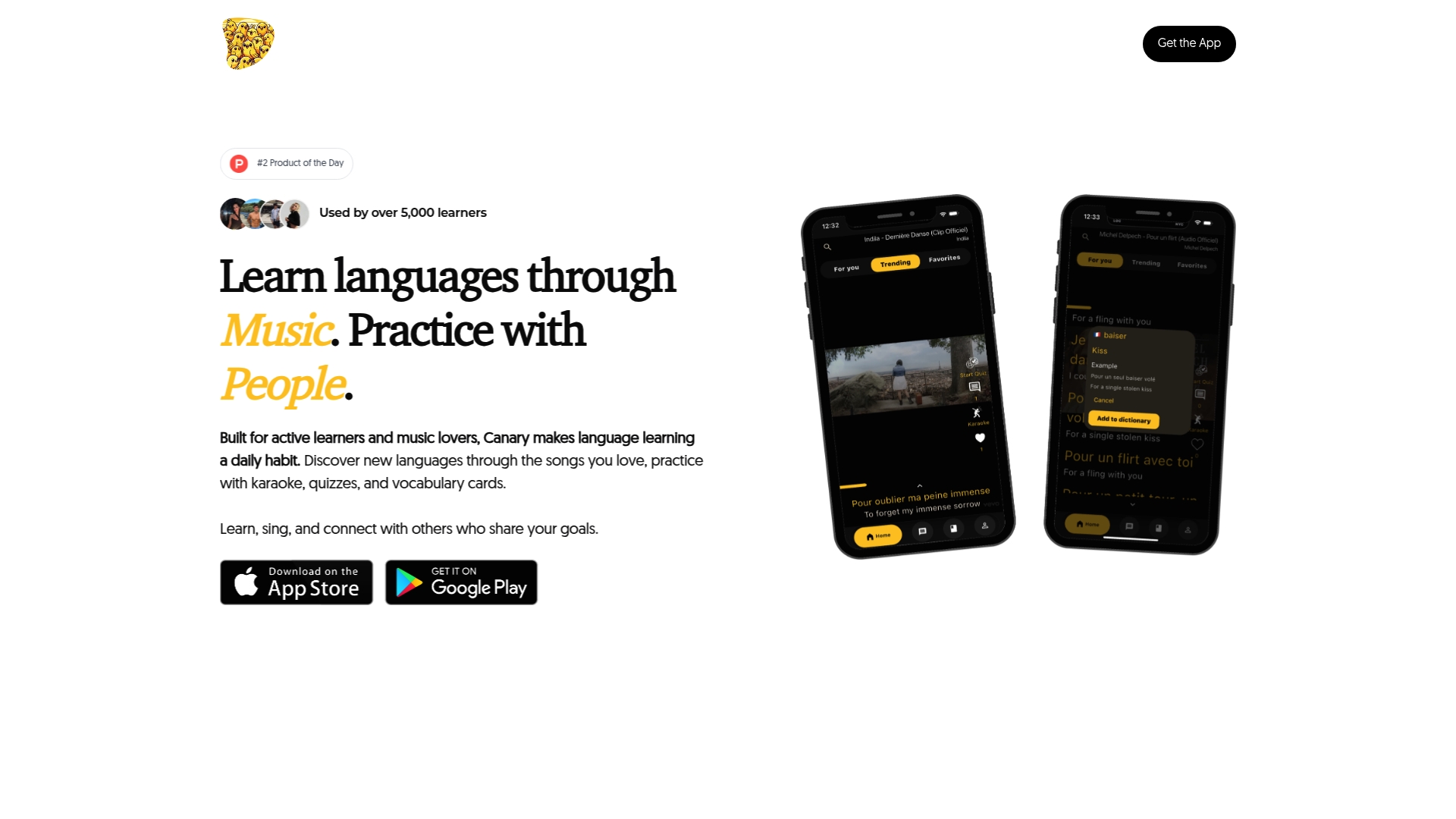
Take the next step today and transform your language skills by experiencing how music can unlock your potential. Visit Canary now to start practicing with songs that inspire and a global community that supports your growth. Your path to fluent, confident communication begins with just one click.
Frequently Asked Questions
What are the main benefits of learning languages with songs?
Learning languages with songs boosts pronunciation, vocabulary retention, listening skills, cultural understanding, and social interactions. To experience these benefits, start by integrating music into your daily language practice.
How can I improve my pronunciation using songs?
To improve pronunciation, choose songs in your target language and sing along to match the singer’s pronunciation. This practice can enhance your pronunciation accuracy over time, often within a few weeks of consistent effort.
What strategies can I use to remember vocabulary through music?
To remember vocabulary, listen to songs that highlight new words and maintain a vocabulary journal to track them. For optimal impact, create a playlist focused on a specific theme, and review it regularly to reinforce your memory.
How does music enhance my listening skills in a new language?
Music enhances listening skills by exposing you to authentic speech patterns, intonation, and rhythm. Listen to songs at or slightly above your comprehension level, and aim to transcribe the lyrics to challenge your auditory understanding.
In what ways can I use songs to build confidence in speaking?
To build confidence in speaking, practice singing songs aloud in a comfortable environment. As you progress, record yourself and notice improvements, which can help ease anxiety and foster a greater willingness to speak.
How can I create opportunities for social interaction through music?
You can create social interactions by joining online music-based language exchange groups or participating in karaoke sessions. Engaging with others in these settings can enhance your language skills while fostering global connections.