TL;DR:
- Active learning techniques for Spanish focus on speaking, listening, creating, and collaborating to build fluency. They lower learner anxiety and promote real output through methods like role-play, gamification, and visual storytelling. Incorporating social interaction and immersion accelerates progress and boosts confidence in using the language.
Active learning techniques for Spanish are defined as student-centered methods that require learners to speak, listen, create, and collaborate rather than passively receive information. Pedagogical research confirms that active methods outperform passive learning for oral skill development across all proficiency levels. The biggest obstacle most Spanish learners face is not grammar. It is anxiety. The techniques in this guide are chosen specifically because they lower that anxiety while building real speaking and listening ability, backed by research published through 2026.
1. What are the top active learning techniques for Spanish speaking skills?
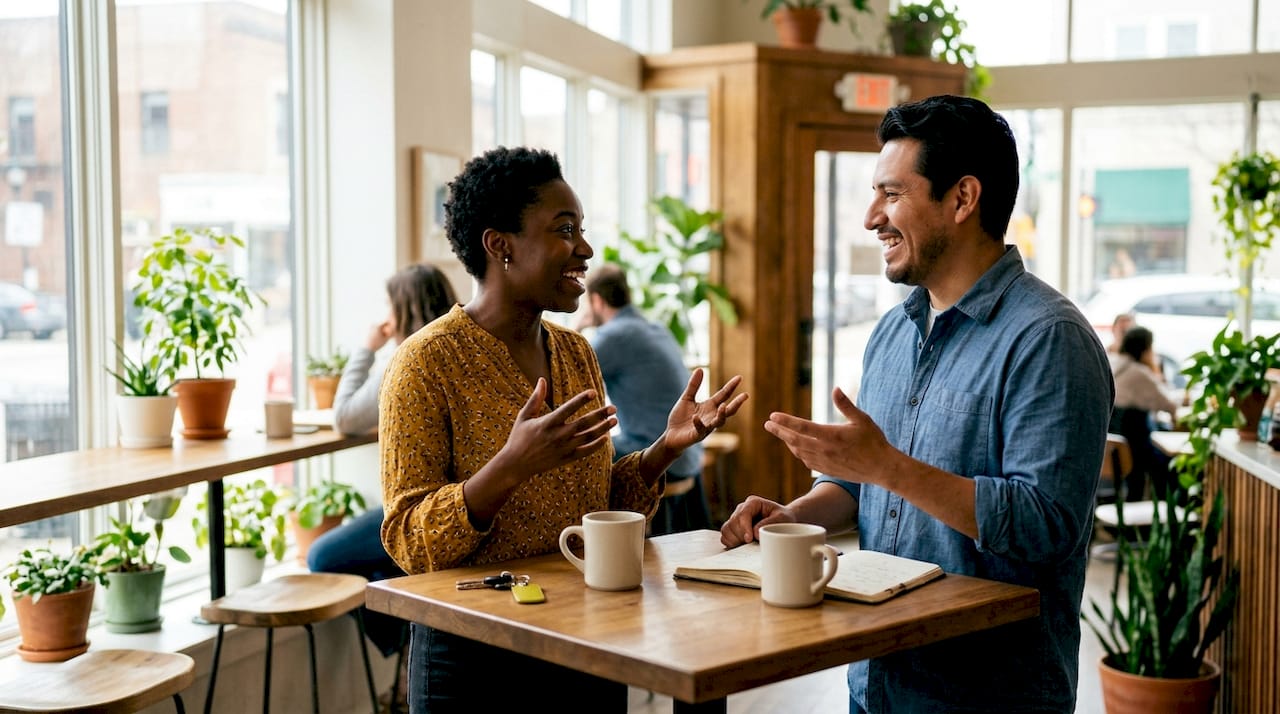
Speaking fluency grows fastest when learners are put in low-stakes situations that demand real output. Drama-based instruction produced statistically significant improvement in oral communicative competence among B1-level Spanish learners. That result matters because it shows performative methods do more than entertain. They rewire how learners process and produce language under pressure.
Role-play and scripted drama work because they give learners a character to hide behind. When you are playing a role, the fear of personal embarrassment drops. You stop worrying about sounding foolish and start focusing on communicating meaning.
Hot Seat is one of the most effective speaking games for any level from Pre-A1 to B1. One learner sits in the “hot seat” and must describe a word without saying it, while teammates guess. This builds circumlocution skills, which is the ability to talk around a word you do not know. Circumlocution is a critical fluency skill because real conversations rarely give you time to look up vocabulary.
- Role-play scenarios: Simulate real situations like ordering food, asking for directions, or negotiating a price.
- Hot Seat: One player describes, the group guesses. Works with zero preparation.
- Debate rounds: Assign positions on simple topics and give learners two minutes to argue their side.
- Story circles: Each learner adds one sentence to a group story, building narrative and listening skills simultaneously.
Pro Tip: Run Hot Seat in the first five minutes of a session. Starting with a speaking game removes the silence barrier and makes the rest of the session feel easier.
2. How visual and collaborative techniques enhance Spanish vocabulary
Visual storytelling combined with group work produces stronger motivation and better comprehension than either method alone. An April 2026 study found that jigsaw techniques paired with comic-based learning increased engagement and comprehension among university-level Spanish learners in language lab settings. The jigsaw method divides a topic into parts, assigns each part to a small group, and then reassembles the groups so every learner teaches the others what they learned.
Comics add a visual layer that anchors vocabulary to images and context. When you read a comic panel in Spanish, you decode meaning from both the words and the picture. That dual-channel processing strengthens retention.
| Method | Format | Best for |
|---|---|---|
| Jigsaw collaborative reading | Group work | Reading comprehension and speaking |
| Comic-based storytelling | Visual plus text | Vocabulary in context |
| Individual visual mapping | Solo | Grammar and word relationships |
| Shared digital storyboards | Pairs or groups | Writing and speaking integration |
For self-study, you can replicate the jigsaw effect by reading one section of an article, summarizing it aloud in Spanish, and then watching a video that covers a different angle of the same topic. The act of synthesizing two sources forces active processing.
- Create your own comic strip in Spanish using free tools like Canva or Google Slides. Label every element.
- Use image-based flashcards where the picture appears first and the Spanish word appears on the back.
- Collaborative annotation: Share a Spanish text with a study partner and each person highlights different vocabulary, then explains their choices.
3. What role does gamification play in active Spanish language learning?
Gamification supports long-term memory retention better than rote memorization by wrapping practice in low-stakes challenge. When the cost of a wrong answer is losing a point in a game rather than failing a test, learners take more risks. More risk-taking means more speaking attempts, and more speaking attempts build fluency faster.
Spin the Wheel is a vocabulary game where a digital or physical wheel lands on a category or word prompt. The learner must respond immediately, with no time to overthink. No-prep games like this work best as warmers in the first few minutes of a session, transitioning learners into active speaking mode naturally.
And You is a movement-based chain game. One learner makes a statement about themselves in Spanish, then points to another and says “and you?” That learner must respond and redirect. The movement and social pressure create urgency that mimics real conversation.
- Spin the Wheel: Instant vocabulary prompts, zero preparation, works for all levels.
- And You: Movement plus speaking chain, builds spontaneous response speed.
- Word association races: Say a Spanish word, the next person says a related word within three seconds.
- Vocabulary bingo: Replace numbers with Spanish words or images. Learners must use the word in a sentence to mark it off.
Pro Tip: The best language learning gamification activities require no setup. If a game takes more than two minutes to explain, it will kill the momentum it was meant to create.
4. How immersive and social interaction techniques improve Spanish fluency
Immersive techniques create the conditions of living in a Spanish-speaking environment without requiring you to book a flight. Immersive technology and social interaction speed up fluency by creating natural, low-pressure practice environments where learners hear and produce Spanish repeatedly in context.
Music is one of the most underused immersion tools. Songs expose you to natural speech rhythm, connected speech, and colloquial vocabulary that textbooks rarely include. Listening to the same song repeatedly trains your ear to parse fast, native-speed Spanish. Singing along trains your mouth to produce those same sounds with correct stress and intonation.
Social interaction methods reduce the affective filter, which is the psychological barrier that blocks language output when a learner feels judged or anxious. Group games, language exchange partners, and community platforms all lower this barrier by making interaction feel normal rather than evaluated.
| Method | Environment | Primary skill built |
|---|---|---|
| Language lab with audio drills | Technology-assisted | Listening and pronunciation |
| Music-based learning | Technology or live | Pronunciation and vocabulary |
| Language exchange with native speakers | Face-to-face or online | Speaking and listening |
| Interactive platform practice | Technology-assisted | All four skills |
| Classroom role-play | Face-to-face | Speaking and confidence |
For daily practice, combine at least one technology-assisted method with one social method. Technology gives you control over pace and repetition. Social interaction gives you the unpredictability that real conversations require.
Pro Tip: Pair learning Spanish with songs with a weekly conversation session. The music builds your ear and vocabulary; the conversation forces you to use what you have absorbed.
5. How team-based activities build Spanish speaking confidence
Team-based games lower anxiety and encourage more confident, frequent communication by distributing the spotlight across the group. When no single learner is the sole focus, the pressure drops and participation rises. This is the core principle behind every successful group language activity.
The key design feature of effective team activities is shared accountability. When your team needs your contribution to win, you speak. When you speak in a low-stakes game, you build the habit of speaking. That habit transfers to real conversations.
Group language learning activities work best when they include a clear goal, a time limit, and a social reward like laughter or winning. These three elements keep energy high and reduce the overthinking that kills spontaneous speech.
Practical team formats that work for Spanish learners include translation relays, where teams race to translate a paragraph correctly; picture description chains, where each person adds detail to a shared image description; and collaborative listening tasks, where the group must reconstruct a short audio clip from memory.
6. How project-based learning deepens Spanish language skills
Project-based learning for Spanish gives learners a real product to create, which makes every vocabulary and grammar decision feel purposeful. Instead of practicing the subjunctive in isolation, you use it while writing a short film script or planning a fictional trip to Mexico City. The context makes the grammar stick.
A well-designed project runs over two to four weeks and includes research, drafting, peer feedback, and a final presentation in Spanish. Each stage activates a different skill. Research builds reading and vocabulary. Drafting builds writing and grammar. Peer feedback builds listening and critical thinking. Presentation builds speaking and pronunciation.
Projects also create vocabulary building momentum because learners repeatedly encounter the same topic-specific words across multiple sessions. Repetition in context is the fastest path to retention.
Good project topics for Spanish learners include creating a travel guide to a Spanish-speaking city, producing a short podcast episode on a cultural topic, or designing a menu for a fictional restaurant with descriptions written entirely in Spanish.
7. How pronunciation practice fits into active Spanish learning
Pronunciation is the skill most learners neglect and the one that most affects how native speakers respond to them. Active pronunciation practice means producing sounds, not just hearing them. Passive listening to Spanish audio helps, but it does not build the muscle memory that speaking requires.
Minimal pair drills are one of the most effective active pronunciation tools. You practice two words that differ by a single sound, like “pero” and “perro,” until you can produce and distinguish them reliably. This trains both your ear and your mouth at the same time.
Interactive quizzes focused on pronunciation give you immediate feedback on whether you are producing sounds correctly. Immediate feedback is what separates active pronunciation practice from passive listening. Without feedback, you can reinforce incorrect habits for months without realizing it.
Shadowing is another high-impact technique. You listen to a native speaker and repeat each phrase immediately, matching their rhythm, stress, and intonation as closely as possible. Shadowing works best with audio you have already understood, so comprehension does not compete with production.
Key Takeaways
Active learning techniques for Spanish work because they force speaking output, lower anxiety through social and game-based formats, and build pronunciation through repetition in meaningful context.
| Point | Details |
|---|---|
| Drama and role-play build oral skills | Performative methods produce measurable speaking improvement, even at B1 level. |
| Gamification beats rote memorization | Low-stakes games increase speaking attempts and long-term vocabulary retention. |
| Visual plus collaborative methods boost comprehension | Jigsaw and comic-based techniques raise motivation and active participation. |
| Immersion accelerates fluency | Combining music, technology, and social practice creates natural, low-pressure repetition. |
| Pronunciation needs active output | Shadowing and minimal pair drills build muscle memory that passive listening cannot. |
What I have learned from watching learners actually improve
The learners who improve fastest are not the ones who study the most. They are the ones who speak the most, even badly. I have watched people with half the vocabulary of their peers outperform them in real conversations simply because they had built the habit of attempting output rather than waiting until they felt ready.
The biggest mistake I see is treating speaking practice as a reward for reaching a certain grammar level. Learners tell themselves they will start speaking when their subjunctive is solid, or when they know enough vocabulary. That day never comes. Speaking is not the reward for learning Spanish. Speaking is how you learn Spanish.
Games and group activities are not just fun additions to a study plan. They are the mechanism that forces you to produce language before you feel ready, which is exactly when the real learning happens. The music-infused approach to language practice works for the same reason. Songs put words in your mouth before your brain has time to second-guess them.
If you are studying alone, find a way to add social pressure to your practice. A language exchange partner, an online community, or even recording yourself and sharing it creates the accountability that solo study lacks. The playful learning activities that work for children work for adults too, because the underlying psychology is the same. We all learn better when we are engaged, not evaluated.
— Ben
Singwithcanary makes active Spanish practice feel natural
Singwithcanary combines music-based learning with social interaction to give Spanish learners a daily practice environment that actually feels worth returning to. The platform uses song lyrics, karaoke, vocabulary cards, and interactive quizzes to build pronunciation, vocabulary, and listening skills through methods that align directly with the active learning principles covered in this guide.
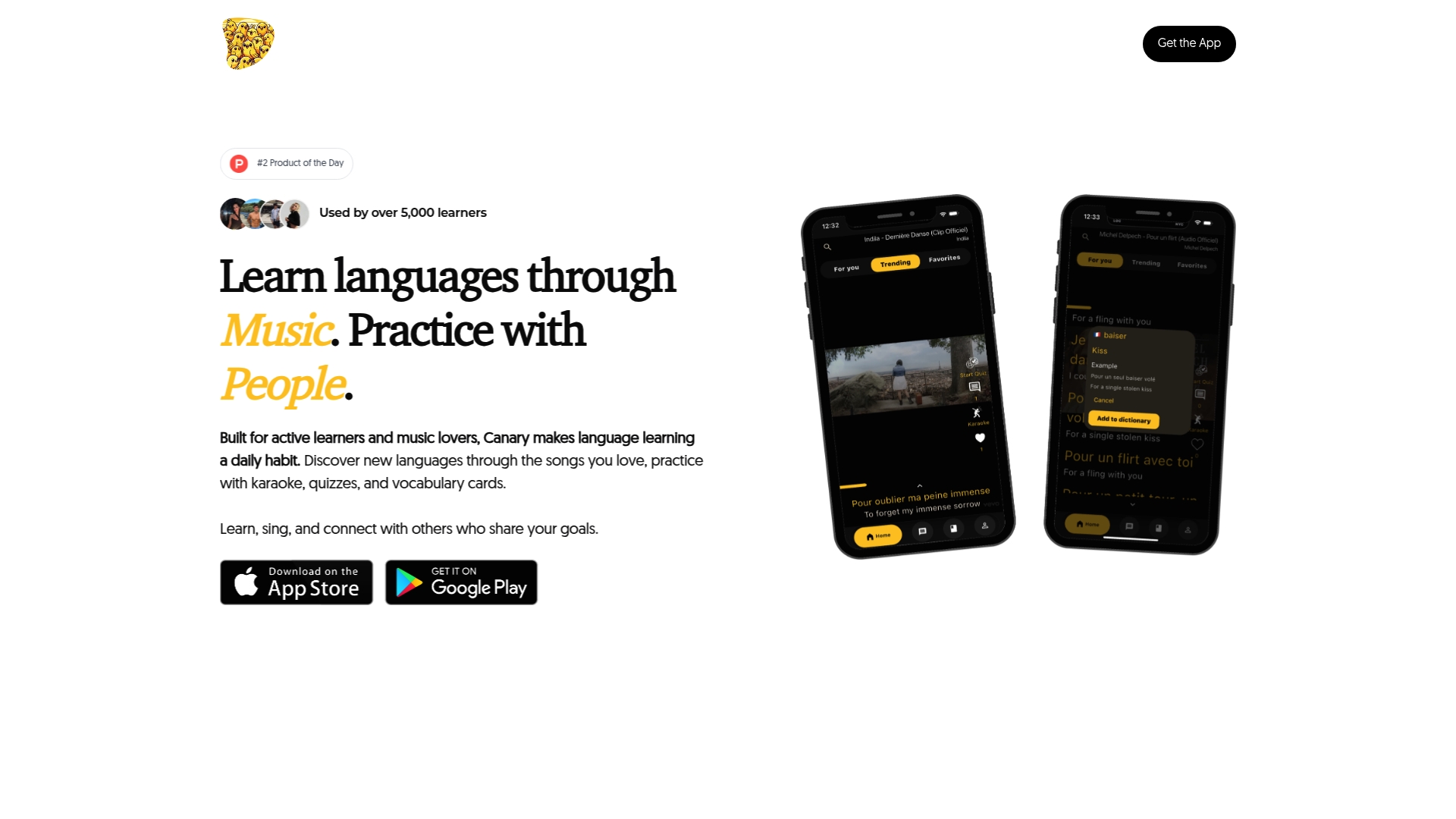
Learners on Singwithcanary practice with people from around the world, which replicates the social pressure and spontaneity of real conversation without the anxiety of a formal class. If you want to put the techniques from this article into daily practice, start with Singwithcanary and use the song-based features to build your ear and your confidence at the same time.
FAQ
What are active learning techniques for Spanish?
Active learning techniques for Spanish are methods that require learners to produce language through speaking, listening, creating, or collaborating rather than passively reading or watching. Examples include role-play, Hot Seat, jigsaw activities, and music-based practice.
How does gamification help with Spanish learning?
Gamification reduces the fear of failure by making mistakes low-stakes, which encourages more speaking attempts and builds long-term vocabulary retention better than rote memorization.
What is the Hot Seat game and why does it work?
Hot Seat requires one learner to describe a word without saying it while teammates guess, building circumlocution skills that are critical for real-world fluency at levels from Pre-A1 to B1.
How can music improve Spanish pronunciation?
Music exposes learners to natural speech rhythm and connected speech, while singing along builds the mouth muscle memory needed for correct stress and intonation in spoken Spanish.
How do I reduce anxiety when speaking Spanish?
Team-based games and group activities distribute the spotlight across multiple learners, which lowers the affective filter and makes speaking feel less evaluated and more natural.