Finding a music-based language learning app that feels engaging and offers diverse language options is difficult. Many apps limit practice to one language or skip structured lesson paths, leaving music lovers with narrow choices. This review compares features, language support, and practice styles so learners can pick the best alternative for their language goals.
Table of Contents
Canary
At a Glance
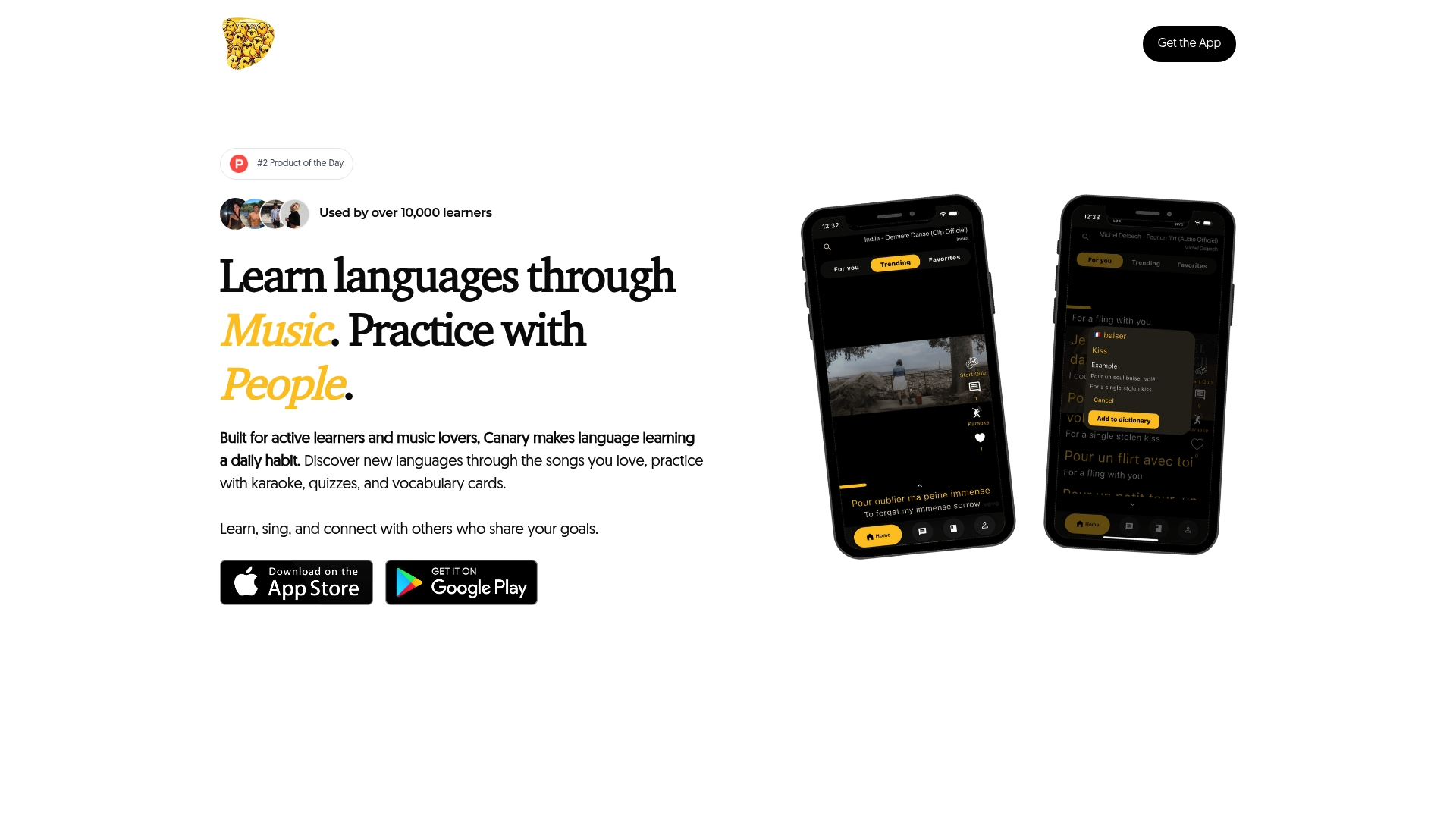
Karaoke mode turns song lyrics into pronunciation drills that learners can repeat and record. The app pairs singalong practice with playlists and social features to make sessions feel communal. The vendor advertises that the app has been praised for making language learning feel natural and addictive. That positioning targets people who prefer music first, lessons second.
Core Features
Canary centers learning around songs and playlists, using music to teach vocabulary and listening. It includes Karaoke mode for pronunciation practice, vocabulary cards and quizzes to reinforce words, and social tools that connect learners and encourage practice. The app also supports music playlist integration so learners can craft thematic practice sets across sessions. The mobile-first design runs on iOS and Android, which keeps practice portable.
Key Differentiator
Combines music, karaoke, and social interaction to make language learning engaging and addictive. That combination links three learning levers in one place: repeated listening, active speaking, and peer feedback. The social layer encourages daily practice by turning solo drills into shared activities with other members. This model shifts practice from task oriented sessions to music centered rituals.
Pros
Canary offers an engaging way to work pronunciation and listening through repeated singing and recordable playback. According to the company, music and singing improve retention, and the platform uses short quizzes and vocabulary cards to capitalize on that effect. The social features build a community of learners who exchange recordings and tips, which helps with real time feedback and motivation. Mobile availability makes it easy to practice between other daily activities.
Cons
- Unclear whether the app supports multiple languages or offers a structured lesson path, which may frustrate learners seeking a full curriculum.
Who It’s For
Music lovers and active language learners who want practice tied to songs will get the most from Canary. People focused on accent and listening improvement will value the karaoke practice and vocabulary tools. Those who need a step by step course or explicit grammar sequences may find the approach less suitable.
Unique Value Proposition
Karaoke mode plus playlist integration creates repeatable practice loops anchored to familiar songs. That setup reduces friction for daily repetition because learners practice while enjoying music they already know. For community minded learners, social sharing converts private drills into quick feedback sessions. The economic effect is lower friction per practice session, which raises the chance you will practice more often.
Real World Use Case
A mid level Spanish learner picks three pop songs each week and uses Canary to record karaoke takes. They review vocabulary cards tied to those lyrics, then post one clip to a community thread for pronunciation feedback. Over several weeks they notice clearer vowel sounds and higher confidence speaking in casual conversations.
Website: https://singwithcanary.com
Lingotune
At a Glance
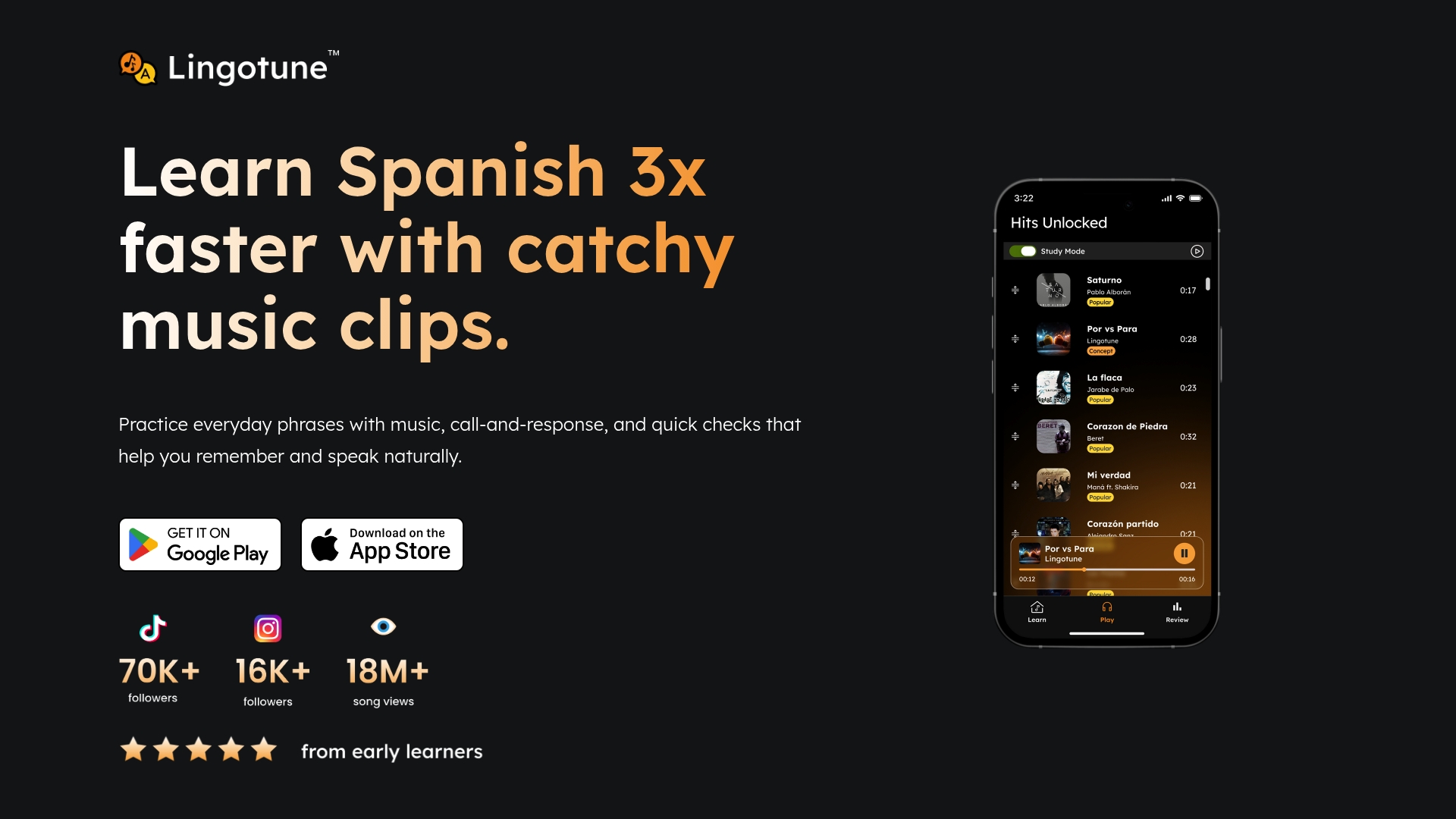
Short, catchy music clips drive speaking practice in Lingotune. The app pairs those clips with quick speaking checks to help learners repeat and retain everyday phrases. It targets Spanish learners who prefer auditory practice and mobile daily drills.
Core Features
Lingotune uses catchy music clips to present vocabulary and short phrases, then follows with call and response practice to reinforce pronunciation. The app includes quick checks that quiz recall and speaking ability after audio segments, and it packages content into short daily sessions. Lingotune runs on Android and iOS and maintains social engagement on Instagram and TikTok.
Key Differentiator
The app’s main angle is musical practice that keeps the voice active rather than passive reading. That approach focuses on speaking repetition inside melodic hooks to build phrase recall. It serves a narrower audience than Singwithcanary by concentrating only on Spanish and short audio drills rather than broader community or multi language offerings.
Pros
The music first method makes practice feel like listening and singing rather than studying, which helps learners keep a daily habit. Mobile availability on Google Play and the App Store means learners can use it while commuting or between errands. The design emphasizes conversational speaking through repeated call and response and quick checks, and the team behind the product has prior experience building popular apps. Social channels provide motivation and short form content for extra practice.
Cons
-
Limited curriculum detail: The app lacks clear information on structured lesson paths or long term progression.
-
Narrow language scope: Content focuses on Spanish only and does not cover other languages or advanced grammar.
-
Learning style fit: The app may underperform for learners who prefer text based lessons or formal grammar instruction.
When It May Not Fit
Avoid Lingotune if you need a graded course with explicit grammar explanations and long lesson sequences. Choose a different tool when your goal is advanced grammar or written composition practice. The app also does not cater to learners who prefer desktop study or textbook style formats.
Who It’s For
Lingotune fits Spanish learners who respond well to musical and auditory cues and who want short daily speaking drills. It works for casual learners who need phrase practice rather than certification or academic study. Use it when you want to improve accent and recall through repetition.
Real World Use Case
A commuter practices ten minutes each morning listening to a music clip, repeating lines using call and response, and taking a quick check at the end. Over several weeks the learner notices faster recall of common phrases and more confidence speaking aloud. The mobile format keeps practice consistent on the go.
Pricing
Pricing information is not listed. The product entry describes the app as informational only and does not provide tier or subscription details. Check the app listings on Google Play or the App Store for current availability and any in app purchase notes.
Website: https://lingotune.ai
Beelinguapp
At a Glance
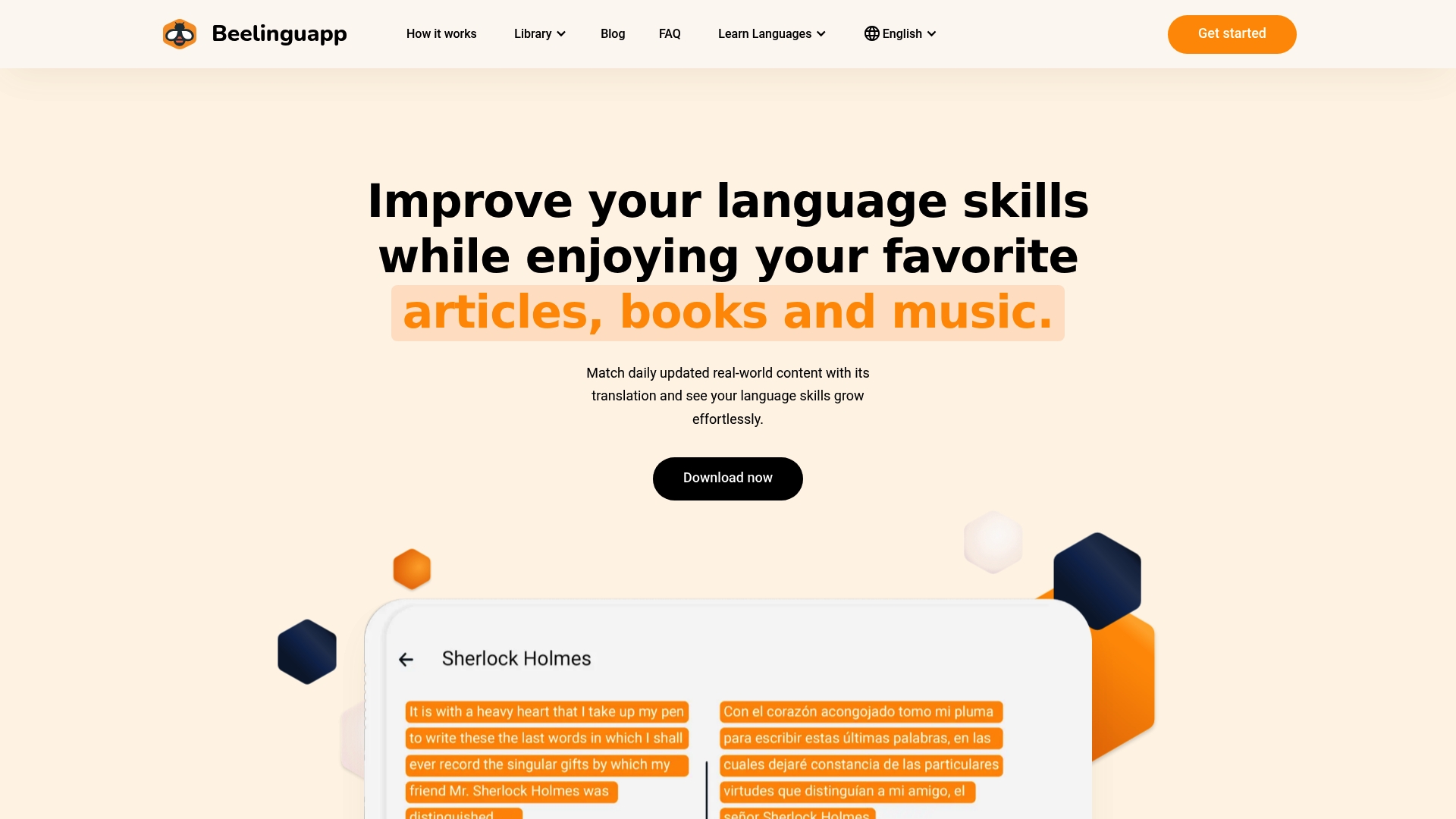
Supports 23 languages and a content library that mixes stories, news, music, and kids material. The app pairs each passage with a side by side translation so you can read and listen at once. Native speaker narration and built in vocabulary tools make listening practice feel practical and focused.
Core Features
Beelinguapp uses parallel texts so you see the target language and your native language together while audio plays. It offers audiobooks narrated by native speakers, plus a broad topic mix that keeps practice varied. Built in vocabulary lists, flashcards, and short comprehension quizzes track progress and reinforce learning.
Key Differentiator
The standout feature is the pairing of text and native narration for the same content. That combination lets you match pronunciation to written words in context. For learners who prefer reading while they listen, this method supports faster decoding of spoken language.
Pros
Learning with real world readings and audio makes practice feel less like drills and more like reading a book or listening to a podcast. Support for a wide set of languages and levels means beginners and advanced learners both find usable material. Native narration improves listening and pronunciation work, and the app offers free entry level content so you can try the method before paying. Positive user reviews suggest many learners enjoy the format.
Cons
- Ads support the free tier, and the presence of ads can interrupt focused study or repeat across short sessions.
- Some users report occasional content availability issues, which can frustrate people relying on specific lessons.
- Advanced features and some content blocks may require payment, so the fully featured experience is not entirely free.
When It May Not Fit
If you require offline access for long trips, this app is not ideal because it needs internet for content updates. If you need a curriculum with strict lesson sequencing and teacher oversight, Beelinguapp lacks that structured classroom flow. Learners who struggle to keep a daily habit may not see strong gains because the method depends on consistent practice.
Who It’s For
This app fits learners who prefer immersion through reading and listening rather than flashcard only study. Travelers who want quick, contextual phrases and readers who enjoy stories with audio will benefit. It also suits casual learners who want flexible, on the go practice that ties vocabulary to full sentences.
Real World Use Case
The vendor describes a learner who listens to Spanish audiobooks and reads parallel texts daily and becomes conversational in three months. In practice, you would pick short articles or a story chapter, listen while reading, and review highlighted words with flashcards. That routine reinforces pronunciation, expands vocabulary, and builds comprehension for real conversations.
Website: https://beelinguapp.com
Comparison of alternatives
Effective language acquisition often leverages engaging and accessible methods that cater to diverse learner preferences. Here, we compare three language-learning platforms—Canary, Lingotune, and Beelinguapp—all of which integrate music to enhance learning, yet address distinct audience needs.
Music-based interaction methodologies
Canary uniquely incorporates karaoke functionality and playlist integration to create a socially driven, dynamic learning ecosystem. In contrast, Lingotune underscores concise musical drills with call-and-response techniques, lending itself to daily recall tasks predominantly for Spanish learners. Beelinguapp combines narrative content with dual-language text-audio pairing, offering diverse language materials—advantageous for learners seeking text-aided auditory practice.
Scope of language availability
While Canary focuses on an engaging technique with broad applicability but unspecified language array, Beelinguapp accommodates 23 languages, making it highly versatile for learners with specific multilingual needs. Lingotune, dedicated solely to Spanish, fine-tunes its offering for focused language improvement. Individuals requiring varied language choices will likely favor Beelinguapp for its inclusiveness.
Best fit
- For music enthusiasts seeking a social learning experience, Canary provides an integrated system with engaging karaoke features and a community-driven practice environment.
- For Spanish learners preferring concise audio-driven practices, Lingotune’s call-and-response method paired with short musical clips delivers targeted conversational skill-building workflows.
- For learners requiring broad language support with immersive practice, Beelinguapp stands out with its expansive multilingual library and narrated story content.
Our pick
Canary is the top pick for learners desiring a harmonious blend of music, community interaction, and effective vocabulary development through practical singing exposure. Unique features like karaoke mode and mobile-friendly accessibility position this platform as an excellent choice for immersive language practice. However, learners strongly focused on acquiring structured grammar proficiency or seeking materials in underrepresented languages might explore alternatives like Beelinguapp for broader coverage.
Discover which app maximizes engagement through music-based language learning practices.
| App Name | Key Feature | Best For | Pricing | Limitations |
|---|---|---|---|---|
| Singwithcanary | Karaoke mode with playlist integration | Music lovers seeking pronunciation improvement | Price not published | Limited details on structured lesson paths |
| Lingotune | Catchy music clips for speaking drills | Auditory learners practicing conversational phrases | Price not published | Focuses only on Spanish language content |
| Beelinguapp | Parallel texts with native narration | Readers preferring immersion with audiobooks | Tiered: Free with ads | Ads interrupt free tier sessions |
Why Some Language Apps May Not Meet Your Music-Driven Learning Needs
Many language apps fail to blend natural pronunciation practice with social interaction, leaving music lovers and active language learners struggling to find engaging tools. Common challenges include lack of structured lesson paths, limited community feedback, and frustrating repetition methods.
Singwithcanary solves these problems by combining karaoke mode, vocabulary quizzes, and social sharing. This lets you practice pronunciation while enjoying your favorite songs and connecting with international learners. The platform supports consistent daily practice driven by music you already love.
Singwithcanary offers a fun, addictive way to improve your accent and vocabulary without feeling like traditional studying. Try it now to join a community where language learning feels natural and engaging.
Start your musical language practice today and record your first karaoke session in minutes.
Learn more about Singwithcanary
FAQ
How does Singwithcanary support pronunciation practice?
Singwithcanary features a Karaoke mode that allows users to turn song lyrics into pronunciation drills. This unique approach helps learners practice speaking by repeating and recording their singing, making the process engaging and effective.
What is the difference between Singwithcanary and Lingotune?
Lingotune excels in using catchy music clips to drive speaking practice through short audio drills. Singwithcanary, on the other hand, places a stronger emphasis on karaoke and community interaction, which may be better for learners focused on pronunciation and social feedback.
Which platform offers a more extensive language library, Singwithcanary or Beelinguapp?
Beelinguapp supports 23 languages and provides a mix of reading and listening content with a side-by-side translation. In contrast, Singwithcanary is primarily designed for music-based language learning, focusing mainly on songs and playlists without a multi-language offering.
Can I use Singwithcanary if I prefer structured lessons?
Singwithcanary may not cater to those seeking a fully structured lesson path, as it emphasizes a music-first approach rather than a traditional curriculum. This app is more suited for music lovers who want to practice language through songs rather than explicit grammar sequences.
How does the mobile availability of Singwithcanary benefit learners?
Singwithcanary’s mobile-first design allows learners to practice on iOS and Android, making language practice portable and easily integrated into daily routines. This flexibility supports consistent practice, regardless of a learner’s schedule.