Finding a language learning method that keeps you motivated while delivering real results can feel overwhelming. Traditional apps often lack the engagement and cultural immersion that music enthusiasts crave, leaving learners stuck in repetitive drills without genuine progress. Music-driven language learning offers a unique solution by combining rhythm, melody, and interactive practice to enhance pronunciation, boost vocabulary retention, and connect you with a global community of learners. This approach transforms song lyrics into powerful educational tools, making language acquisition feel less like work and more like a natural extension of your passion for music. Whether you’re mastering intonation through karaoke or expanding your vocabulary with lyric-based quizzes, music creates an immersive environment where language skills flourish organically.
Table of Contents
- Key takeaways
- Criteria for effective music-based language learning
- Top music-driven methods to boost pronunciation and vocabulary
- Musical training’s impact on cognitive benefits and vocabulary speed
- Choosing the right music-based approach for your language goals
- Explore music-driven language learning with Canary
- Frequently asked questions
Key Takeaways
| Point | Details |
|---|---|
| Rhythm based pronunciation | Using rhythm and prosody training helps you internalize natural speech and improve pronunciation. |
| Vocabulary through melody | Melodic repetition supports vocabulary retention and helps you learn words in context. |
| Interactive lyric practice | Interactive lyric based activities provide immediate feedback and keep practice engaging. |
| Motivation matters | Motivation coupled with suitable training methods enhances learning outcomes and sustains commitment. |
Criteria for effective music-based language learning
Selecting the right music-driven approach requires understanding what makes these methods genuinely effective for language acquisition. The best programs prioritize four core elements: pronunciation improvement through rhythm and prosody training, vocabulary expansion via melodic repetition, sustained learner motivation, and opportunities for social interaction. Rhythm and prosody training helps learners internalize the natural flow of speech, making it easier to imitate native speakers accurately. This embodied approach goes beyond passive listening by engaging your body and voice in the learning process.
Motivation plays a crucial role in adult language acquisition success. Research demonstrates that music and language training combined produces additive effects, particularly for motivated learners and music enthusiasts who already appreciate the art form. When you’re emotionally connected to the music, your brain processes language patterns more deeply, creating stronger neural pathways for retention. This emotional engagement transforms routine practice into an enjoyable daily habit rather than a chore.
Effective music-based programs should include these essential features:
- Interactive elements like lyric gap-fills and pronunciation feedback that provide immediate correction
- Access to diverse music genres and difficulty levels to match your current proficiency
- Community features that enable practice with other learners or native speakers
- Progress tracking tools that measure improvements in vocabulary, listening comprehension, and pronunciation
- Cultural context that helps you understand idiomatic expressions and regional variations
The educational benefits of music for language extend beyond simple memorization. Music activates multiple brain regions simultaneously, creating richer associations with new vocabulary and grammatical structures. This multisensory engagement means you’re not just learning words in isolation but understanding how they function within natural speech patterns and cultural contexts.

Pro Tip: Choose songs slightly above your current level to challenge yourself without causing frustration. Lyrics with clear pronunciation and moderate tempo work best for beginners, while advanced learners can tackle faster-paced tracks with complex vocabulary.
Top music-driven methods to boost pronunciation and vocabulary
Several proven techniques harness music’s power to accelerate language learning, each offering distinct advantages for pronunciation and vocabulary development. Singing along with native speakers remains one of the most effective methods because it forces you to match pitch, rhythm, and articulation simultaneously. This active mimicry improves your accent and intonation far more effectively than passive listening or reading alone. Studies confirm that singing foreign phrases leads to better recall than speaking or listening, making it a superior memorization technique.
Interactive apps like LyricsTraining transform passive music consumption into active learning experiences. These platforms present song lyrics with strategic gaps that you fill in by listening carefully, training your ear to distinguish individual words within rapid speech. Song-based instruction with gap-fills and quizzes improves listening comprehension by requiring focused attention on pronunciation nuances and vocabulary in context. This gamified approach maintains engagement while building practical skills you’ll use in real conversations.
The one-song-per-week repetition method offers remarkable results for vocabulary retention. By deeply studying a single song’s lyrics, cultural context, and grammatical structures over seven days, you create multiple memory anchors for new words and phrases. This intensive approach beats superficial exposure to dozens of songs because it allows time for the vocabulary to move from short-term to long-term memory. You’ll find yourself naturally recalling phrases weeks later when similar contexts arise in conversation.
Karaoke-style practice with real-time lyrics display combines visual and auditory learning channels, reinforcing correct spelling while you practice pronunciation. Many language learners report that mastering language learning with lyrics through karaoke builds confidence for speaking in real-world situations because you’ve already practiced producing sounds at native speed. The immediate feedback from hearing your voice alongside the original track helps you self-correct pronunciation errors on the spot.
These practical methods work best when combined:
- Start with lyrics reading to familiarize yourself with vocabulary and identify unknown words
- Listen actively multiple times, focusing on pronunciation patterns and intonation
- Sing along repeatedly until you can match the native speaker’s rhythm and accent
- Practice with gap-fill exercises to test your listening comprehension without visual aids
- Review vocabulary cards for words you struggled with during practice sessions
Pro Tip: Record yourself singing and compare it to the original track. This uncomfortable but invaluable exercise reveals pronunciation gaps you might miss while singing along, allowing targeted improvement on specific sounds or rhythm patterns.
Musical training’s impact on cognitive benefits and vocabulary speed
The cognitive advantages of musical training extend far beyond simple enjoyment, creating measurable improvements in language acquisition speed and verbal memory. Neuroscience research reveals that sustained musical practice enhances brain plasticity, particularly in regions responsible for auditory processing and language comprehension. Musically trained children outperform their peers in novel word learning and verbal memory tasks, demonstrating that musical experience creates transferable cognitive skills that accelerate vocabulary acquisition across languages.
This cognitive boost isn’t limited to childhood. Adults with musical backgrounds show faster processing of new vocabulary and better retention of grammatical patterns compared to non-musicians. The brain’s ability to distinguish subtle pitch and rhythm variations in music translates directly to improved perception of phonetic nuances in foreign languages. When you’ve trained your ear to hear quarter-tone differences in melody, detecting the subtle vowel shifts between similar words becomes significantly easier.
| Training Type | Vocabulary Acquisition Speed | Verbal Memory Performance | Best For |
|---|---|---|---|
| Music + Language | 35% faster than language alone | Significantly improved | Motivated adults and enthusiasts |
| Music Only | 20% faster than no training | Moderately improved | Musicians learning new languages |
| Language Only | Baseline speed | Baseline performance | Traditional learners |
| No Training | Slowest acquisition | Lowest retention | Complete beginners |
Research demonstrates that music and language training combined produces superior verbal memory outcomes compared to either discipline alone. This additive effect suggests that the neural pathways developed through musical practice complement and enhance language-learning processes rather than simply overlapping. For language learners who already enjoy music, this represents an opportunity to leverage existing skills and interests for accelerated progress.
The benefits manifest most strongly when learners actively engage with music rather than passively consuming it. Singing, playing instruments, or analyzing song structures creates deeper cognitive engagement than background listening. This active participation strengthens the same neural networks involved in language production and comprehension, creating a virtuous cycle where musical practice enhances language skills and vice versa.
Pro Tip: If you’re new to both music and language learning, start with simple songs that use repetitive vocabulary and clear pronunciation. As your skills develop, gradually increase complexity to maintain cognitive challenge without overwhelming yourself.
The music-based language learning guide provides detailed strategies for maximizing these cognitive benefits through structured practice routines that integrate musical and linguistic elements systematically.
Choosing the right music-based approach for your language goals
Different music-learning methodologies suit different learner profiles, making it essential to match your approach to your specific goals, age, and motivation level. Embodied music training incorporates physical movement and rhythm exercises to improve prosody and speech imitation. Studies show that embodied music training improves speech imitation better than non-embodied approaches because it engages multiple sensory systems simultaneously, creating stronger memory traces for pronunciation patterns.
App-based lyrics training platforms offer convenience and structure for tech-savvy learners who prefer self-directed study. These tools provide immediate feedback, progress tracking, and gamified challenges that maintain motivation over long periods. The interactive nature of gap-fill exercises and timed quizzes creates accountability while allowing you to practice at your own pace. For busy professionals or students, this flexibility makes consistent practice achievable even with irregular schedules.
| Method | Pronunciation Improvement | Vocabulary Retention | Engagement Level | Ideal Learner |
|---|---|---|---|---|
| Embodied Training | Excellent | Good | Very High | Kinesthetic learners, performers |
| App-Based Lyrics | Good | Excellent | High | Self-directed, tech-comfortable |
| Karaoke Practice | Excellent | Very Good | Very High | Extroverts, music enthusiasts |
| Traditional Speech | Moderate | Moderate | Low to Moderate | Young children, academic learners |
Traditional speech-centric practice works well for younger children who benefit from explicit phonetic instruction, but it often fails to maintain engagement for adult learners and music enthusiasts. The repetitive nature of pronunciation drills can feel tedious compared to the dynamic experience of learning through songs you genuinely enjoy. For motivated adults, music-based methods provide the cultural context and emotional connection that traditional approaches lack.
Your ideal approach depends on several personal factors:
- Learning style: Visual learners benefit from lyric displays, while kinesthetic learners thrive with embodied methods
- Available time: Apps suit irregular schedules, while structured classes require consistent availability
- Social preferences: Group karaoke builds community, while solo practice offers privacy and flexibility
- Musical background: Trained musicians can tackle complex songs faster than complete novices
- Target language: Tonal languages like Mandarin benefit especially from musical training
Exploring types of language learning methods for music lovers helps you understand which combination of techniques will deliver the fastest progress based on your unique situation. Many successful learners combine multiple approaches, using apps for daily vocabulary practice, karaoke for pronunciation refinement, and embodied training for prosody improvement.
Pro Tip: Experiment with different methods for two weeks each before committing to a primary approach. Track your progress and engagement levels to identify which techniques feel most natural and produce measurable improvements in your target skills.
Explore music-driven language learning with Canary
Ready to transform your language learning journey with the power of music? Canary offers an innovative platform designed specifically for music enthusiasts who want to learn languages with music through interactive, engaging methods that deliver real results. Our platform combines karaoke-style practice, vocabulary cards, and quizzes with a vibrant global community where you can practice with international learners and native speakers.
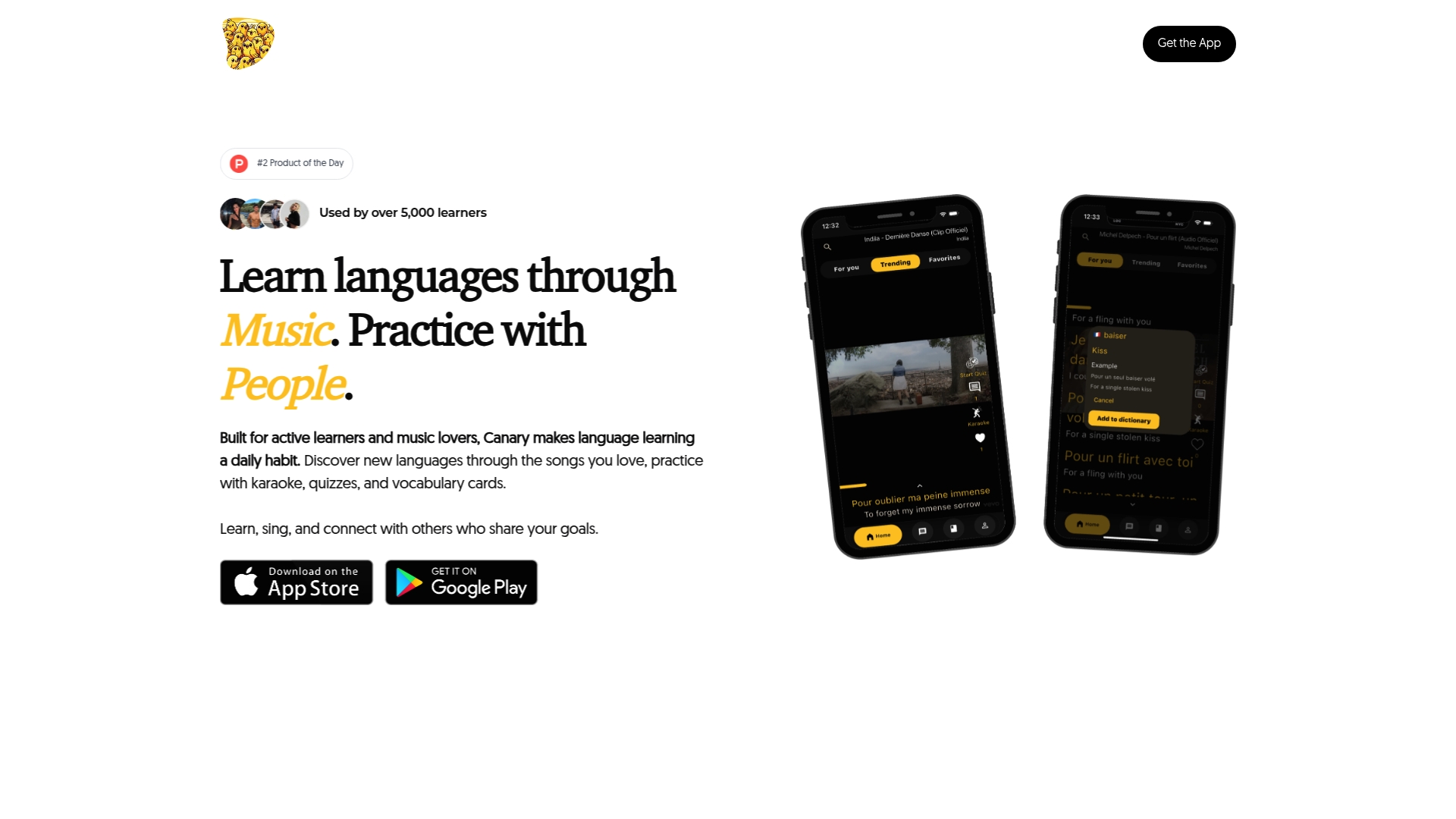
Unlike traditional language apps that rely on repetitive drills, Canary makes every practice session feel like discovering new music while naturally improving your pronunciation and expanding your vocabulary. Our social language learning features connect you with others who share your passion for music and language, creating accountability and motivation that keeps you practicing daily. Join thousands of learners who’ve discovered that mastering a new language doesn’t have to feel like work when you’re singing songs you love. Sign up today and experience how music accelerates your path to fluency.
Frequently asked questions
What are the key pronunciation benefits of learning with music?
Music helps learners mimic native intonation and rhythm naturally, improving speech clarity and accent accuracy. By matching pitch and tempo while singing, you train your mouth and vocal cords to produce sounds that might feel unnatural in isolated pronunciation drills. The rhythmic patterns in songs also reinforce proper stress and prosody, making your speech sound more native-like in everyday conversation.
How does listening to songs improve vocabulary retention?
Melody acts as a powerful memory anchor, making new words significantly easier to recall compared to rote memorization techniques. The combination of rhythm, rhyme, and emotional engagement creates multiple neural pathways to the same vocabulary, strengthening retention. Repeated exposure to lyrics in meaningful contexts helps you understand how words function naturally rather than just memorizing isolated definitions.
Are music-based methods effective for all ages and skill levels?
Music benefits motivated adults and language enthusiasts more than young novices who may need explicit instruction. Research shows preschool children often learn words better through speech-focused methods than song alone because they lack the metacognitive skills to extract language patterns from music independently. However, adults with musical backgrounds or strong motivation show accelerated vocabulary acquisition and pronunciation improvement through song-based learning.
Which apps are best for song-based language practice?
Apps like LyricsTraining, Aprelendo, and LyricLingo provide interactive tools specifically designed for music-based language learning. These platforms include features like gap-fill exercises, sing-alongs with synchronized subtitles, pronunciation feedback, and vocabulary quizzes that transform passive listening into active skill-building. For comprehensive guidance on maximizing these tools, explore our lyrics training apps guide with detailed comparisons and usage strategies.