TL;DR:
- Interactive learning methods boost engagement, critical thinking, and long-term knowledge retention through active participation.
- AI-powered platforms enhance student engagement with personalized, adaptive content when properly integrated into instructional design.
Interactive learning methods are defined as instructional approaches that require active learner participation rather than passive reception of information. The benefits of interactive learning methods are well documented: they increase student engagement, deepen critical thinking, and improve long-term knowledge retention. Collaborative problem-solving and simulation-based tasks produce effect sizes of Cohen’s d = 0.50–0.82, which reflects meaningful, measurable gains in learning outcomes. For educators and trainers working across any setting, understanding these advantages is the first step toward designing instruction that actually sticks.
How do interactive learning methods improve cognitive engagement?
Active participation changes how the brain processes information. When students solve problems, run simulations, or debate ideas, they build mental connections that passive listening cannot create. This is the core mechanism behind the advantages of interactive learning.
Emotional engagement plays an equally important role. Curiosity and joy are not soft outcomes. They strengthen long-term memory by triggering deeper cognitive processing during the learning event itself.
Research confirms this at the classroom level. Interactive teaching strategies increase classroom participation and academic self-efficacy by creating two-way interactions between instructors and students. That shift from one-way delivery to genuine dialog is what separates effective learning strategies from traditional lecture formats.
Key cognitive benefits include:
- Deeper encoding: Active tasks force learners to connect new information to prior knowledge.
- Reduced passive drift: Students who respond, create, or discuss stay attentive longer than those who only listen.
- Metacognitive awareness: Problem-solving tasks prompt students to monitor their own understanding in real time.
- Emotional memory anchoring: Positive emotional states during learning strengthen recall days and weeks later.
Pro Tip: Design at least one active response moment every 10–12 minutes of instruction. Even a brief think-pair-share resets attention and reinforces encoding.
What are the social and emotional benefits of interactive learning environments?
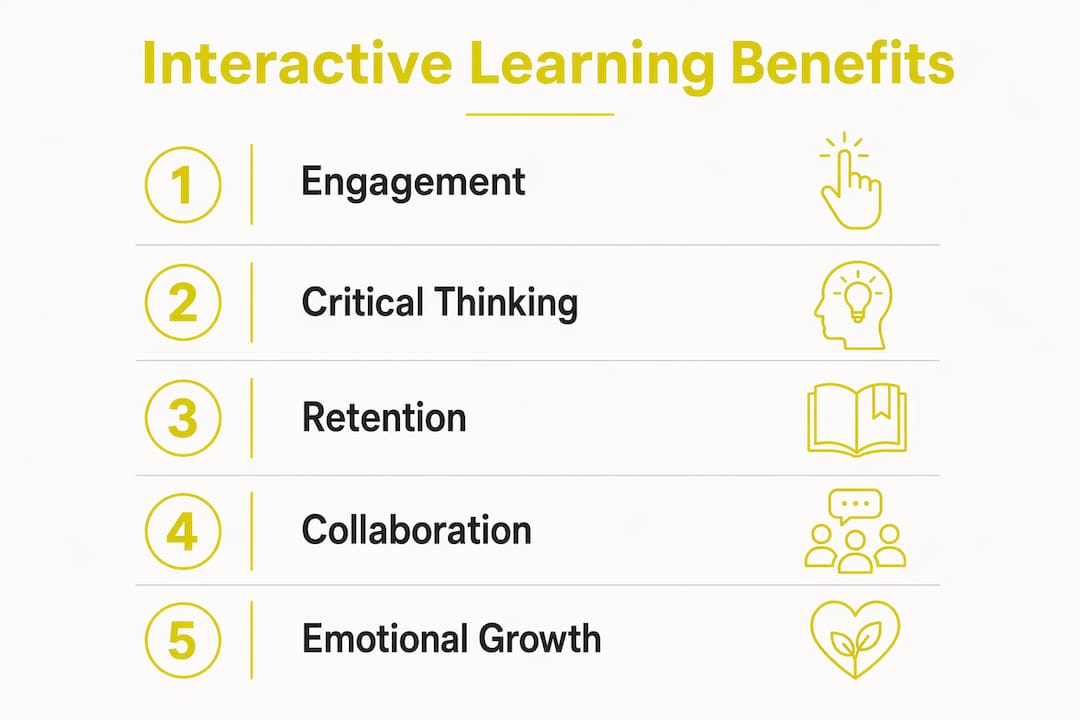
Interactive learning builds more than knowledge. It builds community. When students collaborate on group projects or work through shared challenges, they develop communication skills, accountability, and a sense of belonging in the learning environment.

Emotional engagement enhances motivation and creates positive associations with the subject matter itself. A student who feels connected to peers and to the content is far more likely to persist through difficulty. This is why benefits of collaborative learning extend well beyond academic performance metrics.
Gamification is one of the most studied student engagement techniques for building this emotional connection. Points, badges, and leaderboards tap into intrinsic motivation by making progress visible. Group challenges add social stakes that raise effort without raising anxiety. For learners who struggle with traditional formats, online tutoring environments offer a lower-pressure context where interactive methods can be especially effective.
Practical strategies that deliver social and emotional benefits:
- Structured group projects with defined roles so every student contributes.
- Peer teaching where students explain concepts to classmates, reinforcing their own understanding.
- Gamified quizzes that reward participation, not just correct answers.
- Reflective journaling after collaborative tasks to process both content and group dynamics.
Pro Tip: Assign rotating roles in group work (facilitator, recorder, presenter) so no single student dominates and every learner practices a different skill each session.
What are the advantages of different interactive teaching strategies?
Not all interactive methods work equally well for every learning goal. The choice of strategy should match the instructional objective. Three methods dominate the research: direct interactive teaching, inquiry-based learning (IBL), and problem-based learning (PBL).
Direct interactive teaching
Direct interactive teaching manages attention and cognitive load by presenting new concepts in structured, teacher-guided segments. A chemistry educator, for example, introduces a reaction mechanism step by step, pausing to check understanding before moving forward. Direct interactive teaching effectively builds foundational knowledge before more open inquiry methods are introduced. This approach works best at the start of a new topic or with learners who lack prior knowledge in the domain.
Inquiry-based learning
IBL shifts control to the learner. Students form hypotheses, gather evidence, and draw conclusions with guided support from the instructor. Inquiry-based learning promotes stronger long-term retention than other interactive strategies by encouraging guided discovery and deep conceptual understanding. The tradeoff is time. IBL requires more class time and careful scaffolding to prevent cognitive overload.
Problem-based learning
PBL places students inside authentic, complex scenarios that mirror real-world challenges. A nursing program might ask students to diagnose a simulated patient using incomplete information. Problem-based learning enhances far transfer by requiring learners to apply knowledge flexibly across new contexts. This makes PBL the strongest choice when the goal is real-world application rather than foundational recall.
| Strategy | Primary strength | Best use case |
|---|---|---|
| Direct interactive teaching | Foundation building, attention management | New topics, low prior knowledge |
| Inquiry-based learning | Long-term retention, conceptual depth | Science, humanities, concept mastery |
| Problem-based learning | Transfer, real-world application | Professional training, applied fields |
Pro Tip: Sequence these methods deliberately. Use direct interactive teaching to establish core concepts, then shift to IBL or PBL once students have enough prior knowledge to avoid cognitive overload.
How are AI-powered platforms changing student engagement?
AI-powered interactive learning platforms represent the most significant shift in how interactive methods in education are delivered at scale. These platforms generate dynamic content, provide immediate feedback, and adapt to individual learner performance in ways that static textbooks cannot.
Students using AI-powered interactive platforms demonstrate higher engagement and better learning experiences compared to traditional digital textbooks. That finding comes from experimental research with U.S. high school students, which means the effect is measurable in real classroom conditions, not just controlled lab settings.
AI-driven multimodal content supports diverse learning preferences by presenting information visually, auditorily, and interactively. This builds stronger mental models than any single-format approach. For language learners specifically, interactive language platforms that combine audio, text, and social practice create the kind of multimodal exposure that accelerates acquisition.
Key advantages of AI-powered interactive tools:
- Immediate feedback loops that correct errors before they become habits.
- Adaptive difficulty that keeps learners in the productive challenge zone.
- Data dashboards that give educators visibility into individual and class-wide progress.
- Personalized content paths that match learner pace and preference.
The main limitation is dependency on instructional design quality. A poorly designed AI platform still produces poor outcomes. Technology does not replace pedagogy. It amplifies it.
What practical steps help educators implement interactive methods?
Effective implementation starts with instructional design, not tool selection. Educators who choose a platform before defining their learning objectives consistently underperform those who map goals first and select tools second.
- Define the learning objective clearly. Decide whether the goal is foundational recall, conceptual understanding, or real-world transfer. That decision determines which interactive strategy fits.
- Scaffold before you open inquiry. Students need enough prior knowledge to engage productively with IBL or PBL. Educators should build prior knowledge before employing open inquiry methods to prevent cognitive overload.
- Use authoring templates and analytics. Sustainable adoption of interactive methods depends on authoring templates, analytics dashboards, and well-designed instructional sequences. These tools reduce the time burden on educators and make iteration possible.
- Personalize for learner differences. Vary task formats so that visual, auditory, and kinesthetic learners each have entry points. Microlearning strategies can also break complex content into manageable segments that reduce overload for struggling learners.
- Audit for novelty bias. The most common pitfall in interactive teaching is choosing activities because they feel exciting rather than because they serve the objective. Novelty fades. Pedagogical alignment does not.
Pro Tip: Run a brief exit ticket after every interactive session. Ask students one thing they learned and one question they still have. That data tells you whether the method is working before the next class begins.
Key Takeaways
Interactive learning methods produce the strongest outcomes when the chosen strategy matches the learning goal, emotional engagement is built into the design, and instructional scaffolding prevents cognitive overload.
| Point | Details |
|---|---|
| Match strategy to goal | Use direct teaching for foundations, IBL for retention, and PBL for real-world transfer. |
| Emotional engagement matters | Curiosity and joy strengthen long-term memory and keep learners motivated through difficulty. |
| AI tools amplify good design | AI platforms improve engagement, but only when built on sound instructional design. |
| Scaffold before open inquiry | Students need prior knowledge before IBL or PBL to avoid cognitive overload. |
| Analytics drive sustainability | Authoring templates and dashboards make interactive methods manageable for educators long-term. |
What I’ve learned from watching interactive methods succeed and fail
The research on interactive learning is compelling. The classroom reality is messier. I’ve watched educators adopt gamification, IBL, and AI platforms with genuine enthusiasm, only to see results plateau after a few weeks. The pattern is almost always the same: the method was chosen before the objective was defined.
The educators who get lasting results treat interactivity as a design principle, not a feature. They ask “what do I need students to be able to do?” before they ask “what tool should I use?” That sequence sounds obvious. In practice, it is rare.
The other thing I’d push back on is the assumption that more interaction is always better. Direct instruction still has a place. A well-structured explanation from a knowledgeable teacher, delivered with clear examples and well-timed checks for understanding, is itself a form of interaction. The goal is not to eliminate lecture. The goal is to ensure students are cognitively active, whether they are listening, responding, creating, or collaborating.
The future of interactive learning will be shaped by AI, but not in the way most people expect. The biggest gain will not come from smarter content generation. It will come from better analytics that tell educators, in real time, which students are lost and which are ready to go deeper. That feedback loop is what interactive learning for educators has always needed, and AI is finally making it practical.
— Ben
How Singwithcanary puts these principles into practice
Singwithcanary applies the same evidence-based principles discussed throughout this article to language learning specifically.
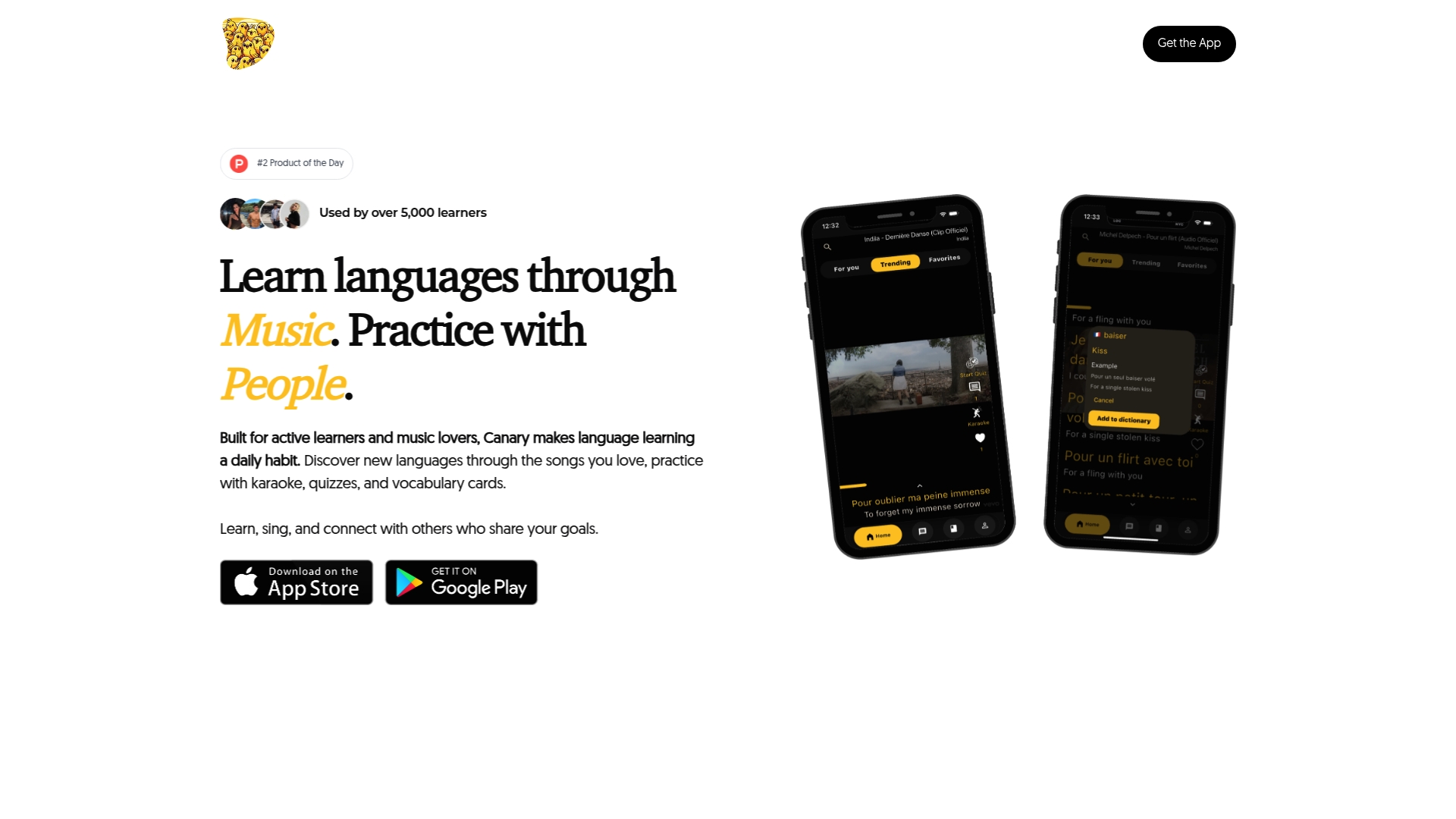
The platform combines song-based learning with karaoke, vocabulary cards, and adaptive quizzes to create the kind of multimodal, emotionally engaging experience that research consistently links to stronger retention. Learners practice pronunciation in context, build vocabulary through song lyrics, and connect with international speakers in a community-driven environment. Every feature is designed to keep learners cognitively active, not passively scrolling. If you want to see how interactive language learning works when music and social practice are built into the core, Singwithcanary is worth exploring. You can also check out the weekly song feature to experience the method firsthand.
FAQ
What are the main benefits of interactive learning methods?
Interactive learning methods improve engagement, critical thinking, and long-term retention by requiring active participation. Research shows effect sizes of Cohen’s d = 0.50–0.82 for collaborative and simulation-based tasks.
Which interactive teaching strategy is best for long-term retention?
Inquiry-based learning produces the strongest long-term retention by encouraging guided discovery and deep conceptual understanding, making it the preferred strategy when knowledge durability is the goal.
How does emotional engagement affect learning outcomes?
Emotional states like curiosity and joy strengthen long-term memory by deepening cognitive processing during the learning event. Designing for emotional engagement is as important as designing for content coverage.
Do AI-powered platforms actually improve student engagement?
Yes. Experimental research with U.S. high school students shows that AI-powered interactive platforms produce higher engagement and better learning experiences than traditional digital textbooks.
How can educators avoid cognitive overload in interactive lessons?
Build foundational knowledge through direct interactive teaching before introducing inquiry-based or problem-based methods. Students need sufficient prior knowledge to engage productively with open-ended tasks.