TL;DR:
- Social language practice is crucial for developing fluency, pronunciation, and pragmatic skills that textbooks cannot teach, because real interaction activates emotional and neurological systems for deeper retention. Engaging regularly in live conversations boosts confidence, improves pronunciation through immediate feedback, and helps learners respond naturally without mental translation. Structured programs like tandem sessions, conversation clubs, and singing in groups enhance social and pronunciation skills, emphasizing that active, authentic practice is more effective than passive study alone.
Social language practice is the most direct path to conversational fluency, pronunciation accuracy, and the pragmatic skills that textbooks cannot teach. Where formal grammar study builds a foundation, it is real human interaction that cements a language in your brain. Research on language acquisition consistently shows that social interaction drives deeper retention than passive study, because communication activates emotional and neurological systems that solo drilling simply does not reach. If you want to speak a language, you have to speak it with people.
What are the key benefits of social language practice?
The benefits of social language practice go well beyond picking up new vocabulary. Conversational fluency, the ability to respond naturally without mentally translating every word, develops almost exclusively through live interaction. When you negotiate meaning with another speaker, you adapt in real time, repair misunderstandings, and build the mental flexibility that makes conversation feel natural rather than mechanical.

Pragmatic communication skills like turn-taking, topic maintenance, and reading non-verbal cues are critical for authentic interaction. These skills are rarely taught in formal curricula, yet they determine whether a conversation flows or stalls. A learner who can conjugate every verb perfectly but cannot read when to speak or when to listen will still struggle in real conversations.
Confidence is another direct outcome. Speaking anxiety is one of the biggest barriers language learners report, and the only reliable way to reduce it is repeated, low-stakes exposure. Every conversation you complete, even an imperfect one, recalibrates your brain’s threat response to speaking. Over time, the fear shrinks and the fluency grows.
Pronunciation improves faster in social settings than in any other context. Immediate feedback prevents the fossilization of pronunciation errors, meaning a partner or peer can catch a mispronunciation before it becomes a permanent habit. This is something a language app cannot replicate with the same precision or emotional weight.
- Conversational fluency: Real-time interaction builds the mental agility to respond without translating.
- Pragmatic skills: Turn-taking, topic shifts, and reading social cues are learned only through practice with people.
- Confidence: Repeated low-stakes conversations reduce speaking anxiety measurably over time.
- Pronunciation accuracy: Social correction prevents errors from becoming ingrained habits.
- Vocabulary in context: Words learned during emotional, social moments are retained far longer than those memorized from lists.
Pro Tip: Start every social practice session with a topic you genuinely care about. Authentic interest lowers your guard, and that is when real language acquisition happens.
How does social practice compare with formal study and self-study?

Effective language learning follows a 10/30/60 ratio: 10% formal study, 30% social interaction, and 60% real-world experiential practice. This means the majority of your learning time should involve doing something with the language, not studying about it. Most learners invert this ratio, spending 80% of their time on grammar and vocabulary drills and wondering why they freeze when a native speaker talks to them.
Formal study gives you the rules. Social practice gives you the reflexes. When you study grammar alone, you are building a map of the language. When you practice socially, you are learning to drive. Both matter, but only one gets you anywhere.
Self-study apps have real value for vocabulary building and listening exposure, but they have a structural limitation: they cannot simulate the unpredictability of real conversation. A native speaker will use slang, change topics mid-sentence, and respond to your emotional tone. No app replicates that complexity. Focusing on repair of meaning rather than perfect grammar is what leads to natural acquisition, and that only happens when another person is involved.
| Method | Strengths | Limitations |
|---|---|---|
| Formal study | Grammar rules, vocabulary foundations | No real-time feedback, no pragmatic skill development |
| Self-study apps | Flexible, low-pressure, good for listening | Cannot simulate unpredictable conversation |
| Social language practice | Fluency, pronunciation, pragmatic skills, confidence | Requires scheduling and a willing partner or group |
| Experiential learning | Deepest retention, full context | Requires immersion or travel access |
Pro Tip: Use formal study and apps to prepare for social sessions, not to replace them. Spend 10 minutes reviewing vocabulary before a conversation club meeting and you will use those words naturally within the hour.
What are effective methods for structured social language practice?
The most structured form of collaborative language learning is the linguistic tandem program. In a tandem, two speakers with opposite native languages meet regularly to practice each other’s target language. Tandem programs require at least 5 sessions over 8 weeks to build consistent progress. That structure matters because it creates accountability, which is the ingredient most informal practice arrangements lack.
Typical tandem sessions last about 1 hour, split equally so each participant gets 30 minutes in their target language. This format is deceptively effective. You are not just practicing speaking. You are also practicing listening, correcting, explaining, and teaching, all of which reinforce your own language knowledge.
Beyond tandems, here are four practical methods ranked by accessibility:
- Conversation clubs and language cafes: Low-pressure group settings where learners meet around shared topics. Many cities host free weekly meetups through platforms like Meetup.com or local libraries.
- Structured group classes with conversation focus: Unlike grammar-heavy courses, these prioritize speaking time and peer interaction. Look for classes where you spend more than 50% of the session talking.
- Online language exchange communities: Platforms connecting learners globally allow you to practice from home, which removes the logistical barrier entirely.
- Music-based social practice: Singing songs in your target language with others combines pronunciation drilling with emotional engagement. Singwithcanary uses this approach specifically to make social practice through music feel natural rather than academic.
Social practice works best without a formal curriculum, with sessions built around shared interests rather than grammar exercises. When you talk about something you care about, you stop monitoring every word and start communicating. That shift is where real fluency begins.
| Method | Frequency recommendation | Best for |
|---|---|---|
| Linguistic tandem | 5+ sessions over 8 weeks | Pronunciation and pragmatic skills |
| Conversation club | Weekly | Confidence and vocabulary in context |
| Online exchange | 2 to 3 times per week | Flexible scheduling, global exposure |
| Music-based practice | Daily short sessions | Pronunciation, rhythm, and retention |
How does social practice sharpen pronunciation and natural rhythm?
Pronunciation is not just about producing the right sounds. It is about timing, intonation, stress patterns, and the rhythm that makes speech sound natural rather than robotic. These elements are almost impossible to acquire from a textbook because they exist in the space between words, not in the words themselves.
Social interaction triggers dopamine release, which enhances learning retention through emotional bonding. This neurological response means that sounds and phrases learned during a real conversation with another person are encoded more deeply than those repeated in isolation. Your brain tags socially learned language as meaningful, and meaningful information is retained longer.
Mimicry is one of the most powerful pronunciation tools available, and it works best in social settings. When you hear a native speaker use a particular intonation pattern and immediately try to replicate it in the same conversation, your brain processes both the model and your attempt in close succession. That tight feedback loop accelerates correction in ways that delayed self-study cannot match.
Low-pressure environments are not just more comfortable. They are neurologically more effective. Low-pressure social environments enable learners to overcome fear of speaking mistakes, which promotes sustained interaction and faster natural rhythm acquisition. Anxiety constricts the vocal tract and disrupts timing. Relaxed conversation opens both.
Music adds another dimension to this process. Song lyrics expose you to natural stress patterns, contractions, and connected speech in a format that is both repetitive and emotionally engaging. Singwithcanary’s karaoke and lyric-based features let you practice pronunciation through song in a social context, combining the neurological benefits of music with the feedback loop of shared interaction. The result is pronunciation improvement that feels less like drilling and more like performing.
Key takeaways
Social language practice is the most effective method for building conversational fluency, pronunciation accuracy, and pragmatic skills because it activates the brain’s emotional retention systems in ways that solo study cannot replicate.
| Point | Details |
|---|---|
| Social practice drives fluency | Real-time interaction builds the mental reflexes that grammar study alone cannot develop. |
| Pragmatic skills require people | Turn-taking, topic maintenance, and reading social cues are only learned through live conversation. |
| Pronunciation needs live feedback | Immediate correction from a partner prevents errors from becoming permanent habits. |
| Structure improves outcomes | Tandem programs with at least 5 sessions over 8 weeks produce consistent, measurable progress. |
| Music amplifies social learning | Song-based practice combines emotional engagement with pronunciation drilling for deeper retention. |
Why I think most learners are practicing in the wrong order
Most language learners I have observed treat social practice as the reward at the end of a long study process. They plan to start speaking “once they know enough.” That threshold never arrives, because the knowledge they are waiting for can only be built through the practice they are postponing.
The learners who progress fastest are not the ones with the best grammar notes. They are the ones who started speaking badly and kept going. Every awkward conversation is a data point. Every correction from a patient partner is worth more than an hour of solo review. The discomfort of not knowing the right word mid-sentence is exactly the cognitive pressure that forces your brain to find a solution and remember it.
I have also noticed that perfectionism is the single biggest obstacle in social language practice. Learners who focus on saying things correctly speak less, get less feedback, and improve more slowly than those who focus on being understood. The goal of a conversation is not grammatical accuracy. It is successful communication repair, the ability to fix a misunderstanding and keep the exchange moving. That skill is worth more than a perfect subjunctive.
Technology is genuinely useful, but it cannot replace the human element. The dopamine hit from a real laugh shared with a conversation partner, the satisfaction of finally being understood in a second language, these are not features you can build into an app. They are what make language learning stick. Start the conversation before you feel ready. That is the only advice that actually works.
— Ben
How Singwithcanary makes social language practice engaging
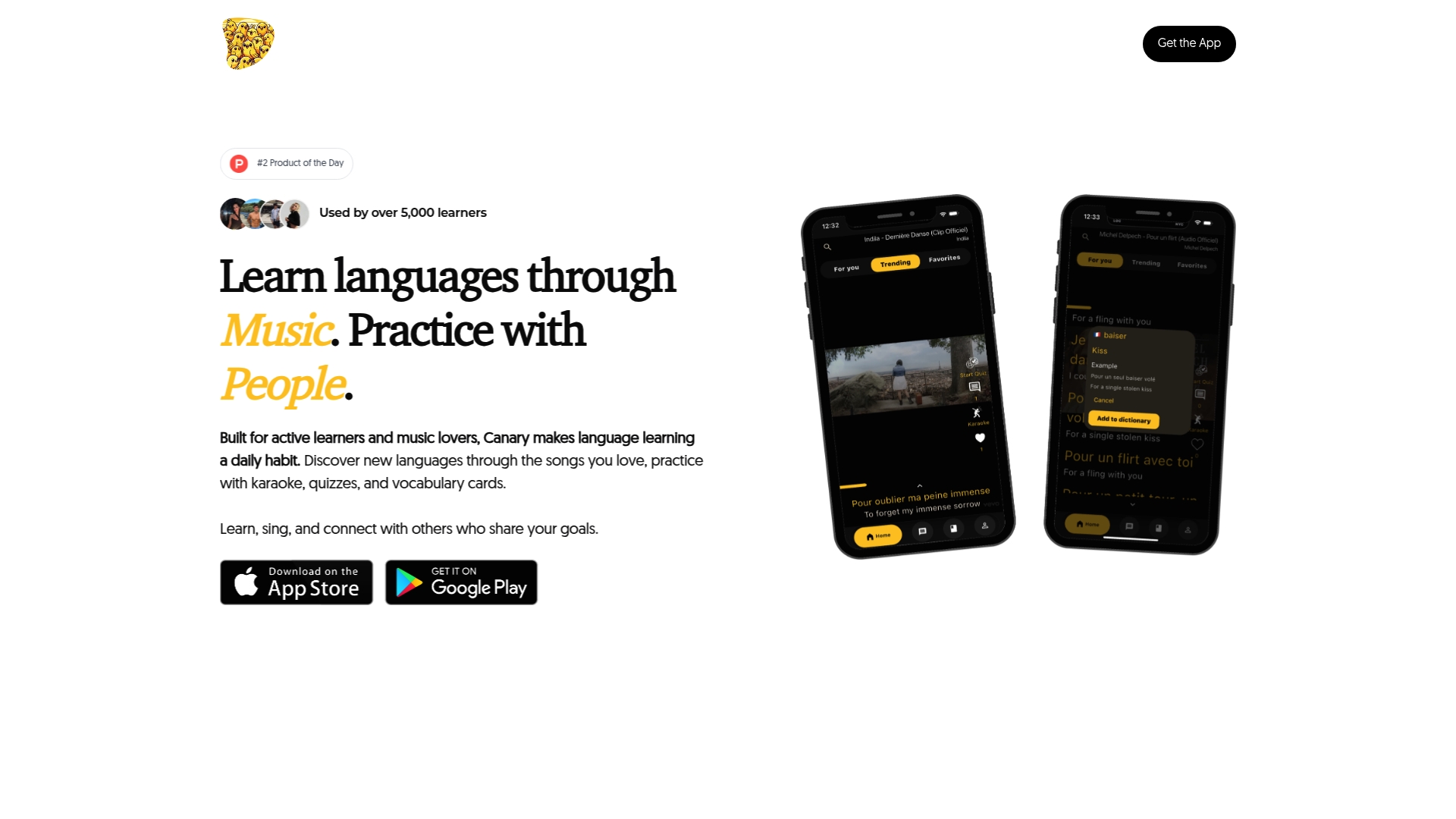
Singwithcanary combines music and social interaction to make language practice something you actually look forward to. The platform’s karaoke features, vocabulary cards, and lyric-based quizzes let you practice pronunciation and natural speech rhythms in a low-pressure, community-driven environment. You are not just studying a language. You are performing it with people from around the world. For learners who want a practical, music-infused approach to social language learning, Singwithcanary offers a genuinely different experience. Explore the platform and start building the conversational confidence that solo apps cannot give you.
FAQ
What are the main benefits of social language practice?
Social language practice improves conversational fluency, pronunciation, pragmatic skills like turn-taking, and speaking confidence. It also triggers dopamine release during interaction, which deepens retention compared to solo study methods.
How often should I practice a language socially?
Consistency matters more than duration for sustained progress. Two to three short social sessions per week outperform one long session, because regular engagement builds both skill retention and confidence over time.
Can music count as social language practice?
Yes. Singing songs in your target language, especially with others, exposes you to natural pronunciation patterns, connected speech, and emotional context. Platforms like Singwithcanary use music-driven group practice to combine these benefits with real social interaction.
What is a linguistic tandem and how does it work?
A linguistic tandem pairs two speakers with opposite native languages who take turns practicing each other’s target language. Sessions typically last one hour, split equally, and programs recommend at least five sessions over eight weeks for measurable progress.
Is social practice better than using a language learning app?
Social practice and apps serve different purposes. Apps build vocabulary and listening skills efficiently, but they cannot replicate the unpredictability, emotional engagement, or pragmatic skill development that comes from real conversation with another person.