TL;DR:
- Group language learning benefits from structured activities like role-plays, conversation circles, and information-gap tasks that promote interaction and reduce anxiety. Incorporating varied tasks, clear roles, and recasting feedback fosters balanced participation and enhances fluency across all levels. Using music and peer collaboration creates engaging, social environments that improve pronunciation, vocabulary retention, and spontaneous speaking skills.
Group language learning is defined as any structured practice where two or more learners collaborate to develop speaking, listening, vocabulary, or pronunciation skills through shared tasks. The best group language learning ideas combine interaction, variety, and clear structure to produce measurably better outcomes than solo study. Collaboration distributes cognitive load, making complex language tasks more manageable and reducing the anxiety that kills progress. This article covers the most effective group activities, how to match them to skill levels, and how to keep every participant talking.
1. Best group language learning ideas: role-play scenarios
Role-play is the single most transferable group activity because it forces learners to produce language under realistic pressure. Pairs or small groups act out scenarios like ordering food, negotiating a price, or handling a complaint. The communicative goal takes priority over grammar accuracy, which shifts focus to task completion and drives more spontaneous, natural speech. That shift is the difference between rehearsed sentences and real fluency.

Set up role-plays with clear context cards. One person gets the customer card, another gets the shop assistant card, and each card contains only the information that person would realistically know. This forces genuine back-and-forth rather than scripted exchanges.
2. Conversation circles with structured prompts
Conversation circles place three to six learners around a shared topic, with each person assigned a role: starter, questioner, summarizer, or devil’s advocate. A LingTera study of 15 graduate students found that structured roles like these equalize speaking time and prevent one confident speaker from dominating the group. That matters because quiet learners get the most from sessions where they are required to contribute.
Use a timer set to 90 seconds per speaker. When the timer ends, the questioner must ask one follow-up question before the next person speaks. This single rule doubles the listening practice in any session.
3. Information-gap tasks
Information-gap tasks give each learner a different piece of information, and the group can only complete the task by sharing what they know. Partner tasks with complementary information require follow-up questions, detail confirmation, and real-time repair of misunderstandings. That process is exactly what happens in authentic conversation, which makes information-gap tasks one of the most efficient group language practice ideas available.
A simple version: give each person a partially completed schedule, map, or story. They must ask questions to fill in the gaps without showing their sheet to anyone else. The constraint forces precise language use.
4. Project-based tasks like Dragon’s Den
Dragon’s Den style projects ask small groups to pitch a product or idea to a panel of “investors.” Experts cite negotiation and task outcome as the primary drivers of authentic interaction and fluency in this format. Learners stop thinking about conjugations and start thinking about persuasion, which produces the kind of extended, spontaneous speech that drills never achieve.
This format works especially well for intermediate and advanced groups. Beginners can use a simplified version where they pitch a favorite food, movie, or travel destination using a prepared vocabulary list as scaffolding.
5. Vocabulary games: charades, Taboo, and Kahoot
Games like charades, Taboo, and Kahoot quizzes make vocabulary recall feel competitive rather than tedious. Charades builds gesture-based comprehension and forces learners to describe concepts without using the target word. Kahoot adds a digital leaderboard that raises energy in both in-person and virtual sessions. These fun language learning activities work because they attach emotional memory to vocabulary, which improves retention.
Pro Tip: Run a Kahoot round using only vocabulary from the previous week’s conversation circle. Recycling words in a new context is one of the fastest ways to move them from short-term to long-term memory.
6. Storytelling rounds and collaborative narratives
Storytelling rounds work by having each person add one or two sentences to a shared story. The first person sets the scene, the second introduces a character, the third adds a problem, and so on. This format practices speaking, listening, and real-time comprehension simultaneously. It also generates genuine laughter, which lowers the anxiety that makes learners freeze mid-sentence.
For written practice, use a shared Google Doc where each person types their contribution in a different color. The visual record lets the group review grammar patterns and vocabulary choices after the session ends.
7. Jigsaw reading and peer teaching
Jigsaw reading divides a text into sections, with each learner reading only their portion and then teaching it to the group. This method builds reading comprehension, speaking confidence, and listening skills in a single activity. Learners who know they must explain their section read more carefully and retain more. The teaching moment also forces them to paraphrase, which is one of the most underrated fluency skills.
Pair jigsaw reading with a group discussion question that requires combining information from all sections. That final synthesis step is where the deepest language processing happens.
8. Matching activities to skill level and learning goal
Not every activity suits every group. Well-scaffolded group work increases confidence and accuracy for beginners without overwhelming them, which means starting with predictable formats like vocabulary bingo or question-and-answer drills before moving to open-ended discussion.
| Activity | Best skill focus | Ideal level |
|---|---|---|
| Role-play | Speaking, listening | Intermediate to advanced |
| Vocabulary bingo | Vocabulary recall | Beginner |
| Information-gap tasks | Speaking, questioning | Beginner to intermediate |
| Jigsaw reading | Reading, speaking | Intermediate to advanced |
| Dragon’s Den pitch | Fluency, persuasion | Advanced |
| Storytelling rounds | Speaking, listening | All levels |
| Kahoot quiz | Vocabulary, review | All levels |
Pro Tip: Scaffold complexity by giving beginners a sentence frame (“I think… because…”) for the same discussion prompt that advanced learners tackle without support. One activity, two levels, zero extra preparation.
9. Managing group dynamics and participation equity
The most common failure in group language sessions is unequal speaking time. Timed partner rotations and prompt sheets reduce awkward silences and promote balanced speaking in language exchanges. Structured variety and clear formats also reduce anxiety, especially in mixed-level or virtual groups where learners feel more exposed.
Three practical tools for balanced participation:
- Assign roles before every session. Rotate them each week so every learner practices every function.
- Use a talking token. Each person holds a physical or virtual token. You must use your token before anyone can speak a second time.
- Apply the 10-minute rule. Rotating activities every 10 minutes maintains engagement in virtual group lessons by mixing teacher talk, student talk, and pair or team tasks.
For feedback, use recasting instead of direct correction. Recasting repeats the correct form as a natural question or response, maintaining flow and learner motivation better than stopping to explain an error. If a learner says “Yesterday I go to the market,” you respond with “Oh, you went to the market? What did you buy?” The correction lands without the embarrassment.
10. Choosing activities by context and goal
The right activity depends on your group’s setting, size, and specific language goal. Virtual groups need more structure because silence reads as technical failure online. In-person groups can handle more open-ended formats because body language fills the gaps.
| Context | Recommended activity | Primary benefit |
|---|---|---|
| Online exchange, 2-4 people | Timed conversation circles | Balanced speaking time |
| Classroom, 10+ learners | Jigsaw reading, Kahoot | Engagement, comprehension |
| Informal meetup | Storytelling rounds, charades | Low anxiety, vocabulary |
| Pronunciation focus | Role-play with audio playback | Accent awareness |
| Fluency focus | Dragon’s Den pitch | Extended spontaneous speech |
For pronunciation specifically, interactive group practice using music adds a dimension that conversation alone cannot. Songs lock pronunciation patterns into memory through rhythm and repetition, and group singing removes the self-consciousness of practicing sounds alone.
Social interaction accelerates language acquisition because it creates the unpredictable, real-time demands that textbooks cannot replicate. The best group language learning strategies always include at least one activity that requires learners to respond to something they did not prepare for.
Pro Tip: For themed sessions, build a playlist ideas for language growth around the session topic. If the theme is travel, play songs about cities or journeys before the session starts. Music primes vocabulary and sets the emotional tone before a single word of practice begins.
Key takeaways
The most effective group language learning combines structured roles, varied activity formats, and feedback methods that protect learner confidence while improving accuracy.
| Point | Details |
|---|---|
| Structure prevents dominance | Assign roles like starter, questioner, and summarizer to equalize speaking time every session. |
| Match activity to level | Beginners need predictable formats; advanced learners need open-ended, spontaneous tasks. |
| Recasting beats correction | Repeat the correct form naturally in your response instead of stopping to correct errors directly. |
| Rotate every 10 minutes | Switching formats at 10-minute intervals sustains attention and participation in virtual and in-person groups. |
| Collaboration reduces anxiety | Group tasks distribute cognitive load, making complex language processing less overwhelming for every learner. |
Why I think most group sessions underperform
Most group language sessions fail not because of bad activities but because of missing structure. I have watched confident speakers take over a conversation circle within three minutes while quieter learners check their phones. The fix is not a better activity. It is a role card and a timer.
The other mistake I see constantly is treating feedback as a separate event. When a facilitator stops the group to correct a grammar point, the session loses momentum and the learner loses face. Recasting solves both problems. It is the most underused tool in group language learning, and it costs nothing to implement.
Collaboration in trios is worth calling out specifically. A study of 82 international students found that working in groups of three stabilized cognitive performance to near-native levels during language tasks. Two people is often not enough peer support. Four or more dilutes accountability. Three is the number that actually works, and most facilitators never think about group size at all.
My honest recommendation: run one role-play, one information-gap task, and one game per session. Rotate roles every week. Use recasting for every error. That formula outperforms any single “best” activity because variety and structure together are what actually build fluency.
— Ben
Practice with music and real people on Singwithcanary
Singwithcanary takes the best group language learning ideas and adds music, making pronunciation practice feel like entertainment rather than work. The platform combines karaoke, vocabulary cards, and quizzes with a global community of learners so you practice with real people, not just recordings.
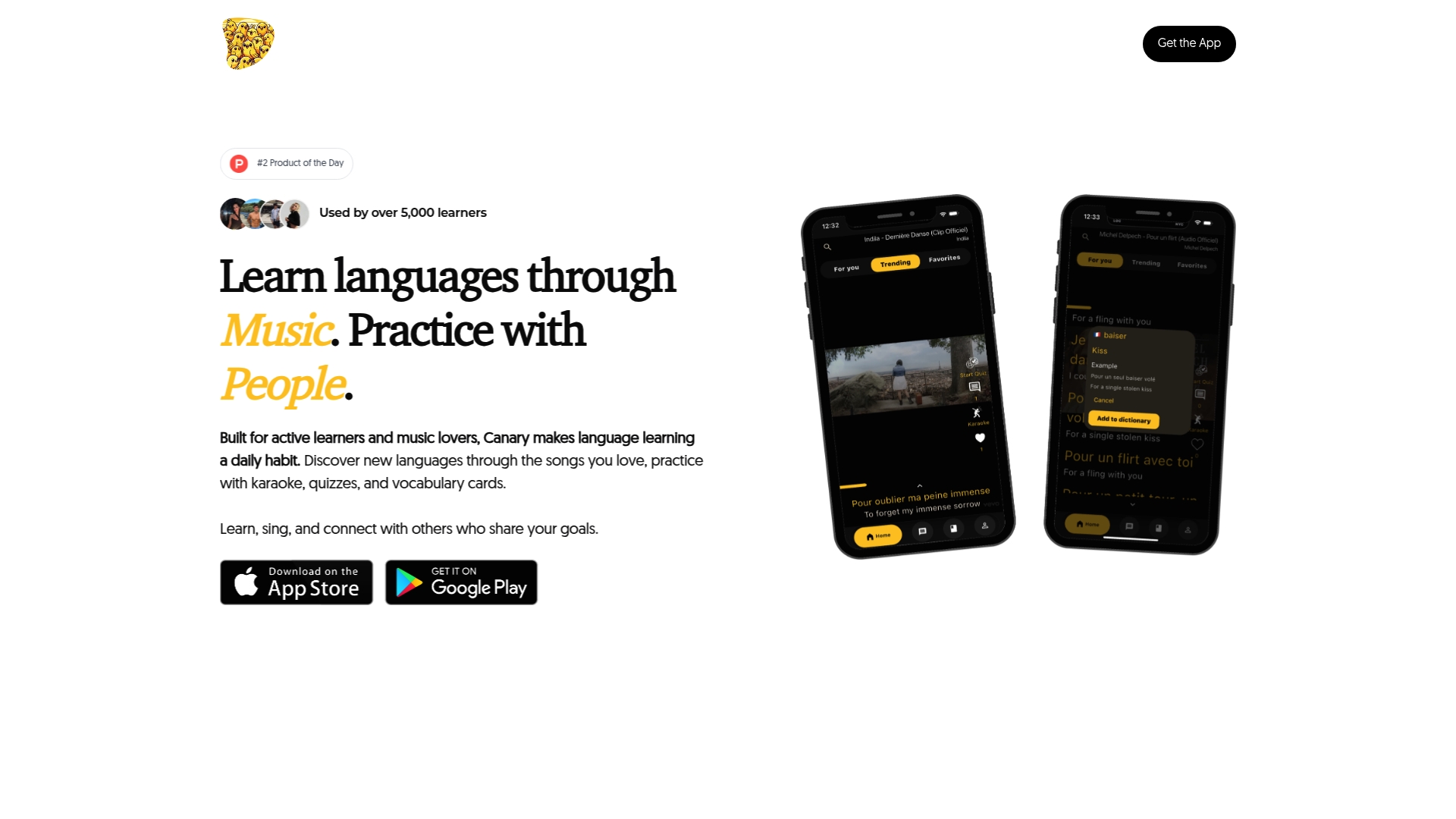
Whether you are working on accent reduction, vocabulary retention, or building the confidence to speak spontaneously, Singwithcanary gives you the social and musical context that group study alone cannot. Explore interactive collaborative learning on the platform, or check out the best language learning apps guide to find the right tools for your group. Start learning with music at Singwithcanary today.
FAQ
What are the best group language learning ideas for beginners?
Beginners benefit most from highly structured activities with predictable patterns, such as vocabulary bingo, question-and-answer drills, and simple role-plays with sentence frames. These formats build confidence and accuracy without overwhelming learners with open-ended demands.
How do you keep everyone participating in a group language session?
Assign structured roles before each session and use a timer to limit individual speaking turns. Rotating partner pairings and applying the 10-minute rule to switch activity formats also prevent any one person from dominating the group.
What is recasting and why does it work for group language learning?
Recasting is a feedback method where the facilitator repeats a learner’s error in correct form as a natural part of the conversation, without stopping to explain the mistake. It maintains communication flow and protects learner motivation better than direct correction.
How does collaboration reduce language learning anxiety?
Group tasks distribute cognitive load across participants, making complex language processing less demanding for each individual. A study of 82 international students confirmed that trio collaboration stabilizes cognitive performance to near-native levels during language tasks.
Can music be used as a group language learning strategy?
Music reinforces pronunciation, vocabulary, and rhythm patterns through repetition, making it one of the most effective tools for group practice. Platforms like Singwithcanary combine song-based learning with social interaction to build speaking confidence in a shared, low-pressure environment.