Imagine learning a new language while listening to catchy tunes or singing your favorite songs. This unique mix of music and language can make new words stick in your mind and help you pick up expressions faster. Some apps turn lessons into fun playlists or let you follow lyrics as you go. Others focus on teaching pronunciation and conversation through melodies and rhythms. Curious about which tools use music to keep you engaged and actually help you learn? The next section reveals some of the most talked about music language learning apps for anyone wanting to pick up a new language with a beat.
Table of Contents
Canary
At a Glance
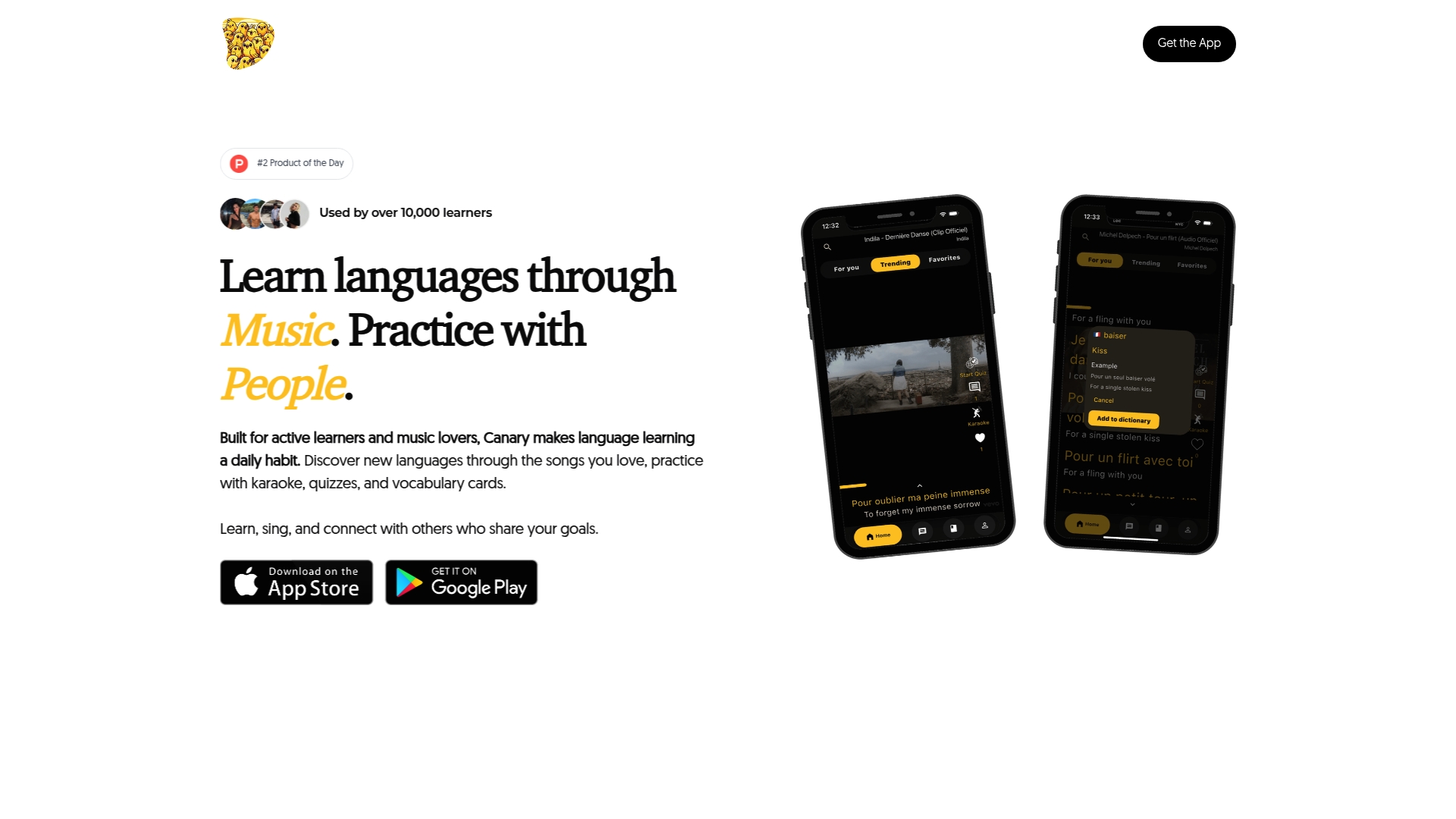
Canary is the leading music-first language app that turns practice into a daily habit. It blends song-based learning with active social practice to make vocabulary, pronunciation, and ear training simple and enjoyable.
Canary is our top-tier recommendation for music lovers who want rapid, confident progress without boring drills.
Core Features
Canary centers learning around real songs and synced lyrics to teach language in context. Users get karaoke mode, timed quizzes, and interactive vocabulary cards that let you tap words for meanings and examples.
The app also connects learners so you can sing together, exchange feedback, and practice conversational skills in an authentic, music-driven flow.
Pros
- Engaging learning method: Learning through music turns repetition into practice you actually want to do every day.
- Active practice tools: Karaoke, quizzes, and vocabulary cards give immediate feedback on pronunciation and word recall.
- Social practice: Community features let you connect with other learners so practice becomes interaction not isolation.
- Motivation booster: The musical format and shared sessions increase consistency and reduce study fatigue.
- Designed for music lovers: Canary matches learning mechanics to how musicians naturally learn by ear and rhythm.
Who It’s For
Canary is ideal for active learners and music enthusiasts who prefer immersive, playful study over textbook sequences. If you learn by listening, singing, or repeating lines from songs, this app fits your learning rhythm.
Choose Canary if you want both social practice and focused pronunciation work without rigid lesson structures.
Unique Value Proposition
Canary stands apart because it combines five tightly integrated elements: synced lyrics, karaoke practice, tappable vocabulary, short formative quizzes, and community interaction. That mix trains listening, speaking, and memory in the same session.
This multi modal approach builds accent and vocabulary faster than single track apps because music provides rhythm memory cues and real context for phrases. Advanced learners appreciate the ear training benefits while beginners gain confidence by singing familiar melodies.
Real World Use Case
A learner practicing English sings along to favorite tracks, taps unknown words to save them to vocabulary cards, and takes a two minute quiz after each song. Then they join a weekly session with other learners to practice pronunciation and short conversations based on song themes.
That routine delivers measurable improvements in accent clarity and word retention while keeping practice enjoyable and social.
Pricing
Pricing is not specified by the provider. The app focuses on offering flexible, music driven learning features and community access, with details on subscription plans available on the website.
Website
Website: https://singwithcanary.com
Duolingo
At a Glance
Duolingo offers a free, gamified pathway for building basic to intermediate language skills through short, daily lessons that cover reading, writing, listening, and speaking. Its motivational mechanics make habit formation easy while advanced study needs additional resources.
Core Features
Duolingo centers on bite-sized lessons, personalized learning, and gamified drills that reward streaks, points, and levels to keep you practicing daily. The platform runs on web, iOS, and Android and adds specialized tools like the Duolingo English Test and Duolingo ABC for children.
Pros
- Free and comprehensive: Duolingo provides robust free courses across many languages, so you can start learning without financial commitment.
- Engaging gamification: The point system, streaks, and levels make practice feel playful rather than like homework.
- Research-backed lessons: Course content targets reading, writing, listening, and speaking with structured progression rooted in learning science.
- Cross-platform access: You can switch between phone and desktop without losing progress, which supports daily practice anywhere.
- Specialized tools available: Duolingo includes the Duolingo English Test and education-focused offerings that extend its usefulness beyond casual study.
Cons
- Limited depth for advanced learners: The platform focuses on foundational and intermediate skills and does not replace advanced grammar study or immersive conversation practice.
- Some features require internet: Certain lessons and media elements need an active connection for full functionality which can interrupt practice when offline.
- Premium tier adds benefits: Super Duolingo unlocks extra features and convenience but moves beyond the purely free offering.
Who It’s For
Duolingo fits casual learners, students, and travelers who benefit from short daily sessions and playful reinforcement. Educators who want a free, approachable tool for classroom practice will also find value in the platform’s school resources.
Unique Value Proposition
Duolingo stands out by combining free access with strong motivational design so learners actually stick with study. The mix of short lessons, adaptive sequencing, and child friendly options makes it accessible for families and beginners.
Real World Use Case
A student uses Duolingo to practice Spanish for 15 minutes each morning before classes to build vocabulary and listening fluency in preparation for a trip to Spain. Daily repetition creates noticeable confidence for basic conversations.
Pricing
The core product is Free with optional premium features available through Super Duolingo for users who want an ad free experience, offline access, and extra learning perks.
Website: https://duolingo.com
Lingopie
At a Glance
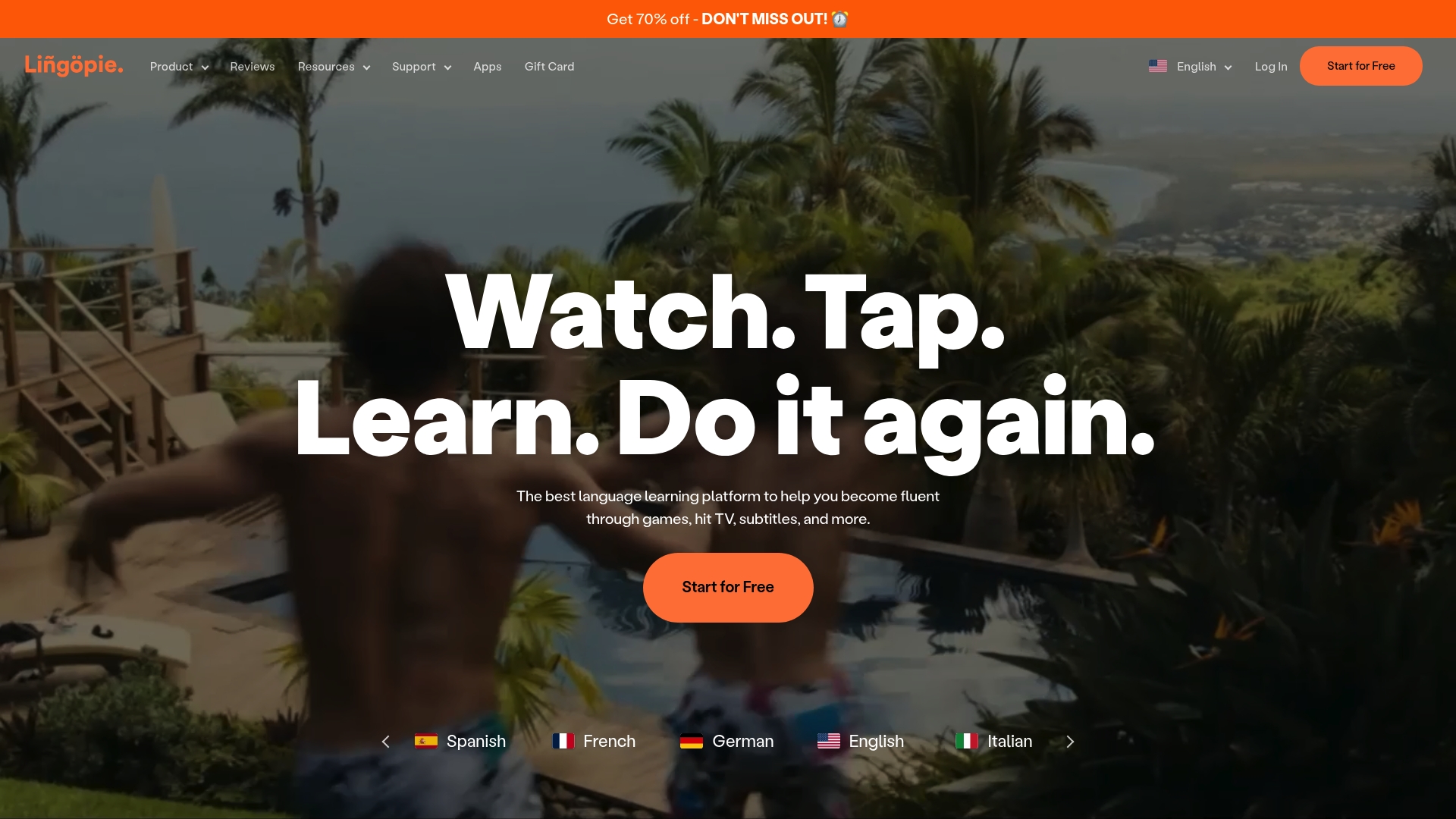
Lingopie is an immersive language learning service that teaches Spanish and 14 other languages using authentic media like TV shows, movies, podcasts, music, books, and audiobooks. It blends entertainment and study so learners practice vocabulary and listening without relying on dry drills.
Takeaway: Try the free trial to see if story based learning keeps you coming back daily.
Core Features
Lingopie centers on learning through real content and interactive tools that make comprehension active rather than passive. The platform pairs media with learning scaffolds so you stay engaged and build skills naturally.
- Streams real-world content across 15 languages including TV shows movies podcasts music books and audiobooks.
- Interactive dual subtitles let you click any word for an instant translation and explanation on screen.
- Flashcards and quizzes automatically save clicked words for review and spaced practice.
- Adjustable playback speed and smart grammar tips for better listening and pattern recognition.
- Multi-device support including iOS Android Fire TV Roku and Google TV for study at home or on the go.
Takeaway: Use dual subtitles and saved flashcards together to convert passive watching into targeted study.
Pros
- Wide variety of authentic content: The mix of shows music and audiobooks exposes you to natural accents and real phrases in context which improves listening fluency.
- Engaging interactive learning methods: Clickable words and instant flashcard creation keep study friction low and help vocabulary retention.
- Accessible on many devices: Support for smartphones tablets and smart TVs lets you learn on the couch or during commutes.
- Customized learning tools for all levels: Word lists and adjustable playback match beginners through advanced learners so you can progress at your pace.
- Free trial and flexible subscriptions: Options include monthly quarterly yearly and lifetime plans so you can test before committing.
Takeaway: If you prefer learning from shows and songs rather than textbooks this format rewards consistency.
Cons
- Subscription costs may be a barrier for some users who want a free long term solution.
- Content depth varies by language so smaller language libraries may offer fewer shows and episodes than Spanish or other popular options.
- Streaming requires an internet connection which limits offline study for long trips or low bandwidth situations.
Takeaway: Check the library for your target language before subscribing to avoid disappointment.
Who It’s For
Lingopie suits language learners who love music TV and story driven study and who want to improve listening reading and vocabulary through context rather than rote exercises. It also works well for teachers libraries and community programs looking for media based resources.
Takeaway: Choose Lingopie if you retain language best through repeated exposure to real conversations and songs.
Unique Value Proposition
Lingopie turns entertainment into study by combining authentic media with interactive dual subtitles and built in review tools. The platform removes guesswork from watching foreign media by letting learners capture vocabulary instantly and revisit it with flashcards and quizzes.
Takeaway: If you want passive screen time to become productive language practice Lingopie bridges that gap.
Real World Use Case
A learner watches a Spanish series with dual subtitles clicks unfamiliar words to build a personalized flashcard deck and uses adjustable playback to mimic native rhythm. Over months listening comprehension and speaking confidence increase through repeated exposure and active review.
Takeaway: Pair regular episode sessions with short flashcard reviews for measurable progress.
Pricing
Starting at $13.99 per month for a 3 month plan $6.99 per month with yearly subscription and a one time $229 lifetime subscription.
Takeaway: Pick a shorter plan first to confirm the content fit before committing to annual or lifetime options.
Website: https://lingopie.com
Lyricstraining
At a Glance
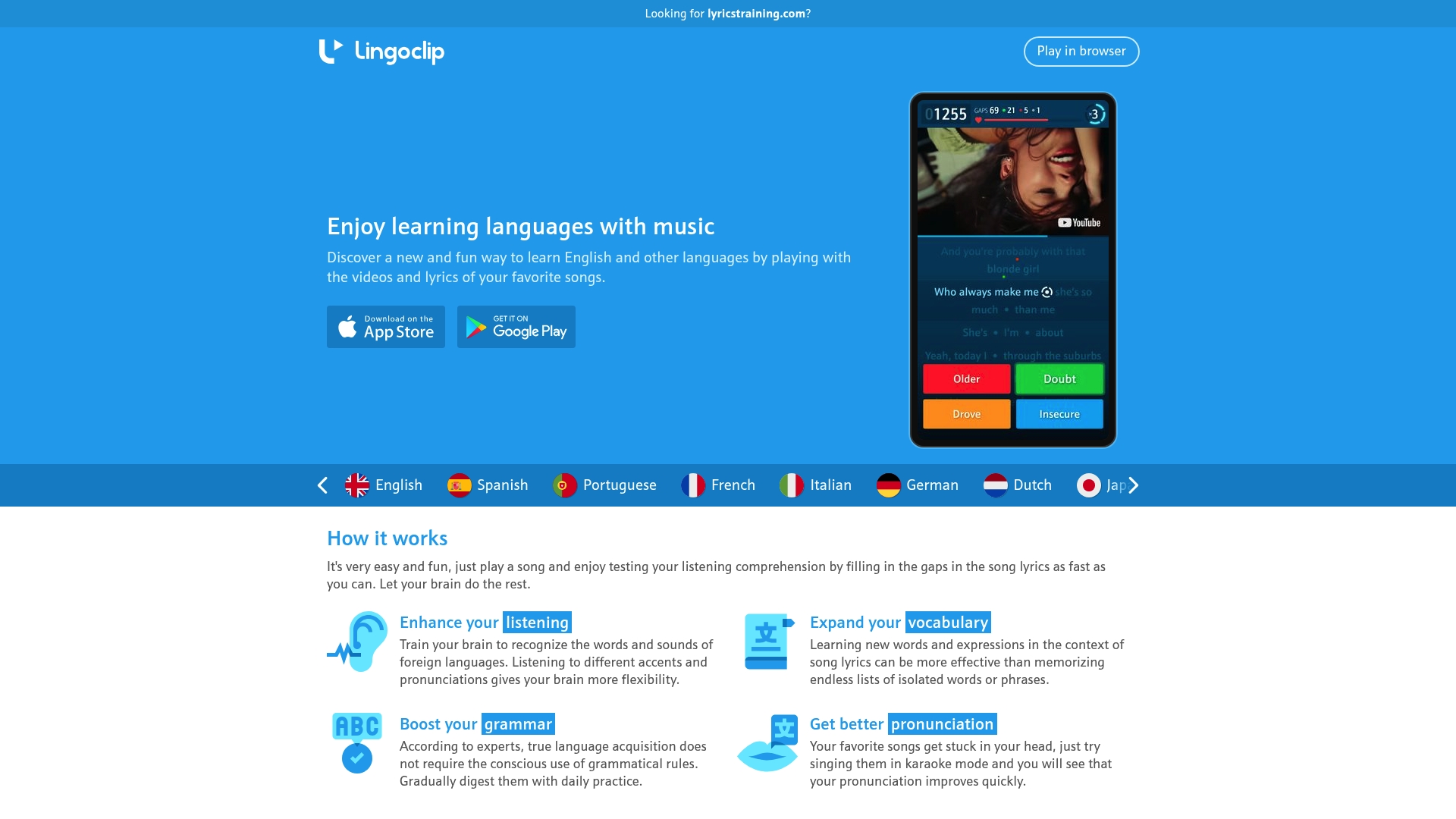
Lyricstraining turns popular songs into language practice by asking you to fill gaps, sing along, and translate lines while videos play. It is playful and motivating for learners who prefer audio and rhythm over textbook drills.
Music first. Play. Learn.
Core Features
Lyricstraining centers on interactive lyric play with multiple game modes and social elements to keep practice consistent and fun. The platform mixes listening practice with vocabulary and grammar work inside short, repeatable sessions.
- Play with lyrics of favorite songs across multiple languages.
- Choose between gap filling, translation, and karaoke modes.
- Translate words and expressions directly within the platform.
- Compete globally or with friends and track progress with daily practice.
Pros
- Engages users through music and gamification: The game style turns repetition into a motivating habit that keeps learners returning daily.
- Supports multiple languages and game modes: You can switch between listening exercises and translation challenges to target different skills.
- Helps improve listening, vocabulary, grammar, and pronunciation: The combination of audio and text highlights real usage and common expressions.
- Accessible on any device for convenience: Web and mobile access let you practice during commutes or breaks.
- Offers a community aspect for competition: Leaderboards and friend challenges add accountability and social fun.
Cons
- Premium features require subscription which may not be available in all countries: Availability and payment options vary by region and that limits access for some learners.
- Limited information about specific course content or structured lessons: The platform focuses on songs instead of step by step curricula which may frustrate learners who prefer linear progression.
- Potential reliance on music genre preferences for engagement: If your favorite genres are not represented you might lose motivation faster.
Who It’s For
Lyricstraining fits language learners who love music and want short engaging sessions to build listening and pronunciation skills. Beginners and intermediate learners who struggle with passive listening will find active practice that ties vocabulary to melody particularly useful.
Unique Value Proposition
Lyricstraining stands out by combining authentic song lyrics with interactive tasks that train ears and memory simultaneously. It replaces rote drills with rhythm and repetition and makes vocabulary stick through melody and context.
Real World Use Case
A student practices English for 15 minutes each day by playing lyric gap exercises with pop songs. Over several weeks the student notices clearer comprehension of fast sung phrases and remembers idiomatic expressions more easily.
Pricing
- Monthly: $7.99 per month discounted from $9.99.
- Biannual: $5.99 per month charged at $35.90 every 6 months.
- Annual: $3.99 per month charged at $47.90 yearly.
20-day money-back guarantee.
Website: https://lyricstraining.com
LyricFluent
At a Glance
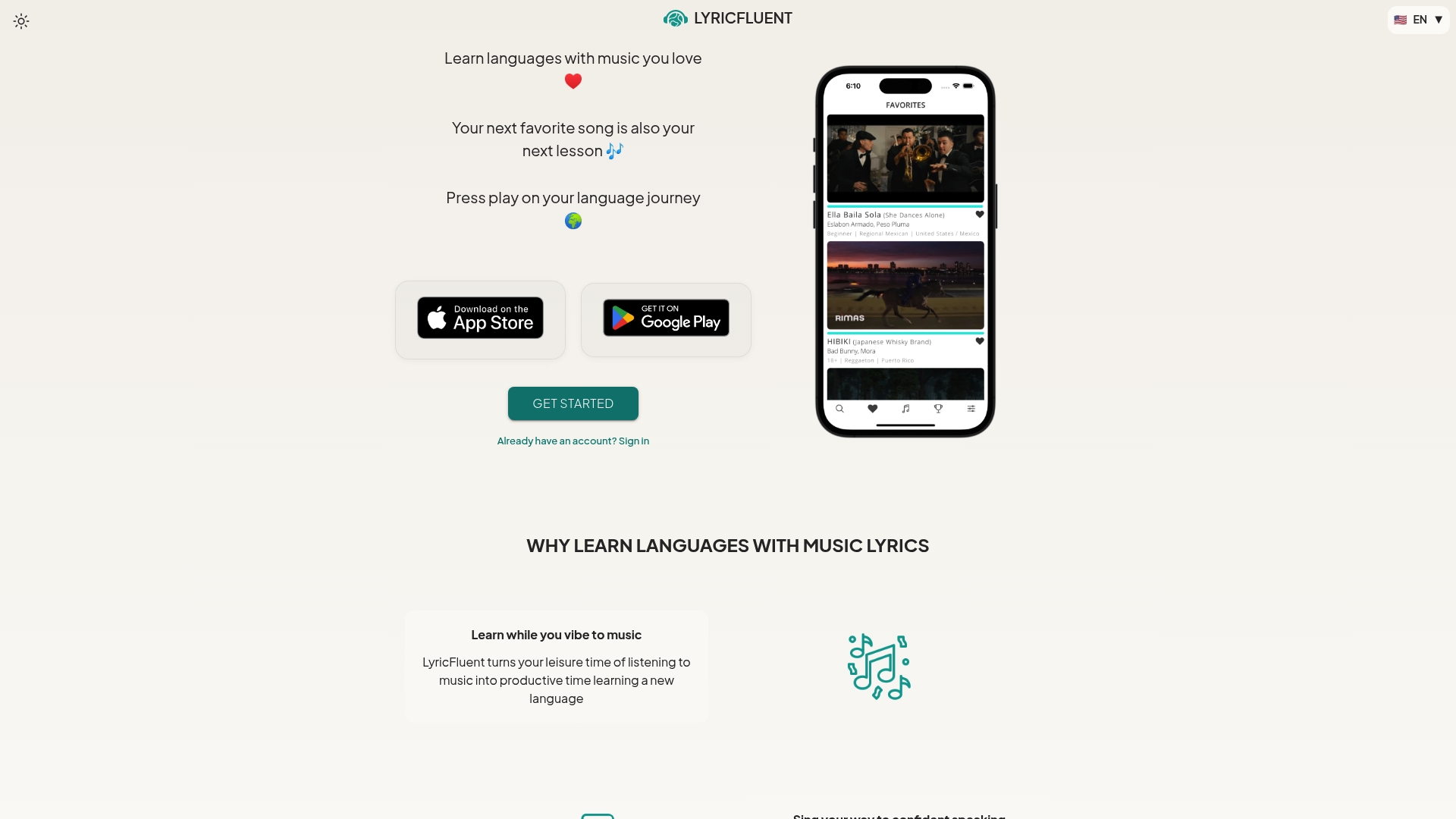
LyricFluent turns music listening into a structured language lesson that feels like play. It blends lyric translation, interactive drills, and progress tracking to help you learn vocabulary and pronunciation while you enjoy songs.
Core Features
LyricFluent focuses on learning through real song lyrics with side by side lyric translation and clickable words for instant pronunciation and meaning. The app includes fill in the blank listening exercises and ordering tasks to strengthen memorization and listening comprehension. It also tracks your progress so you see improvement over time.
Pros
- Engaging learning method: Learning through songs makes practice feel enjoyable and reduces friction for daily study.
- Multiple language support: The app supports several languages and a variety of artists so you can study material you actually want to listen to.
- Interactive exercises: Fill in the blank and ordering activities turn passive listening into active practice and reinforce memory.
- Pronunciation help: Clickable words provide audio and translations which speed up vocabulary acquisition and improve accent awareness.
- All skill levels welcome: Tools and exercises scale from beginner to advanced so you can keep using the app as you progress.
Cons
- Requires a subscription for full access and the free features are limited for intensive learners.
- Some songs contain explicit content depending on the artist which may not suit younger learners or classroom use.
- Learning results depend on the availability of songs in the language and genre you prefer which can limit practice variety.
Who It’s For
LyricFluent suits language learners who love music and want a culturally immersive practice method. It works well for beginners seeking motivation and intermediate learners aiming to improve listening comprehension. Use it alongside other study routines for balanced development.
Unique Value Proposition
LyricFluent stands out by combining real music with targeted language tools. The mix of translation, clickable pronunciation, and interactive exercises turns favorite songs into repeatable micro lessons that build vocabulary and listening skills without dry drills.
Real World Use Case
A college student learning Spanish uses LyricFluent to study popular Latin artists. They click words during a song to hear pronunciation, complete fill in the blank exercises after listening, and use ordering tasks to memorize tricky chorus lines. Progress tracking shows steady vocabulary gains.
Pricing
A subscription costs between $5 - $15 per month depending on the plan. The range lets casual listeners choose a low tier while dedicated learners access the full library and exercise set with a higher plan.
Website: https://lyricfluent.com
Songlingo
At a Glance
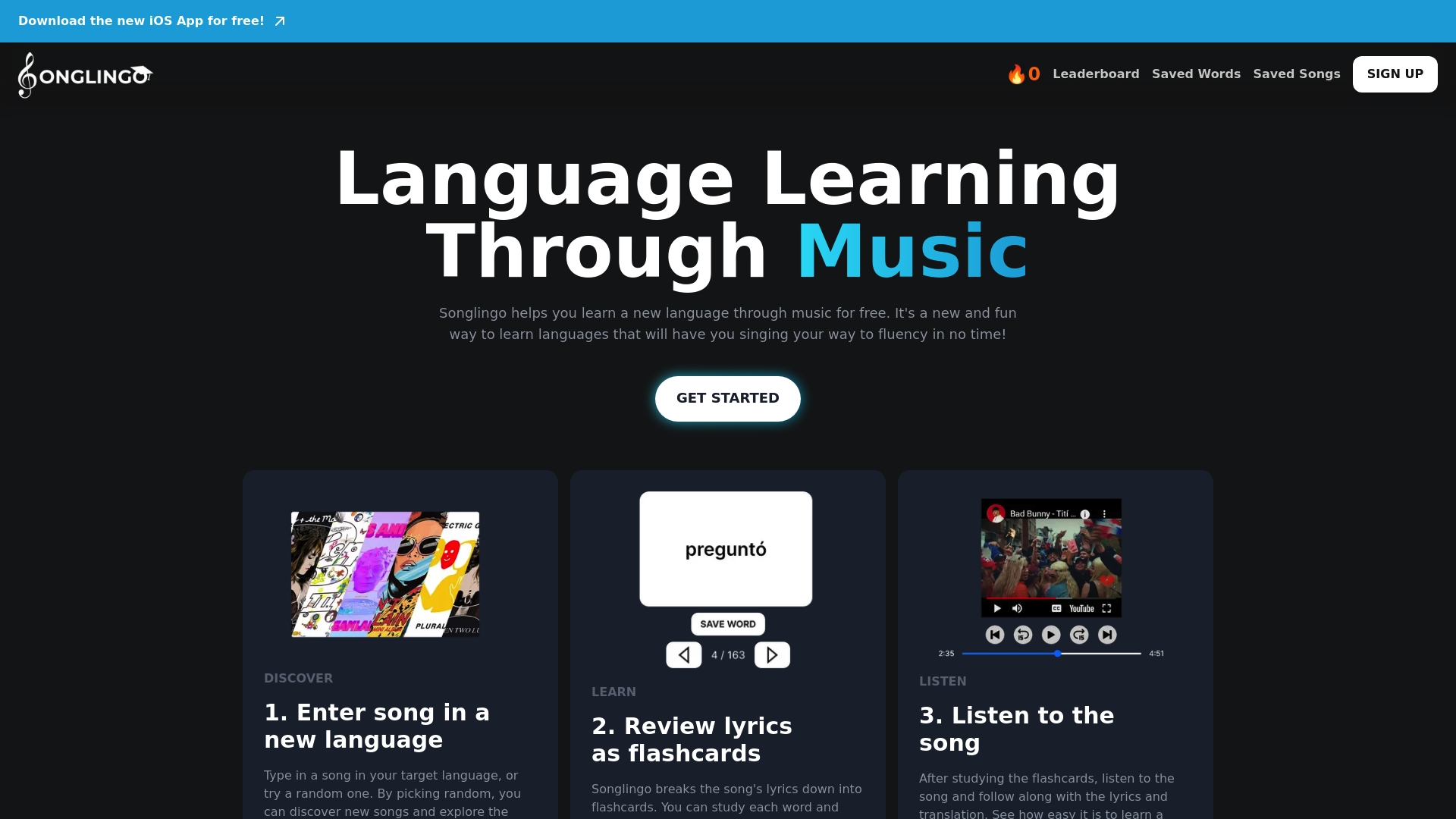
Songlingo offers a music-first route to language practice that feels playful and natural. It is free to use and ideal for learners who retain words better through melody and repetition.
Songlingo does not replace structured grammar study, but it makes listening practice and pronunciation drills far more enjoyable.
Core Features
Songlingo lets you enter songs in any language, discover tracks randomly, and study lyrics broken into lyrics flashcards. You can save words for later review and listen to songs while following lyrics and translations on both iOS and the website.
The platform emphasizes cultural exploration through music and focuses on retention via repeated listening and targeted review.
Pros
- Free to use. Anyone can start learning with music without a subscription or trial barrier, which lowers the entry cost for curious learners.
- Interactive learning through music and flashcards. The flashcard-style lyric breakdown helps you isolate vocabulary and rehearse lines like a singer memorizes a verse.
- Supports multiple languages. You can add songs in less common languages as well as major ones, so the tool adapts to varied language goals.
- Cultural exploration through music. Discovering songs exposes you to regional expressions and real-world phrasing that textbooks rarely show.
- Easy to access with a user-friendly interface. The site and iOS app keep controls intuitive so you spend time learning, not hunting menus.
Cons
- Limited to music-based language learning, which may not suit all learning styles because some learners need explicit grammar instruction.
- Reliance on internet for streaming and lyrics restricts use when you have no connection and may increase data usage.
- Lacks comprehensive grammar or vocabulary exercises found in traditional language courses, so you will need other resources for full language mastery.
Who It’s For
Songlingo fits music lovers and casual learners who want to practice pronunciation, listening, and vocabulary through songs. If you lose focus with drills but stay engaged with music, this tool keeps you practicing daily.
Unique Value Proposition
Songlingo turns songs into study material by combining lyrics flashcards with playback and translations. That blend makes vocabulary stick by pairing audio memory with active review, all without a paywall.
Real World Use Case
A learner practicing Spanish inputs a popular song, studies the lyrics as flashcards, saves unfamiliar words, and repeats verses while following translations. The result is better listening comprehension and more natural pronunciation.
Pricing
Songlingo is free to use and available as a free app on iOS and through the website. There are no paid tiers listed in the product data.
Website: https://song-lingo.com
Musicalingua
At a Glance
Musicalingua pairs pop songs and language lessons to make learning lively and memorable. It focuses on short challenges and interactive media so you practice pronunciation and vocabulary while enjoying real music.
Core Features
Musicalingua centers on music videos, karaoke sing-alongs, and interactive games that teach language in context. The platform offers 5 day and 15 day courses, pronunciation tests, lyric reading, and memory retention techniques designed to speed learning.
Pros
- Highly engaging format: The use of real songs and videos turns passive study into active listening and repetition, which helps motivation and habit building.
- Science-backed approach: Musicalingua emphasizes research on music and memory to support better pronunciation and vocabulary retention in lessons.
- Multiple course lengths: Short 5 day challenges and longer 15 day courses let you pick a training sprint that fits your schedule and goals.
- Fun interactive steps: Karaoke sing-alongs, reading lyric lines, and pronunciation checks make practice feel like play rather than drills.
- Appealing for families: The playful format and games make this platform suitable for parents who want an educational and entertaining tool for children.
Cons
- Pricing details are not clearly listed on the homepage, so you may need to contact support or create an account to learn full costs.
- The platform currently emphasizes Spanish more than other languages which means content depth varies across Spanish, English, German, French, Chinese, and Italian.
- Musicalingua requires internet access for streaming videos and interactive exercises which limits use when you are offline or traveling.
Who It’s For
Musicalingua is ideal for music lovers who want an interactive method to learn a language and for beginners and intermediate learners who respond well to audio and repetition. It also suits parents seeking engaging educational content for children.
Unique Value Proposition
Musicalingua stands out by teaching language through familiar songs and practical drills rather than isolated vocabulary lists. Its combination of karaoke, videos, and memory techniques creates a steady daily practice loop that reinforces speaking and listening.
Real World Use Case
A learner signs up for the 5 day Spanish song challenge, sings along to a popular track, and uses the pronunciation test to correct tricky sounds. After daily sessions the learner notices words stick better and speaking confidence grows.
Pricing
Musicalingua offers free courses with the option for additional premium content that may carry a charge. Exact premium pricing is not specified on the site and appears available after signup or on request.
Website: https://musicalingua.com
Language Bard
At a Glance
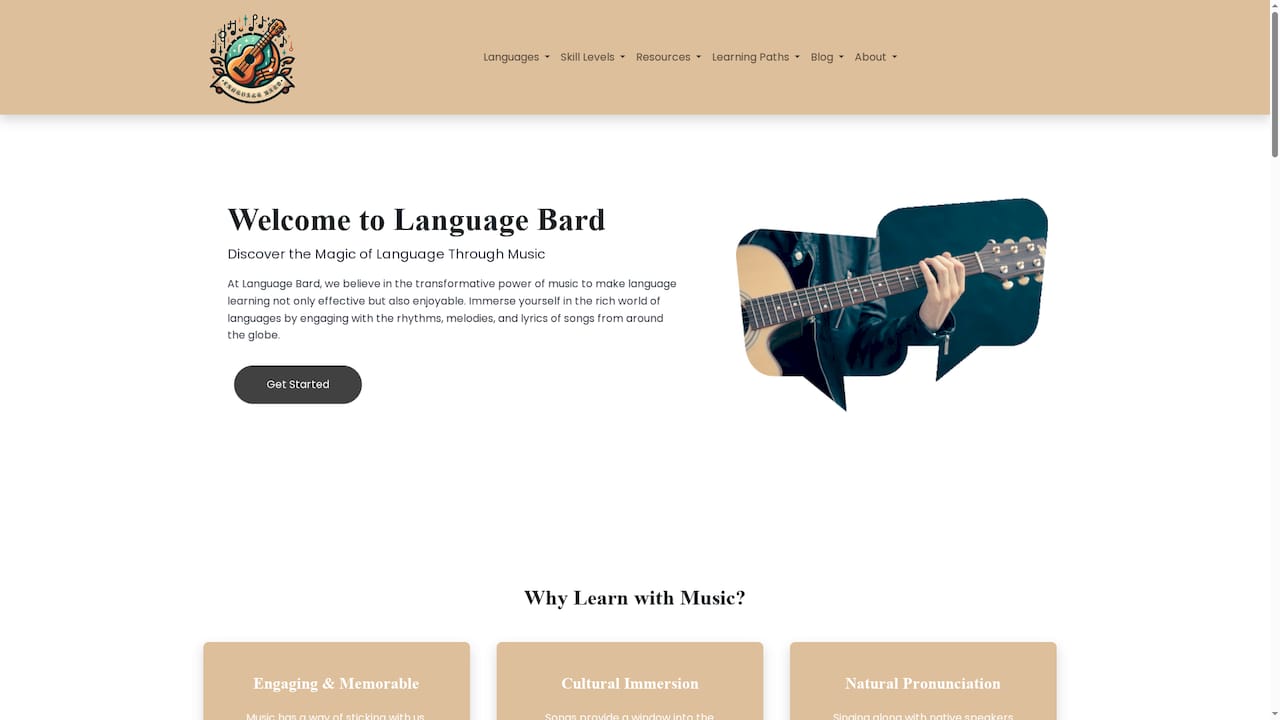
Language Bard uses music based learning to make language practice feel like listening to a playlist rather than studying. The site blends songs, lyrics, and cultural notes into resources that target beginner to intermediate learners who prefer rhythm and melody over drills.
Core Features
Language Bard offers courses in multiple languages including Spanish, French, Japanese, and German along with grammar guides, vocabulary lists, and pronunciation tools. The platform pairs diverse music genres with cultural insights and community feedback to help learners practice vocabulary and ear training in context.
Pros
-
Unique music approach: The focus on songs and lyrics creates memorable exposures to natural phrasing and everyday vocabulary.
-
Wide language coverage: Courses and resources span several languages and multiple skill levels, making it useful if you study more than one language.
-
Supplementary resources available: Grammar guides, vocabulary lists, and pronunciation aids support song practice with concrete learning materials.
-
Community interaction: Community features and social media presence let you get feedback, compare notes, and practice with others.
-
Visually engaging content: Multimedia pages and embedded music make lessons more appealing than text only resources.
Cons
-
Limited course structure: The site provides little detailed information about a formal curriculum or step by step course progression.
-
Unclear pricing: No pricing or subscription details are specified in the provided content, which makes comparing cost and value difficult.
-
Heavy reliance on music: The strong focus on songs may not suit learners who prefer grammar first methods or highly structured practice sequences.
Who It Is For
Language Bard suits music loving language enthusiasts who enjoy cultural immersion and audio practice. It works best for beginner to intermediate learners who want to improve vocabulary retention and pronunciation through songs instead of traditional drills.
Unique Value Proposition
Language Bard stands out by turning songs into study tools, pairing lyric based practice with grammar and pronunciation support. The combination of music, cultural notes, and community feedback creates a learning loop that helps you notice patterns and build listening skills naturally.
Real World Use Case
A learner practicing Spanish can listen to Latin music playlists, follow lyric translations, and use pronunciation tools to sing along. Over weeks of active listening and practice with community feedback, the learner improves accent, vocabulary recall, and confidence in everyday conversation.
Pricing
Pricing is not specified in the provided content.
Website: https://languagebard.com
{“text”:"## Comprehensive Language Learning Tools Comparison
This table provides an overview of various innovative language learning tools, comparing their key features, advantages, disadvantages, user suitability, and pricing to assist readers in identifying the best tool for their language acquisition goals.
| Tool | Key Features | Pros | Cons | Pricing |
|---|---|---|---|---|
| Canary | Song-centric learning, karaoke mode, vocabulary cards, community feedback | Engaging methods, active practice tools, music-focused approach | Pricing undetailed, reliance on music genres | Visit Canary |
| Duolingo | Gamified exercises, bite-sized lessons, adaptive learning, Duolingo English Test | Free plan, cross-platform compatibility, science-based methods | Limited depth for advanced learners, freemium model features | Free with premium option |
| Lingopie | Dual subtitles, interactive tools, varied media, playback customization | Real-world content access, multi-device flexibility, tailored subscriptions | Smaller library for less common languages, Internet-dependence | $6.99/month yearly subscription |
| Lyricstraining | Interactive lyrics games, song-based exercises, progress tracking | Music-driven learning, suitable for multiple skill levels, affordable plans | Subscription required for premium features, genre preferences impact utility | $3.99/month yearly plan |
| LyricFluent | Lyric translation, fill-in-the-blanks, clickable words | Supports diverse languages, builds listening and vocabulary skills | Subscription fee, content limitation by genre availability | $5 - $15/month |
| Songlingo | Free-to-use, flashcard-style lyric lessons, cultural music exploration | No cost barrier, intuitive interface, personalized song inputs | Restricted to music-based learning, Internet dependency | Free |
| Musicalingua | Music videos, karaoke, memory retention games | Playful learning, use of memory techniques, suitable for families | Emphasizes Spanish, connections required for videos | Free with premium options |
| Language Bard | Lyric-based courses, cultural insights, pronunciation aids | Multi-language options, community interaction, engaging content | Heavy reliance on music, unclear pricing details | Pricing not specified |
Experience Language Learning Through Music With Canary
Struggling to make language practice enjoyable and effective can slow your progress and drain your motivation. The article highlights how combining music with active learning techniques like karaoke and quizzes helps overcome these challenges and builds confidence in speaking naturally. If you want to turn language learning into a fun daily habit without boring drills Canary is designed just for you.
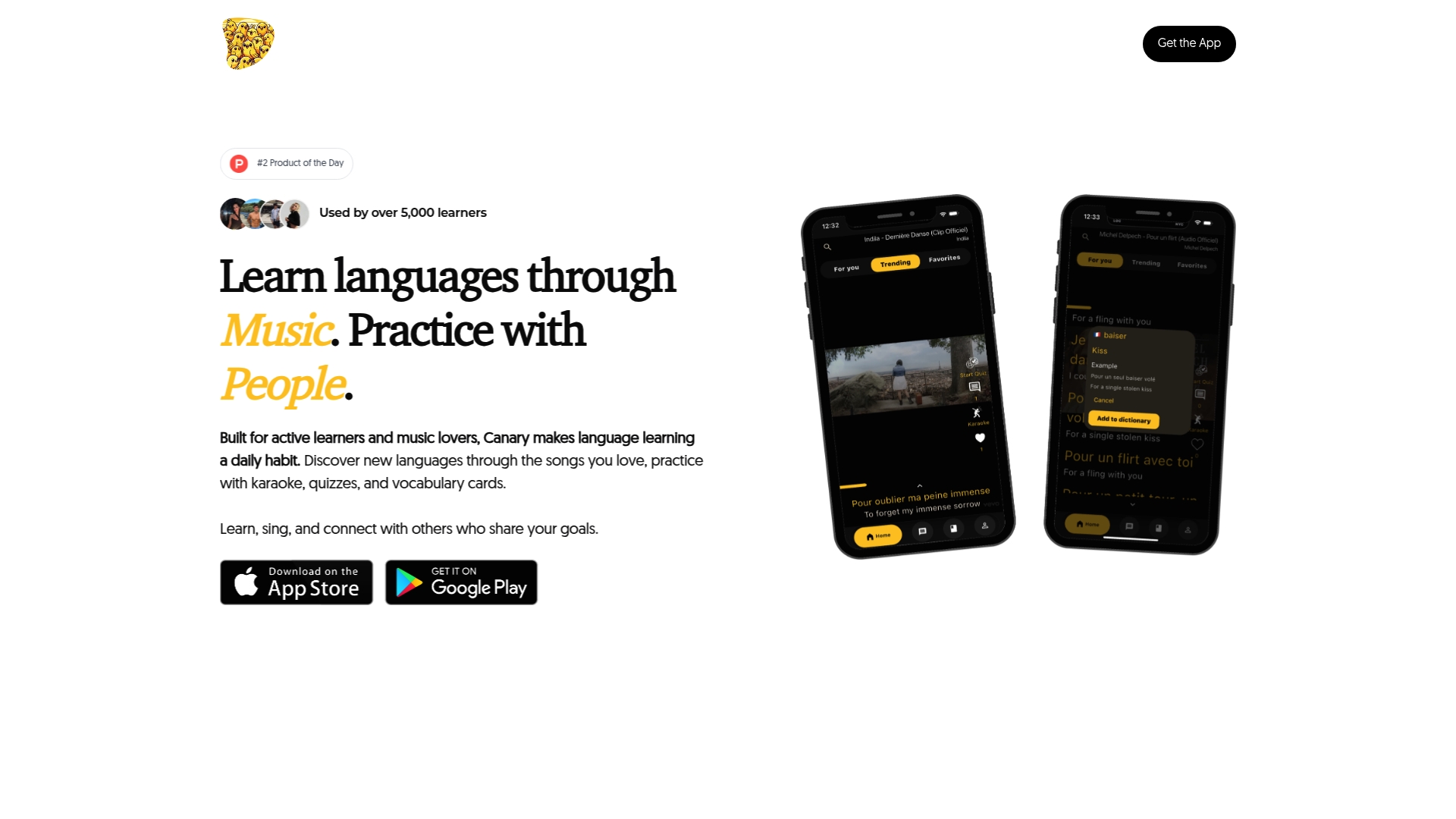
Discover how Canary’s unique integration of song-based learning, interactive vocabulary cards, and social practice connects you with learners worldwide. Visit Canary now to join a vibrant community where music and language come together. Don’t wait to boost your accent clarity, vocabulary retention, and listening skills through an engaging, music-infused platform built for active learners and music lovers alike.
Frequently Asked Questions
What features should I look for in the best music language learning apps for 2026?
To select the best music language learning app, look for features like song-based learning, interactive tools for pronunciation practice, and community engagement options. Choose apps that offer engaging content, such as karaoke modes or quizzes, to enhance your daily practice.
How can using a music language learning app improve my vocabulary retention?
Music language learning apps use real songs to create a memorable context for new vocabulary, helping to reinforce what you learn. Engage with the app by actively participating in quizzes and repeating lines within 30 minutes of your initial exposure to boost retention significantly.
Is it common for music language learning apps to offer social features?
Yes, many music language learning apps incorporate social features that allow users to connect, sing together, and provide feedback. Join community sessions or group challenges to practice conversational skills and enhance your learning experience.
How do I get started with a music language learning app?
To get started, download the app of your choice and create a user account. Explore its features, set a daily practice goal, and begin with a short lesson that focuses on a song you enjoy.
Can I track my progress in music language learning apps?
Most music language learning apps include progress tracking features that let you monitor improvements in vocabulary and pronunciation. Regularly review your progress every few weeks to adjust your study habits accordingly and ensure continued growth.