TL;DR:
- Interactive learning involving student participation and immediate feedback enhances language acquisition more effectively than passive listening to music.
- Music supports fluency development through emotional regulation, rhythmic entrainment, and memory recall mechanisms, making micro-sequences with songs highly beneficial.
Most people assume that listening to their favorite songs in a foreign language is a pleasant bonus to “real” studying. Fun, sure, but not exactly rigorous learning. That assumption is wrong, and it’s holding a lot of learners back. When interactive learning is properly designed around student-centered participation and two-way feedback, it produces measurably stronger outcomes than passive study. This article breaks down exactly what makes an activity truly interactive, why music accelerates those results, how to structure effective song-based lessons, and how social feedback turns short practice sessions into lasting fluency gains.
Table of Contents
- What makes learning ‘interactive’?
- How music transforms interactive language learning
- Designing effective interactive song-based lessons
- Practicing language with interactive social feedback
- What most people get wrong about interactive learning
- Boost your language skills with music-driven interactive tools
- Frequently asked questions
Key Takeaways
| Point | Details |
|---|---|
| True interactivity matters | Effective methods involve active, two-way participation and feedback—not just fun activities. |
| Music boosts retention | Song-based routines improve memory, pronunciation, and motivation thanks to rhythm and repetition. |
| Micro-sequences work best | Short, focused musical routines yield sustainable results, especially with regular practice. |
| Social feedback builds fluency | Practicing with peers, groups, or AI with immediate feedback leads to measurable fluency gains. |
| Match method to goal | The best interactive activities align entertainment with learning outcomes for real skill improvement. |
What makes learning ‘interactive’?
The word “interactive” gets used loosely, and that’s part of the problem. Teachers call a YouTube video interactive. Learners describe passive song listening as interactive because they’re engaged emotionally. But genuine interactive learning is something more specific and more powerful.
True interactive learning is student-centered participation involving active two-way feedback. You do something, get a response, adjust, and do it again. That cycle is what separates interactive practice from passive consumption. Think of it this way: watching a cooking show is not cooking. You learn to cook by standing at the stove, making mistakes, and tasting the results.
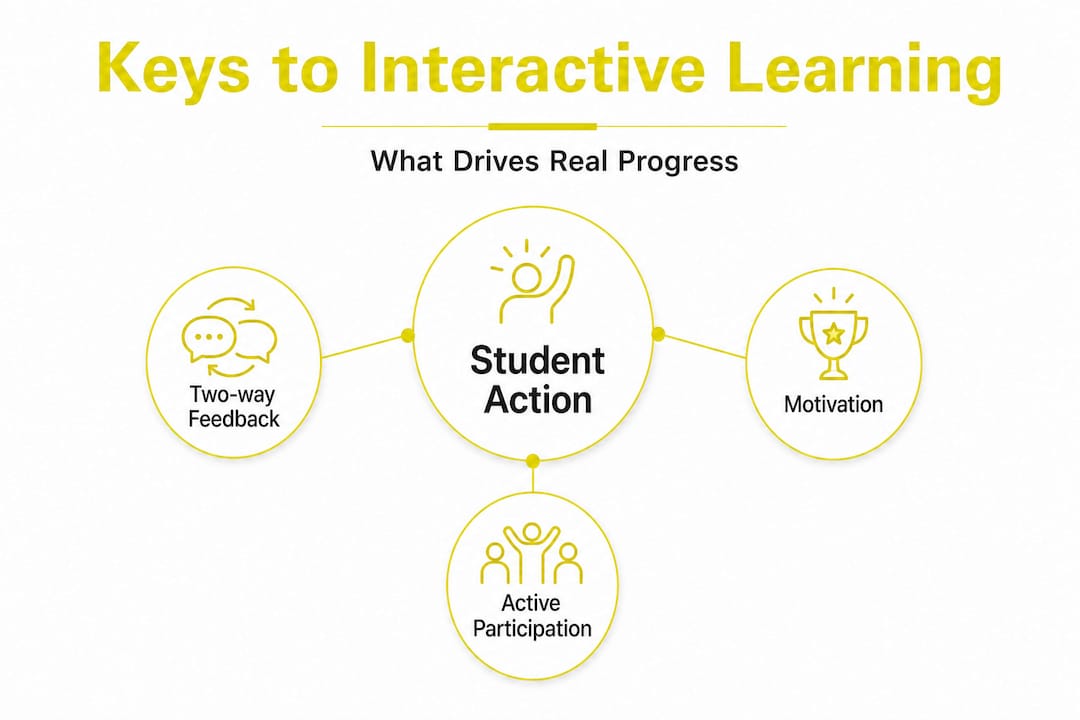
Effective interactive activities operate across three dimensions that should be balanced across a module: cognitive engagement (thinking, analyzing, problem-solving), social engagement (exchanging ideas, getting peer responses), and emotional engagement (curiosity, motivation, personal relevance). A great activity does not need to hit all three simultaneously, but your overall practice routine should cover all three regularly.
Here are the clearest signs that an activity is genuinely interactive versus merely entertaining:
- You produce language output, not just consume it
- You receive immediate or near-immediate feedback on that output
- You can adjust your behavior based on that feedback in the same session
- The activity requires you to make decisions or solve small language puzzles
- You feel mild productive challenge, not just comfort
“Multi-dimensional engagement, combining cognitive, social, and emotional participation, is the gold standard for interactive learning design.” This means your language routine should stretch your thinking, connect you with others, and feel personally relevant, all within a sustainable weekly structure.
Simply being entertaining does not make an activity effective. Games, songs, and group chats are only as useful as the feedback loops built into them. Understanding how music boosts fluency starts with recognizing this distinction. If you want to explore engaging activity strategies in general, the principle holds: structure and feedback matter more than fun alone.
How music transforms interactive language learning
Music is not just a motivational tool. It works on your brain through specific mechanisms that directly support language acquisition, and the research is getting clearer about exactly how.
A 2026 mini-review in Frontiers grouped music-in-ELT (English Language Teaching) evidence into three main mechanisms: affective regulation, rhythmic-prosodic entrainment, and memory through lyric repetition and retrieval. Affective regulation means music lowers the emotional barrier to trying new language. Rhythmic-prosodic entrainment means rhythm physically patterns your pronunciation habits, making native-like stress and intonation feel more natural. Memory through lyric retrieval means you can recall vocabulary and grammar structures faster because they’re attached to a melody.
The same review recommends “micro-sequences,” which are brief, repeatable routines focused on these three mechanisms. Short beats of practice, done consistently, outperform occasional marathon study sessions.
| Micro-sequence routine | Primary mechanism | Measurable impact |
|---|---|---|
| Sing a verse, then paraphrase lyrics | Memory retrieval | Vocabulary retention |
| Clap rhythm while reading lyrics aloud | Rhythmic entrainment | Prosody and stress patterns |
| Discuss song meaning with a partner | Social and cognitive engagement | Speaking confidence |
| Fill-in-the-blank lyric quiz | Cognitive challenge | Listening accuracy |
| Record yourself singing, compare to original | Affective regulation + feedback | Pronunciation self-awareness |
Pro Tip: Pick one micro-sequence and repeat it with the same song for a full week before switching. Familiarity with the song frees up cognitive space to focus on the language itself, not just following along.
The benefits of song-based learning go beyond vocabulary. Songs carry cultural context, idioms, slang, and emotional tone that textbooks rarely capture. Understanding music’s role in language learning at a deeper level reveals why learners who practice with songs consistently report better listening comprehension and more natural-sounding speech. You can also explore multi-language engagement tools for additional ideas on keeping practice varied.
Here are song-based activities worth building into regular practice:
- Lyric dictation: Listen to a verse, write what you hear, then check against the lyrics
- Shadow singing: Sing simultaneously with the track, focusing on matching rhythm and vowel sounds
- Lyric swap: Rewrite one line of a song using synonyms or a grammar structure you’re studying
- Vocabulary spotting: Highlight five unknown words per song and look them up in context
- Translation comparison: Translate a verse yourself, then compare to an official translation
Designing effective interactive song-based lessons
Knowing that music methods work is only half the job. The other half is structuring your sessions so you don’t waste time or drift toward passive listening. Good design is what separates a productive 20-minute practice from 20 minutes of enjoying music without actually learning.
Research on structured song teaching units shows that multi-phase approaches get high learner acceptance, but the language-focused phases are often rated less clearly than the creative phases, and the whole approach can run over time budgets if poorly planned.
“Time-consuming approaches need scaffolding. Without clear phases and time limits, creative activities crowd out the language-focused work that actually produces measurable gains.” Plan your session in advance and protect time for the analytical phase, not just the enjoyable singing parts.
Here is a practical phased lesson structure you can follow:
- Warm-up (3 minutes): Listen to the song once without looking at lyrics. Form a rough impression of mood, topic, and a few words you recognize.
- First pass with lyrics (5 minutes): Read along while listening. Circle unfamiliar words. Do not look anything up yet.
- Vocabulary focus (5 minutes): Look up the circled words in context. Write a short definition or draw a mental image for each.
- Active production (7 minutes): Sing or speak one verse aloud. Record yourself if possible.
- Language analysis (5 minutes): Identify one grammar pattern or phrase structure in the lyrics. Write two original sentences using that same pattern.
- Reflection (2 minutes): Note one thing you noticed about pronunciation, vocabulary, or meaning that surprised you.
| Phase | Creative focus | Language focus |
|---|---|---|
| Warm-up listening | Emotional response, mood | Recognizing familiar sounds |
| Vocabulary focus | Personal associations | Precise meaning in context |
| Active production | Expressive singing | Pronunciation accuracy |
| Language analysis | Creative rewriting | Grammar patterns |
| Reflection | Personal takeaways | Measurable observations |
Building your week around song of the week routines makes this easier because the song choice is handled for you. You just follow the phases. For more practical music-based tips on fitting this into a busy schedule, the key insight is that consistency beats duration. Three 20-minute sessions beat one 90-minute session almost every time.
Pro Tip: After each session, rate your own perceived learning on a scale of one to five. If you consistently score low despite enjoying the session, shift more time to the language analysis phase and less to singing.
Practicing language with interactive social feedback
Lessons build knowledge. Social feedback builds confidence and real-world competence. These are different things, and you need both. A learner who can analyze lyrics but freezes in conversation has a feedback gap, not a knowledge gap.

Studies of AI conversation bots and structured speaking practice show measurable improvements in speaking skills compared to alternative activities, including significant reductions in foreign language speaking anxiety. That matters because anxiety is one of the biggest barriers to actually using a language in the real world.
Here are the best practices for getting useful interactive feedback on your speaking:
- Use short speaking prompts tied to the song you’re studying. “Describe this song’s message in three sentences” is a manageable entry point that keeps the conversation anchored to familiar content.
- Practice with a conversation partner at a similar level. Peer feedback reduces the pressure of expert evaluation while still giving you genuine human responses.
- Record yourself and review once. You will catch errors your ear misses in real time.
- Use AI tools for immediate feedback between human sessions. AI can flag pronunciation patterns, grammar errors, and vocabulary gaps without judgment.
- Set a specific goal for each session. “I want to use three new words from this week’s song” is more productive than “I want to practice.”
Confidence-building exercises that fit naturally around music practice include:
- Spoken lyric summary: Explain what a song means in your own words without looking at the lyrics
- Emotion imitation: Mimic the singer’s emotional tone in a short spoken monologue
- Music-based debate: Discuss with a partner whether a song’s message applies to real life
- Pronunciation mirror session: Repeat individual phrases from the song, then compare rhythm to the original
- Group song analysis: Join a community discussion about a song’s cultural meaning and vocabulary
“Active participation in speaking practice improves real-world fluency, not just test scores. The gap between passive knowledge and spoken ability closes fastest when learners regularly push through the discomfort of producing language in front of others.”
Joining music-driven language exchanges with other learners gives you real social feedback anchored to songs you already know. This removes one layer of anxiety because the topic is the music, not your grammar. You can also look into interactive engagement in learning for broader frameworks on how feedback loops drive long-term retention.
What most people get wrong about interactive learning
Here’s the uncomfortable truth: a lot of what gets called “interactive language learning” is just entertainment with a learning label slapped on it. Group activities where everyone laughs but no one produces measurable language output. Playlists labeled as “immersive” that never require you to do anything with what you hear. Music apps that reward completion rather than comprehension.
The myth is that all interactive activities are equally good for language development, as long as everyone is engaged and having fun. That’s not what the evidence shows. Engagement is a necessary condition, not a sufficient one. You can be completely engaged in an activity and still walk away having learned almost nothing.
The trap is optimizing for enjoyment signals rather than learning signals. If you finish a session feeling great but can’t produce a single new phrase you encountered during that session, something went wrong. The fix is not to make practice joyless. It’s to regularly check for observable gains. Can you use this word in a new sentence? Can you hear this sound more accurately than you could last week? Can you hold a five-minute conversation where last month you managed two?
We’ve seen this pattern repeatedly with Canary users: the learners who grow fastest are not the ones who use music the most. They’re the ones who combine music with structured output, social feedback, and honest self-assessment. They engage, collaborate, and grow rather than just consume.
Understanding music-infused learning theory helps you see why the structure underneath the music matters as much as the music itself. Fun and rigor are not opposites. The best interactive learning feels genuinely enjoyable because the challenge is calibrated, the feedback is real, and the progress is visible.
Boost your language skills with music-driven interactive tools
If you’ve made it this far, you know that effective interactive learning requires structured activities, social feedback, and consistent output practice built around music you actually love.
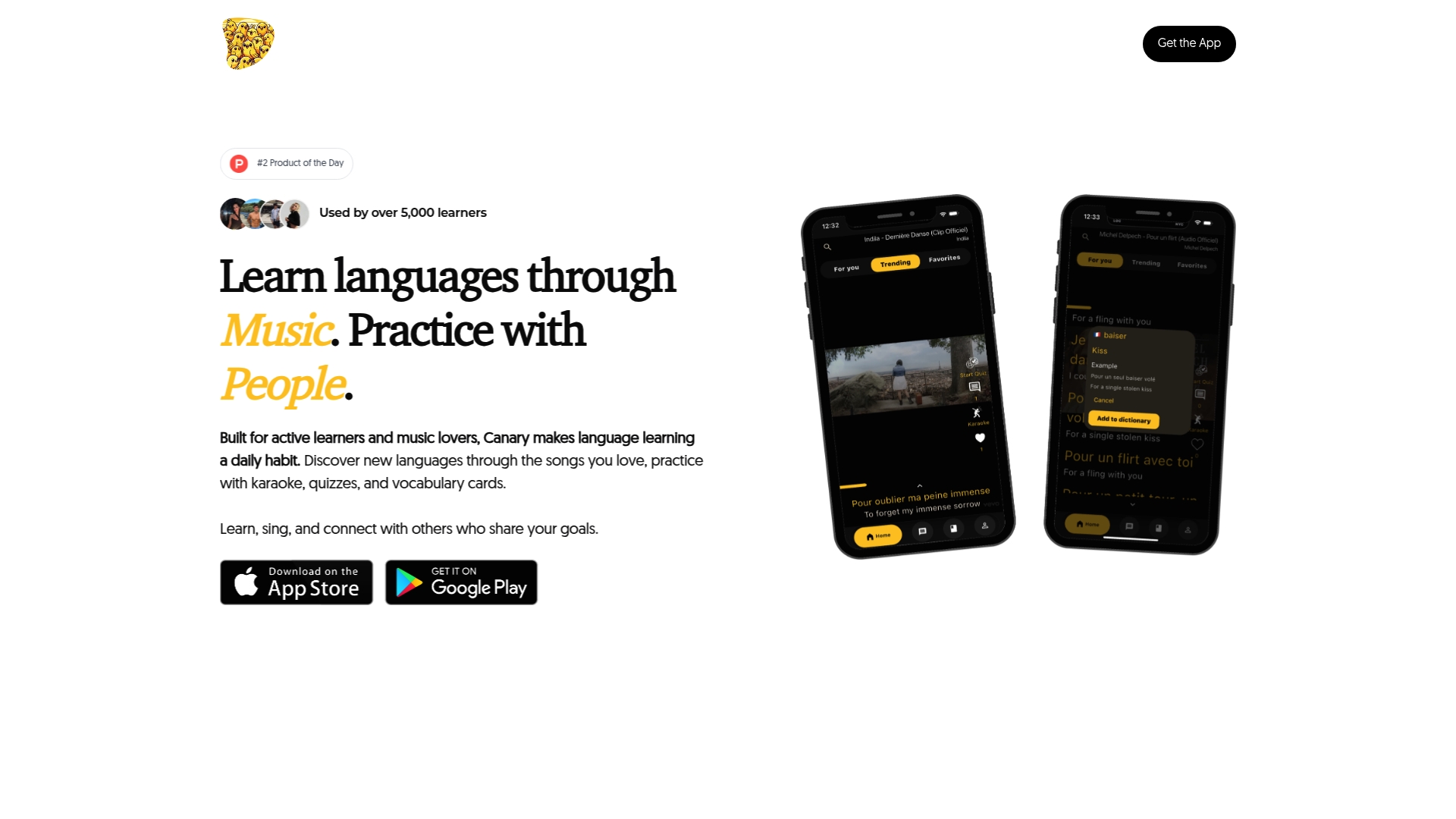
Canary brings all of this together in one platform. With learn languages with music as the core experience, you get karaoke-style song practice, vocabulary cards pulled directly from lyrics, pronunciation feedback, and a global community of learners doing the same songs at the same time. You can follow weekly song routines that walk you through structured phases without having to design your own lesson plan. Every feature is built to turn passive listening into active, feedback-rich language practice. Ready to stop just listening and start actually learning? Sign up and start your first song-based session today.
Frequently asked questions
Is listening to music alone enough to improve my language skills?
Passive listening helps with ear training and familiarity, but active participation with structured feedback produces significantly better language outcomes over time.
How much time should I spend on song-based language activities?
There’s no single answer, but brief micro-sequences repeated a few times per week are the most effective and sustainable approach for most learners.
Can interactive activities reduce speaking anxiety?
Yes. Experimental studies show that interactive speaking practice, including music-based formats, significantly reduces foreign language anxiety while improving spoken fluency.
What types of feedback are most effective in interactive lessons?
Immediate two-way feedback from peers, instructors, or AI tools works best because it closes the loop between attempt and correction in real time.
Do I have to use pop songs or can I use other types of music?
Any genre works, but songs with clear lyrics and strong rhythmic patterns tend to produce the highest learner acceptance and the most repeatable practice routines.