Studying a language alone can feel like practicing guitar in a soundproof room. You improve technically, but you never really know how you sound to others. 78% of international hires credited networking as a key factor in their career success, and 43% of multilingual workers earn over $5,000 more annually than their monolingual peers. For adult learners who love music, the path forward is not more solo drilling. It is connecting with real people around the world and using songs as your shared language.
Table of Contents
- Why global connections matter in language learning
- How music enhances pronunciation with global peers
- Top platforms for building global connections through song
- Real-world outcomes: Networking, motivation, and skill growth
- Connect with a global community for music-powered language learning
- Frequently asked questions
Key Takeaways
| Point | Details |
|---|---|
| Peer practice matters | Connecting with global language partners quickly improves pronunciation, confidence, and real-life usage. |
| Music accelerates learning | Song-based practice helps you master rhythms, stress, and authentic speech more effectively than traditional methods. |
| Career and cultural gains | Global language connections can increase earnings and broaden your access to international opportunities. |
| Right tools boost results | Apps and platforms with music features connect you with peers for feedback and song-supported growth. |
Why global connections matter in language learning
A global connection in language learning means practicing with real speakers from other countries, not just consuming content passively. It means exchanging voice messages, singing together, correcting each other’s pronunciation, and building friendships across borders. This kind of interaction changes everything about how fast you improve.
When you practice with international peers, you get something no app or textbook can give you: authentic feedback. You hear how a native speaker actually stresses syllables, drops certain sounds, or speeds through phrases in casual conversation. That exposure is irreplaceable.
The educational benefits of music become even stronger when paired with real human interaction. Music gives you a shared emotional and cultural reference point with your practice partner, making conversations richer and more memorable.
Here is what global peer practice delivers for adult learners:
- Pronunciation accuracy through real-time correction from native and fluent speakers
- Cultural awareness by learning idioms, humor, and context that textbooks miss
- Career opportunities since professional outcomes for multilingual learners consistently show salary and mobility gains
- Accountability because a real person waiting for your voice note is far more motivating than a streak counter
“Language exchange is not just about grammar. It is about building the confidence to use what you know in real situations with real people.”
Motivation is the silent killer of most language learning journeys. When you have a global friend who shares your taste in music and is rooting for your progress, showing up every day stops feeling like a chore.
How music enhances pronunciation with global peers
Singing is not just fun. It is one of the most effective tools for training your mouth and ear to produce sounds in a new language. The reason comes down to how music and speech share the same cognitive pathways in your brain.
Music and singing improve pronunciation, prosody, rhythm, and speech imitation in second language acquisition through these shared mechanisms. When you sing a phrase repeatedly, your brain encodes the melody alongside the sounds, making correct pronunciation far easier to recall later in conversation.
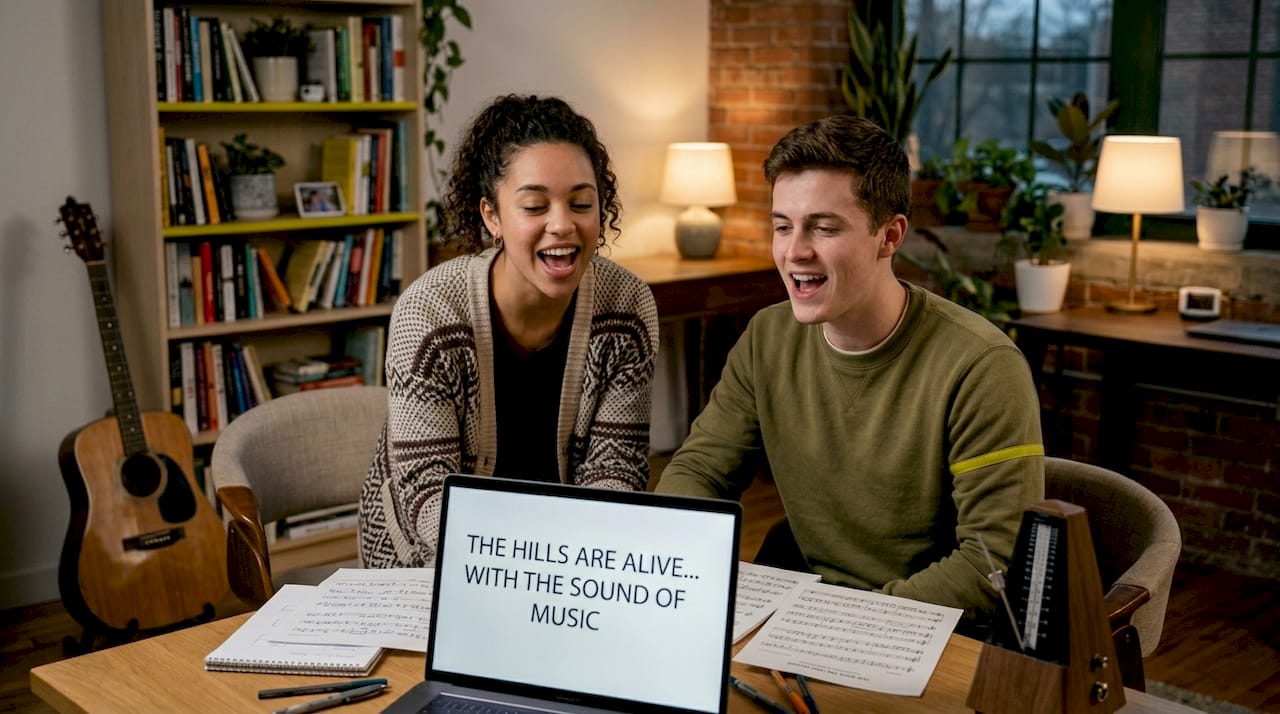
Empirical research backs this up. Song-based learning enhances vocabulary retention, listening comprehension, and motivation, and rhythmic skills directly predict how well learners can imitate the prosody (the natural rise and fall) of a new language.
| Learning method | Pronunciation gain | Vocabulary retention |
|---|---|---|
| Traditional drills | Moderate | Moderate |
| Conversation only | High | Moderate |
| Song-based learning | High | High |
| Song-based with peer feedback | Very high | Very high |
The table above shows why combining music with real peer feedback is the most powerful combination. Neither element alone is as effective as both together.
Pro Tip: Choose songs with clear diction and moderate tempo when starting out. Pop ballads and acoustic tracks work better than fast rap for beginners because every syllable is easier to isolate and practice.
Understanding the role of music in pronunciation helps you pick the right songs for your level. Not every track is equally useful. A song with heavy slang or regional dialect might confuse more than it teaches early on. Use the song-based learning guide to build a playlist that actually moves your accent forward.
Top platforms for building global connections through song
Knowing that music and real feedback are powerful, the next step is finding the right tools to connect with global partners for song-based practice. Not all platforms are created equal for this purpose.
Language exchange platforms like Tandem and HelloTalk enable real-time voice and video practice with global peers, making them ideal for pronunciation feedback. Both apps let you send voice recordings, which means you can literally sing a line from a song and ask your partner to correct your accent.
| Platform | Voice messaging | Song sharing | Pronunciation correction | Community size |
|---|---|---|---|---|
| Tandem | Yes | Limited | Yes | Large |
| HelloTalk | Yes | Yes | Yes | Very large |
| Canary | Yes | Yes (core feature) | Yes | Growing |
| Discord language servers | Yes | Yes | Peer-based | Varies |
Here is a simple process for getting real feedback through these platforms:
- Choose a song in your target language that matches your current level
- Record yourself singing or speaking a verse using the app’s voice feature
- Send it to a partner and ask specifically about one or two sounds you are unsure about
- Listen to their correction and record yourself again immediately after
- Return the favor by helping your partner with their target language
This loop of record, share, correct, and repeat is where the real gains happen. Mastering language learning with lyrics becomes much faster when a real person is in the loop with you. Pairing that with solid knowledge of music for pronunciation and rhythm gives you a complete system.
Real-world outcomes: Networking, motivation, and skill growth
Equipped with the right tools and methods, here is what you can tangibly expect from building global connections for your language growth. The results go well beyond just sounding better.
On the career side, the numbers are striking. Multilingual networking boosts salary by 5 to 19%, and music training improves verbal memory and phonology imitation compared to non-musicians. These are not soft benefits. They show up in job interviews, client calls, and international collaborations.
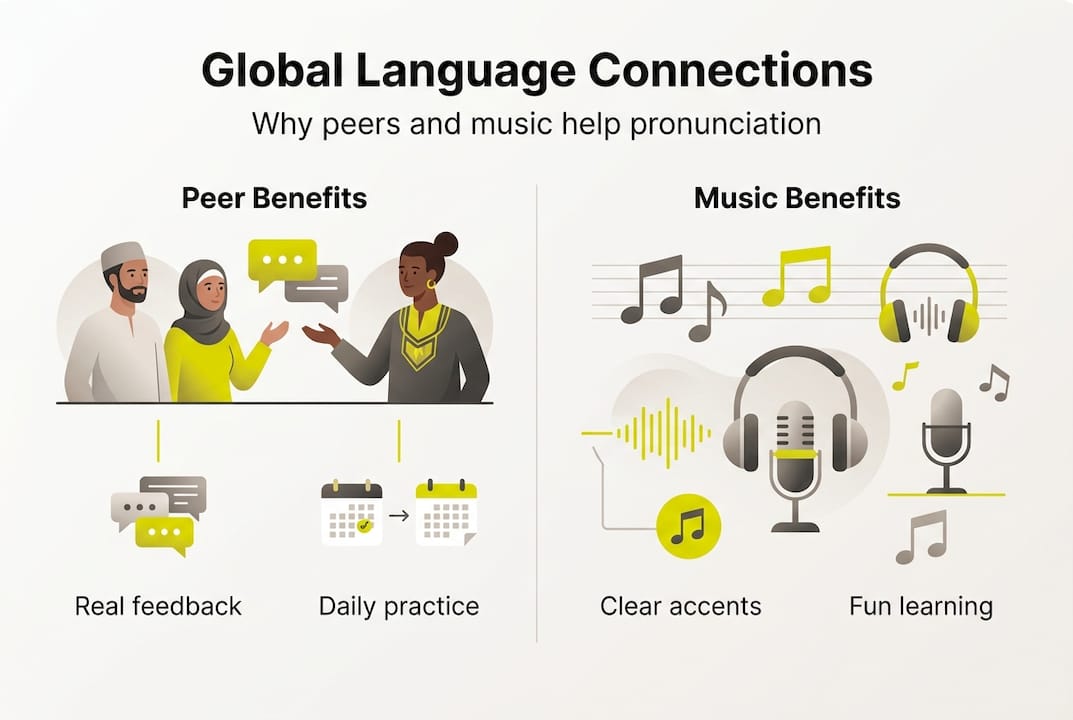
43% of multilingual professionals with active global networks report earning over $5,000 more per year than peers who studied in isolation.
Beyond salary, the motivation factor is enormous. Learning with international peers who share your love of music creates a feedback loop that keeps you coming back. You are not just learning a language. You are building real friendships, discovering new artists, and understanding cultures from the inside out.
Here is what consistent global music practice delivers over time:
- Faster vocabulary retention because songs create emotional memory anchors
- Stronger listening skills from exposure to different accents and regional styles
- Cultural intelligence through shared songs that carry history, humor, and identity
- Confidence in real conversations because you have already practiced with real people
- Long-term motivation since your practice feels like a hobby, not homework
Building a daily music language practice habit is the single most reliable way to sustain progress. Research also shows you can learn faster with songs, with some studies pointing to vocabulary gains up to 40% faster compared to traditional methods. That is not a small edge. That is a completely different trajectory.
Connect with a global community for music-powered language learning
Ready to put these strategies into action? Canary is built exactly for learners like you: people who love music and want to practice with real speakers from around the world.
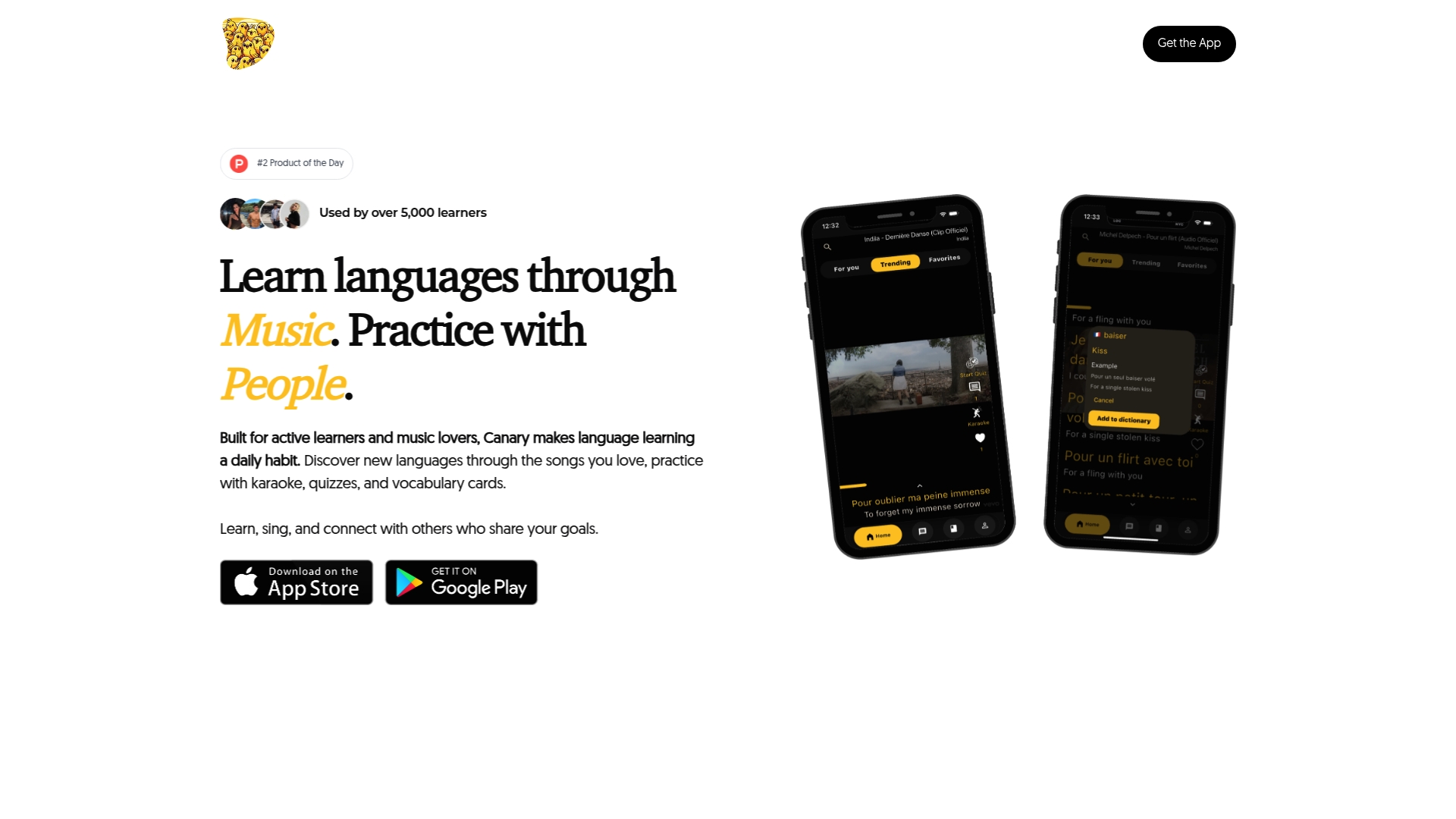
With Canary, you can sing along to songs in your target language, practice pronunciation through karaoke-style features, and connect with a growing international community of music-driven learners. Every session feels more like discovering a new playlist than grinding through a lesson. You can explore the benefits of learning languages with music and find practical language learning tips with music to build a routine that actually sticks. Join Canary and start turning your favorite songs into your most powerful language tool.
Frequently asked questions
How do global connections speed up language learning?
Connecting with international peers gives you real-time feedback, keeps you motivated, and exposes you to authentic pronunciation and cultural context that no app can fully replicate. Global language exchange builds professional networks and cultural awareness alongside your fluency.
Why use music for pronunciation instead of just talking?
Music taps into rhythm and memory systems that speech alone does not fully activate, making accent patterns and new sounds stick much longer. Singing improves prosody and speech imitation through shared cognitive mechanisms between music and language.
Which language exchange app is best for singing practice?
Apps such as Tandem and HelloTalk allow you to send voice notes, join video calls, and swap song recordings for targeted pronunciation feedback from real speakers.
Does building global connections help with career growth?
Yes. Multilingual professionals with active global networks consistently earn more and access new opportunities faster. 78% of international hires credited networking, and 43% of multilingual workers earn over $5,000 more annually than monolingual peers.