TL;DR:
- Singing along to songs significantly improves language recall and fluency.
- Effective music-based habits include regular practice, engagement, relevance, and measurement.
- Community and personalized routines enhance motivation and measurable progress in language learning.
If your language-learning routine feels like homework, you’re not alone. Most apps and textbooks strip the joy out of practice, leaving you staring at flashcards until your eyes glaze over. Music changes that completely. Singing along to songs improves recall of phrases nearly twice as much as speaking alone. For music lovers, that’s not just good news, it’s a game changer. This checklist is built specifically for people like you: learners who want fast, real progress without sacrificing fun. Each item is grounded in research, practical to use daily, and designed to turn your favorite songs into your most powerful study tool.
Table of Contents
- Essential criteria for a music-powered language habit
- Daily checklist item 1: Shadow and sing with purpose
- Daily checklist item 2: Lyric challenges for listening and vocabulary
- Daily checklist item 3: Social music sessions for authentic practice
- How to personalize your checklist for measurable progress
- Why music-loving language learners see faster results and bigger smiles
- Turn your checklist into real progress with Canary
- Frequently asked questions
Key Takeaways
| Point | Details |
|---|---|
| Sing and shadow daily | Regular out-loud practice with music sharpens memory, pronunciation, and confidence. |
| Make lyrics interactive | Lyric challenges and gap fills boost vocabulary and listening skills in a fun way. |
| Use social music sessions | Practicing with others accelerates learning, builds confidence, and adds enjoyment. |
| Track small gains | Short, focused music sessions yield measurable language progress when tracked weekly. |
Essential criteria for a music-powered language habit
With the foundation set, let’s explore what actually makes a language-learning habit stick when you’re using music. Not every approach is equal, and knowing what separates a great habit from a forgettable one saves you weeks of wasted effort.
The education benefits of music go far beyond entertainment. Research shows that music interventions boost EFL listening engagement, fluency, and prosody in measurable ways. But those benefits only show up when your habit has the right structure.
Here’s what every effective music-based language habit needs:
- Frequency: Short, regular sessions beat occasional marathons every time. Ten minutes daily outperforms two hours on Sunday.
- Engagement: You have to genuinely enjoy what you’re doing. Music earns its place here because it keeps motivation high naturally.
- Relevance: Real song lyrics and native speech expose you to how the language actually sounds, not how textbooks say it should sound.
- Measurement: Track your pronunciation accuracy, vocabulary recall, and how engaged you feel. Progress you can see keeps you going.
The role of music in language learning is not decorative. Melody and rhythm create memory hooks that plain repetition simply cannot match. When you hear a chorus for the tenth time, your brain is doing serious language work without feeling like it.
“Music is not a shortcut. It’s a more direct route.”
Pro Tip: Start every session with one easy, familiar song. It warms up your ear and builds confidence before you tackle harder material.
Once you have these four criteria in place, the checklist items below slot in naturally. Think of them as daily building blocks, not isolated exercises.
Daily checklist item 1: Shadow and sing with purpose
Once you know what makes a strong habit, add these daily tasks to your checklist for hands-on results. Shadowing and singing are two of the most effective tools available, and together they cover pronunciation, rhythm, and memory in one session.
Shadowing means repeating what a native speaker says in real time, matching their rhythm, stress, and intonation as closely as possible. Songs are perfect for this because the melody gives you a clear template to follow.
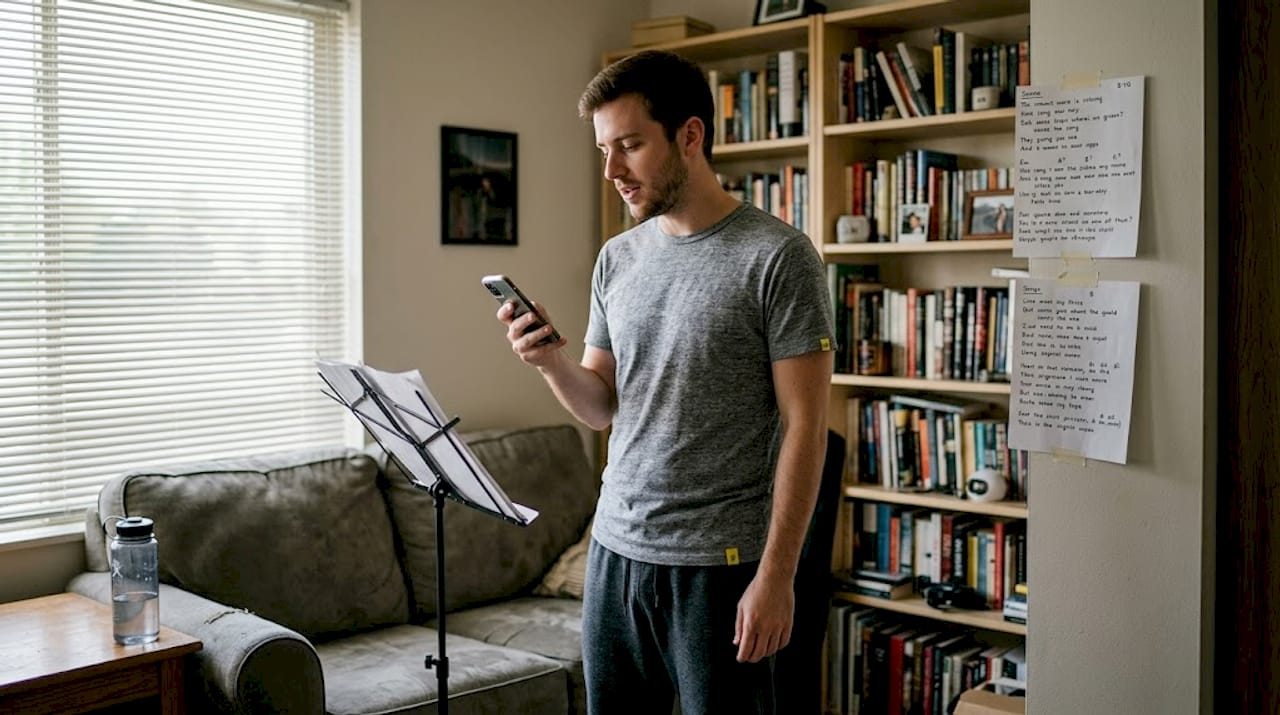
Singing out loud reinforces memory through what researchers call motor cortex activation. Put simply, singing aids memory through melody and motor engagement in ways that silent reading cannot replicate. Your mouth, ears, and brain all work together.
Here’s how to add this to your daily checklist:
- Pick one song in your target language that you already like.
- Listen to the first verse once without doing anything else.
- Play it again and shadow the singer line by line, pausing after each phrase.
- Sing the verse out loud twice, focusing on matching the sounds rather than performing perfectly.
- Move to the chorus and repeat the process.
The pause-play method is key here. Work with just two to four lines at a time. Trying to shadow an entire song at once leads to frustration and sloppy pronunciation. Small chunks let you focus on accuracy.
The benefits of singing-based practice stack up quickly when you stay consistent. Within a week of daily shadowing, most learners notice they’re picking up the rhythm of the language more naturally in regular conversation.
“Don’t aim for perfect. Aim for closer than yesterday.”
Pro Tip: Use upbeat songs when you need energy and motivation. Switch to slower ballads when you want to focus on pronunciation clarity, since every syllable is easier to hear.
Daily checklist item 2: Lyric challenges for listening and vocabulary
Having covered speaking and memory, let’s add the next daily item: building vocabulary and listening with active lyric exploration. Passive listening is enjoyable, but active lyric work is where real vocabulary growth happens.
Music training boosts vocabulary retention and verbal memory significantly compared to traditional drills. The reason is simple: words attached to melody and emotion stick longer than words on a list.
Here are two exercises to add to your checklist today:
- Gap fill: Play a song and write out the lyrics as you hear them, leaving blanks where you miss words. Then check your version against the real lyrics. Every gap is a learning opportunity.
- Lyric retrieval: Pause the song after a verse and try to write the next verse from memory before playing it again. This forces active recall, which is one of the strongest memory techniques available.
Key gains from regular lyric work include:
- Sharper listening skills and faster word recognition
- Wider vocabulary with emotional context attached
- Easier recall during real conversations
- Better understanding of natural speech patterns
| Method | Vocabulary retention | Engagement | Real-world application |
|---|---|---|---|
| Traditional vocab drills | Moderate | Low | Limited |
| Music-based lyric work | High | High | Strong |
You can find ready-made music-based vocabulary tips to guide your lyric sessions, and exploring music for vocabulary retention gives you even more structured approaches.
Pro Tip: Try weekly song challenges to keep your lyric practice fresh. A new song each week introduces new vocabulary naturally while keeping the routine exciting.
Daily checklist item 3: Social music sessions for authentic practice
After individual work comes connection. Turn your checklist into a community experience with this next step. Practicing alone builds a foundation, but practicing with others builds confidence and fluency in ways solo sessions simply cannot replicate.
Singing or working through lyrics with friends, online groups, or native speakers forces you to use the language in real time. You can’t pause and rewind a conversation. That productive pressure accelerates growth.
Music-based interventions increase pronunciation accuracy by 20%, and social settings amplify that effect by adding authentic listening and response practice.
Here’s how to start or join a music-based language session:
- Search for language exchange groups on apps like Meetup or Discord that focus on music or karaoke.
- Invite a friend who speaks your target language to a virtual karaoke session.
- Join online communities where learners share song recommendations and lyric breakdowns.
- Start a weekly group challenge where each person picks one song and teaches the others a phrase from it.
| Practice style | Pronunciation gains | Motivation | Long-term retention |
|---|---|---|---|
| Solo sessions | Good | Moderate | Moderate |
| Social music sessions | Excellent | High | Strong |
Exploring music-driven group activities gives you structured ideas for turning group sessions into real learning events. And if you want to go deeper on fluency, song-based fluency methods offer a clear path forward.
The social element also solves one of the biggest challenges in language learning: staying motivated long enough to see real results.
How to personalize your checklist for measurable progress
Finally, let’s make your habit checklist flexible for your unique journey. A checklist that doesn’t fit your life won’t survive past the first week. Personalization is what turns a good idea into a lasting habit.
Short micro-sequences yield measurable gains without overloading your brain or your schedule. That means even ten focused minutes with the right song can move the needle.
Here’s how to personalize your checklist:
- Set realistic goals: Aim for one new song per week and three to five vocabulary words per session, not fifty.
- Log your progress: Keep a simple note of songs practiced, words learned, and how your pronunciation felt that day.
- Switch up genres: Pop, hip hop, folk, and jazz each expose you to different vocabulary and speech rhythms.
- Celebrate small wins: Nailing a tricky phrase or finally hearing a word you always missed is worth acknowledging.
You can also combine checklist items for a more efficient routine. Shadow for five minutes, do a gap fill for five minutes, then spend five minutes in a group session or recording yourself. That’s fifteen minutes of rich, varied practice.
For building vocabulary with songs, rotating genres is especially effective since each style brings its own set of common phrases and cultural references.
Pro Tip: Record yourself singing or shadowing once a week and listen back. You’ll hear improvements you didn’t notice in the moment, and that feedback is incredibly motivating.
Experiment with the time of day, the difficulty of the song, and whether you practice alone or with a partner. Your ideal routine is the one you actually stick to.
Why music-loving language learners see faster results and bigger smiles
Here’s the uncomfortable truth about traditional language learning: it’s designed for compliance, not joy. Grammar drills and vocabulary lists work in theory but collapse in practice because humans are not wired to stay motivated by tedium.
Music rewires the experience entirely. Research confirms that music aids prosody and intonation more effectively than isolated vocabulary study, and that micro-sequences create real, lasting impact. That’s not a small distinction. Prosody, the rhythm and melody of speech, is what makes you sound natural rather than robotic.
When you learn through all the ways music helps language skills, you’re not just memorizing words. You’re absorbing the emotional texture of the language. That’s why music learners often sound more natural faster than traditional learners.
Community makes it even stronger. Singing with others, even imperfectly, creates a sense of shared experience that keeps you coming back. Joy is not a bonus in language learning. It’s the engine.
Turn your checklist into real progress with Canary
If you’re eager to make this checklist part of your daily life, here’s an easy way to begin.
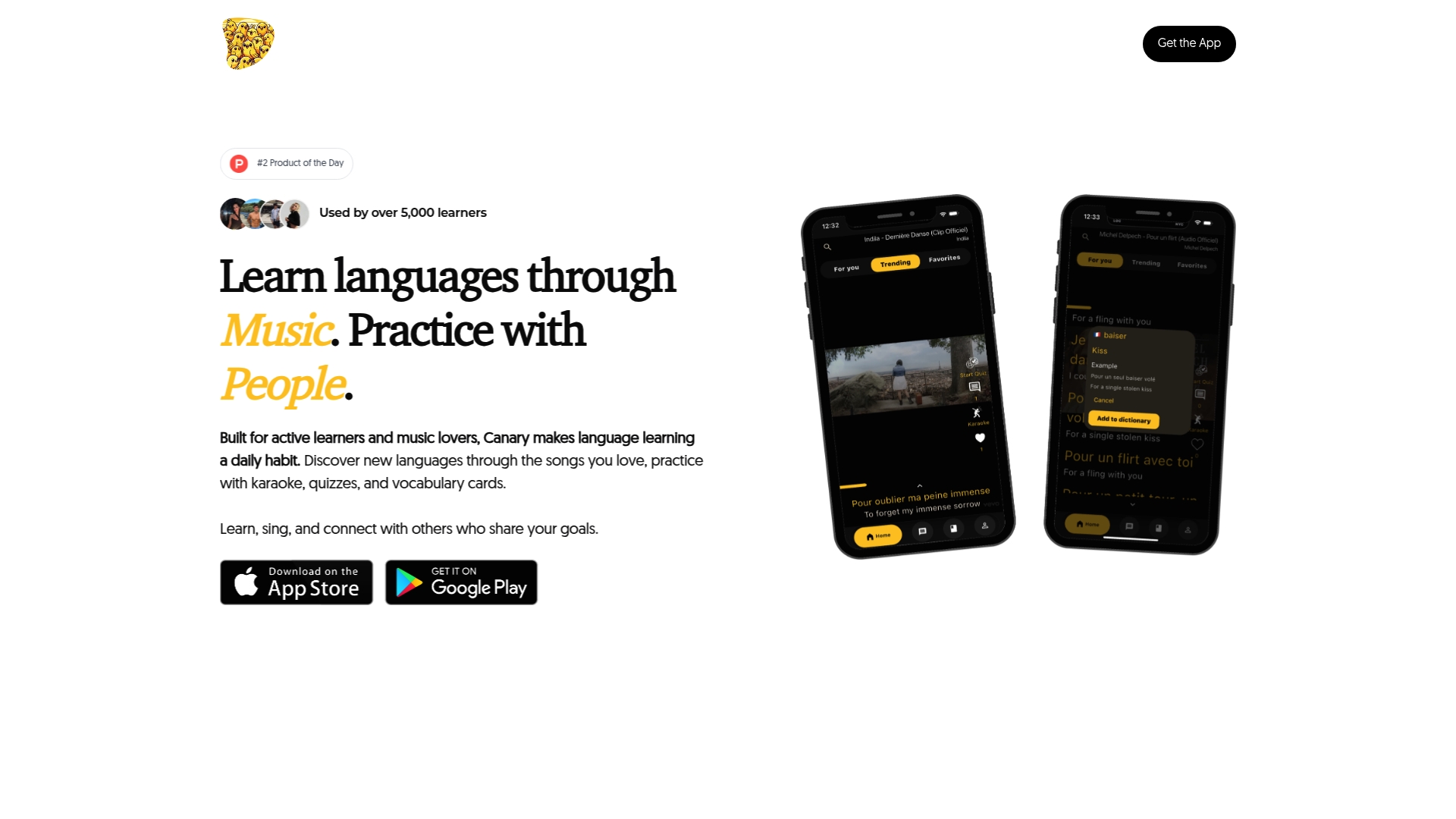
Canary is built for exactly this kind of learning. Every feature on the platform supports the habits in this checklist: karaoke-style singing practice, vocabulary cards pulled from real song lyrics, quizzes, and a global community of learners who share your passion for music. You can learn languages with music in a way that feels natural and genuinely fun. Dive into song-based habit-building with tools designed to make every session count, or jump straight in and try a weekly song challenge to put your new checklist into action today.
Frequently asked questions
How often should I sing or shadow for the best language progress?
Aim for short, daily sessions of about 10 to 15 minutes, since regular musical micro-sequences produce measurable language gains more reliably than infrequent, longer study blocks.
Can music-based methods improve my pronunciation even if I’m a beginner?
Yes. Music-based interventions have been shown to increase pronunciation accuracy by 20% for learners at all levels, including complete beginners.
What kinds of songs work best for language practice?
Songs with clear vocals and natural pacing work best. Ballads support diction and pronunciation clarity, while upbeat tracks reinforce rhythm and help vocabulary stick through repetition.
How can I measure my language progress using music?
Record yourself weekly and compare the recordings over time. Even short musical exercises produce measurable language gains in pronunciation and fluency that are easy to hear when you listen back.