TL;DR:
- Finding real people to practice a new language with is challenging, but platforms like Tandem, HelloTalk, and italki facilitate genuine connections with native speakers. Incorporating music-based challenges and singing during exchanges enhances vocabulary retention and makes learning enjoyable. Consistent routines, safety precautions, and active participation are essential to progressing effectively in language mastery.
Finding real people to practice a new language with is genuinely hard. Most learners spend months on grammar apps but never build the confidence to hold an actual conversation. The good news: a growing wave of global platforms and music-driven tools makes it easier than ever to connect with native speakers, build real friendships, and retain vocabulary far faster. This guide covers every practical step, from choosing the right platform to weaving song-based challenges into your weekly routine, so your language learning feels less like homework and more like a playlist you can’t stop listening to.
Table of Contents
- Platforms to connect internationally
- Step-by-step: Making your first global connection
- Amplify learning with music
- Smart routines, safety, and troubleshooting
- What most guides miss: True engagement means active participation
- Take your global language practice further with music
- Frequently asked questions
Key Takeaways
| Point | Details |
|---|---|
| Use global apps | Platforms like Tandem and HelloTalk connect you with native speakers and international learners for reciprocal practice. |
| Music boosts memory | Singing helps you retain 20-30% more vocabulary than speech alone, thanks to melody. |
| Protect your safety | Always verify profiles, avoid external requests, and use platform safety tools when connecting with new partners. |
| Engage actively | Song-based challenges and real conversations drive deeper learning and confidence. |
| Routine sustains progress | Consistent weekly sessions and post-practice reviews are key to steady advancement. |
Platforms to connect internationally
Once you understand why global connection matters, the next step is choosing the right digital platform. Three options dominate the space, and each has a distinct personality worth knowing before you sign up.
Tandem is built around one-on-one language exchange. You pair with a native speaker who wants to learn your language, and you swap roles mid-conversation. The exchange apps like Tandem connect you with global learners for reciprocal practice via text, voice, video calls, and group audio rooms. The interface is clean, the matching filters are solid, and the correction tools let your partner highlight mistakes without breaking the flow of conversation. If you are the kind of learner who thrives with a consistent partner and a clear structure, Tandem fits well.
HelloTalk leans more social. Think of it as a language-focused social network where you post Moments, join Voicerooms, and watch Livestreams from native speakers anywhere on the planet. HelloTalk’s built-in features include translation, correction tools, and video chats that make it easier to drop into a real conversation even when your skills are still developing. The Moments feed is particularly useful for music lovers because you can share a song clip, tag the language, and instantly spark reactions from speakers worldwide.
italki plays a different game entirely. Rather than peer exchange, it connects you with professional and community tutors for paid sessions across 150+ languages. One-on-one video lessons mean you get focused, corrected, structured practice that free peer exchanges sometimes lack. Community tutors are more affordable; professional teachers bring grammar depth. Many serious learners use italki alongside a free app like Tandem, getting casual conversation practice from peers and deeper grammar work from tutors.
Here is a quick side-by-side so you can pick your starting point:
| Platform | Best for | Cost | Key features |
|---|---|---|---|
| Tandem | 1-on-1 exchange | Free (Premium option) | 50/50 time splits, correction tools, Language Parties |
| HelloTalk | Social practice | Free (VIP option) | Moments, Voicerooms, Livestreams, translation |
| italki | Structured lessons | Paid per session | Native tutors, 150+ languages, community exchange |
Understanding the benefits of song-based learning will also help you pick the right platform because some apps let you share audio clips directly while others require you to link out. Before your first session, share a favorite song from your target language as a conversation starter. It works every time.
Pro Tip: Use a song you genuinely love, not a “textbook classic.” Your real enthusiasm signals authenticity and gives your partner something personal to respond to, which is how lasting language friendships begin.
For more ideas on weaving music into your study plan, explore these language learning tips for music lovers before your first session.
Step-by-step: Making your first global connection
With the platforms selected, let’s walk through your first meaningful interaction.
1. Create a strong profile. Upload a real photo, write a short bio in both your native language and the one you are learning, and list your interests. Mention music genres and specific artists. This alone filters your matches toward people who actually share your world.
2. Choose your focus language and level honestly. Overestimating your level leads to frustrating conversations. Underestimating it wastes both partners’ time. Pick the closest match and note that you are open to correction.
3. Open with a song. Send a short voice note singing or humming the hook of a song you like in your target language. It sounds wild, but it removes the awkward opener problem entirely. Your partner either knows the song and lights up, or they discover something new and thank you for it.
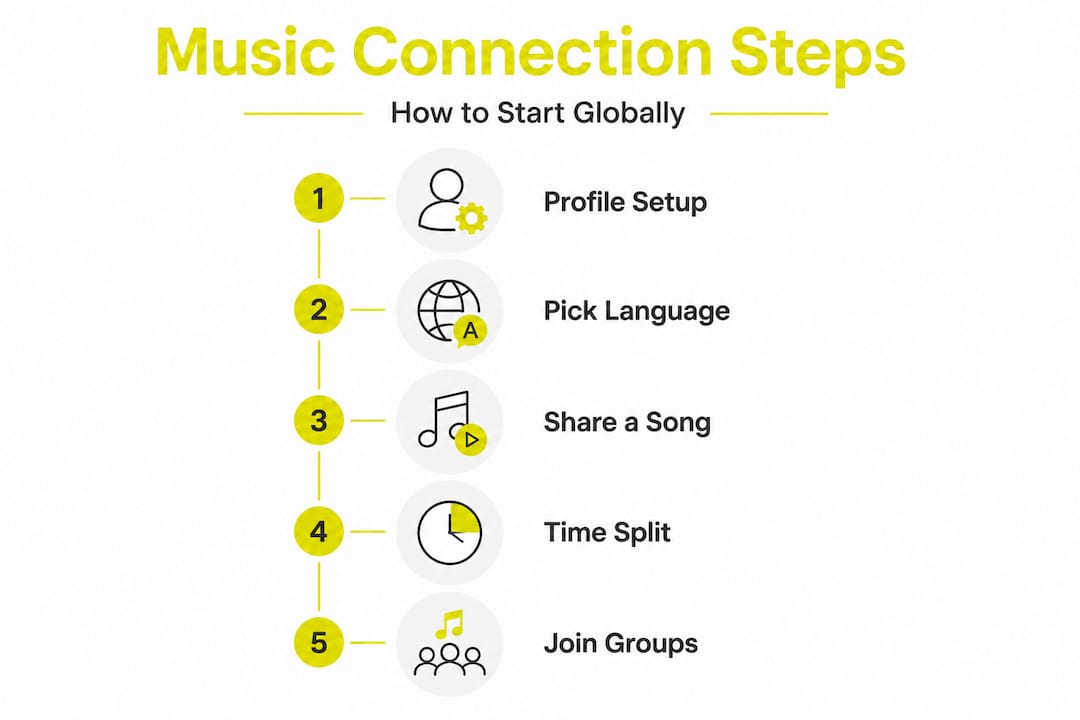
4. Set the time split. Tandem’s structured exchange format recommends 50/50 time splits so neither partner feels like an unpaid tutor. Use correction tools and set a language preference at the start of each session so both people know what to expect.
5. Use correction features actively. On HelloTalk, built-in translation and correction tools let your partner flag grammar or pronunciation errors without pausing the whole conversation. Review those corrections after the session, not during it.
6. Join a group session. Language Parties on Tandem and Voicerooms on HelloTalk put you in a low-pressure group where you can listen, observe, and gradually contribute. This is perfect for beginners who freeze during one-on-one practice.
Here is a simple data snapshot showing how session type affects learning outcomes:
| Session type | Pressure level | Best outcome | Time needed |
|---|---|---|---|
| 1-on-1 exchange | Medium | Conversational fluency | 30-45 min |
| Group audio room | Low | Listening and confidence | 20-30 min |
| Paid tutor lesson | Structured | Grammar and accuracy | 45-60 min |
| Song challenge thread | Very low | Vocabulary and pronunciation | 10-15 min |
For real examples of learning with music in action, you will find that song-focused sessions consistently outperform standard conversation drills for vocabulary retention. The educational benefits of music go far deeper than just making study feel fun.
Pro Tip: Set a micro-goal before every session. “Tonight I will use three new words from the song I learned yesterday” beats “I will practice Spanish” by a wide margin. Specific targets create measurable wins.
Amplify learning with music
Once connected, step up the impact by integrating music for richer, faster learning.

Singing activates multiple brain regions at once. You process rhythm, melody, meaning, and emotion simultaneously, which creates layered memory. Vocabulary attached to a melody sticks in a way that vocabulary written on a flashcard simply does not. University of Edinburgh research confirms singing retains 20-30% more vocabulary than speech alone because melody acts as a built-in memory cue. That is not a small edge. It compounds over weeks and months.
Here is how to bring music into your practice sessions actively:
- Use a karaoke app for active singing. Apps like Turtle Tune and Singit offer lyrics highlighting, tap-to-translate, and slowed playback that let you isolate tricky phrases and repeat them until they feel natural.
- Share a weekly song challenge. Post a lyric snippet to your exchange partner and ask them to explain the slang or regional expression in it. This turns a song into a cultural lesson.
- Sing together over video. It feels goofy for exactly thirty seconds and then it becomes one of the most memorable learning experiences you will have. Shared laughter builds retention.
- Focus on one verse at a time. Do not try to learn an entire song in one session. Master eight lines, understand every word, then move on.
- Record yourself singing. Listening back reveals pronunciation patterns you cannot hear in real time, especially vowel sounds and tonal shifts in languages like Mandarin or Portuguese.
Daily practice with songs accelerates fluency because you are reinforcing the same vocabulary in emotional context, not just rote repetition. And understanding the deeper role of music in learning helps you make smarter choices about which songs to pick and how long to spend on each one.
Stat spotlight: Singing in your target language can boost vocabulary retention by 20-30% compared to reading or listening alone. That means a 30-minute singing session is worth roughly 36-39 minutes of standard study.
Pro Tip: Slow playback is a game changer for pronunciation. Drop a song to 75% speed on a karaoke app or music player, shadow the singer word by word, then bring it back to full speed. Your mouth learns the muscle memory faster at a slower pace.
Smart routines, safety, and troubleshooting
With musical engagement underway, steady routines and safety complete your toolkit.
Build a sustainable weekly schedule. Weekly 30-60 minute sessions with regular note review and progress tracking produce sustained gains. Consistency always outperforms intensity. Three 30-minute sessions per week beats one 90-minute marathon that leaves you burned out.
Reinforce after every session. Spaced repetition review after sessions, paired with micro-goals and structured study, optimizes retention. Write down every correction your partner made. Add new vocabulary to a flashcard app that night, not three days later. Then set one goal for the next session based on what tripped you up.
Here are the key habits worth building into every week:
- Review session notes within 24 hours while the context is still fresh
- Add new words to a spaced repetition system like Anki immediately after your session
- Pick next week’s song by Sunday so you arrive prepared
- Set a single vocabulary or grammar focus for each upcoming session
- Track sessions completed, not just time spent
Stay safe online. Language exchange apps attract genuine learners, but a small number of bad actors exist on every free platform.
Safety warning: Watch for scammers on free apps. Check profile pictures with a reverse image search, verify any unusual job or background claims, and never move a conversation to an external app or investment platform at someone else’s request. Report suspicious accounts using the app’s built-in tools immediately.
Red flags to watch for include: profiles with no posts or activity history, partners who push quickly toward personal financial topics, anyone who avoids video calls after several exchanges, and accounts that seem overly polished or scripted. Trust your instincts. Real language partners are interested in your language skills, not your bank details.
Learning the full benefits of languages with music also helps you stay focused on learning outcomes rather than getting sidetracked into unproductive or unsafe exchanges.
What most guides miss: True engagement means active participation
After reviewing core routines and safety, here is an honest angle drawn from years of watching how language learners actually progress versus how they think they will progress.
Most people download a language exchange app, browse profiles for twenty minutes, send two messages, and check their phone the next morning hoping for a response. That is passive. And passive never works. The apps are just tools. The real work is showing up with something to share, a song fragment, a question about a lyric, a voice note attempting a tricky phrase, and being willing to sound imperfect.
Free exchanges genuinely build conversational instinct. You learn how real people talk, including the slang, the fillers, the rhythm of natural speech that textbooks never capture. But free exchanges build conversation while paid tutors offer structure. One without the other leaves gaps. If your grammar is weak, casual conversation can accidentally reinforce bad habits. A periodic italki session with a grammar-focused tutor catches the patterns before they solidify.
Music is where most guides stop at “listen to songs in your target language.” That is the floor, not the ceiling. The real return comes from active engagement: singing along, shadowing pronunciation, pulling lyrics apart word by word with a native speaker, and building a personal library of songs that mean something to you. Passive background listening feels productive but rarely is. Active song-based learning with a real partner on the other end of a call transforms vocabulary into living memory.
The learners who make the fastest, most durable progress combine three things: consistent free peer exchange for natural conversation, occasional structured sessions for depth, and a music routine that makes the whole process enjoyable enough to do every single day. None of those three elements is optional. Drop one and progress slows significantly. Combine all three and learning starts to feel effortless, because it starts to feel like something you actually want to do.
Take your global language practice further with music
Connecting with a global learning partner is the first step. Keeping that momentum, session after session, week after week, is where Canary comes in.
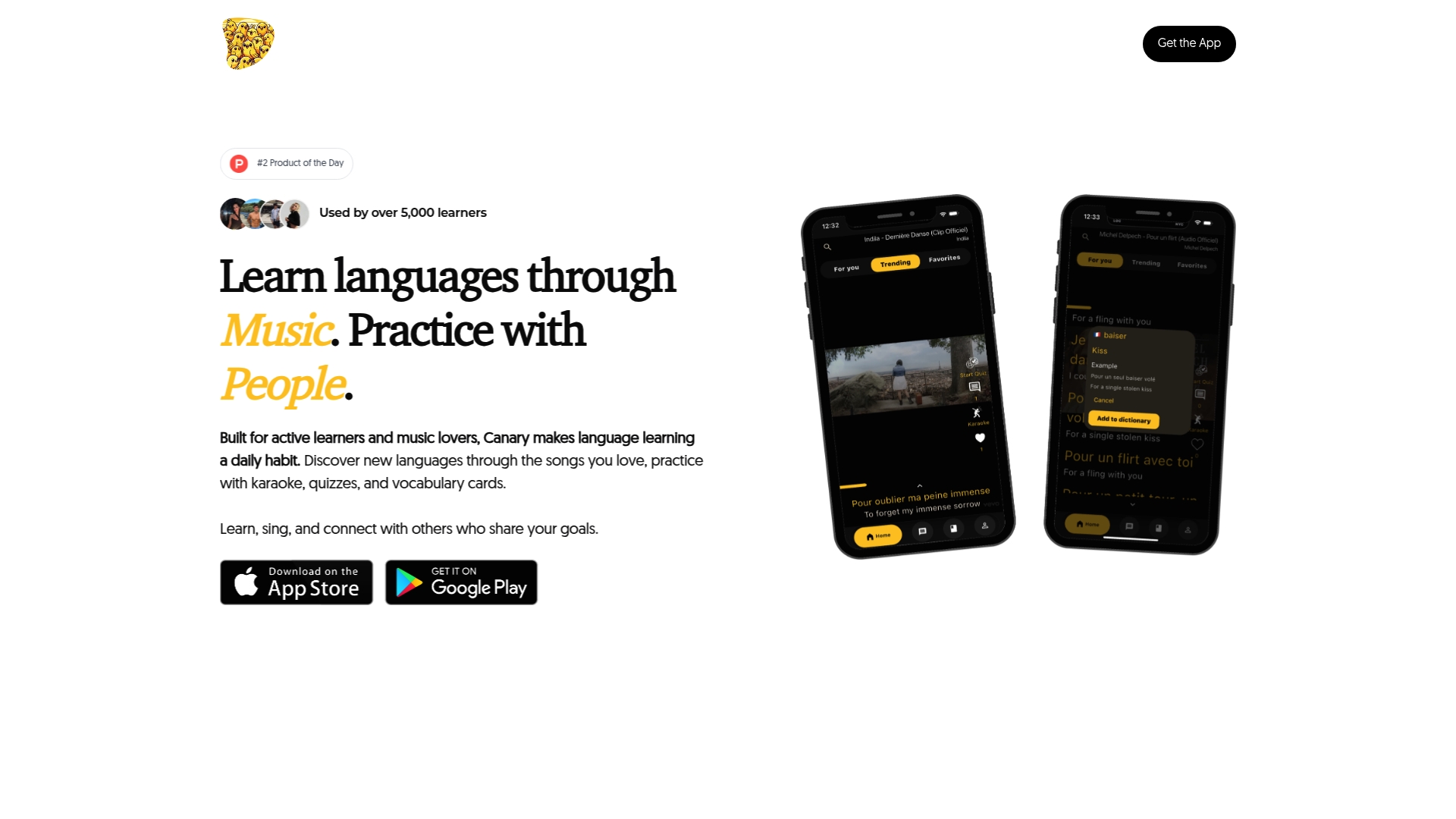
Canary is built for exactly this kind of learner: someone who loves music, wants real global connection, and needs a platform that makes showing up daily feel rewarding. From song-of-the-week challenges to karaoke features with vocabulary cards and pronunciation practice, Canary turns every session into something you look forward to. Explore engaging ways to practice languages socially through music, or revisit the full case for song-based language learning to deepen your understanding of why this approach works. And if you want a ready-made musical anchor for your practice week, jump into Canary’s song of the week challenge and start singing with learners from around the world today.
Frequently asked questions
What is the most effective platform to connect with language learners globally?
Tandem and HelloTalk are the top free choices for peer-to-peer exchange via text, voice, and group audio rooms, while italki adds structured paid sessions with native tutors across more than 150 languages for learners who want grammar depth alongside conversation practice.
How does music improve vocabulary retention?
Singing in a target language boosts vocabulary retention by 20-30% compared to speech alone because melody acts as a built-in memory trigger, making new words far easier to recall in context.
What safety tips should I follow for online exchanges?
Always run a reverse image search on profile photos, verify any unusual background claims, and avoid shifting conversations to external apps or engaging with any financial requests, reporting suspicious accounts immediately using the platform’s built-in tools.
How can music lovers make language exchanges more interactive?
Open with a voice note of a song hook, then use karaoke apps with lyrics highlighting and slowed playback to practice tricky phrases together, setting up weekly song challenges that turn cultural context into a shared activity.
What weekly routine supports global language learning?
Commit to 30-60 minute sessions weekly, review your notes and corrections within 24 hours, and track your session count and vocabulary growth to stay motivated and measure real progress over time.