Learning a new language can feel overwhelming when every lesson sounds artificial and disconnected from real life. For music-loving adults, cultural immersion opens the door to genuine conversation, deeper pronunciation practice, and authentic understanding. Cultural immersion combines authentic language exposure with genuine human connection, helping you absorb the rhythm, humor, and stories woven into everyday speech. This article explores how music and immersive experiences transform language learning into cultural connection and lasting fluency.
Table of Contents
- Defining Cultural Immersion In Language Learning
- Types Of Immersive Language Experiences
- How Cultural Immersion Enhances Fluency
- Practical Applications For Music-Based Learning
- Challenges And Common Pitfalls In Immersion
Key Takeaways
| Point | Details |
|---|---|
| Cultural Immersion Boosts Learning | Engaging directly with the language in real-life contexts promotes deeper understanding and enhances fluency. |
| Variety of Immersive Experiences | Different immersion methods, from study abroad to music-based learning, offer unique ways to connect with the language culturally. |
| Challenges are Part of Growth | Facing cultural shock and language fatigue is a normal part of the immersion journey that leads to personal and linguistic development. |
| Music Enhances Language Learning | Utilizing music in language practice creates emotional connections and improves pronunciation, making learning more enjoyable and effective. |
Defining Cultural Immersion in Language Learning
Cultural immersion in language learning means far more than memorizing vocabulary lists or drilling grammar rules. It’s about stepping into the living, breathing context where a language actually exists. Think of it as learning Spanish not from a textbook, but by understanding the rhythm of conversation, the weight of humor, and the stories embedded in how people actually speak.
Cultural immersion combines authentic language exposure with genuine human connection. When you engage with cultural immersion in language learning, you’re absorbing idiomatic expressions, slang, and cultural nuances that no app can fully teach. This approach goes beyond grammar and vocabulary into real-life interactions where language lives.
What makes cultural immersion different from traditional learning?
- Real-world context: You hear language as native speakers actually use it, not simplified or scripted versions
- Emotional connection: Learning through authentic stories and experiences creates stronger memory retention
- Cultural understanding: You grasp why people speak the way they do, not just what words mean
- Active participation: You’re not passive; you’re engaging, responding, and interacting
Imagine learning French through song lyrics rather than a grammar book. You pick up pronunciation naturally, understand cultural references, and connect emotionally with the language. That’s immersion in action.
Motivational factors in immersion programs show that learners gain far more than linguistic abilities—they develop genuine cultural understanding and appreciation. This dual benefit transforms language from a skill into a bridge between worlds.
However, immersion isn’t always easy. Learners often face cultural shock or feel overwhelmed by unfamiliar social norms. These challenges are normal and actually part of the growth process.
The core idea: You’re not just learning words. You’re learning how to think, feel, and communicate like a member of that culture. Music becomes your tool for this transformation because songs carry culture, emotion, and authentic language in one powerful package.
Cultural immersion transforms language learning from abstract memorization into meaningful human connection.
Pro tip: Start small with cultural immersion by listening to music in your target language daily and paying attention to how native speakers express emotions—this builds intuition for the language’s personality before you need to use it in conversation.
Types of Immersive Language Experiences
Immersive language experiences come in many forms, each offering different levels of engagement and cultural depth. Not every learner has the same opportunity or timeline, so understanding the variety helps you pick what fits your life right now.
Study abroad programs remain the gold standard for total immersion. You’re living in a country where the language surrounds you—at cafes, shops, and social gatherings. This creates constant exposure and forces you to adapt quickly. Study abroad and international internships develop intercultural competence and transformative learning that short-term experiences sometimes cannot match.
But study abroad isn’t your only option. Here are other proven immersive approaches:
- Music-based learning: Engage with songs, lyrics, and karaoke in your target language to pick up pronunciation and cultural references naturally
- Online language exchanges: Connect with native speakers through video calls or messaging apps for real conversations
- Global service learning: Volunteer or work abroad with community-focused projects that blend language practice with cultural service
- Short-term immersion trips: Weekend or week-long intensive programs that don’t require semester-long commitments
- Cultural events and meetups: Attend festivals, movie nights, or conversation clubs in your area
Short-term programs work well for beginners and busy professionals. You get concentrated exposure without months away from home or work. A two-week intensive trip can shift your perspective and accelerate learning faster than months of solo study.
Long-term immersion builds deeper cultural understanding. When you live somewhere for months or years, you move beyond tourist experiences into real community life. You understand inside jokes, navigate social complexity, and develop genuine friendships. This is where true fluency takes root.
Different immersion types suit different learners—the best choice aligns with your goals, timeline, and resources.
The intensity of your experience matters too. Passive immersion (listening to podcasts) differs from active immersion (speaking daily with native speakers). Active participation accelerates learning because you’re forced to produce language, not just absorb it.
Musician-learners have a unique advantage here. You can create immersion through music-based language learning approaches that blend your passion with cultural connection, turning practice sessions into cultural exploration.
Pro tip: Start with short-term, music-focused immersion experiences like online song exchanges or virtual karaoke sessions with native speakers if study abroad isn’t immediately possible—these build momentum and confidence while fitting your current schedule.
Here’s a comparison of different immersive language experiences and their key characteristics:
| Immersion Type | Required Commitment | Cultural Depth | Accessibility |
|---|---|---|---|
| Study Abroad | Months or longer | Very high immersion | Limited, costly |
| Short-term Trips | 1-2 weeks | Moderate exposure | Moderate, more affordable |
| Online Language Exchange | Flexible, ongoing | Conversational focus | High, easy to access |
| Music-based Learning | Daily or weekly | Cultural references | Very high, convenient |
| Local Meetups/Events | Occasional | Authentic interactions | High in urban areas |
How Cultural Immersion Enhances Fluency
Fluency isn’t just about knowing vocabulary or grammar rules. It’s about thinking and communicating naturally, without translating in your head. Cultural immersion creates the conditions where this happens naturally.
When you learn language in context, your brain stops treating words as isolated items and starts treating them as tools for real communication. Cultural immersion accelerates language acquisition because you encounter language where it actually lives—in conversations, humor, relationships, and daily challenges.
Here’s what changes when you immerse yourself:
- Idiomatic expressions stick: You learn not just what words mean, but when and how native speakers use them
- Accent and intonation improve naturally: Hearing language constantly trains your ear without forced drills
- Social navigation becomes intuitive: You understand unwritten rules about politeness, formality, and appropriateness
- Confidence skyrockets: Real interactions prove you can communicate, which eliminates self-doubt
- Long-term retention increases: Context-based learning creates stronger neural pathways than memorization
Think about how you learned your first language. You didn’t study grammar; you lived it. Immersion recreates that natural learning environment in your target language.

Cultural immersion improves accent, intonation, and authentic social interaction by placing you in situations where you must understand nuance and respond appropriately. This builds intuitive fluency—the kind that feels automatic, not rehearsed.
Music accelerates this process dramatically. Songs contain cultural references, emotional depth, and natural pronunciation patterns. When you learn through music-based language learning, you’re absorbing fluency patterns while connecting emotionally with the culture.
Fluency emerges when you practice language in meaningful contexts where communication matters—not in isolated exercises.
The key difference: classroom learning teaches you about language. Immersion teaches you language itself. Your brain shifts from conscious processing (“I need to conjugate this verb”) to automatic processing (“I just naturally said it right”).
Real conversations force your brain to work faster, adapt quickly, and find creative solutions. This pressure transforms theoretical knowledge into practical fluency.
Pro tip: Practice pronunciation daily through singing in your target language, then have real conversations with native speakers the same day—combining music’s natural cadence with live interaction accelerates accent improvement and conversational confidence simultaneously.
Practical Applications for Music-Based Learning
Music-based language learning transforms theory into action. Instead of abstract drills, you’re engaging with real songs, artists, and cultural moments that matter. This approach works because it combines fluency-building with genuine enjoyment.

Start with songs you actually want to listen to. Your taste in music is already a window into the culture. Interactive engagement through songs and lyrics improves listening skills, emotional connection, and motivation far more effectively than forced materials.
Here are practical ways to apply music-based learning:
- Song annotation practice: Print lyrics and highlight new words, idiomatic phrases, and cultural references as you listen
- Karaoke sessions: Record yourself singing and compare pronunciation to native speakers—this builds accent awareness instantly
- Lyric translation challenges: Translate song lines into your native language to understand wordplay and deeper meaning
- Themed playlists: Create playlists around topics (love songs, protest music, comedy) to expand vocabulary in context
- Conversation starters: Use song lyrics to start conversations with native speakers about what the music means culturally
- Rhythm repetition: Tap out rhythms while repeating phrases to reinforce intonation and natural pacing
The beauty of this approach is that music engages multiple learning pathways simultaneously. Your brain processes rhythm, melody, emotion, and vocabulary at the same time, creating stronger neural connections than traditional studying.
Start small. Pick one song per week. Spend time with it—listen multiple times, read the lyrics, look up unfamiliar words, sing it badly, then sing it better. One deeply explored song beats ten songs skimmed.
Find native speakers who share your musical taste. Online music communities, social platforms, and language exchange apps connect you with people who want to discuss the exact songs you love. These organic conversations feel natural because you’re bonding over shared interest, not forced language practice.
Music-based learning works because it combines language acquisition with cultural joy—you’re not grinding; you’re connecting.
Track your progress by revisiting songs from months ago. You’ll notice words that confused you are now automatic. Accents improve subtly. Emotional nuance becomes clearer. This organic progress builds confidence without pressure.
Pro tip: Choose one favorite song, learn it completely this week (lyrics, pronunciation, cultural meaning), then find a native speaker to discuss why that song matters to you—combining deep music study with authentic conversation accelerates both fluency and cultural understanding.
Challenges and Common Pitfalls in Immersion
Immersion sounds perfect in theory, but real life brings obstacles. Understanding these challenges upfront helps you prepare strategies and avoid discouragement when things get difficult.
Financial constraints top the list for many learners. Study abroad costs thousands of dollars. International trips require time away from work. Not everyone has these resources, and that’s okay—it doesn’t mean you can’t experience meaningful immersion.
Common immersion challenges include cultural shock, adaptation difficulties, and relationship strain. These aren’t failures; they’re normal parts of deep cultural learning. When you push beyond your comfort zone, discomfort signals growth.
Here are real obstacles you might face:
- Cultural shock: Unfamiliar social norms, humor, and communication styles feel jarring and exhausting
- Language fatigue: Constant mental effort to understand and produce language drains energy quickly
- Homesickness: Missing familiar foods, people, and routines creates emotional weight
- Imposter syndrome: Feeling like you’re not progressing fast enough despite genuine improvement
- Isolation: Standing out as a foreigner can make socializing feel intimidating
- Insufficient preparation: Jumping into immersion without studying basics leads to frustration
Lack of continuous reflection and insufficient pre-immersion preparation reduce transformative outcomes. You need both before-and-during support to maximize benefits.
The biggest mistake? Expecting overnight fluency. Immersion accelerates learning, but it doesn’t eliminate the time required to truly master a language. Your brain needs patience.
Another common pitfall: isolating yourself. Learners sometimes spend immersion time only with fellow non-natives, defeating the purpose. Push yourself into uncomfortable conversations with native speakers, even when your accent feels terrible.
Immersion challenges are temporary; they’re part of the transformation, not proof that you’re failing.
Music-based immersion sidesteps some traditional obstacles. You can practice daily at home, enjoy music from your favorite artists, and connect with communities online—no expensive trip required. This lowers barriers while maintaining cultural depth.
Start with manageable immersion goals. Commit to singing in your target language for 20 minutes daily. Have one meaningful conversation weekly with a native speaker. These small, consistent practices build momentum without overwhelming you.
This table summarizes common challenges in language immersion and practical coping strategies:
| Challenge | Example Scenario | Coping Strategy |
|---|---|---|
| Cultural Shock | Misreading social cues | Ask questions, observe respectfully |
| Language Fatigue | Feeling mentally drained | Take short breaks, vary activities |
| Homesickness | Missing home comforts | Engage with supportive communities |
| Isolation | Hesitant to join groups | Initiate small conversations daily |
| Imposter Syndrome | Doubting progress | Track small wins, seek feedback |
Pro tip: When cultural shock or language fatigue hits, pause ambitious immersion goals for a day, listen to music you love in your target language, and reconnect with why you started—this emotional reset prevents burnout while maintaining progress.
Experience True Cultural Immersion with Music-Based Language Learning
The article highlights key challenges in cultural immersion such as language fatigue, cultural shock, and the struggle to connect authentically with native speakers. If you are looking to overcome these hurdles and actively engage with language through meaningful contexts like music and social interaction, there is a solution designed just for you. Canary offers an innovative platform that blends cultural immersion with music-based learning, helping you improve pronunciation, build vocabulary, and understand language in real-life cultural settings.
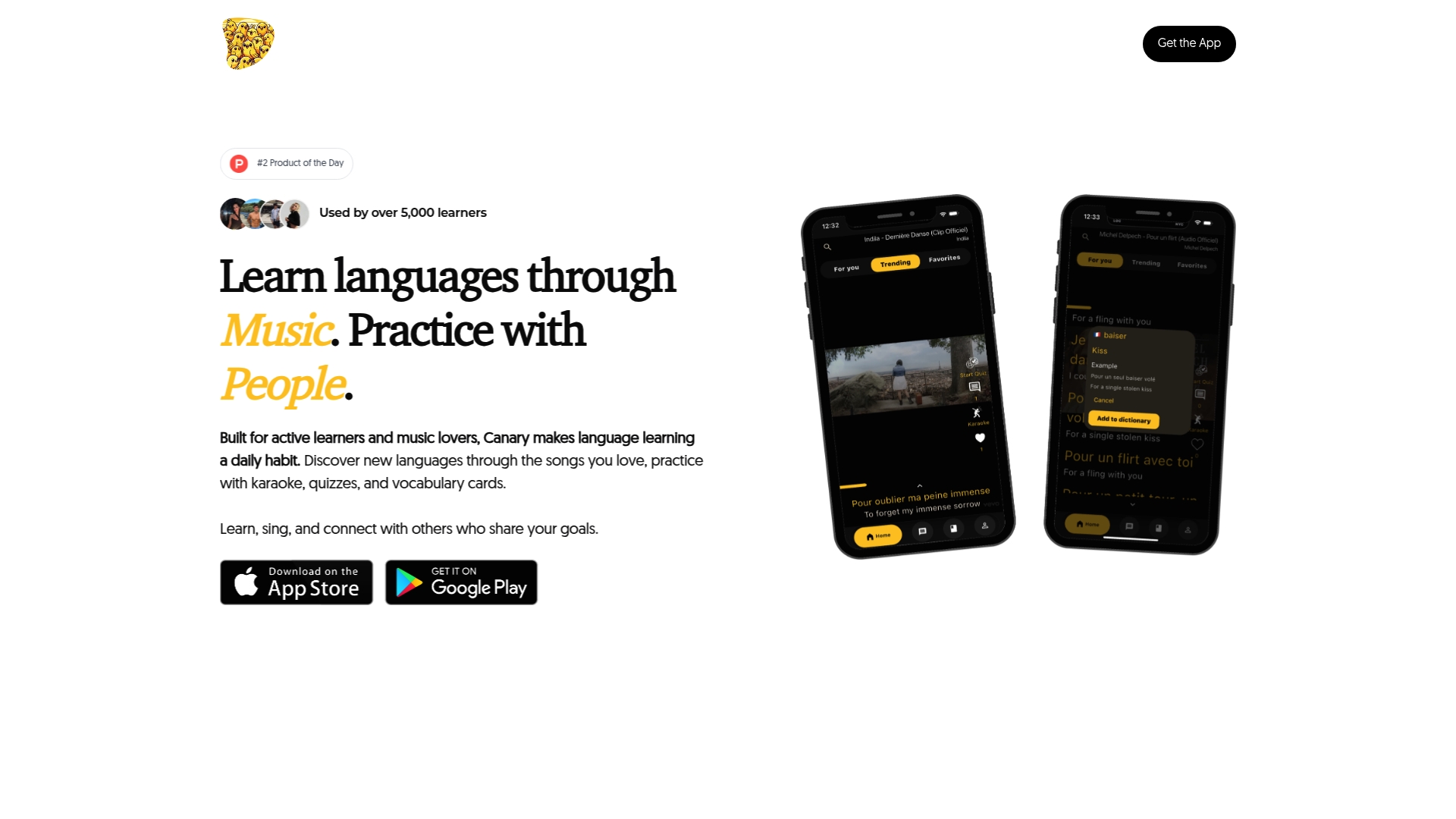
Start your journey by exploring Canary’s platform, where every song becomes a doorway to fluent communication and cultural insight. Don’t let traditional learning frustrations hold you back. Join a community of learners and musicians worldwide who transform language learning into a vibrant, enjoyable experience. Dive into music-based language learning approaches and make cultural immersion a part of your daily routine. Act now to turn your language goals into living conversations with Canary.
Frequently Asked Questions
What is cultural immersion in language learning?
Cultural immersion in language learning refers to engaging with a language in its natural context, emphasizing authentic exposure and real-life interactions rather than just memorizing vocabulary and grammar.
How does cultural immersion enhance language fluency?
Cultural immersion enhances fluency by allowing learners to think and communicate naturally in the language. It supports faster acquisition of idiomatic expressions, improves accent and intonation, and boosts confidence through real conversations.
What types of immersive language experiences are available?
Types of immersive language experiences include study abroad programs, short-term trips, online language exchanges, music-based learning, and local cultural events or meetups. Each offers varying levels of engagement and cultural depth.
What challenges can learners face during immersion?
Common challenges during immersion include cultural shock, language fatigue, homesickness, isolation, and feelings of inadequacy. It’s important to have coping strategies, such as taking breaks, connecting with supportive communities, and setting manageable goals.