Learning a new language through traditional textbooks and repetitive drills often feels tedious and ineffective, leaving many learners frustrated and unmotivated. However, learning English through songs improves vocabulary acquisition by 32%, pronunciation by 22%, and listening comprehension by 28%, making music one of the most powerful tools for daily language practice. This guide reveals how incorporating songs into your daily routine transforms language learning from a chore into an enjoyable, effective habit that enhances pronunciation, expands vocabulary, and builds genuine communication skills through engaging, music-driven methods.
Table of Contents
- Why Songs Enhance Daily Language Practice
- Core Methods For Daily Song-Based Language Practice
- Maximizing Learning: Storytelling, Translation, And Triple Input
- Musical Expertise’s Role And Communication Skill Benefits
- Discover Sing With Canary For Fun Daily Language Practice
- FAQ
Key takeaways
| Point | Details |
|---|---|
| Music enhances multiple skills | Songs simultaneously improve vocabulary, pronunciation, and listening comprehension through engaging repetition. |
| Lower anxiety boosts retention | Musical practice creates a relaxed learning environment that facilitates better absorption and memory encoding. |
| AI tools democratize learning | Technology-supported lyric creation and guided singing make song-based practice accessible to all skill levels. |
| Triple input accelerates acquisition | Combining text, audio, and visuals through songs provides multiple pathways for faster language retention. |
| Storytelling deepens engagement | Narrative context before lyrics creates emotional connections that significantly improve comprehension and motivation. |
Why songs enhance daily language practice
Music transforms language learning by engaging multiple cognitive pathways simultaneously, making daily practice both effective and enjoyable. Songs provide natural repetition that aids memory encoding without the monotony of traditional drills. The melodic structure helps learners internalize pronunciation patterns, while rhythmic elements reinforce proper stress and intonation.
Research demonstrates that music helps lower language anxiety, creating an optimal emotional state for language acquisition. When learners feel relaxed and engaged, their brains absorb new vocabulary and grammatical structures more efficiently. This reduced anxiety directly translates to better retention and increased willingness to practice speaking.
The multisensory nature of songs provides exceptional learning languages with songs benefits through combined auditory, visual, and kinesthetic input. Listening to melodies activates auditory processing centers, reading lyrics engages visual learning pathways, and singing along incorporates physical muscle memory for pronunciation. This triple approach creates stronger neural connections than single-mode learning methods.
Songs naturally incorporate authentic language usage, exposing learners to colloquial expressions, cultural references, and natural speech patterns rarely found in textbooks. The emotional resonance of music makes vocabulary more memorable, as words learned within meaningful contexts stick far better than isolated vocabulary lists. Daily exposure to songs builds familiarity with native speaker rhythm and flow.
“Music creates a bridge between mechanical language study and natural communication, allowing learners to absorb language the way children do, through repetition, emotion, and context.”
The universal appeal of music keeps learners motivated to practice daily, unlike traditional study methods that quickly become tedious. When you genuinely enjoy your practice material, consistency becomes effortless. Key advantages include:
- Automatic repetition through replay value without boredom
- Cultural immersion through authentic artistic expression
- Flexible practice anywhere with minimal equipment
- Social connection through shared musical experiences
Core methods for daily song-based language practice
Implementing effective song-based practice requires strategic approaches that maximize learning outcomes while maintaining engagement. These methods transform passive listening into active skill development through structured interaction with musical content.
-
Lyric analysis practice: Select songs at your current proficiency level and systematically study lyrics before listening. Identify unfamiliar vocabulary, grammatical structures, and idiomatic expressions. Write translations or definitions, then listen while following along to connect written words with pronunciation.
-
Guided singing sessions: Use technology platforms that provide real-time feedback on pronunciation and pitch. AI-supported lyric composition and guided singing significantly improve language proficiency, confidence, and creative expression. Sign up for guided singing to access personalized feedback that accelerates improvement.
-
Repetitive listening cycles: Choose three to five favorite songs each week and listen repeatedly throughout daily activities. This passive exposure reinforces vocabulary and pronunciation patterns subconsciously. Sing along whenever possible to activate muscle memory for speech production.
-
Vocabulary extraction exercises: After becoming familiar with a song, extract 10 to 15 new words or phrases and create flashcards with contextual sentences from the lyrics. Review these daily, focusing on how words function within natural language flow rather than isolated definitions.
-
Progressive complexity scaling: Start with slower, simpler songs featuring clear pronunciation and basic vocabulary. Gradually advance to faster tempos and more complex linguistic structures as your skills develop. This scaffolded approach prevents frustration while maintaining challenge.
-
Active pronunciation drills: Isolate challenging phrases from songs and practice them slowly, focusing on accurate sound production. Record yourself and compare to the original, adjusting tongue position, breath control, and intonation until your production matches native speaker patterns.
Pro Tip: Create themed playlists organized by grammar structures or vocabulary topics to provide focused practice on specific language elements while maintaining musical enjoyment.
The key to success lies in consistent daily engagement rather than lengthy irregular sessions. Even 15 minutes of focused song-based practice yields better results than occasional marathon study sessions. Technology enhances this process by providing personalized content recommendations, tracking progress, and offering immediate feedback that would be impossible with traditional methods alone.

Maximizing learning: storytelling, translation, and triple input
Deeper comprehension emerges when learners engage with songs through multiple complementary strategies that activate different cognitive processing systems. These advanced techniques transform surface-level listening into profound language acquisition.
Starting with a compelling story linked to a song increases engagement and comprehension by providing emotional and contextual anchors. Before diving into lyrics, research the song’s background, the artist’s intent, and the cultural context. This narrative framework makes vocabulary and phrases more memorable because your brain connects language to meaningful stories rather than arbitrary word lists.
Translation serves as a powerful comprehension tool when used strategically. Rather than avoiding your native language entirely, compare original lyrics with quality translations to understand nuanced meanings, idiomatic expressions, and cultural references that might otherwise remain opaque. This bilingual approach clarifies confusion and builds confidence in interpretation skills.
Triple input via lyrics, music videos, and melody enhances comprehension and retention significantly by engaging visual, auditory, and textual processing simultaneously. Reading lyrics while watching music videos and listening to melodies creates redundant neural pathways that strengthen memory encoding. Each input mode reinforces the others, leading to faster, more durable learning.

| Learning Approach | Input Modalities | Retention Rate | Engagement Level |
|---|---|---|---|
| Audio only | Single (auditory) | Moderate | Low to moderate |
| Lyrics only | Single (visual text) | Low to moderate | Low |
| Audio plus lyrics | Dual (auditory, visual) | High | Moderate to high |
| Triple input (audio, lyrics, video) | Triple (auditory, visual, kinesthetic) | Very high | Very high |
This multimodal approach caters to diverse learning styles, ensuring that visual, auditory, and kinesthetic learners all find optimal pathways to acquisition. Visual learners benefit from reading lyrics and watching videos, auditory learners thrive on melodic repetition, and kinesthetic learners engage through singing and physical movement.
Pro Tip: Create your own music videos by filming yourself performing songs with subtitles, combining all three input modes while adding personal creative expression that deepens emotional connection to the material.
Contextual storytelling before lyric study activates prior knowledge and creates anticipation that primes your brain for focused attention. When you understand why a song matters culturally or personally, every word carries greater significance. This emotional investment triggers stronger memory formation than mechanical repetition ever could.
The lyrics learning guide provides detailed strategies for implementing these techniques systematically. By combining narrative context, bilingual comparison, and triple sensory input, you create optimal conditions for rapid language acquisition that feels effortless and enjoyable rather than laborious and tedious.
Musical expertise’s role and communication skill benefits
Musical training and regular singing practice create neurological advantages that extend far beyond melody recognition, directly enhancing language processing and communication abilities. Understanding these connections reveals why song-based daily practice produces such remarkable fluency improvements.
Musical expertise benefits speech processing at behavioral and neurophysiological levels, as musicians demonstrate superior abilities in perceiving subtle pitch variations, rhythmic patterns, and tonal distinctions crucial for accurate pronunciation. These enhanced auditory discrimination skills transfer directly to language learning, enabling faster recognition of phonetic differences between similar sounds that non-musicians often struggle to distinguish.
Regular singing practice strengthens the neural pathways controlling speech production, improving articulation precision and vocal control. The same muscle coordination required for singing translates to clearer, more confident speaking. Singing enhances communication skills, improving academic performance and interpersonal relations by reducing speaking anxiety and increasing expressive confidence.
The rhythm and melody skills developed through musical practice directly support prosodic language elements like stress patterns, intonation, and speech rhythm. Languages possess inherent musicality, and learners with musical sensitivity naturally acquire these suprasegmental features more quickly. This leads to more native-like accent and fluency.
- Enhanced auditory memory supports vocabulary retention
- Improved breath control facilitates longer, more fluent utterances
- Rhythmic sensitivity aids grammatical pattern recognition
- Pitch discrimination enables tonal language mastery
Music and speech share overlapping neural mechanisms in brain regions responsible for auditory processing, motor planning, and emotional expression. Activating these networks through singing strengthens the entire language production system. Daily musical practice essentially provides cross-training for your communication abilities.
| Communication Skill | Musical Practice Benefit | Language Learning Impact |
|---|---|---|
| Pronunciation accuracy | Enhanced pitch and rhythm perception | Native-like accent development |
| Speaking confidence | Reduced performance anxiety | Increased willingness to communicate |
| Listening comprehension | Superior auditory discrimination | Better understanding of rapid speech |
| Fluency and flow | Improved breath control and pacing | Smoother, more natural expression |
The motivational benefits of musical practice cannot be overstated. When language learning feels like creative expression rather than academic drudgery, learners practice more consistently and with greater intensity. This increased engagement directly correlates with faster skill acquisition and better long-term retention.
Explore music learning success examples to see how diverse learners have transformed their language abilities through consistent song-based practice. The evidence clearly demonstrates that musical approaches produce communication improvements that extend into academic success, professional advancement, and enriched social relationships.
Discover Sing With Canary for fun daily language practice
Transforming your language learning journey requires the right tools and community support to maintain consistent daily practice. Sing With Canary offers a comprehensive platform specifically designed to make song-based language learning accessible, engaging, and remarkably effective for learners at every proficiency level.
The platform combines curated song libraries with interactive features including guided karaoke, pronunciation feedback, vocabulary cards, and social practice opportunities. Whether you’re a complete beginner or advanced learner, personalized song recommendations match your current abilities while providing appropriate challenges to accelerate improvement.
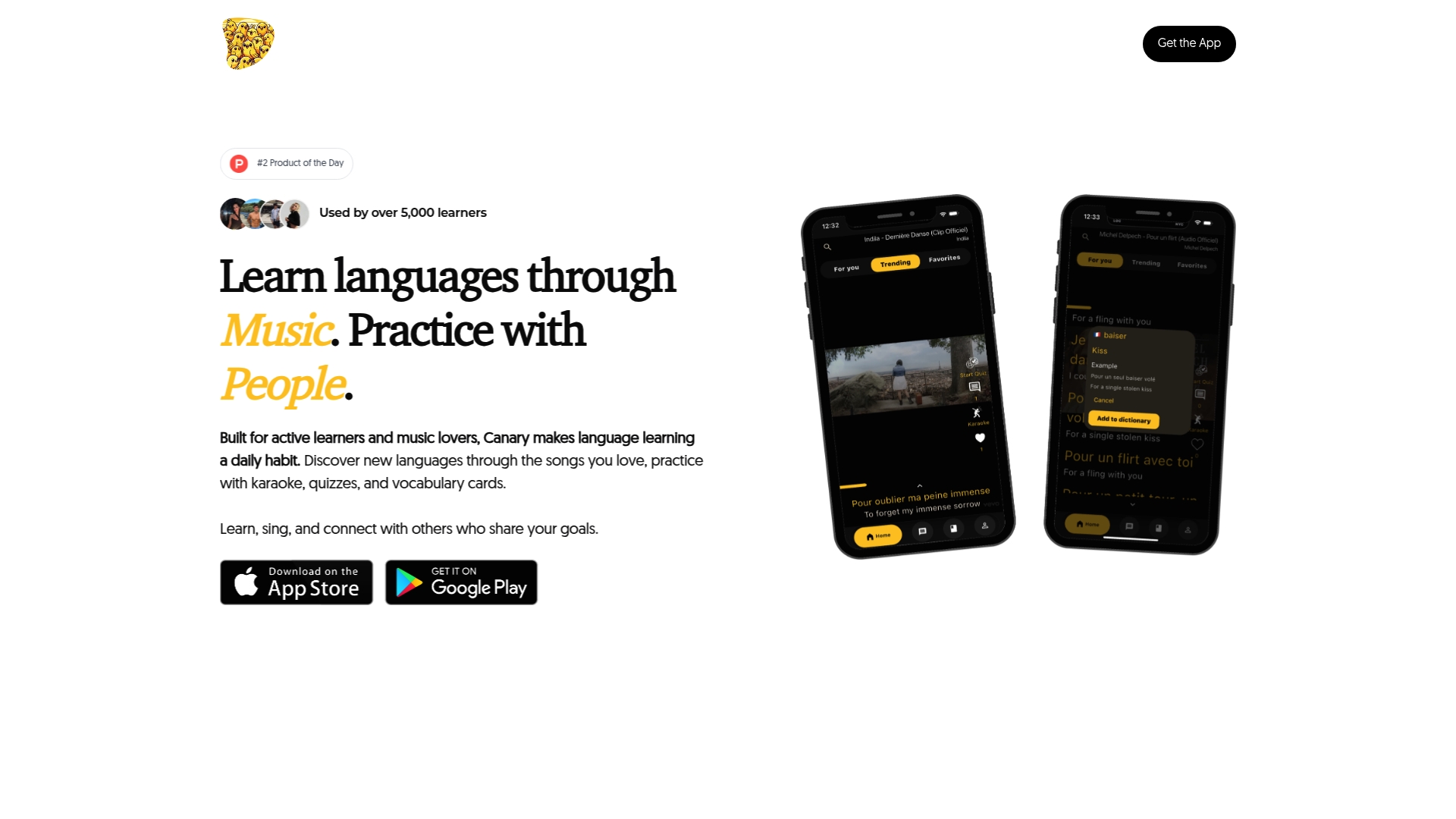
AI-supported tools democratize the learning process by providing instant feedback on pronunciation, suggesting relevant vocabulary, and even helping you create original lyrics to express personal ideas. These features eliminate the intimidation factor that prevents many learners from practicing speaking and singing aloud. Regular song challenges keep motivation high through gamification and community engagement.
Learn languages with music by joining thousands of active learners who practice together, share favorite songs, and celebrate progress in a supportive environment. Sign up for guided singing to access personalized lessons that adapt to your learning pace. Explore the song of the week landing page for fresh content that keeps your practice varied and culturally relevant. Make daily language practice something you genuinely look forward to rather than another obligation on your to-do list.
FAQ
What is the best daily practice time for song-based language learning?
Daily sessions of 15 to 30 minutes provide the optimal balance between effectiveness and sustainable engagement for most learners. Consistency matters significantly more than session length, as regular exposure creates the repetition necessary for gradual skill improvement. Morning practice energizes your day, while evening sessions provide relaxing stress relief, so choose timing that fits your natural rhythm and schedule.
How can AI tools help with learning languages through songs?
AI integration supports lyric creation and guided singing to improve proficiency and confidence by providing personalized feedback impossible with traditional methods. These tools analyze your pronunciation in real time, suggest vocabulary based on your interests, and adapt difficulty levels to match your progress. Learners of all levels benefit regardless of musical background, as AI removes technical barriers and makes sophisticated learning techniques accessible to everyone. Sign up for guided singing to experience how technology personalizes your learning journey.
Why is storytelling effective before learning song lyrics?
Story-led approaches increase student engagement and comprehension by creating emotional connections that make language memorable. Stories provide context that aids understanding by explaining cultural references, historical background, and artist intentions that might otherwise remain confusing. This narrative framework activates prior knowledge and creates anticipation, priming your brain for focused attention that dramatically improves retention compared to studying isolated lyrics without meaningful context.
Can complete beginners use songs for daily language practice?
Absolutely, beginners benefit tremendously from song-based practice when they select appropriate material and use supportive tools. Start with children’s songs, slow ballads, or simplified versions featuring clear pronunciation and basic vocabulary. Use platforms offering translations, vocabulary support, and guided practice to build confidence gradually. The key is matching song complexity to your current level while accepting that you won’t understand everything immediately, allowing comprehension to develop naturally through repeated exposure.