Finding a language learning method that keeps motivation high while delivering real-world pronunciation and listening gains is tough when most apps rely on rote drills and textbook exercises. Traditional programs rarely use music as the anchor for lessons or skip interactive song practice, leaving musical learners with few paths to engage and retain material. This comparison covers music-based language platforms and their lesson mechanics so you can choose a solution that aligns with your learning style and classroom goals without sacrificing context or cultural depth.
Table of Contents
Canary
At a Glance
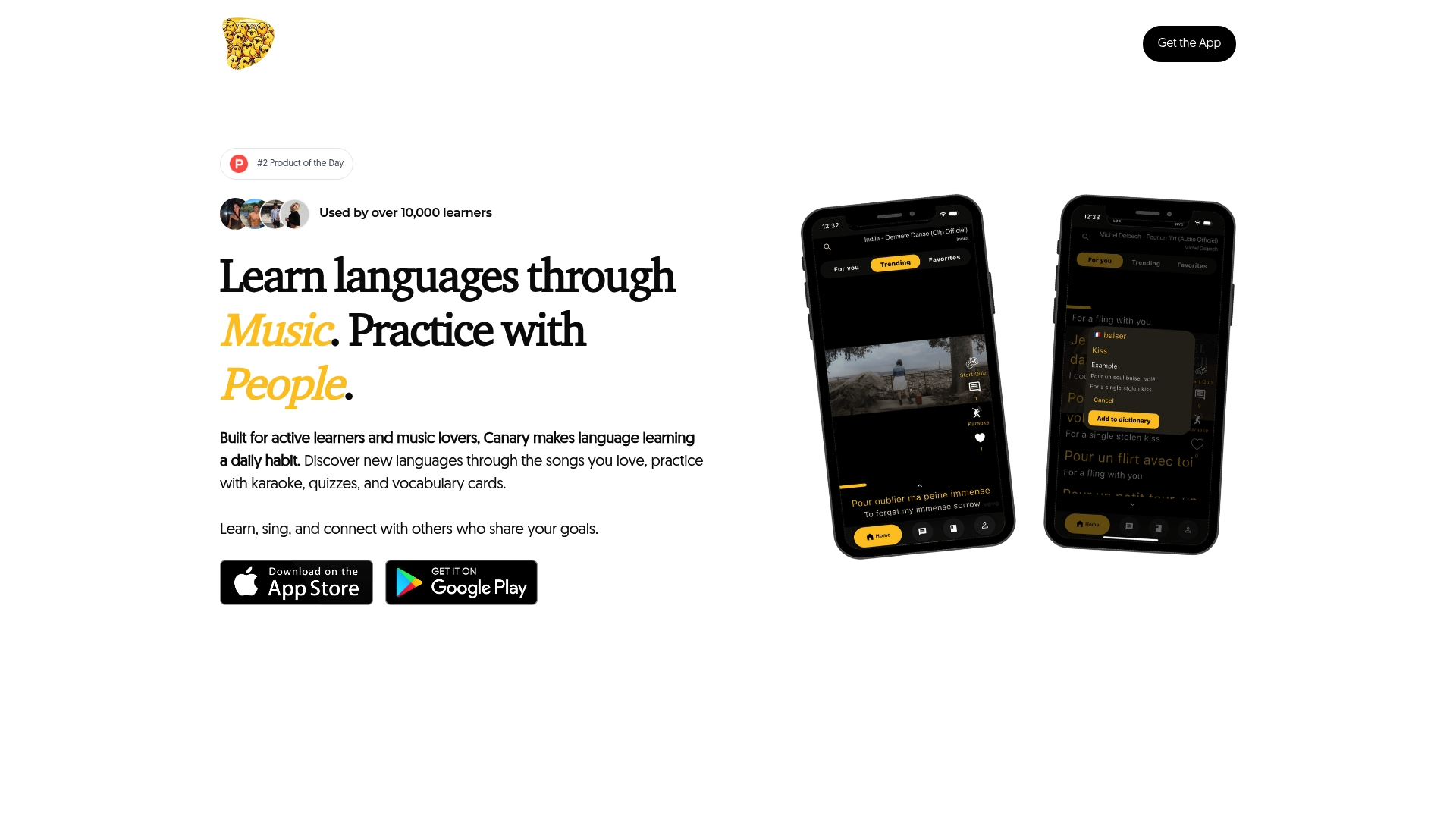
You can tap any word in a song lyric for meanings and examples while you sing the line in karaoke, turning a song into an interactive lesson in seconds. The vendor’s marketing materials report that users find the app fun, addictive, and effective for pronunciation and retention.
Core Features
- Learning through songs and music lyrics with synced playback and highlighted lines for follow along practice.
- Karaoke, quizzes, and vocabulary cards that let you rehearse pronunciation and test recall after listening.
- Social features that connect learners who share language goals for duet practice or group sessions.
- Tap-to-define words for instant examples and context while a lyric plays.
Key Differentiator
The standout mechanic is pairing real popular music with interactive playback and karaoke practice so learning comes from listening and reproducing actual speech patterns. That pairing targets ear training and pronunciation in a way flashcards alone do not.
Pros
- Fun practice that keeps you returning. The song focus converts passive listening into active repetition which many learners report helps retention.
- Pronunciation gains: Singing lines forces sustained attention to sounds and timing which improves accent and intonation over ordinary drills.
- Social practice removes isolation. Partnered karaoke sessions and learner connections turn weekly practice into a short social event instead of a chore.
- Contextual vocabulary learning. Tapping words inside lyrics supplies immediate examples so vocabulary ties to melody and usage instead of isolated translation.
- Mobile friendly on iOS and Android, so you can rehearse phrases on commutes, during workouts, or in short daily sessions.
Cons
- Public documentation is sparse and the vendor’s site returned incomplete pages, so pricing and some technical details are not publicly disclosed.
Who It’s For
Active learners who prefer immersive and playful methods. If you enjoy music, want better listening skills, or get motivated by social practice this app fits your habit. It is less useful for grammar-first learners who need explicit grammar drills.
Unique Value Proposition
The tap-to-define lyric playback combined with karaoke practice creates microloops of listen, mimic, and check. Those short rehearsal loops make daily practice effortless for people who already spend time with music and who want pronunciation work embedded in enjoyable activities.
Real World Use Case
A learner uses a two minute chorus as a daily drill. They tap unfamiliar words, run the karaoke once, take a three-question quiz, then join a short duet with another learner to rehearse lines together. Over weeks their confidence in speaking those phrases improves.
Pricing
No public subscription details are available. Our attempt to access pricing on the vendor’s site returned a 404, so the company does not appear to publish rates at this time or the pages were temporarily inaccessible.
Website: https://singwithcanary.com
Sounter
At a Glance
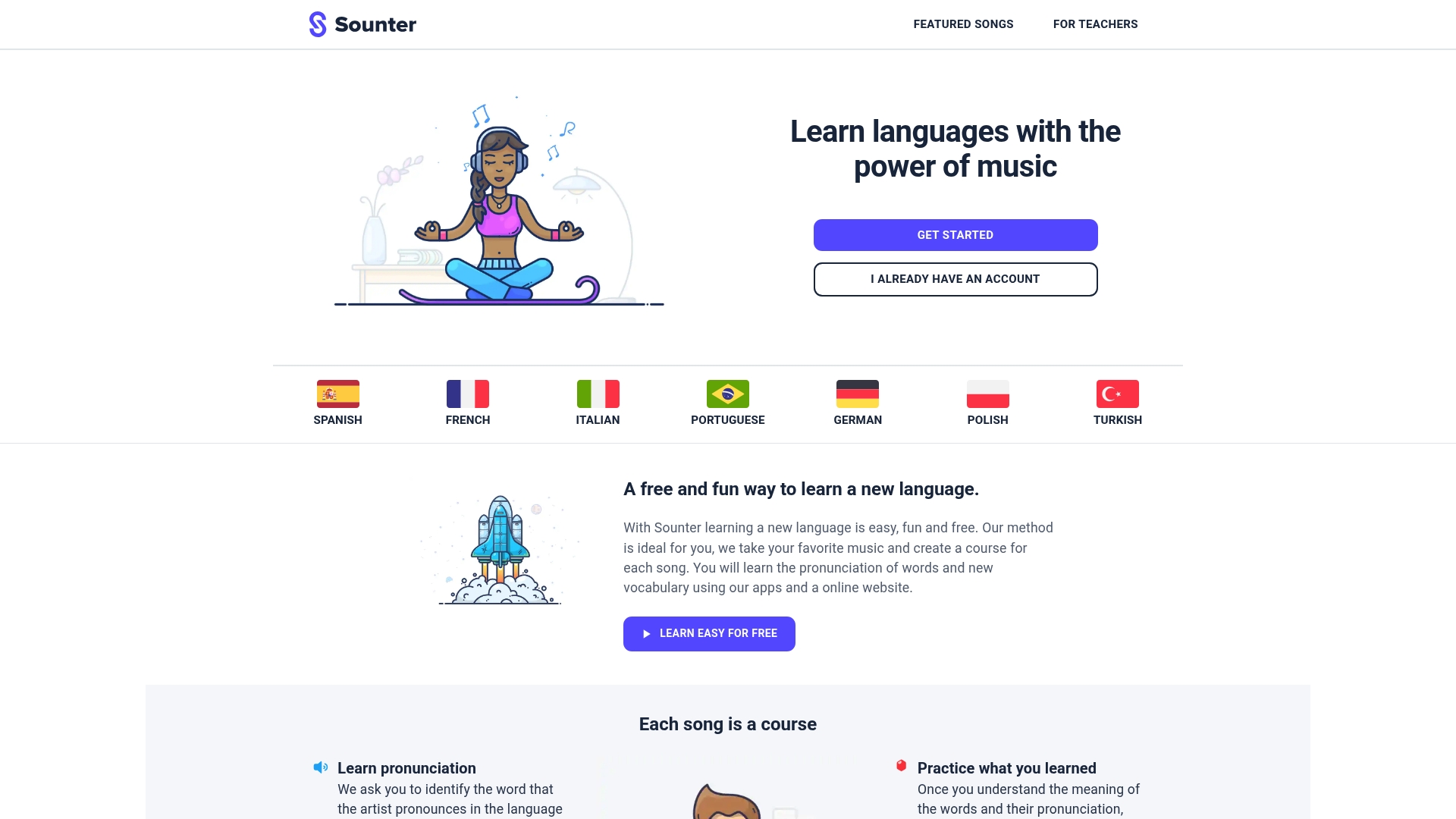
Courses are automatically generated from your favorite songs, turning tracks you already know into bite sized lessons that focus on pronunciation, vocabulary, and listening. The platform offers free basic use, mobile apps, a community for content sharing, and a paid upgrade to remove ads and enable offline playback.
Core Features
- Courses created from song lyrics that map lines to lesson units and exercises.
- Pronunciation identification exercises that compare your audio to target pronunciations.
- Vocabulary learning from lyrics plus translated lyrics for context and meaning.
- Mobile apps for learning on the go and community contributions for new content.
Key Differentiator
Automatic lesson generation from songs is Sounter’s standout mechanism. Instead of forcing you into prebuilt modules, it personalizes lessons around the music you already listen to, which can increase engagement and habit formation for music oriented learners.
Pros
- Fun, music first learning keeps practice sticky for learners who use songs daily. Short sessions feel less like study and more like listening with purpose.
- Accessible on multiple devices: mobile apps let learners pick up short practice sessions during commutes or breaks.
- Free basic usage lowers the barrier for teachers and classrooms to trial the platform before any purchase decisions.
- Classroom friendly features support teacher assignments and student progress tracking, which helps lesson planning and assessment.
- Community based contributions expand the library faster than a single editorial team could, letting teachers and learners share creative song lessons.
Cons
- No substantive third party reviews are available, which makes independent comparison to other methods difficult.
- Limited detailed user feedback on long term effectiveness or measurable outcomes reduces confidence for institutions seeking validated results.
- Focused mainly on music based learning, so grammar first or text heavy learners may find gaps in scope and practice types.
When It May Not Fit
If your program depends on validated assessment metrics or published studies, Sounter’s limited third party validation makes it a weak choice. If learners prefer textbook drills, spaced repetition without musical context, or grammar first sequences, the music centric approach will feel narrow.
Who It’s For
Learners who want to build listening, pronunciation, and vocabulary through song based practice. Teachers seeking engaging classroom material and educational institutions looking for a low cost, media driven supplement to existing language curricula will find Sounter relevant.
Real World Use Case
A high school ESL teacher assigns a song lesson each week and uses the platform to track which students complete pronunciation exercises. Students report higher participation because the assignments feel like music practice rather than homework.
Website: https://sounter.com
Lirica
At a Glance
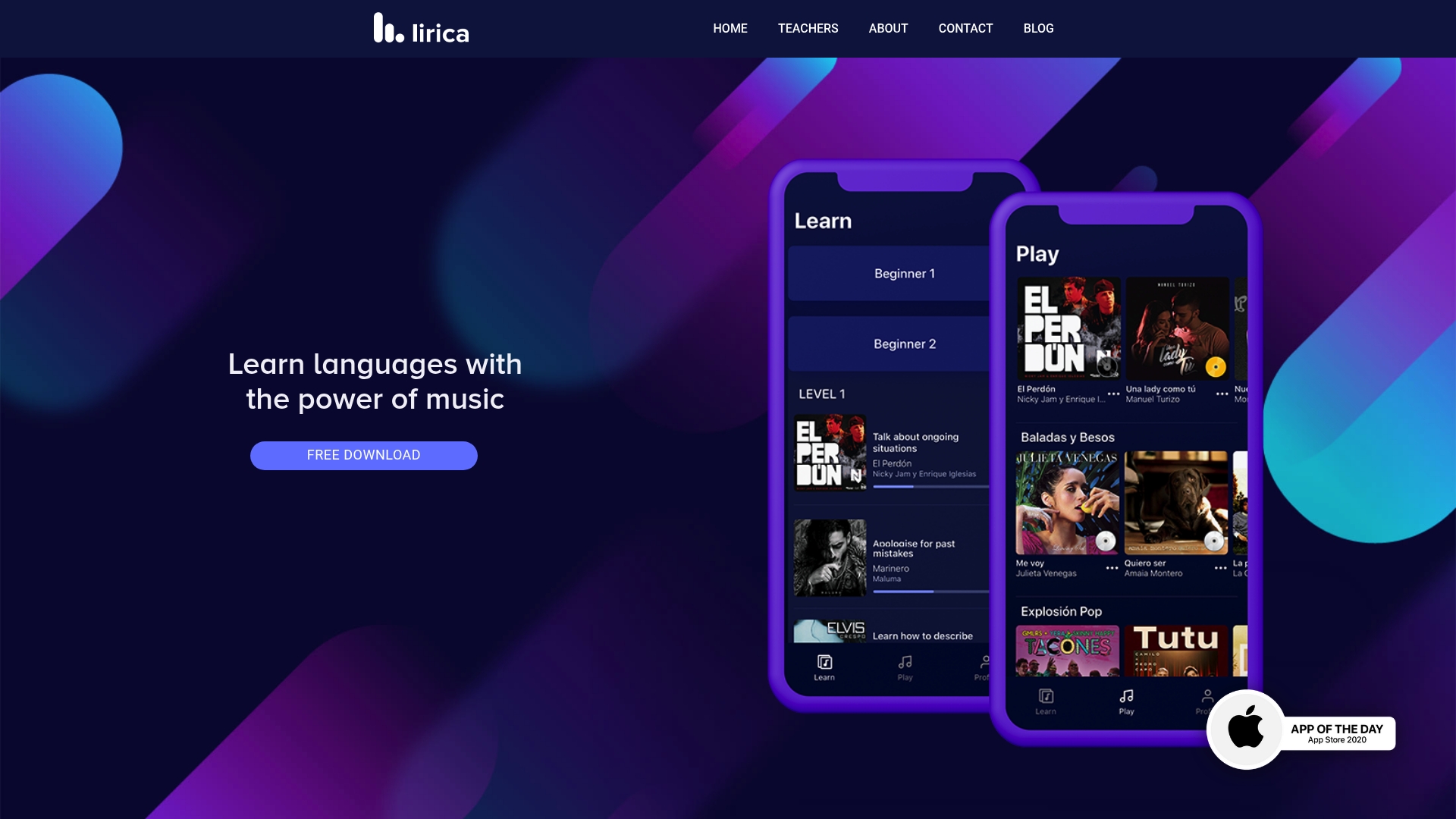
Lirica’s marketing materials state it was named App of the Day in 2020 and called a Hidden Gem by Google in 2018. That recognition helps explain why educators and learners often mention music first when describing this app.
Core Features
- Lessons built around hit songs that use real lyrics from popular artists to teach vocabulary and grammar.
- One verse at a time learning exercises that break songs into bite sized practice segments for repeatable listening and speaking.
- Lyric challenges that prompt recall and gap fill to reinforce new words in context.
- Cultural notes and explanations that connect phrases to real usage and background on artists.
- Support for Spanish, English, and German with more languages announced for future release.
Key Differentiator
Lirica pairs mainstream music with targeted language drills so you practice vocabulary in authentic contexts. The app frames grammar and meaning inside songs you already enjoy which helps memory and listening skills in a different way than flashcard drills.
Pros
- Makes vocabulary stick by teaching words inside familiar hooks and choruses. That contextual repetition feels natural and memorable.
- Lessons move at a steady pace so listening and speaking practice happen together rather than in separate modules.
- Recognitions noted above give teachers a quick signal to try the app in class before committing time to lesson plans.
- Works for both self learners and classroom settings so teachers can assign song exercises and learners can practice independently.
- The catalog includes mainstream tracks rather than obscure material which helps cultural learning and student motivation.
Cons
- Public user reviews and independent third party feedback are sparse, which makes it hard to judge long term retention from outside sources.
- Available documentation does not clearly outline coverage across proficiency levels, so advanced learners may find gaps in a formal curriculum.
- Feature details such as offline access, progress tracking, or teacher management tools are not specified in the material provided.
When It May Not Fit
If you need a full curriculum that maps precisely to CEFR levels and progressive grammar lists, Lirica may be too open ended. Likewise, programs that require detailed reporting for school systems will miss standard progress exports and a clearly defined level ladder.
Who It’s For
Music lovers who want vocabulary, pronunciation, and cultural context tied to popular songs. Teachers who want ready made song activities for classes and learners preparing for travel where listening comprehension and phrase recall matter more than formal grammar drills.
Real World Use Case
A learner preparing for a trip to Madrid studies Latin pop choruses five minutes a day. Lyric challenges highlight useful travel phrases and cultural notes explain idioms. After two weeks the learner reports clearer listening comprehension of familiar radio songs.
Website: https://lirica.io
Lingotune
At a Glance
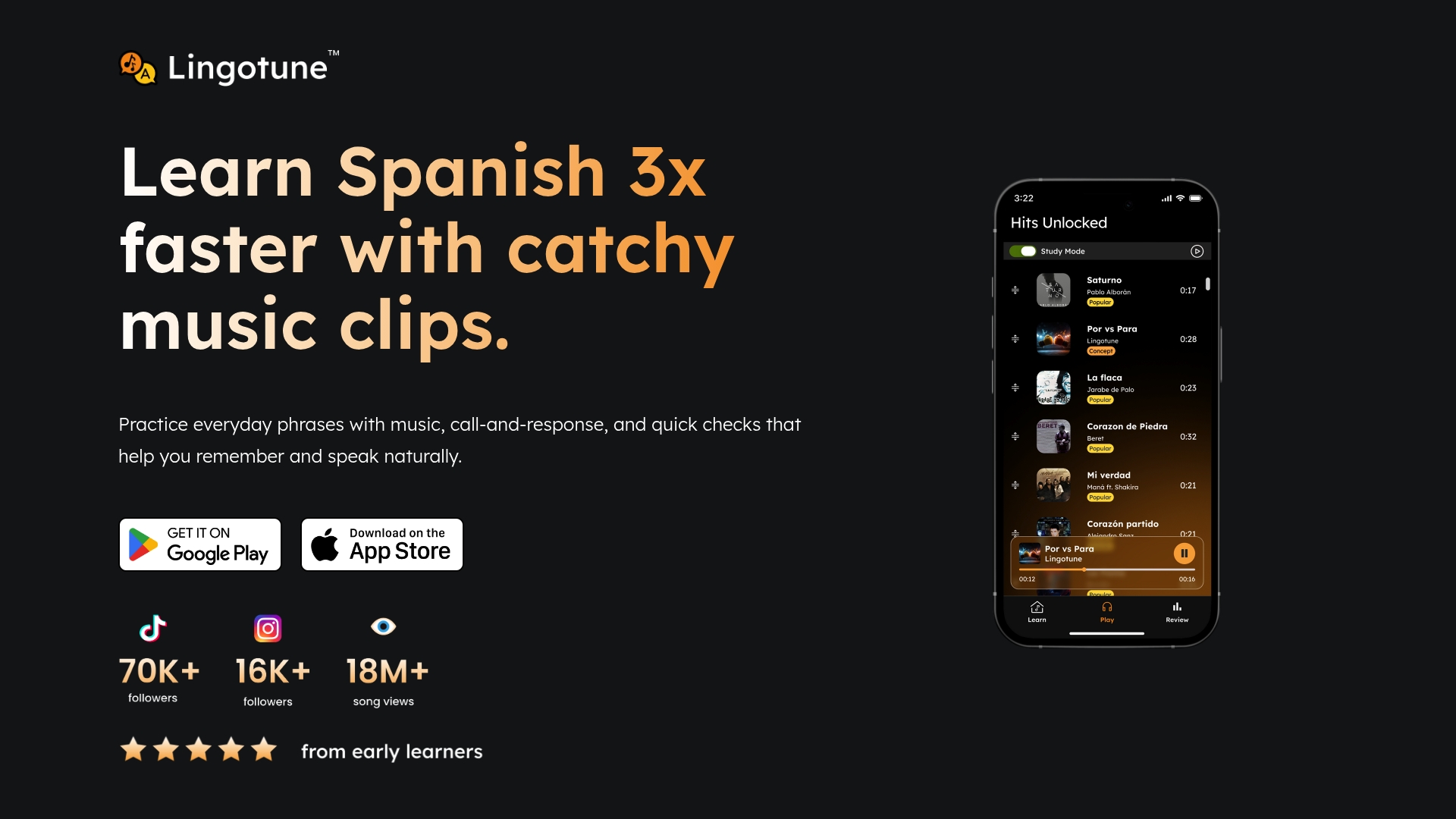
Lingotune’s marketing materials claim learners pick up Spanish three times faster by practicing short, catchy music clips paired with call-and-response drills. The app doubles as a small social hub where clips and challenges circulate on Instagram and TikTok.
Core Features
- Music-based language practice: short song clips that repeat target phrases so you hear language in melodic context.
- Call-and-response exercises: quick vocal prompts that push spoken recall instead of multiple choice.
- Quick checks and gamified learning: short retention checks and streak mechanics designed for daily habit building.
Key Differentiator
The product centers the community around music. Where typical forums host threads, Lingotune prompts members to share recorded responses and short clip reactions. That focus turns social features into practice opportunities rather than just discussion.
Pros
- Engaging, music-driven learning style speeds repetition and helps phrases stick through melody rather than rote drills.
- Accessible on mobile devices so members can practice on commutes or between tasks. Short clips load quickly and fit into brief daily routines.
- Social media integration keeps motivation high by letting members post wins to Instagram and TikTok and discover community challenges.
- Lightweight community features let you follow contributors, replay popular responses, and join small practice chains without a heavy moderation layer.
Cons
- Limited curriculum detail means progression is informal; you may not get a structured grammar path from beginner to intermediate.
- The product data shows no third-party review coverage, which leaves real-world satisfaction hard to verify.
- Might not serve advanced learners who need dense grammar explanations or large passive vocabulary drills.
When It May Not Fit
If you want a curriculum with clearly mapped lessons, tests, and CEFR alignment, Lingotune will feel too loose. Also skip it if you prefer text-heavy lessons or offline study packs; the offering is optimized around streaming clips and social practice.
Who It’s For
Casual Spanish learners who enjoy music and short daily practice sessions will find Lingotune appealing. Members who value speaking practice over grammar drills or who gain momentum from social sharing will get the most from this approach.
Real World Use Case
You spend ten minutes after lunch. You open the app, run through three call-and-response clips, record your response, and repost one clip to your profile. A friend replies with a correction and a duet. Practice, feedback, repeat.
Website: https://lingotune.ai
Languages Through Music
At a Glance
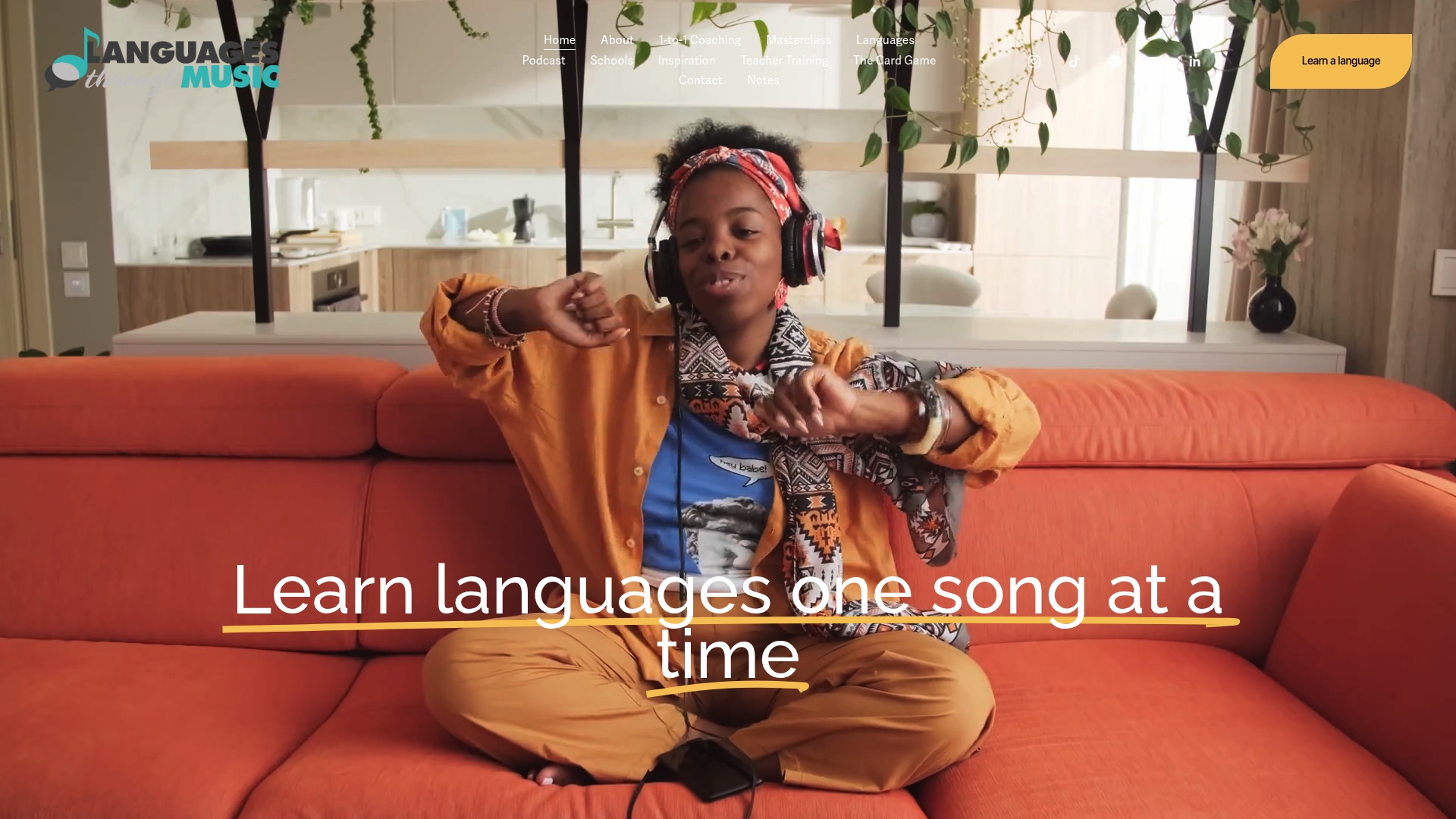
The vendor reports reaching over 10,000 students in nearly 90 countries, with awards cited for its methods. Founded by Desta Haile, the community platform blends courses, coaching, teacher training, and workshops that center songs, rhythm, and storytelling.
Core Features
The platform combines teacher-facing training, learner-facing masterclasses, and ongoing community support.
- Personalized 1-to-1 coaching with Desta Haile for tailored practice and feedback.
- Comprehensive masterclasses on language, culture, and education for self-paced study.
- Teacher training programs and interactive workshops for schools, festivals, and institutions.
- Curated playlists, cultural resources, and a community space for members and educators.
Key Differentiator
Languages Through Music anchors language learning in cultural storytelling and live pedagogy rather than in gamified drills. That focus makes it more education-first and classroom-ready than Singwithcanary, which centers social music practice and karaoke-style interaction for daily habit building.
Pros
- The founder-led coaching provides direct mentorship, which accelerates pronunciation and musical phrasing when you work weekly.
- Teacher training materials translate easily into lesson plans, saving prep time for classroom use.
- Curated playlists across 30 plus languages give concrete listening practice tied to cultural notes and lyric breakdowns.
- The platform supports schools and institutions with workshop formats, so organizers can book a ready-made program rather than design one from scratch.
- Community support helps teachers share classroom adaptations and learners swap song-based study tips.
Cons
- The vendor reports its student reach above, but there are no third-party user reviews to verify longterm satisfaction.
- Pricing and subscription details are not listed on the site, which complicates budget decisions for schools or districts.
- Technical integration details are sparse, so learning management system syncing or single sign-on is unclear.
When It May Not Fit
If you need transparent, per-seat pricing or a published subscription model, this offering will require direct sales contact and a proposal. That lack of upfront rates makes procurement slower for institutions.
If your priority is a daily micropractice app with built-in social karaoke and automated exercises, Languages Through Music is narrower. Its strength is workshops and teacher development rather than a mass-market mobile habit app.
Who It’s For
Curious language teachers, intercultural trainers, and learners who want music deeply woven into pedagogy. Schools, festival programmers, and artists seeking structured workshops and mentorship will find the format aligned with classroom and performance contexts.
Real World Use Case
A middle school Spanish teacher adopts a masterclass module, adapts the supplied lesson plan, and runs a three-week unit where students analyze lyrics, practice pronunciation with coached phrases, and perform short songs. Engagement rises and assessment shows improved listening retention in follow-up quizzes.
Website: https://languagesthroughmusic.com
Comparative Analysis
When evaluating platforms focused on music-based language learning, it becomes essential to assess elements such as interactivity, social engagement, pedagogical comprehensiveness, and ease of integration. Each platform offers unique strengths catering to diverse learner profiles.
Interactivity and Practice Diversity
- Sing with Canary provides a highly interactive experience by letting users tap on song lyrics for immediate vocabulary context and paired karaoke functionality, turning music playback into a learning exercise. This form of practice supports sustained engagement and multifaceted skill-building.
- Lirica focuses on integrating grammar drills with real music but lacks the tap-to-define feature, potentially challenging instant comprehension. For learners valuing extended grammar instruction, its structured lessons may hold more appeal.
Classroom and Pedagogical Adaptability
- Languages Through Music distinguishes itself through masterclasses and personalized coaching designed for educational settings. These features are beneficial for structured syllabi and professional training purposes. However, its focus on workshops over daily use apps may limit its suitability for self-guided learners.
- Lingotune excels in leveraging community-driven practice through shared music clips. Its design promotes social reinforcement, though the lack of a formal grammar path may not suit preparatory or advanced learners requiring CEFR-aligned frameworks.
Best Fit Scenarios
- Choose Sing with Canary if seeking an app that transforms everyday music consumption into vocabulary, pronunciation, and social practice for immersive language improvement.
- Opt for Languages Through Music for informed, classroom-integrated music lessons including cultural insights through curated sessions.
- Try Lingotune to combine language learning with collaborative community exercises in a modern, socially interactive format.
- Use Lirica for grammar-enriched song-based learning in a structured approach designed for multi-level learners.
Our Pick
Sing with Canary emerges as a powerful tool for learners keen on improving their pronunciation, contextual vocabulary, and social interaction through engaging and regular music-based practice. However, institutional educators requiring a clear curriculum for standardized language benchmarks may find Languages Through Music preferable for their needs.
Comparison of Music-Based Language Learning Applications
Discover the primary features and distinctions of top music-integrated language learning platforms to make an informed choice tailored to your learning style.
| Product | Core Feature | Key Differentiator | Best For | Notable Limitation |
|---|---|---|---|---|
| Singwithcanary | Tap-focused karaoke with real lyrics | Interactive learning loop with music context | Song-focused immersive learners | Pricing and technical details not disclosed |
| Sounter | Auto-generates lessons from personal playlists | Personalized song-integrated language practice | Mobile and free-trial learners | Lack of in-depth long-term feedback |
| Lirica | Song-based vocabulary and grammar lessons | Pop culture-relevant teaching method | Music-centric vocabulary learners | Limited documentation for advanced levels |
| Lingotune | Short clips with call-and-response practice | Social hub for music and language learning | Socially-driven short practices | Informal curriculum design |
Discover a Music-Powered Alternative for Language Learning
If you are exploring duolingo.com alternatives that make language learning enjoyable and more effective, Singwithcanary offers a refreshing approach. Singwithcanary combines music, karaoke, and social interaction to help active learners improve pronunciation, expand vocabulary, and gain confidence in real conversations. Users appreciate transforming passive listening into active practice, which directly supports retention and accent improvement.
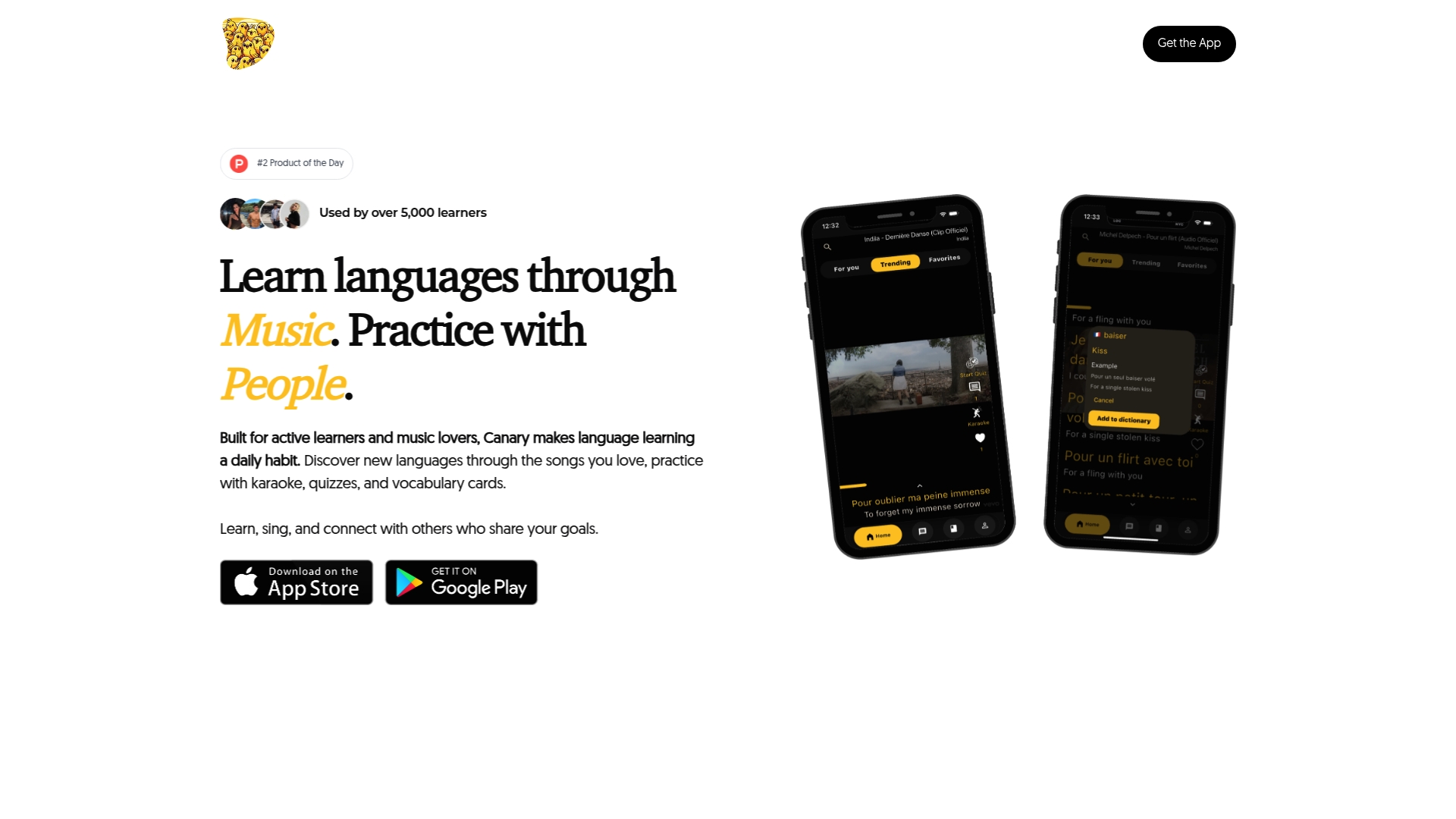
Experience how music shapes natural language acquisition by visiting Singwithcanary. Start tapping on song lyrics for instant meanings, rehearse with quizzes and karaoke, and connect with a global community to make speaking practice a social event. Try Singwithcanary today and unlock better listening skills while having fun with songs you love.
Frequently Asked Questions
How does Singwithcanary enhance pronunciation skills?
Singwithcanary focuses on pronunciation through singing, encouraging learners to pay attention to sounds and timing, which improves accent and intonation. The app’s karaoke mode allows users to practice lines while following along with highlighted lyrics, making the learning experience both interactive and effective. You can use this feature to convert your music practice into a valuable language learning session.
What is the difference between Singwithcanary and Sounter for language learning?
Sounter excels in generating personalized lessons from the songs you already enjoy, making it great for users who prefer to learn with their current music preferences. In contrast, Singwithcanary’s standout feature is its tap-to-define function, providing instant examples and context for vocabulary within lyrics, which is particularly beneficial for pronunciation practice. If you’re looking for a more interactive vocabulary learning experience, Singwithcanary may be the better option for you.
Which platform offers a more community-driven learning experience: Singwithcanary or Lingotune?
Lingotune provides a strong community aspect where users can engage through social media to share recorded responses and challenges, making it more interactive in a social context. Singwithcanary, while it offers social features for duet practice, is primarily focused on immersive, music-centered individual practice, appealing to learners who want to prioritize effective pronunciation and retention. You may prefer Lingotune if community interaction is a major factor in your learning style.
Can I use Singwithcanary if I primarily prefer grammar-focused learning?
Singwithcanary is less suited for users who need explicit grammar drills, as its emphasis is on pronunciation through music rather than structured grammar practice. The app is designed for learners looking for an immersive and fun language learning method, so if grammar is a priority for you, it may be useful to explore additional resources alongside Singwithcanary for a more balanced approach.
What features make Singwithcanary fun and engaging for language learners?
Singwithcanary incorporates music and interactive karaoke practice, which many users find enjoyable, turning language learning into a fun, routine activity. The app allows users to tap on words for definitions while singing, enhancing both retention and pronunciation. You can expect to enjoy your practice sessions, making it easier to stay committed to your language learning goals.