Learning French, Spanish, or Italian can feel overwhelming when textbooks leave you stuck at grammar drills. For music lovers, songs transform language from abstract rules into real-life conversation. Research shows that exposure to rhythm and melody supports language development by boosting phonological awareness and memory. This article reveals how song-based activities help you master vocabulary, pronunciation, and cultural fluency while connecting with native speakers worldwide.
Table of Contents
- How Music Enhances Language Acquisition
- Types of Musical Activities for Learners
- Key Cognitive and Linguistic Benefits
- Practical Strategies and Common Pitfalls
- Comparing Song-Based and Traditional Methods
Key Takeaways
| Point | Details |
|---|---|
| Music enhances language learning | Engaging with music activates neural pathways that facilitate vocabulary retention and pronunciation. |
| Active participation is key | Involving yourself in singing and musical activities deepens comprehension and boosts confidence. |
| Combination of methods | A hybrid approach that integrates music with traditional learning maximizes both fluency and accuracy. |
| Cultural context matters | Understanding the cultural significance of songs enhances comprehension and makes learning more meaningful. |
How Music Enhances Language Acquisition
Music isn’t just entertainment—it’s a powerful learning tool that rewires how your brain processes language. When you listen to songs, your brain activates multiple learning pathways simultaneously, making vocabulary stick faster and pronunciation feel more natural.
The rhythm and melody connection
Your brain processes rhythm and melody differently than regular speech. Melodies create patterns that stick in your memory, making it easier to recall new words when you hear that familiar tune again. Rhythm helps your brain group sounds together, which strengthens your understanding of how words connect in natural conversation.
This is why song lyrics often feel easier to remember than vocabulary lists.
How music and language share neural pathways
Music and language use similar cognitive processes. Both require sound identification, categorization, and memory. When you sing a Spanish song, you’re training the same parts of your brain that recognize grammar patterns and word order.
Key ways music supports language acquisition:
- Activates phonological awareness (your ability to hear and manipulate sounds)
- Strengthens semantic processing (understanding what words mean)
- Reinforces grammar and syntax through repetition without feeling like drills
- Builds confidence because singing feels fun, not like studying
Pattern extraction and phonetic cues
Exposure to music helps your ear extract linguistic patterns automatically. You start noticing how native speakers stress certain syllables, where they pause, and how sounds flow together. This happens naturally through listening, not conscious analysis.
When you practice songs with international speakers, you hear authentic accents and regional variations. Your ear adjusts to these patterns faster than through traditional lessons because the musical context makes it stick.
The memory advantage
Your brain prioritizes information that comes with melody. A single listen to a song verse plants vocabulary deeper than multiple textbook repetitions. This phenomenon, called the “Mozart effect,” shows that music genuinely enhances memory consolidation.
The hierarchical structure of music mirrors language structure. Both have beats, patterns, and rising/falling intonation that your brain naturally recognizes and stores.
Music transforms passive listening into active language processing. Your brain doesn’t just hear words—it learns their rhythm, stress patterns, and emotional context simultaneously.
Why active learners benefit most
For someone aged 20-35 who already loves music, song-based learning removes friction. You’re not forcing yourself to study—you’re enjoying what you already listen to while developing language skills. The social element amplifies this: practicing pronunciation with native speakers through songs creates real accountability and natural conversation practice.
Pro tip: Choose songs by artists from countries where your target language is spoken, then listen multiple times before checking lyrics. Let your brain extract patterns first, then verify comprehension with written text.
Types of Musical Activities for Learners
Not all musical activities are created equal. Different approaches target specific language skills, from listening comprehension to pronunciation to cultural understanding. The best strategy combines multiple activity types to keep learning fresh and address different learning styles.
Singing and sing-alongs
Singing is the most direct musical activity for language learners. When you sing, you’re forced to pronounce words correctly, match native speaker rhythm, and internalize vocabulary through repetition. Sing-alongs work because they’re low-pressure—you’re not being judged on accuracy, just participation.

Singing activates your memory in ways that passive listening cannot. The combination of melody and movement makes words stick permanently.
Lyric-based activities
Lyric gap fills remove selected words from song lyrics, forcing you to listen actively and fill in the blanks. This activity builds listening comprehension and vocabulary recognition simultaneously.
Creating new lyrics or discussing song meanings deepens understanding beyond surface-level word recognition. You’re thinking about grammar, context, and cultural nuance.
Key lyric activities include:
- Gap-fill exercises: Listen and complete missing words
- Vocabulary extraction: Identify key words and their meanings
- Lyric analysis: Discuss themes, emotions, and cultural references
- Creative rewriting: Write new verses using target vocabulary
Rhythmic and phonetic exercises
Rhythmic exercises isolate pronunciation patterns and syllable stress. By clapping to rhythm or repeating phrases in time with music, you internalize how native speakers actually speak—not the slow, over-articulated version in textbooks.
These exercises strengthen phoneme-letter association, helping your brain connect sounds with written letters. This is critical for reading comprehension and spelling accuracy.
Listening comprehension and emotion exploration
Playing background music while learning sets mood and reduces anxiety. But active listening—where you focus on understanding lyrics and identifying emotions—builds deeper comprehension.
Discussing what emotions a song evokes encourages you to use descriptive language. You’re practicing vocabulary for feelings, cultural expressions, and subjective interpretation.
Diverse activities prevent learning plateaus. Rotating between singing, gap fills, and rhythm work keeps your brain engaged while building multiple language skills simultaneously.
Musical drawings and visual response
Creating visual representations of songs forces you to understand meaning at a deeper level. Drawing what a song makes you feel or visualize requires linguistic comprehension without pressure.
This activity works especially well for visual learners and creates natural opportunities for discussion and vocabulary use.
Social and collaborative singing
Practicing pronunciation with international speakers through songs combines all benefits: authentic accent exposure, real conversation practice, cultural connection, and social accountability. You’re not just learning a language—you’re building community.
Pro tip: Start with one activity type you enjoy most, then add complementary activities weekly. If you love singing, add lyric gap fills next week, then rhythmic exercises the following week. Variety maintains motivation over months of practice.
Here’s how core musical activities align with different learning styles:
| Activity Type | Best For | Language Skill Focus | Engagement Style |
|---|---|---|---|
| Singing and Sing-Alongs | Auditory/kinesthetic | Pronunciation, vocabulary | Active participation |
| Lyric-Based Activities | Analytical/visual | Listening, grammar | Listening + written task |
| Rhythmic/Phonetic Exercises | Kinesthetic/auditory | Pronunciation, spelling | Movement + repetition |
| Musical Drawings/Visuals | Visual/creative | Comprehension, emotion | Creative expression |
| Social/Collaborative Singing | Social/interactive | Fluency, accent | Group interaction |
Key Cognitive and Linguistic Benefits
Music doesn’t just make language learning fun—it rewires your brain in measurable ways. When you combine music with language study, you activate neural pathways that traditional textbooks never touch. The cognitive gains are real and transferable to everyday communication.
Improved pronunciation and speech perception

Musical training strengthens auditory processing, which directly improves how you hear and produce sounds in your target language. Your ear becomes more sensitive to subtle differences between phonemes, accents, and speech patterns.
When you practice with songs, you’re training your brain to catch pronunciation nuances that native speakers use naturally. This transfers immediately to your own speech production.
Enhanced prosodic skills
Prosody—the rhythm, stress, and intonation of speech—is where many language learners struggle. You can memorize grammar perfectly but still sound robotic. Music fixes this because songs are built on prosody.
By singing and listening actively, you internalize the natural rise and fall of language. Your brain learns where native speakers stress syllables and when they pause. This happens automatically through musical exposure.
Key prosodic improvements include:
- Natural stress patterns on the right syllables
- Authentic intonation that sounds conversational
- Proper pacing and rhythm in connected speech
- Emotional expression that makes you sound confident
Stronger reading comprehension
Music-enhanced auditory processing transfers directly to reading. When your ear becomes attuned to sounds and patterns through songs, your brain processes written text faster. You recognize word families, anticipate grammar patterns, and understand context more intuitively.
This happens because shared brain areas support music and language processing simultaneously. Training one strengthens the other.
Increased neural plasticity
Your brain’s ability to form new neural connections—neuroplasticity—peaks when you combine music with language learning. Music activates reward pathways that motivate continued practice. This motivation drives the repetition needed for language acquisition.
Neuroplasticity means your brain becomes better at learning over time. The more you practice with music, the faster you absorb new vocabulary and grammar.
Better memory retention
Musical context creates multiple memory anchors. You remember words through melody, rhythm, and emotional content simultaneously. This explains why song lyrics stick in your head for years while textbook vocabulary fades in weeks.
The cognitive advantage compounds: better memory means less review time, which means faster progression.
Music leverages your brain’s existing strengths instead of fighting against them. You’re not forcing language into a reluctant brain—you’re working with how your brain naturally learns best.
Confidence in real conversation
All these cognitive improvements translate to one outcome: confidence when speaking with native speakers. You understand more, produce sounds correctly, and match natural pacing and emotion. The social practice component builds genuine communication skills, not just language knowledge.
Pro tip: Record yourself singing the same song weekly and listen back for improvements in pronunciation and prosody. You’ll notice progress faster than traditional methods, which builds confidence that accelerates further learning.
Practical Strategies and Common Pitfalls
Knowing that music works is one thing. Using it effectively is another. The difference between success and frustration often comes down to strategy. Small adjustments in song selection and activity design create dramatically different outcomes.
Choosing music that matches your level and taste
Selecting music that aligns with learner proficiency prevents discouragement. If a song is too advanced, you’ll miss comprehension. Too easy, and it won’t challenge you. Your sweet spot is slightly above your current level.
More importantly, choose songs you actually want to hear repeatedly. If you hate the music, no cognitive benefit will save you from quitting.
Balancing entertainment with education
This is critical: fun and learning must coexist. Songs that are purely entertaining teach nothing. Songs that feel like work kill motivation. The goal is songs you enjoy that also contain vocabulary and grammar patterns you need.
Think strategically about song selection:
- Pick genres and artists you already enjoy
- Ensure lyrics contain vocabulary aligned with your learning goals
- Verify the proficiency level matches yours (A2 to B1 is ideal for most adults)
- Check that pronunciation is clear enough to hear native patterns
- Confirm cultural relevance makes the song worth understanding deeply
Avoiding the entertainment-only trap
One common pitfall: treating songs only as entertainment without structured practice. Passive listening is fine occasionally, but real learning requires active engagement. Gap fills, lyric analysis, and discussion force your brain to process meaning.
Without purposeful activities, songs stay surface-level. You enjoy the music but don’t retain vocabulary or understand grammar patterns.
Structuring purposeful activities
Purposeful activities focusing on vocabulary and grammar transform songs into learning tools. Before listening, set a specific goal: find five key verbs, identify stress patterns, or understand the emotional message.
Structured approach:
- Listen once without materials (enjoy the music)
- Listen again with specific focus (identify grammar or vocabulary)
- Complete targeted activity (gap fill, translation, or analysis)
- Discuss meaning or sing together (reinforce learning)
Aligning songs with curriculum goals
Don’t randomly pick songs. Choose ones that reinforce what you’re studying. If you’re learning present perfect tense, find songs heavy in that structure. This curriculum alignment maximizes transfer to your actual learning goals.
Skipping this step creates a common pitfall: enjoying songs but making slow progress toward fluency.
The difference between effective and ineffective music learning is intentionality. Random enjoyment is nice, but strategic song selection plus structured activities creates real language advancement.
Building cultural context
Understanding the culture behind songs deepens comprehension and connection. Why did the artist write this? What does the context mean to native speakers? This cultural knowledge makes language stick because it carries meaning beyond vocabulary.
Pro tip: Create a monthly playlist of 3-5 songs aligned with your current grammar focus, practice each one weekly with a different activity, and rotate in new songs only after you can sing and discuss each one confidently.
Comparing Song-Based and Traditional Methods
Traditional language learning works. Textbooks, grammar drills, and classroom instruction have produced fluent speakers for decades. But they come with a cost: tedium, high dropout rates, and learners who can recite grammar rules but freeze in conversation.
Song-based methods offer a different path. The comparison reveals where each approach excels and where they fall short.
Vocabulary retention: The clear winner
Song-based lessons enhance vocabulary retention compared to traditional text-based instruction. When you learn a word through melody and rhythm, it sticks deeper than through repetition alone. A single song listen plants vocabulary better than multiple textbook reviews.
Traditional methods rely on spaced repetition and flashcards. These work eventually, but require more time and effort for the same result.
Engagement and motivation
Traditional methods struggle with motivation. Students know they should study grammar, but few genuinely enjoy it. Song-based learning removes this friction—you’re doing something you want to do anyway.
This engagement difference compounds over time. Higher motivation means consistent practice. Consistent practice means faster progress.
What traditional methods do well
Traditional approaches excel at foundational accuracy. Grammar-translation and structured drills build explicit knowledge of language rules. You understand why Spanish uses subjunctive or French has gendered nouns.
Songs alone won’t teach you these concepts clearly. You need grammar explanation somewhere.
Fluency versus accuracy
Traditional methods focus on linguistic accuracy through rote memorization, while song-based approaches promote natural fluency and contextual understanding. Someone who studied grammar intensively can diagram complex sentences but might stumble in conversation.
Songs teach you how language actually sounds and flows. You absorb patterns subconsciously without conscious analysis.
Key differences:
- Traditional: Grammar accuracy, rule-based, slow initial progress
- Song-based: Natural fluency, pattern-based, faster engagement
- Grammar-translation: Vocabulary + written accuracy, boring, limited speaking
- Communicative singing: Real conversation skills, pronunciation, sustained motivation
The subconscious absorption advantage
Songs work differently than explicit instruction. Your brain absorbs rhythm, stress patterns, and intonation without conscious effort. This happens naturally through repeated exposure.
Traditional methods require active, conscious learning. Your brain gets tired. You need willpower.
The hybrid approach
Research suggests the optimal path combines both methods. Use traditional grammar instruction to build foundational understanding of structure. Use songs to develop fluency and confidence.
Start with basic grammar, reinforce it through songs, then practice speaking with native speakers. This progression addresses all learning dimensions.
Neither approach alone is sufficient. Grammar without fluency produces robotic speakers. Fluency without grammar creates communication gaps. The best learners blend both strategically.
Building daily habit
Traditional methods struggle to create daily habits. Songs integrate naturally into existing listening habits. You can practice during commutes, workouts, or downtime without special effort.
The following table highlights key advantages and limitations of song-based vs. traditional language methods:
| Aspect | Song-Based Approach | Traditional Methods |
|---|---|---|
| Engagement | High, fun, motivating | Often low, repetitive |
| Vocabulary | Rapid, context-based retention | Slower, requires review |
| Grammar | Implicit through exposure | Explicit instruction |
| Pronunciation | Models natural speech patterns | Formal, often artificial |
| Fluency | Builds real-life conversation | Focus on written accuracy |
Pro tip: Use traditional grammar lessons as weekly foundations, then reinforce each concept immediately through targeted songs that showcase that specific grammar pattern in natural context.
Unlock Natural Language Learning with Music and Social Interaction
Traditional language study can feel slow and tedious while struggling with pronunciation, rhythm, and fluency. This article highlights how music activates multiple brain pathways to improve vocabulary retention, prosody, and confidence by making learning both engaging and natural. If you want to break free from boring drills and experience how song-based learning boosts your real conversation skills in a fun, immersive way, there is a solution designed just for your needs.
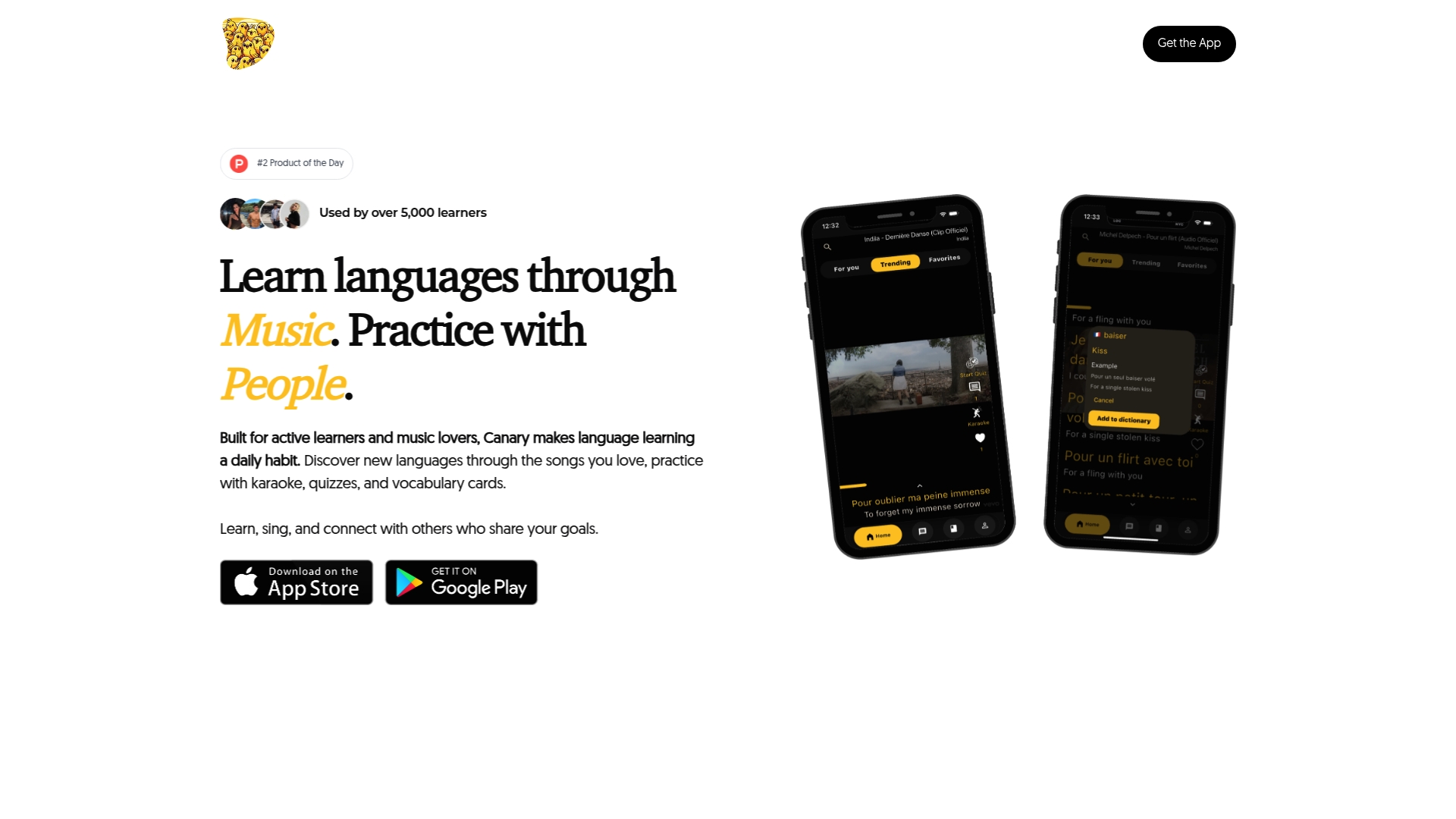
Explore Canary, the innovative platform that combines music and social interaction to turn language practice into an enjoyable daily habit. With interactive features such as karaoke, vocabulary cards, and quizzes, you refine your pronunciation, internalize grammar naturally, and expand your vocabulary—all while singing songs by native artists and connecting with international learners. Don’t just study language—live it through music on Sing With Canary. Start today to transform your learning journey and build confidence with every note you sing.
Frequently Asked Questions
How does music enhance language acquisition?
Music activates multiple learning pathways in the brain, improving vocabulary retention and pronunciation by leveraging rhythm and melody that make linguistic patterns easier to remember.
What types of musical activities can I use for language learning?
Effective musical activities include singing, lyric gap fills, rhythmic exercises, and creative tasks like musical drawings. Combining these approaches helps target various language skills and keeps learning engaging.
Can music improve pronunciation and speech perception?
Yes, practicing with music enhances auditory processing, allowing learners to recognize subtle differences in sounds, accents, and speech patterns, ultimately leading to better pronunciation.
How can I effectively incorporate music into my language study routine?
Choose songs that match your proficiency level and interests, structure purposeful activities around them, and align them with your current learning goals to maximize the educational benefits.