The most effective examples of multilingual social communities for adult learners are not classrooms or chat forums. They are song-based, synchronous, and social. Platforms like Singwithcanary, along with community formats grounded in research from OsloMet and the affective filter framework, show that music-driven group practice accelerates pronunciation, vocabulary retention, and speaking confidence faster than solo study.
Here are the core community formats and what each one actually improves:
- Live karaoke rooms: Real-time voice practice with synced lyrics; targets rhythm, intonation, and syllable stress
- Weekly song clubs: Repeated exposure to the same song over 7 days; builds lexical chunks and phrase-level fluency
- Pronunciation cohorts with recording/playback: Small groups record, compare, and give feedback; sharpens accent accuracy
- Tandem song pairs: One native speaker, one learner, same song; improves conversational turn-taking and listening
- Themed microchats: Text or voice discussion around a song’s topic or culture; expands vocabulary in context
- Lyric-analysis study circles: Groups annotate and discuss lyrics together; deepens grammar and idiomatic understanding
- Choir or group singing sessions: Unison practice in a low-stakes group; reduces speaking anxiety and builds social bonds
Key Takeaways
Music-driven, synchronous social communities are the fastest path to spoken fluency for adult language learners because they combine real-time voice practice, structured repetition, and peer feedback in one low-anxiety format.
| Point | Details |
|---|---|
| Synchronous voice is non-negotiable | Real-time audio creates social presence, the factor OsloMet research identifies as critical for conversational skill development. |
| Repeat the same song all week | The 11-week EFL study found sustained gains when learners had repeated, structured exposure, not a new song every session. |
| Record and compare every session | Four recordings spaced two weeks apart give you measurable evidence of pronunciation progress without external testing. |
| Scaffolding beats performance pressure | Shadow at 75% speed for two weeks before singing live; karaoke research links this approach to reduced anxiety and real pronunciation gains. |
| Singwithcanary covers all of it | Karaoke with synced lyrics, a weekly song club, and recording/playback with peer feedback are available in one app, free to start. |
Table of Contents
- What do these multilingual online communities actually look like in practice?
- Why music and synchronous social interaction speed up spoken language gains
- How to use music-driven communities for pronunciation, vocabulary, and confidence
- Which platform features make music-driven multilingual communities effective?
- How to join an existing group or start your own music-based song community
- How Singwithcanary puts these features into one place
- What learners actually notice first in music-driven communities
- Singwithcanary: a ready-made music-infused community worth trying
- Sources
What do these multilingual online communities actually look like in practice?
Most learners picture a language community as a forum with text posts. The music-driven version looks nothing like that. Sessions are short, structured, and built around a shared song.
Live karaoke room (30 minutes, 4–8 participants): A host picks a song at or just below the group’s level. Participants sing along in turns, with lyrics displayed on screen. After each round, one person gives a single pronunciation note. The session closes with a group replay.
Weekly song club (45 minutes, 6–12 participants): The group studies one song all week. Monday is first listen and vocabulary pull. Wednesday is a shadowing drill. Friday is a group sing-along with open discussion about the lyrics’ meaning and cultural context.
Pronunciation cohort (20 minutes, 3–5 participants): Each learner records a 30-second clip of a verse, shares it in the group, and receives two pieces of peer feedback before the next session.
Tandem song pair (15–20 minutes, 2 participants): Partners swap target languages each week, using the same song. One person sings in their learning language while the other listens and corrects.
Themed microchat (asynchronous or 10-minute live): Participants post a lyric line that surprised them and explain why. Vocabulary discussion follows in voice or text.
Starter session schedule for a new group:
- Choose a song at CEFR A2–B1 level with clear diction and moderate tempo
- Share lyrics and a vocabulary list 24 hours before the session
- Open with one full listen, no singing
- Run two shadowing rounds, then one group sing-along
- Close with a 5-minute voice chat: one word each person will remember
Pro Tip: Pick songs with a tempo under 100 BPM for beginners. Fast songs punish learners before they have the phoneme patterns down, which kills confidence in the first session.
Research on social reinforcement in online learning confirms that structured tasks and peer encouragement, not just open chat, are what keep learners coming back. Build those elements into every session from day one.
Why music and synchronous social interaction speed up spoken language gains
Music plus live social practice is not a novelty. It is a research-backed combination that targets the exact mechanisms behind spoken fluency.
The core claim: synchronous group singing lowers the psychological barrier to speaking while simultaneously drilling the phonological patterns learners need most.
A study on synchronous interaction in online social learning communities identifies real-time voice practice as the critical factor that transforms isolated app use into genuine conversational skill, because it creates social presence. When learners feel they are with other people, not just consuming content, they produce more language and take more risks.
Research signal: A quasi-experimental 11-week song-based instruction study with 200 EFL learners found significantly greater gains in academic development, cognitive engagement, and motivation compared with traditional instruction, and those gains held at follow-up.
Music-mediated activities also reduce the affective filter, the internal anxiety that stops learners from speaking. When a song is the shared focus, the social risk of making a mistake drops. Learners report feeling more willing to try, and more willing to try means more repetitions, which is where pronunciation gains actually come from.
What this means for session design:
- Use synchronous voice, not text-only, for any pronunciation-focused session
- Repeat the same song multiple times across a week, not a different song every day
- Build in a low-stakes performance moment (group sing-along) before any individual critique
How to use music-driven communities for pronunciation, vocabulary, and confidence
Every session should follow a three-step micro-protocol: prepare, perform, review.
Numbered session micro-tasks:
- Select a song one level below your current speaking comfort (clear diction, moderate tempo, familiar topic)
- Pull 5–8 target phrases from the lyrics before the session, not during
- Shadow the recording twice with lyrics on screen before singing independently
- Record your own version of one verse using your phone or app microphone
- Compare your recording to the original, noting two specific differences in stress or vowel sounds
- Share the recording with your group and ask for one piece of feedback on rhythm
- Repeat the same verse at the next session and compare the two recordings
Read the lyrics aloud simultaneously. Pause after each line and repeat from memory. This isolates weak syllable stress patterns without the pressure of performing in real time. Karaoke research links this kind of scaffolded, repeated drill to measurable pronunciation improvements and reduced speaking anxiety.
Pro Tip: Beginners should shadow for two full weeks before singing in a live group session. The goal is phoneme familiarity, not performance. Rushing to the group stage before the patterns are internalized is the single most common reason learners feel embarrassed and drop out.
Tracking progress is straightforward. Keep four recordings spaced two weeks apart. Rate yourself on three dimensions: stress accuracy, vowel clarity, and fluency (no long pauses). Ask one peer to rate the same clip. The gap between your self-rating and their rating narrows as confidence builds.
Which platform features make music-driven multilingual communities effective?
Not every app that calls itself a “language community” delivers real speaking gains. These are the features that actually matter, and why.
Must-have features:
- Real-time voice rooms: Social presence requires live audio. Text-only platforms cannot replicate the pressure and reward of speaking in front of others.
- Synchronized lyrics or karaoke display: Learners need to see the text while hearing the audio. Visual-audio pairing is the multimodal processing mechanism that locks vocabulary into memory.
- Recording and playback: Without the ability to hear yourself back, you cannot identify your own errors. This is non-optional for pronunciation work.
- Structured group tasks: Open-ended “chat anytime” rooms have low retention. Scheduled tasks with clear roles keep learners engaged session to session.
- Badges and peer encouragement: Platform design research shows that social reinforcement mechanics reduce dropout and increase daily participation.
- Easy scheduling: If joining a session takes more than two taps, most learners will not show up consistently.
Red flags: No live voice option. Only text chat. No recording feature. No structured tasks or session agenda. These gaps produce passive consumption, not speaking practice.
Most credible platforms in this space use a freemium model: free access to basic sessions, with a paid tier unlocking additional songs, advanced feedback tools, and premium group rooms. Learners who want AI-personalized alternatives to traditional apps will find that the feature checklist above applies regardless of the delivery model.
How to join an existing group or start your own music-based song community
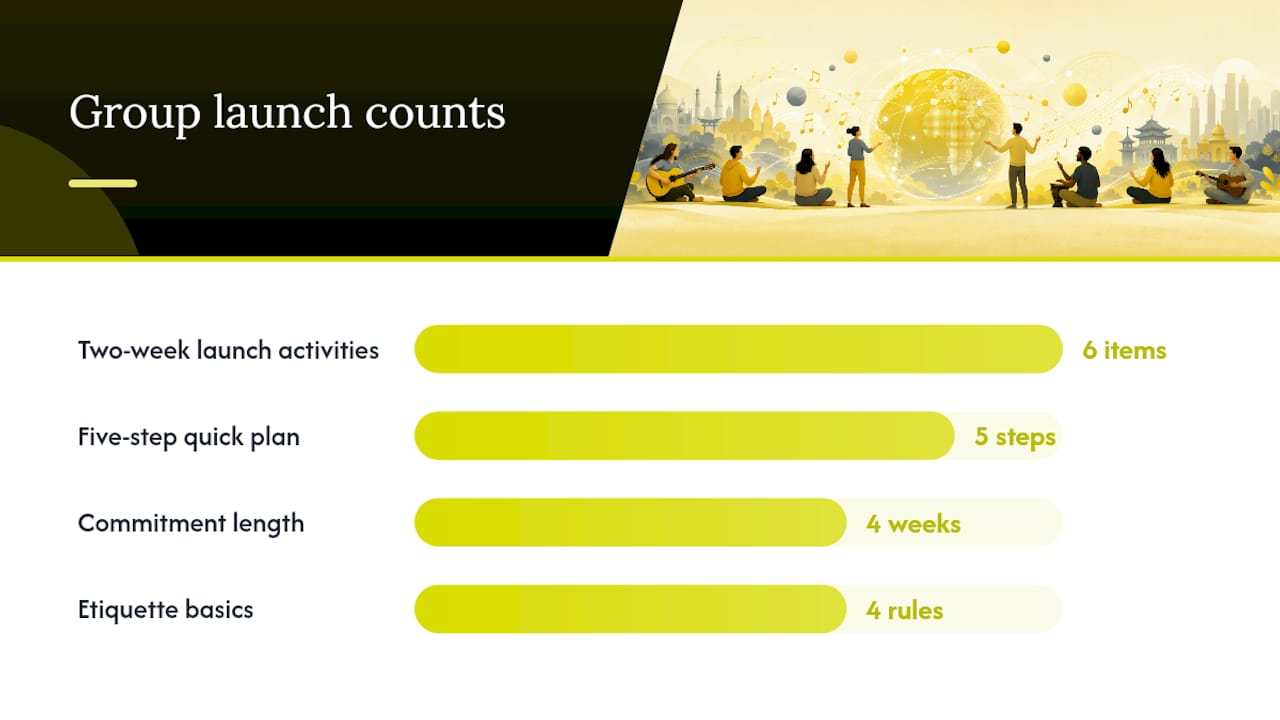
Five-step quick plan:
- Tech check: Test your microphone and headphones. Use a headset if possible; laptop speakers cause echo that disrupts group sessions.
- Choose your format: Pick one format (karaoke room, song club, or pronunciation cohort) and commit to it for four weeks before adding others.
- Find or invite members: Post in language-learning subreddits, Discord servers, or app communities. Aim for 4–8 people for a first group.
- Run the first session: Use the starter schedule above. Keep it under 45 minutes.
- Follow up within 24 hours: Send the group a recording of the session’s target verse and confirm the next date.
Two-week launch plan:
- Week 1, Day 1: Send song choice and vocabulary list to the group
- Week 1, Day 3: First live session (listen + shadow + group sing)
- Week 1, Day 5: Async recording share in group chat
- Week 2, Day 1: Peer feedback round
- Week 2, Day 3: Repeat session with same song, compare recordings
- Week 2, Day 5: Vote on next song; celebrate one pronunciation win per person
Etiquette and privacy basics:
- Always ask before recording another person’s voice
- Use a display name, not your full name, in public rooms
- Mute when not singing to reduce background noise
- Keep feedback specific and positive: “Your stress on the second syllable was clearer this week” beats “Good job”
Safety tip for public rooms: Join observer-only for your first session in any new community. Listen, read the chat, and assess the moderation quality before turning on your mic.
Pro Tip: Captions and lyrics displays are accessibility features, not training wheels. Learners with auditory processing differences or lower literacy in the target language benefit most from having both audio and text running simultaneously. Never run a session without lyrics visible.
For more structured group language learning ideas and how to build social practice into a weekly routine, the frameworks translate directly to the music-driven formats above.
How Singwithcanary puts these features into one place
Singwithcanary is a purpose-built example of a music-infused multilingual social community that maps directly to the research-backed features described above. It combines karaoke with synchronized lyrics, a recurring song-of-the-week social practice format, and recording/playback with peer feedback, all inside a single mobile app.
Three signature features:
- Karaoke with synced lyrics: Learners sing along with the target-language lyrics displayed in real time, isolating stress and vowel patterns the way the shadowing drill above describes
- Song-of-the-week community practice: A shared weekly song creates the repeated-exposure cycle that the 11-week EFL study found most effective for sustained motivation and cognitive engagement
- Recording, playback, and peer feedback: Users record a verse, hear it back, and share it for community response, closing the feedback loop that solo apps leave open
Onboarding checklist for new users:
- Download the app and create an account
- Run the mic test and set your target language
- Join the current song-of-the-week session
- Record your first verse clip
- Post it to the community feed and respond to one other learner’s clip
Three practical use cases:
- Daily 10-minute pronunciation warm-up: Shadow the week’s song at 75% speed, record one verse, compare to the original
- Weekly themed song club: Join the song-of-the-week room, discuss two vocabulary items from the lyrics, sing one round as a group
- Tandem song pair practice: Match with a native speaker of your target language through the app’s social features, swap languages, use the same song
Singwithcanary’s approach to social language practice reflects the same mechanics the OsloMet synchronous interaction study and the affective filter research point to: live voice, shared music, structured repetition, and peer reinforcement in one place.
What learners actually notice first in music-driven communities
Rhythm comes before vocabulary. Almost every adult learner who joins a music-based community reports the same early surprise: within two or three sessions, they start hearing the beat of the language, not just the words. That shift in perception, from decoding individual sounds to feeling the flow of a sentence, is the earliest and most motivating signal that something is working.

Shyness is real and normal. Singing in front of strangers in a second language is genuinely uncomfortable at first. The research on affective filter reduction explains why it gets easier faster than learners expect: the song absorbs the social attention, so the group is listening to the music, not judging your accent. Most learners report that the discomfort fades after two sessions, not two months.
Consistency matters more than talent. The learners who improve fastest are not the ones who sing best. They are the ones who show up every week, record every session, and ask for feedback. A simple calendar reminder and a committed group of four people will outperform any solo app streak.
Singwithcanary: a ready-made music-infused community worth trying
Singwithcanary gives you the full stack: karaoke rooms, a weekly shared song, recording tools, and a global community of learners, without building any of it yourself.
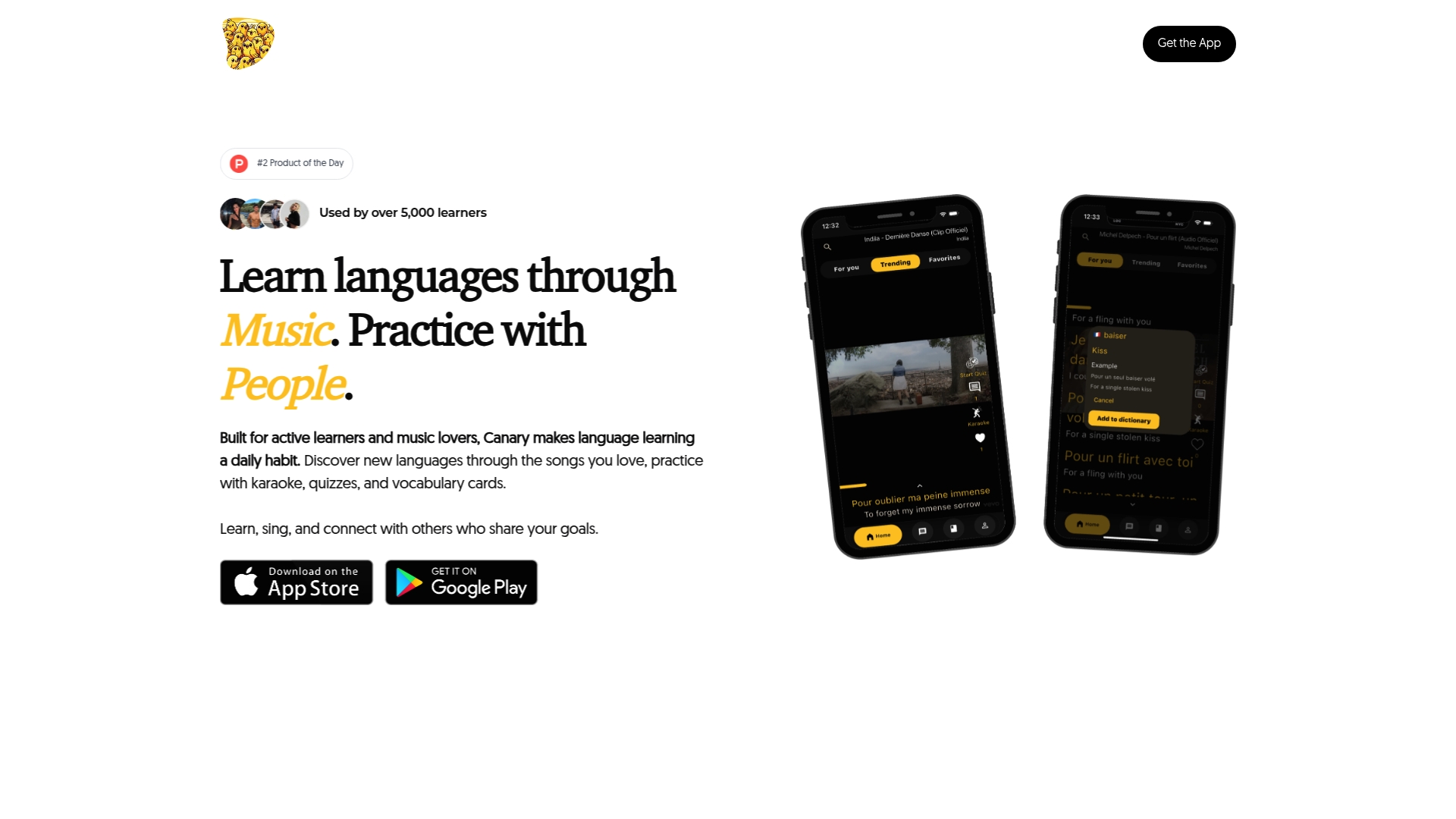
New users can start with three things right away:
- Song of the week: Join a live weekly song session and practice with learners from around the world
- Karaoke room: Sing with synced lyrics and get real-time pronunciation feedback from peers
- Record and compare: Capture your first verse, play it back, and post it for community response
The app is free to download on iOS and Android, with a Premium subscription available through the Apple App Store and Google Play for access to additional songs, advanced feedback features, and premium group rooms. Sign up and start your first session today.
Sources
- Study on synchronous interaction in online social learning communities
- A music-mediated language learning experience: students’ awareness of their socio-emotional skills
- Designing social reinforcement in online learning environments (Nature preview)
- Song-based language learning: academic development and motivation (Bridging study)
- The effect of using karaoke activities on students’ English pronunciation (ERIC full text)