TL;DR:
- Using Italian music boosts vocabulary retention by 20-30% compared to traditional methods.
- Songs help with pronunciation, cultural understanding, and connecting learners through community engagement.
- Selecting clear, repetitive, level-appropriate songs and practicing actively enhances language learning outcomes.
If you have ever sat down with a flashcard deck to learn Italian vocabulary, you know the feeling: study for an hour, forget most of it by morning. Traditional rote memorization is slow, frustrating, and honestly kind of boring. Songs, on the other hand, stick. Research shows that songs boost retention 20-30% compared to standard memorization, and they do it while you are actually enjoying yourself. This guide walks you through exactly how to use Italian music to grow your vocabulary, sharpen your pronunciation, and connect with a global community of learners who share your passion.
Table of Contents
- Why songs boost Italian vocabulary retention
- How to pick the right Italian songs for learning
- Step-by-step: Learning Italian vocabulary through songs
- Beyond vocabulary: Cultural and community learning
- A new mindset: Why playful engagement beats perfectionism
- Sing your way to fluent Italian with community resources
- Frequently asked questions
Key Takeaways
| Point | Details |
|---|---|
| Songs improve retention | Music-based learning helps you recall and use more Italian words than memorizing alone. |
| Choose songs wisely | Selecting clear, catchy tunes suited to your level leads to better vocabulary gains. |
| Engage actively | Listening, singing, and reviewing lyrics transforms music into a powerful study tool. |
| Connect with community | Practicing Italian songs with others accelerates learning and keeps motivation high. |
| Embrace culture | Songs teach idioms, slang, and history, deepening both language skill and cultural insight. |
Why songs boost Italian vocabulary retention
There is a reason you still remember every word of a song you heard in middle school but forgot last week’s grocery list. Music and memory are deeply connected. When it comes to learning Italian, that connection becomes a genuine superpower.
Research published on ResearchGate confirms that singing boosts foreign vocab recall, with music and language training working together to improve verbal memory through rhythm and repetition. The Ludke study, in particular, showed that participants who learned phrases through song consistently outperformed those who only spoke or repeated the same lines.
Here is why that matters in practice:
| Learning method | Retention rate | Pronunciation benefit | Engagement level |
|---|---|---|---|
| Flashcard drills | Low-medium | Minimal | Low |
| Grammar textbooks | Medium | Minimal | Low |
| Song-based learning | High | Strong | High |
| Shadowing songs | Very high | Very strong | High |
Songs cover 40-60% of common vocabulary through their natural repetition. That means the words appearing in pop songs and folk ballads are overwhelmingly the same high-frequency words you need most in real conversation. You are not studying obscure vocabulary, you are absorbing the exact words Italians use every day.
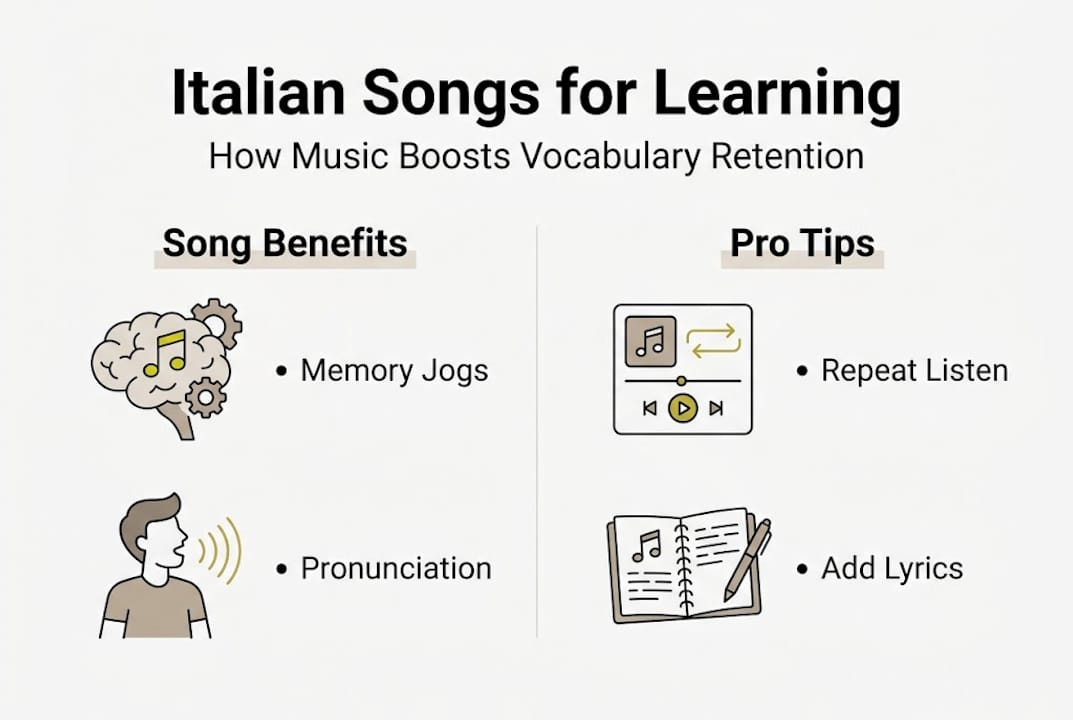
Pronunciation is another huge advantage. Italian is a phonetic language, meaning words are pronounced exactly as they are written, but stress patterns and vowel sounds trip up most learners. Singing naturally trains your ear and mouth to hit those patterns correctly, something a written list simply cannot do. The benefits of learning with songs go well beyond word counts, touching rhythm, intonation, and cultural feel.
There is also a neurological angle. Music activates multiple areas of the brain simultaneously, including memory, emotion, and motor function. That multi-region activation is exactly why vocabulary retention with music tends to outlast what you get from reading alone. You are not just storing a word, you are storing a melody, an emotion, and a context.
“Music is the shortcut your brain has been waiting for. When words have a rhythm, they have a home.”
Pro Tip: Listen to the same Italian song for three consecutive days before studying its lyrics. Your brain will already know the sound, making the vocabulary feel familiar the moment you read it.
The educational advantages of music have been studied across multiple age groups and language pairs, and the findings consistently point in the same direction: if you want words to stick, put them to a beat.
How to pick the right Italian songs for learning
Not every song is a good teacher. The wrong choice can leave you confused by regional dialects you are not ready for, or lyrics so poetic they barely resemble spoken Italian. The right song, though, can accelerate your learning dramatically.
Here is how to choose well:
- Choose clear singers. Artists like Laura Pausini, Eros Ramazzotti, and Zucchero enunciate cleanly and sing at a pace beginners can follow.
- Look for repetition. Choruses that repeat the same phrases are your best friend. You will internalize structure and vocabulary without even trying.
- Match your level. Do not jump to Måneskin before you are ready. Their lyrics include Romanesco dialect and slang that even intermediate learners find challenging to analyze.
- Pick meaningful themes. Love songs, travel anthems, and everyday-life narratives give you vocabulary you will actually use.
| Learner level | Recommended artists | Why they work |
|---|---|---|
| Beginner | Laura Pausini, Biagio Antonacci | Clear diction, standard Italian, slow tempo |
| Intermediate | Elisa, Jovanotti | Natural pacing, varied vocabulary, accessible themes |
| Advanced | Måneskin, Caparezza | Slang, dialects, complex wordplay |
For finding songs, Spotify playlists like “Italia Top 50” and YouTube channels dedicated to Italian music with lyrics on screen are excellent starting points. The Sanremo Music Festival, Italy’s most famous annual song competition, releases a fresh batch of contemporary songs every year and has become a popular learning resource for students worldwide.

One thing to watch for is dialect. Southern Italian dialects like Neapolitan sound dramatically different from standard Italian, which is based on the Tuscan variety. Neapolitan songs are beautiful and culturally rich, but they can confuse beginners who have not yet built a solid foundation. Save those gems for when you have a stronger base.
Pro Tip: Search YouTube for “learn Italian with music naturally” to find videos that combine official lyrics with comprehension breakdowns. These are perfect for bridging the gap between listening and understanding.
Theme matters more than you might think. A song about morning routines will teach you household verbs and daily expressions. A song about a road trip will give you directional vocabulary, landscape terms, and emotional language. Choose themes that align with the Italian conversations you actually want to have.
Step-by-step: Learning Italian vocabulary through songs
Having the right song is half the battle. The other half is how you study it. A structured approach turns a three-minute pop track into a genuinely powerful lesson.
- Listen without lyrics first. Play the song once or twice and just absorb the feeling, the rhythm, and any words you already catch. This builds natural listening instinct before your analytical brain takes over. Studies confirm that printing lyrics for study works best when you listen without text first.
- Read the lyrics and underline key words. Pull up the lyrics and mark every word you do not know. Focus especially on nouns, verbs, and expressions that appear in the chorus.
- Translate in context, not in isolation. Do not just look up a word and move on. Read the full line, understand how the word fits, and note whether it is formal or casual.
- Sing along and mimic. This is where pronunciation training happens. Match the singer’s stress patterns, vowel sounds, and rhythm. You will feel awkward at first. That is fine.
- Shadow the lyrics. Play the song and speak along with it in real time, overlapping with the singer. This technique is one of the fastest ways to improve fluency and feel.
- Track your new words. Keep a running vocabulary list organized by song. Reviewing it weekly reinforces what you have learned and shows you real progress over time.
Pro Tip: Use song-based ear training exercises where you listen to a section, pause, and try to write down what you heard before checking the lyrics. This habit builds both listening comprehension and spelling at the same time.
Learners who shadow songs regularly report noticeable improvement in natural speech rhythm within just two to four weeks.
Aim for one new song every week. By the end of three months, you will have studied twelve songs, absorbed hundreds of vocabulary words in meaningful context, and built a genuinely Italian-sounding ear.
Beyond vocabulary: Cultural and community learning
Songs are not just vocabulary delivery systems. They are windows into how Italians actually think, feel, and see the world. That cultural layer is something no textbook can replicate.
Take “Bella Ciao,” for example. Learning that song gives you vocabulary, yes, but it also teaches you about Italian WWII resistance history and the idioms surrounding freedom and solidarity. The song is still sung at political rallies today, giving learners a real-time connection to Italian social life.
Here are other cultural dimensions that music opens up:
- Idioms in context. Italian is full of colorful expressions that make no literal sense. Songs use them naturally, showing you how idioms actually function in emotional speech.
- Regional dialects. From Romanesco in Rome to Neapolitan in Naples, dialects reveal the extraordinary diversity of Italian culture. Recognizing them is a sign of advanced competency.
- Social commentary. Artists like Caparezza and Fabrizio De André used music to discuss poverty, immigration, and identity. Their lyrics are rich with real-world Italian.
- Generational vocabulary. Songs from different decades show you how the language has evolved, which also helps you understand older relatives, films, and literature.
The community angle is just as powerful. Platforms like Reddit’s Italian learning thread connect you with hundreds of learners sharing playlists, discussing lyrics, and swapping recommendations. Discord servers focused on Italian let you practice in real time with people at your exact level.
Engaging with the Sanremo Festival each year is another smart move. Thousands of learners worldwide follow the event, discuss the songs, and break down the lyrics together. The shared experience creates accountability and turns a solo habit into a genuinely social one. Exploring cultural immersion in language learning through music is one of the most natural ways to build lasting fluency.
A new mindset: Why playful engagement beats perfectionism
Here is the uncomfortable truth most language courses will not tell you: the learner who sings badly but consistently will almost always outpace the learner who waits until they feel ready to try.
Perfectionism is a trap. It disguises itself as standards, but it mostly just keeps you quiet. Songs dismantle that trap because they invite imperfection by design. Nobody expects you to sound like the artist on day one. The act of trying, stumbling, and trying again is exactly where vocabulary gets cemented.
We believe that song-based language benefits are most accessible when you approach them with curiosity rather than pressure. Learners who treat music practice like play, rather than a test, report higher consistency and stronger motivation over time. And retention gains of 20-30% do not come from grinding harder. They come from creating conditions where your brain is relaxed and engaged simultaneously.
Share songs with other learners. Post your karaoke attempts. Ask questions about lyrics. The social layer of music-based learning is not optional, it is actually where a lot of the magic happens.
Sing your way to fluent Italian with community resources
Ready to take the next step? Canary is built specifically for learners like you, people who want to learn languages with music in a way that actually feels good. The platform combines song-based vocabulary cards, karaoke practice, and interactive quizzes with a global community of learners you can sing alongside.
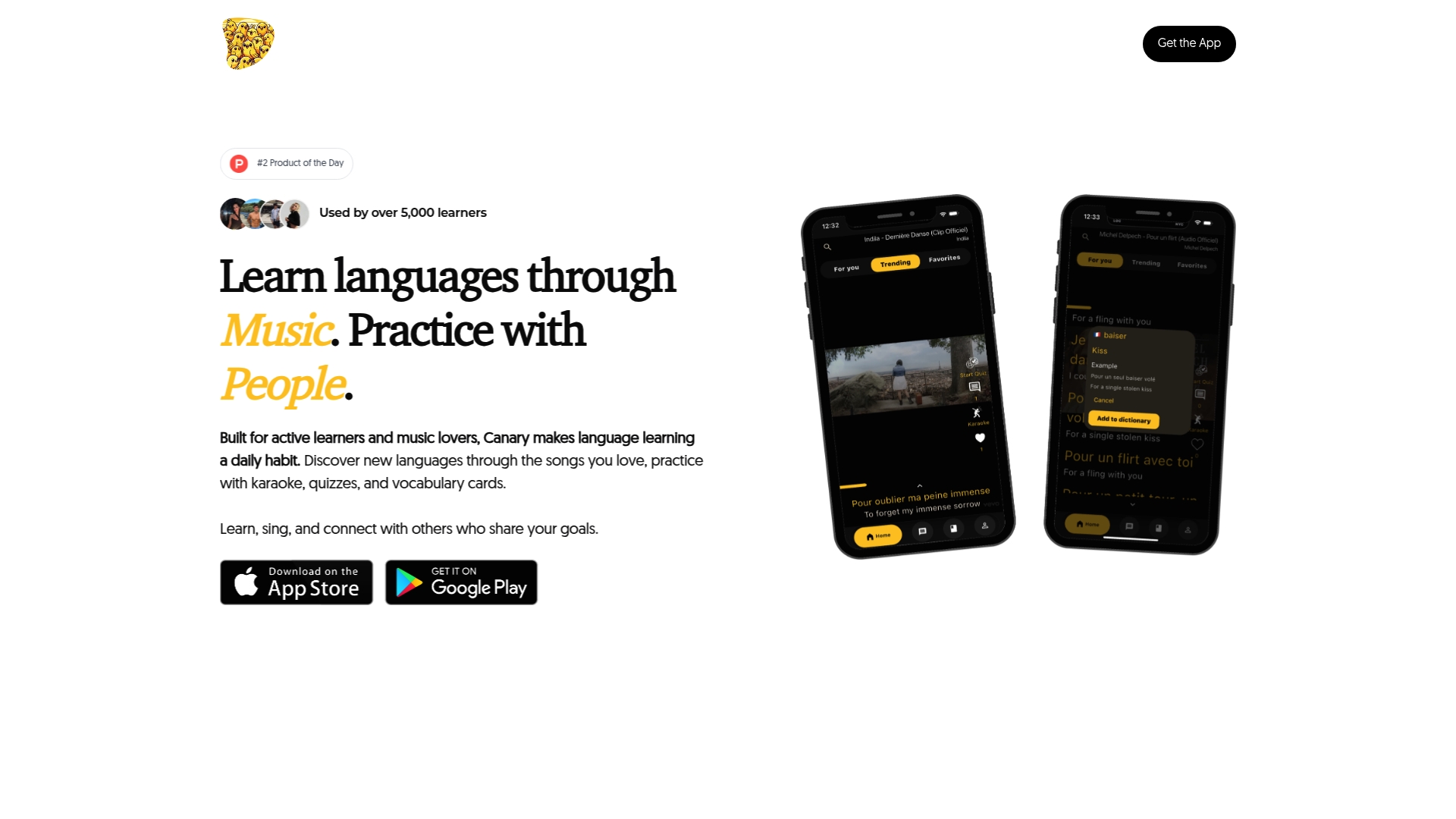
Whether you are just starting your Italian journey or pushing toward advanced fluency, building a consistent language learning workflow around music makes the whole process click. You get pronunciation training, vocabulary in context, and cultural depth, all from songs you genuinely enjoy. Explore social language learning on Canary and discover how much faster you grow when you practice with others who share your passion.
Frequently asked questions
How many new Italian words can I learn per week with music?
With consistent song-based practice, learners typically add 10-30 new words weekly, thanks to the repetition and higher retention that music naturally provides compared to standard memorization.
What kind of Italian songs are best for beginners?
Clear, slow-paced pop or traditional songs with repetitive lyrics work best. Artists with clean diction and repetitive choruses like Laura Pausini are ideal starting points.
How do I remember new vocabulary from songs long-term?
Shadowing lyrics and re-listening multiple times locks in both meaning and sound. Research confirms that singing boosts vocab recall by activating rhythm and neural memory pathways simultaneously.
Can songs help me understand Italian culture and slang?
Absolutely. Songs regularly teach idioms, slang, and cultural context, from Bella Ciao’s wartime history to modern Romanesco dialect in contemporary pop.
Where can I share Italian music learning playlists with others?
Reddit and Discord host active communities for Italian learners. The r/LearningItalian community is particularly active for sharing playlists and group song analysis sessions.