Struggling to memorize and retain new vocabulary in your target language? You’re not alone. Many learners find traditional flashcard drills tedious and ineffective, leading to frustration and slow progress. Songs offer a powerful alternative by combining melody, rhythm, and repetition to make vocabulary stick naturally. This guide reveals how to strategically use music to expand your word bank, improve pronunciation, and accelerate your language journey in an engaging, enjoyable way.
Table of Contents
- Key takeaways
- What you need to start expanding vocabulary through songs
- Step-by-step guide to using songs for vocabulary improvement
- Common challenges and how to overcome them
- Expected results and how to track your progress
- Discover Canary: your music-driven language learning companion
- Frequently asked questions
Key Takeaways
| Point | Details |
|---|---|
| Songs boost retention | Melody rhythm and repetition help new words stick more naturally than traditional drills. |
| Right song selection | Choosing tracks that match your proficiency level and motivation maximizes comprehension and long term learning. |
| Active listening techniques | Listening with lyrics following along and focusing on pronunciation links sounds to written forms and improves accuracy. |
| Daily song practice | Integrating short song sessions into your daily routine accelerates vocabulary growth through consistent varied exposure. |
What you need to start expanding vocabulary through songs
Before diving into song-based vocabulary practice, gather the right tools and create an environment that maximizes learning efficiency. Your setup doesn’t need to be complicated, but having essential resources ready ensures you can focus on absorbing new words rather than scrambling for materials mid-session.
You’ll need a device to play music and display lyrics simultaneously. A smartphone, tablet, or computer works perfectly. Streaming platforms like Spotify or YouTube provide access to millions of songs, while lyric websites or apps let you follow along word by word. Effective vocabulary learning with songs requires appropriate song selection and tools for lyrics and playback, so invest time in finding reliable sources.
Song selection matters enormously. Choose tracks that match your current proficiency level. Beginners benefit from children’s songs or pop music with simple, repetitive lyrics. Intermediate learners can tackle mainstream artists with clearer pronunciation. Advanced students might explore rap, folk, or indie genres with complex vocabulary. Pick music you genuinely enjoy because motivation drives consistency.
Essential tools for song-based vocabulary learning:
- Translation apps or dictionaries for instant word lookups
- Note-taking apps or physical notebooks to record new vocabulary
- Audio recording software to capture your singing practice
- Lyric annotation tools to highlight and mark unfamiliar words
- Playback speed controllers to slow down fast sections
| Tool type | Recommended options | Primary function |
|---|---|---|
| Lyric display | Musixmatch, Genius, LyricsTraining | Synchronized lyrics with audio playback |
| Translation | Google Translate, DeepL, WordReference | Quick definitions and context examples |
| Vocabulary tracking | Anki, Quizlet, Notion | Flashcard creation and spaced repetition |
| Audio practice | Voice Memos, Audacity, GarageBand | Recording and playback for pronunciation review |
Establish a distraction-free practice space. Find a quiet room where you can sing without self-consciousness or interruption. Good lighting helps when reading lyrics. Comfortable seating encourages longer practice sessions. Some learners prefer headphones for immersive listening, while others benefit from speakers to hear their own voice alongside the music.
Pro Tip: Create a dedicated playlist of 10 to 15 songs at your level and rotate through them weekly. This repetition reinforces vocabulary while preventing boredom through variety. Understanding the educational benefits of music for language helps you appreciate why this method works so effectively.
Step-by-step guide to using songs for vocabulary improvement
Active engagement transforms passive listening into powerful vocabulary acquisition. Follow this systematic approach to extract maximum learning value from every song you practice.
Start with a complete listen-through without lyrics. This initial exposure trains your ear to recognize word boundaries, intonation patterns, and overall melody. Don’t worry about understanding everything. Focus on identifying familiar words and getting a feel for the song’s rhythm and emotional tone.
Next, access the lyrics and listen again while reading along. This crucial step connects sounds to written words, revealing pronunciation patterns you might have missed. You’ll notice how native speakers link words together, drop certain sounds, or emphasize unexpected syllables. This awareness directly improves your listening comprehension.
Now comes the vocabulary work:
- Read through the lyrics without audio and highlight every unfamiliar word or phrase
- Look up definitions using a reliable dictionary, noting multiple meanings if they exist
- Write down the new vocabulary in your notebook with example sentences from the song
- Research pronunciation using audio dictionaries or language apps to hear correct articulation
- Create flashcards for words you want to prioritize in your active vocabulary
- Review the song’s cultural context or idiomatic expressions that might not translate literally
Once you’ve studied the vocabulary, practice singing along. Start slowly, perhaps at 75% speed if your player allows it. Focus on matching the singer’s pronunciation, intonation, and rhythm. Don’t aim for perfection on the first attempt. Daily language practice with songs boosts fluency through consistent repetition, not flawless performance.

Repeat the song multiple times across several practice sessions. Spacing out your exposure strengthens long-term retention far more effectively than marathon sessions. Try singing along three to five times over a week, then revisit the song monthly to reinforce learning.
Pro Tip: Record yourself singing and compare it to the original. This objective feedback reveals pronunciation gaps you can’t hear while singing. Many learners discover they’re dropping endings, mispronouncing vowels, or rushing through difficult sections.
Supplement your song practice with complementary activities. Review your vocabulary flashcards daily. Write original sentences using new words. Try explaining the song’s meaning to a language partner. These varied approaches cement words in multiple contexts, making recall automatic. Exploring how to master language learning with lyrics provides additional strategies for maximizing your musical study sessions.
Common challenges and how to overcome them
Even with the best intentions, song-based vocabulary learning presents obstacles that can derail your progress. Recognizing these challenges early and implementing smart solutions keeps you moving forward.
Fast or unclear lyrics frustrate many learners. Rap verses, mumbled delivery, or heavy accents make word recognition nearly impossible. Solution: Use playback speed controls to slow songs to 50% or 75% speed without pitch distortion. Most music apps and YouTube offer this feature. Practice at reduced speed until you can identify individual words, then gradually increase tempo.
Getting distracted by melody or rhythm pulls focus away from vocabulary learning. You might find yourself enjoying the music without actually studying the words. Solution: Alternate between analytical listening sessions focused purely on vocabulary and enjoyment sessions where you simply sing for fun. Set clear intentions before each practice. During study time, pause frequently to look up words and take notes.
Frustration with overwhelming unknown vocabulary can kill motivation. Opening lyrics to find 30 unfamiliar words feels discouraging. Solution: Start with songs containing just 5 to 10 new words per track. Build your vocabulary gradually rather than tackling advanced material prematurely. Remember that even native speakers don’t know every word in every song.
Strategies for maintaining momentum:
- Break songs into sections and master one verse at a time before moving forward
- Use lyric annotation apps that let you click words for instant translations
- Join online communities where learners share song recommendations and discuss lyrics
- Set realistic goals like learning two new songs per week rather than one per day
- Celebrate small wins by tracking the total number of songs you’ve mastered
“I used to get discouraged when songs had too many unknown words. Now I choose tracks with 70% familiar vocabulary and focus on learning just the new 30%. This approach keeps me motivated and builds confidence steadily.” - Intermediate Spanish learner
Music boosts vocabulary retention language learning because it engages multiple memory systems simultaneously, but you must give yourself permission to struggle initially. Progress comes from consistent effort, not perfect execution. Understanding the broader role of music in language learning helps you appreciate that challenges are normal parts of the acquisition process.
Stay patient with yourself. Native speakers spent years absorbing their language through songs, conversations, and media. You’re compressing that timeline significantly by studying intentionally. Every song you practice builds neural pathways that make the next one easier.
Expected results and how to track your progress
Consistent song-based vocabulary practice produces measurable improvements across multiple language skills. Understanding what to expect helps you recognize progress and stay motivated during plateaus.

Vocabulary retention improves dramatically compared to traditional memorization methods. The combination of melody, emotional connection, and repeated exposure creates stronger memory associations. Consistent song-based practice leads to faster vocabulary acquisition and improved listening comprehension over traditional methods. Most learners notice they can recall song vocabulary weeks or months later without review, while flashcard words often fade within days.
Pronunciation and accent evolve through mimicry and rhythm recognition. Singing forces your mouth to move at native speed, training muscle memory for sound combinations. You’ll hear yourself naturally adopting intonation patterns and stress rhythms that previously felt foreign. Recording monthly singing samples reveals subtle improvements you might not notice day to day.
Listening comprehension expands beyond your studied songs. As you internalize pronunciation patterns and common word combinations, you’ll understand more in conversations, podcasts, and videos. The vocabulary you learn through songs appears frequently in everyday speech, making real-world interactions suddenly more accessible.
| Metric | Measurement method | Expected timeline |
|---|---|---|
| Vocabulary size | Count unique words learned from songs | 50 to 100 new words per month with daily practice |
| Pronunciation accuracy | Record and compare to native speakers | Noticeable improvement within 2 to 3 weeks |
| Listening comprehension | Test understanding of unfamiliar songs | Gradual increase, significant gains after 3 months |
| Speaking confidence | Self-assessment and partner feedback | Steady growth, breakthrough moments around 6 weeks |
Tracking progress systematically keeps you motivated and reveals patterns in your learning. Implement these monitoring strategies:
- Take weekly vocabulary quizzes using words from songs you’ve studied
- Record yourself singing the same song monthly to hear pronunciation evolution
- Maintain a journal logging practice sessions, new words learned, and breakthrough moments
- Use spaced repetition apps that show retention rates for song vocabulary
- Set milestone goals like mastering 10 songs or learning 200 words in a quarter
Pro Tip: Create a “mastery playlist” containing only songs where you understand 95% of the lyrics and can sing along comfortably. Watching this playlist grow provides tangible proof of your expanding abilities. Revisit these songs quarterly to maintain vocabulary and enjoy how easy they’ve become.
Celebrate incremental wins rather than waiting for fluency. Recognizing when you understand a word in conversation that you learned from a song creates positive reinforcement. Noticing improved pronunciation in a specific sound you’ve practiced builds confidence. These small victories accumulate into significant language gains over time. Integrating daily language practice with songs boosts fluency by making consistent progress visible and rewarding.
Discover Canary: your music-driven language learning companion
Ready to supercharge your vocabulary expansion through music? Canary transforms song-based learning from a casual hobby into a structured, effective practice system. The platform combines everything you need in one place: synchronized lyrics, vocabulary tracking, pronunciation practice, and a supportive community of fellow learners.
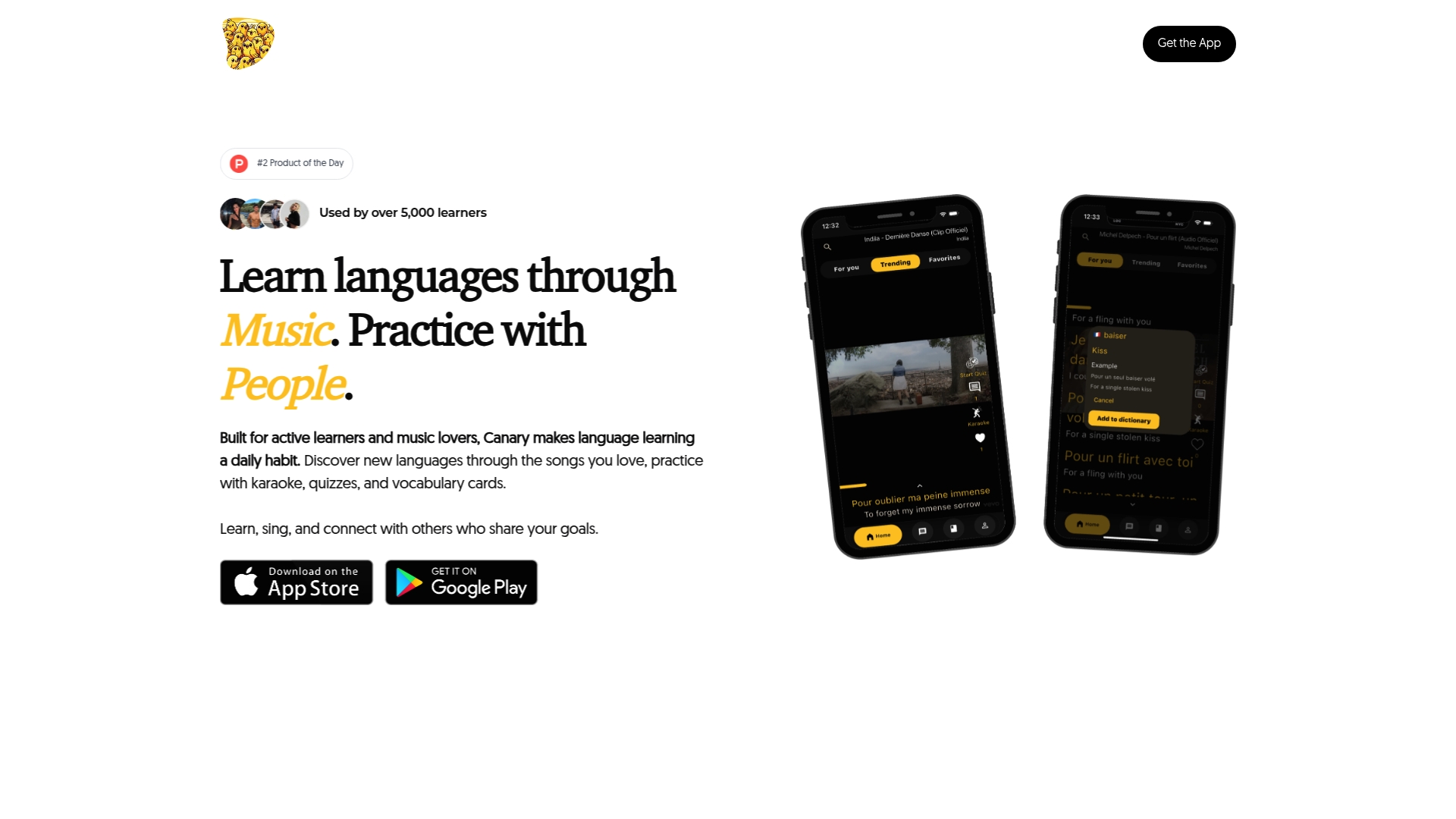
Canary offers interactive features specifically designed for vocabulary growth. Highlight unfamiliar words directly in lyrics, create instant flashcards, and practice with karaoke-style playback that adjusts to your pace. The platform tracks which songs you’ve mastered and suggests new tracks matching your proficiency level and musical preferences.
Join challenges with learners worldwide to stay accountable and motivated. Share your progress, exchange song recommendations, and practice with international partners who bring diverse perspectives to your language journey. Learn languages with music in a way that feels less like studying and more like discovering your favorite new artists. Consistent daily language practice with songs boosts fluency when you have the right tools supporting your efforts. Sign up today and experience how music accelerates your path to confident communication.
Frequently asked questions
Can I use any songs to learn vocabulary effectively?
Not all songs suit every proficiency level. Choose tracks with clear pronunciation and vocabulary matching your current abilities. Beginners benefit from children’s songs or simple pop music with repetitive lyrics, while advanced learners can tackle complex genres. Selecting music you genuinely enjoy increases motivation and practice consistency, which matters more than picking “perfect” educational content.
How often should I practice with songs to see progress?
Consistent daily or near-daily practice of 15 to 30 minutes yields the best results for vocabulary retention and pronunciation improvement. Regularity matters more than session length because spaced repetition strengthens long-term memory. Even short daily sessions outperform occasional marathon practice. Aim for at least five sessions weekly to maintain momentum and build habits.
Can singing along actually improve pronunciation?
Singing along with songs improves pronunciation through rhythm, intonation, and repetition. The musical structure forces your mouth to move at native speed, training muscle memory for sound combinations. Mimicking singers helps you adopt natural stress patterns and reduces foreign accent markers. Repetition reinforces these patterns until they become automatic in regular speech.
What tools can assist vocabulary learning through songs?
Lyric apps, translation tools, and language learning platforms enhance understanding by providing synchronized text, instant definitions, and pronunciation guides. Recording yourself and comparing to native speakers reveals pronunciation gaps. Flashcard apps with spaced repetition algorithms help cement new vocabulary long-term. Exploring the educational benefits of music for language shows why combining multiple tools creates the most effective learning environment.