TL;DR:
- Fun French learning activities include interactive games and creative exercises that make language study engaging for all ages. These activities range from vocabulary games like Bingo and Memory Match to speaking tools and cultural projects, meeting high demand for playful, effective practice. Combining these methods helps build vocabulary, speaking confidence, and cultural awareness, leading to well-rounded language proficiency.
Fun French learning activities are interactive games and creative exercises designed to make language study enjoyable and effective for learners of all ages. The best list of fun French learning activities combines vocabulary games like French Bingo and Memory Match, speaking tools like Jenga and Role-Plays, and creative projects like illustrated reading corners and class journals. Over 16,000 online French learning resources feature game-based activities effective for levels A1 to B1. That number tells you one thing clearly: the demand for engaging, playful French practice is enormous, and the supply is there to meet it.
1. What are the top interactive French vocabulary games?
Game-based learning prevents French study from feeling repetitive and improves vocabulary retention compared to drills alone. The activities below are the most effective for building word recognition, recall, and spelling at every level.
Memory Game pairs French words with images or English translations on cards. Learners flip cards to find matches, which forces active recall rather than passive reading. This works well for beginners building their first 200–300 words.
French Bingo replaces numbers with vocabulary words, verb conjugations, or images. The teacher calls out definitions or sentences, and learners mark their cards. It works across A1 to B1 levels by adjusting the complexity of the clues.
French Boggle gives learners a grid of letters and a time limit to find as many French words as possible. It trains spelling and pattern recognition at the same time. Intermediate learners find it especially useful for consolidating words they recognize but cannot yet spell.
The Label Game is the single best activity for absolute beginners. Learners stick sticky notes with French words onto objects around the room or home. For beginners at A1 level, tangible object-linked activities build reassuring vocabulary foundations before abstract conversation begins.
- Memory Game: Best for A1 beginners; needs printed cards; great for solo or pair practice.
- French Bingo: Flexible for all levels; teacher-led; easy to adapt to any vocabulary theme.
- French Boggle: Best for A2 and above; builds spelling and word recognition simultaneously.
- Label Game: Ideal for A1 learners at home or in class; zero prep; high daily exposure.
Pro Tip: Rotate vocabulary themes weekly in Bingo and Boggle. Using the same word set for more than two sessions drops engagement fast.
2. How can speaking and listening activities boost French conversational skills?
Speaking activities are the fastest path to real fluency. The following games build oral communication and confidence by forcing learners to produce language under low-pressure conditions.
1. Role-Plays assign learners specific scenarios: ordering food, asking for directions, or booking a hotel. They practice real-world phrases in context. Interactive vocabulary-building games like role-plays appear consistently across top French learning resource lists because they mirror authentic communication.
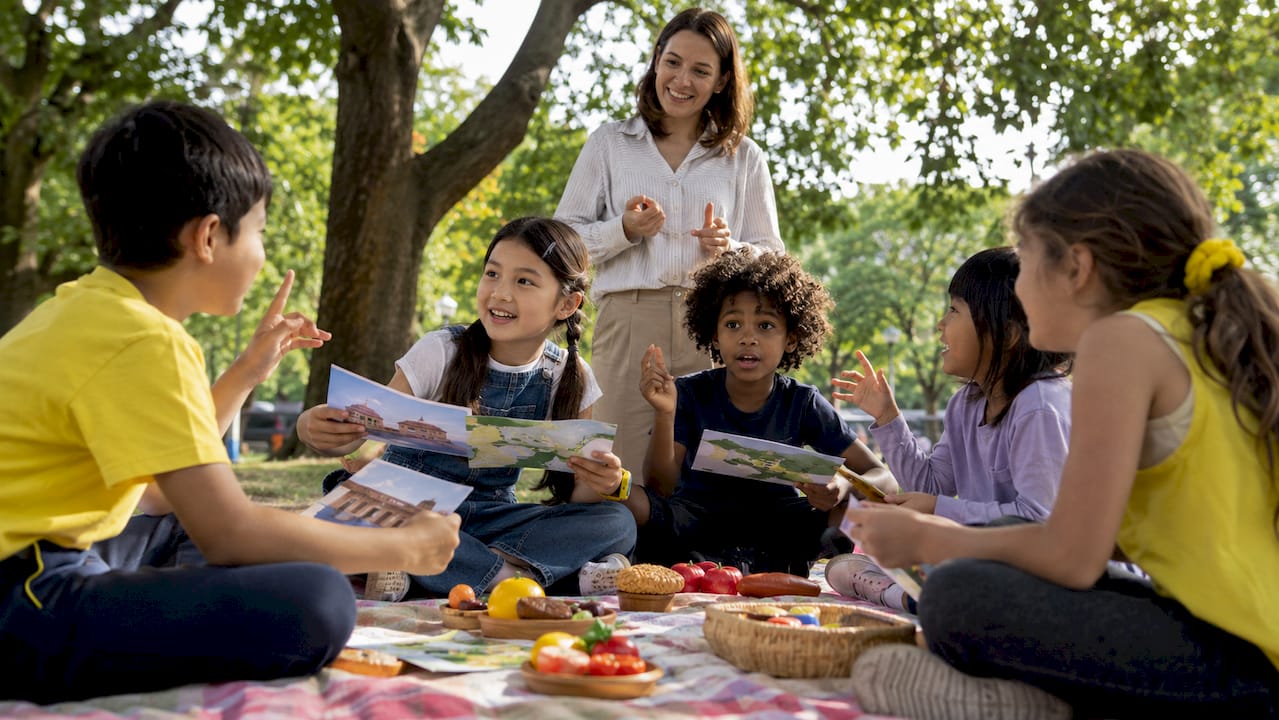
2. Jenga Speaking Game writes a question or prompt on each Jenga block. When a learner pulls a block, they must answer the question in French before placing it on top. Jenga and Fortune Teller games succeed when students are paired strategically and partners are rotated, ensuring every learner gets equal speaking time.
3. French Fortune Teller uses the classic paper fortune teller folded with French questions inside. Learners choose numbers and colors in French, then answer the revealed question. It works especially well with younger learners or beginners who need low-stakes speaking practice.
4. Collaborative Storytelling starts with one sentence from the teacher and passes the story around the group. Each learner adds one sentence in French. Group activities like collaborative storytelling promote natural language use and boost fluency by encouraging expression beyond memorization.
5. Escape Room Challenges integrate vocabulary and grammar review into problem-solving tasks. Students solve clues and complete language-based challenges in small groups, which builds fluency and teamwork at the same time.
Pro Tip: Mix proficiency levels in speaking pairs. A stronger speaker models natural phrasing while a weaker speaker gains confidence. Rotate pairs every 10 minutes to prevent dominant learners from taking over.
For learners who want to sharpen their ear alongside their speaking, improving French listening skills is a natural next step after these activities.
3. Which no-prep French activities fit any learning context?
No-prep activities are the most practical tools in a French teacher’s or self-learner’s kit. They require no materials, no printing, and no setup. No-prep French games such as “Ceci ou Cela,” Sparkle, and Ball Toss cover vocabulary topics and verb tenses for both core and immersion classrooms.
- Ceci ou Cela (This or That): The teacher calls out two options in French. Learners move to one side of the room based on their preference. It builds listening comprehension and vocabulary in under five minutes.
- Sparkle: Learners spell a French word aloud, one letter per person around the circle. The learner who says the final letter stays in; mistakes sit down. It trains spelling and listening simultaneously.
- Ball Toss: A ball is tossed around the room. The catcher must answer a French question or name a word in a given category before tossing it on. It keeps energy high and attention sharp.
- Four Corners: Each corner of the room is labeled with a French word or category. The teacher describes something, and learners move to the correct corner. Games like Four Corners and Ball Toss provide low-stress environments for real-time comprehension evaluation without formal testing anxiety.
- Mystery Number: Learners ask yes-or-no questions in French to guess a hidden number. It builds question formation and number vocabulary at the same time.
These activities also serve as informal assessments. Teachers can gauge listening fluency and comprehension in real time without a single quiz or test.
4. How do creative projects and cultural activities improve French retention?
Creative projects give learners a reason to use French beyond the classroom exercise. They build writing, reading, and cultural awareness together.
| Activity | Skills Developed | Best Level | Setup Required |
|---|---|---|---|
| Cultural Projects | Cultural awareness, vocabulary | A2 to B1 | Medium |
| Class Journal in French | Writing, grammar, reflection | A1 to B1 | Low |
| Picture Dictation | Listening, vocabulary, drawing | A1 to A2 | Low |
| Illustrated Reading Corner | Reading, comprehension, creativity | A2 to B1 | Medium |
| Songs and Karaoke | Pronunciation, rhythm, grammar | All levels | Low |
Class Journals ask learners to write a few sentences in French each day about their life, the weather, or a topic they choose. The personal connection to the content makes vocabulary stick faster than any worksheet.
Picture Dictation has the teacher describe a scene in French while learners draw what they hear. It trains listening comprehension and vocabulary recall without any writing pressure. Beginners find it especially accessible.
Songs are powerful tools for memorizing French grammar and improving pronunciation through rhythm and repetition. Music supports natural language absorption across all proficiency levels. Platforms like Singwithcanary use this principle directly, pairing song lyrics with vocabulary cards and karaoke to make the process feel more like entertainment than study. For a curated starting point, fun French songs for beginners offer an easy entry into music-based learning.
5. How to choose and combine French activities for maximum effectiveness
Choosing the right activity depends on three factors: the learner’s current level, the skill being targeted, and the available time and materials.
| Activity Type | Best Level | Primary Skill | Prep Needed |
|---|---|---|---|
| Label Game | A1 | Vocabulary | None |
| French Bingo | A1 to B1 | Vocabulary, listening | Low |
| Jenga Speaking Game | A2 to B1 | Speaking, fluency | Low |
| Collaborative Storytelling | A2 to B1 | Speaking, grammar | None |
| Escape Room | B1 | Grammar, vocabulary | High |
| Songs and Karaoke | All levels | Pronunciation, grammar | Low |
| Cultural Projects | A2 to B1 | Writing, culture | Medium |
A well-rounded weekly plan mixes at least one vocabulary game, one speaking activity, and one creative or cultural project. This rotation prevents any single skill from being neglected. Language learning gamification research confirms that variety in activity type sustains motivation over weeks and months, not just single sessions.
For A1 learners, start with the Label Game and Picture Dictation before introducing speaking games. For A2 and above, Jenga and Collaborative Storytelling build fluency quickly. B1 learners benefit most from Escape Rooms and Cultural Projects, which demand sustained language production.
Pro Tip: Adapt any game to a new theme by swapping the vocabulary set. Bingo works for food, travel, and body parts. Jenga works for past tense, future tense, or opinion questions. One game structure can serve a full semester.
Key takeaways
The most effective French learning combines vocabulary games, speaking activities, and creative projects because each targets a different skill and together they build complete language competence.
| Point | Details |
|---|---|
| Start concrete for beginners | Use the Label Game and Picture Dictation before introducing conversation activities. |
| Rotate activity types weekly | Mix vocabulary, speaking, and creative tasks to cover all core language skills. |
| No-prep games double as assessments | Four Corners and Ball Toss reveal comprehension gaps without formal testing pressure. |
| Strategic pairing boosts speaking | Mixing proficiency levels in Jenga and Role-Plays gives every learner equal practice time. |
| Music accelerates retention | Songs and karaoke reinforce grammar and pronunciation through rhythm across all levels. |
Why I think most French learners are one game away from a breakthrough
Most learners who struggle with French are not failing because of grammar. They are failing because the activities they use feel disconnected from real communication. Flashcard apps and grammar drills teach French as a code to crack, not a language to use.
The shift happens when a learner plays Jenga and realizes they just held a conversation. Or when they sing a French song and notice they remembered the subjunctive without trying. Recognizing every learner’s small progress shifts their mindset and creates positive associations with language learning through play. That shift is not a nice-to-have. It is the mechanism that keeps people practicing past the first two weeks.
The learners I have seen make the fastest progress are not the ones with the best textbooks. They are the ones who found an activity that made them forget they were studying. Mistakes become part of the game rather than evidence of failure. That psychological shift is worth more than any grammar rule.
My honest recommendation: pick one speaking game and one vocabulary game from this list and run them for two weeks before adding anything else. Depth beats variety at the start. Once the habit is there, layer in cultural projects and music. The foundation holds everything else up.
— Ben
Take your French further with Singwithcanary
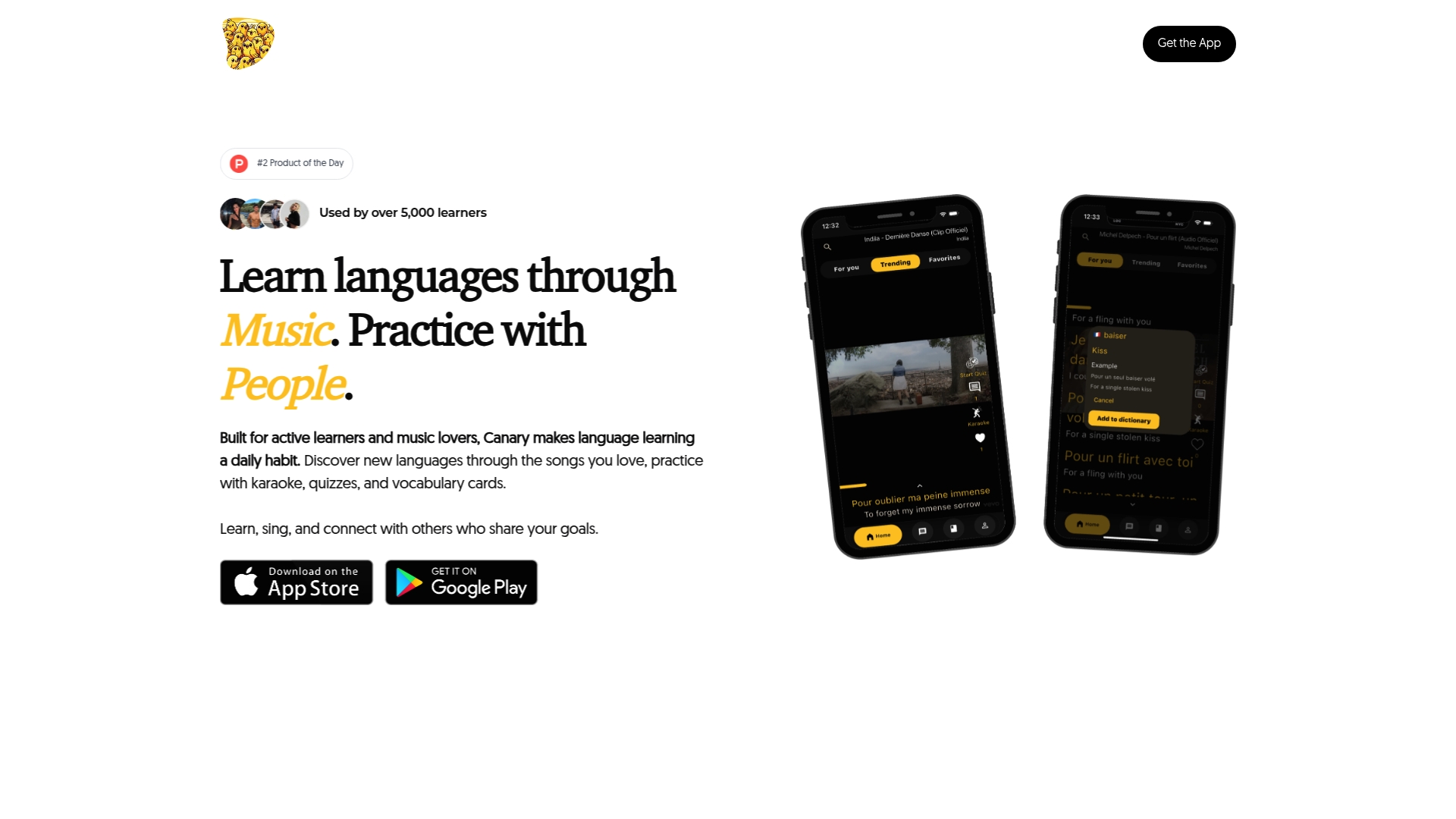
Singwithcanary is built on the same principle that makes games work: language sticks when it feels natural and enjoyable. The platform combines song-based learning with karaoke, vocabulary cards, and real-time practice with speakers from around the world. You practice pronunciation through lyrics, build vocabulary in context, and train your ear the way musicians do. Every session feels more like entertainment than a lesson. If the activities in this article sparked something, learn languages with music on Singwithcanary and turn that spark into a daily habit. Sign up today and start your first session free.
FAQ
What are the best fun activities for learning French at home?
The Label Game, Picture Dictation, and song-based learning with platforms like Singwithcanary are the most effective home activities. They require no partner and build vocabulary, listening, and pronunciation simultaneously.
How do interactive French language games help with retention?
Game-based learning improves retention by making review feel rewarding rather than repetitive. Active recall through games like Memory Match and Bingo outperforms passive reading for long-term vocabulary storage.
Which French activities work best for kids and beginners?
The Label Game, French Fortune Teller, and Picture Dictation work best for young learners and A1 beginners. They link language to physical objects and low-pressure play, which builds confidence before abstract grammar is introduced.
Can no-prep games replace formal French assessments?
No-prep games like Four Corners and Ball Toss serve as informal diagnostics that reveal comprehension gaps in real time. They do not replace formal tests but give teachers and learners immediate feedback without test anxiety.
How often should I rotate French learning activities?
Rotate activity types at least once per week. A weekly plan that includes one vocabulary game, one speaking activity, and one creative project covers all core skills and prevents engagement from dropping.