Finding a music-based language learning platform that offers interactive practice with fresh content and community support is harder than it should be. Many tools limit language practice to passive listening, hide karaoke or quiz features behind paywalls, or do not support content creation and sharing. This comparison covers price, speaking practice, and content creation across three platforms so learners can choose the music-based option that matches their study habits.
Table of Contents
Canary Learning with Music
At a Glance
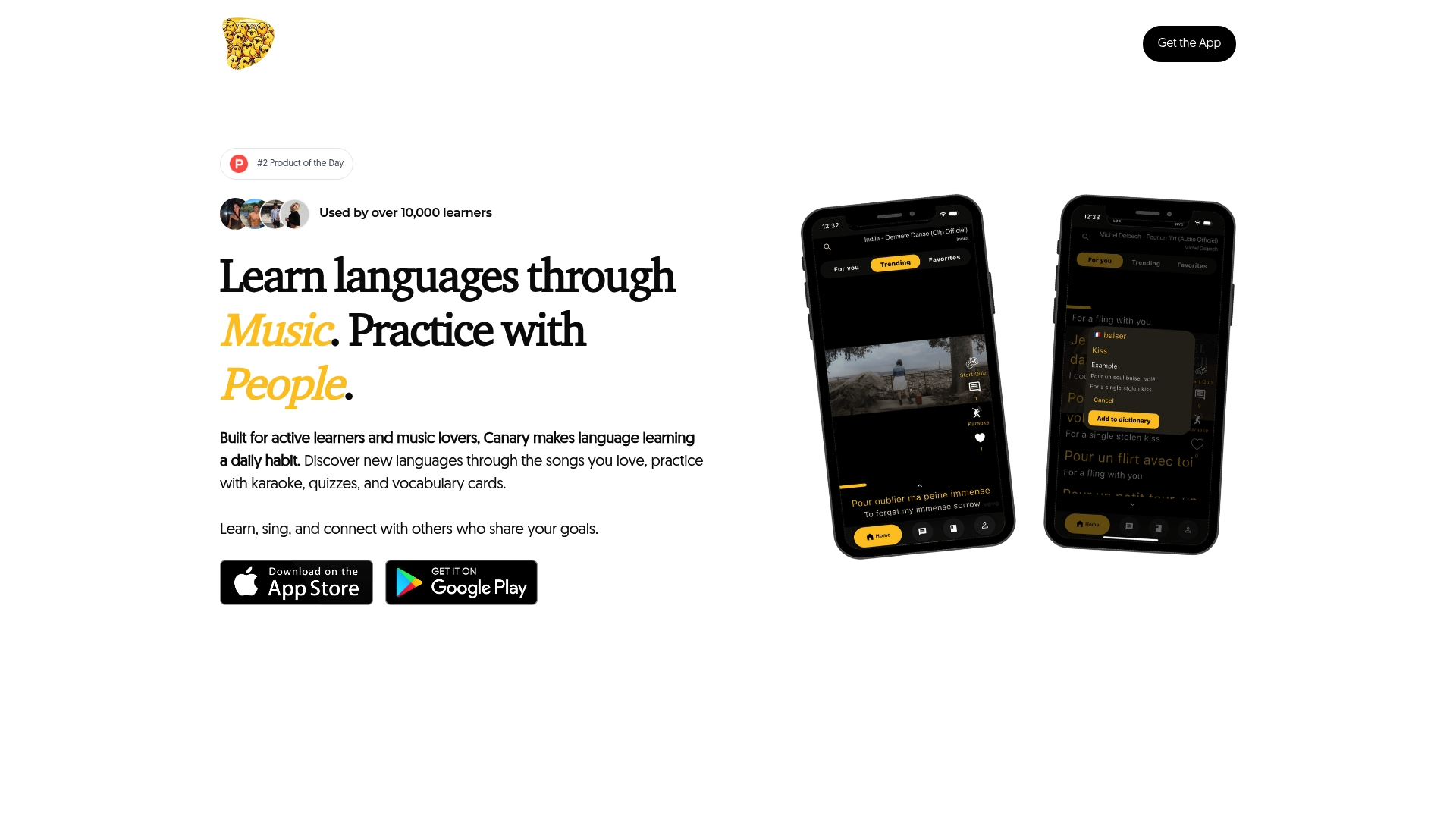
Canary reports more than 10,000 learners worldwide. That figure shows the app has reached a sizable learning community, so Canary Learning with Music turns songs into practice sessions through karaoke, tappable vocabulary, and social study features.
Core Features
Canary centers study around songs and karaoke practice mode while offering quizzes and vocabulary cards that appear with each track. Tapping a word reveals meanings and example sentences so members learn vocabulary in context. The platform also includes community features that let learners connect, practice together, and share recordings on iOS and Android.
Key Differentiator
The standout feature is the combination of live karaoke practice and tappable lyrics that link directly to quiz items and vocabulary cards. That pairing converts passive listening into active speaking practice and focused vocabulary review. Community interaction then gives members chances to repeat, correct, and refine pronunciation with peers.
Pros
The learning method makes practice feel like a social activity instead of a chore. Singing real songs helps ear training and gives concrete pronunciation targets. Interactive elements such as tapping words for meanings and quick quizzes let learners move from hearing a phrase to using it in minutes. Positive user feedback appears in the app descriptions and reviews, and the mobile availability on iOS and Android makes daily practice practical for commuters and casual learners.
Cons
- The public website and some feature pages return 404 errors, which makes it hard to research details before joining.
Who It’s For
This community platform fits music-loving members who want speaking practice that feels like performance. It suits learners focused on pronunciation and accent work who prefer contextual learning through lyrics. People who seek social practice and feedback from other members will find the format especially useful.
Unique Value Proposition
Karaoke practice mode turns each song into a repeatable speaking drill while tappable vocabulary cards keep the focus on words you actually hear. That structure shortens the loop from exposure to active practice and encourages daily repetition inside the community. For learners who want to improve accent and retention by doing, the feature set replaces passive listening with targeted speaking exercises.
Real World Use Case
A learner downloads the app to study French by singing popular tracks, tapping unknown words, and taking short quizzes tied to those lyrics. They record a karaoke take, post it to the community, and get corrective feedback from other members. Over weeks, they notice clearer pronunciation and better recall for words learned through songs.
Website: https://singwithcanary.com
Sounter
At a Glance
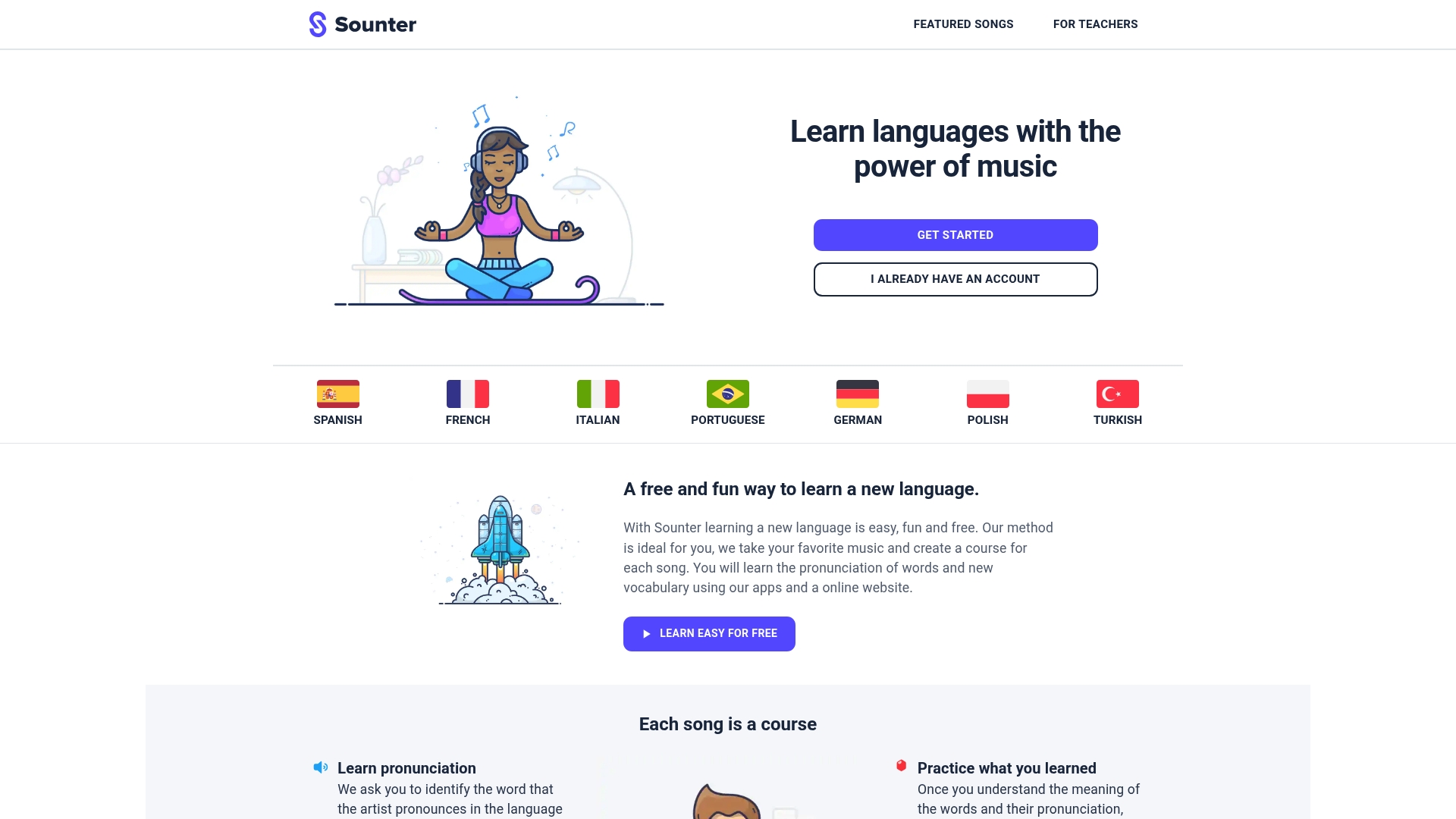
Sounter centers learning around popular songs and lyric work. The platform pairs listening activities with translation and vocabulary drills. It supports classroom use and mobile study on iOS and Android. The base product is free with optional premium features for offline access.
Core Features
Sounter builds courses from popular song lyrics and combines listening with lyric translation. The platform offers pronunciation practice through listening and identification exercises and vocabulary lessons tied to lyrics. It also includes a points system that rewards community contributions and encourages regular practice.
Key Differentiator
The defining strength is its focus on music as the primary teaching tool. Lessons use actual song lyrics to teach vocabulary, rhythm, and pronunciation in context. That design targets learners who retain language better through melody and repetition.
Pros
Learning by songs makes practice feel like entertainment rather than study. That approach helps users form a daily habit and improves listening skills through repeated exposure. The platform is free to start, and optional paid tiers add offline access and extra features for focused study.
Sounter supports mobile learning on iOS and Android, so you can study during commutes or short breaks. It also includes classroom tools that let teachers assign lyric based exercises and monitor student participation. A community area lets learners contribute content and compare translations, which increases variety and keeps material fresh.
Cons
- Limited content depth compared to structured language courses. Users report gaps in systematic grammar coverage.
- Premium features require payment for offline content and advanced tools. That may block learners with tight budgets.
- Music first design may feel less systematic for learners who prefer grammar first methods.
When It May Not Fit
Sounter may not suit learners who need a strict curriculum for certification or formal exams. It is not designed to replace a full school syllabus or heavy grammar drilling. Heavy travelers who cannot buy premium may find offline content restricted.
Who It’s For
Solo learners who enjoy music and want to boost listening and vocabulary retention will find Sounter appealing. Teachers who want a low cost, engaging classroom tool can use it for listening homework and translation practice. Community contributors who like creating lyric based exercises will get the most out of the platform.
Real World Use Case
A high school Spanish teacher assigns a popular song as homework and asks students to translate selected verses. Students complete listening identification drills and submit alternative translations through the community hub. The teacher tracks participation and uses in class discussions to highlight tricky pronunciation and vocabulary.
Pricing
The base tier is free and covers core lessons and community features. Premium options are available for additional features and offline access. Exact premium tier pricing is not publicly listed on the site.
Website: https://sounter.com
Univoice
At a Glance
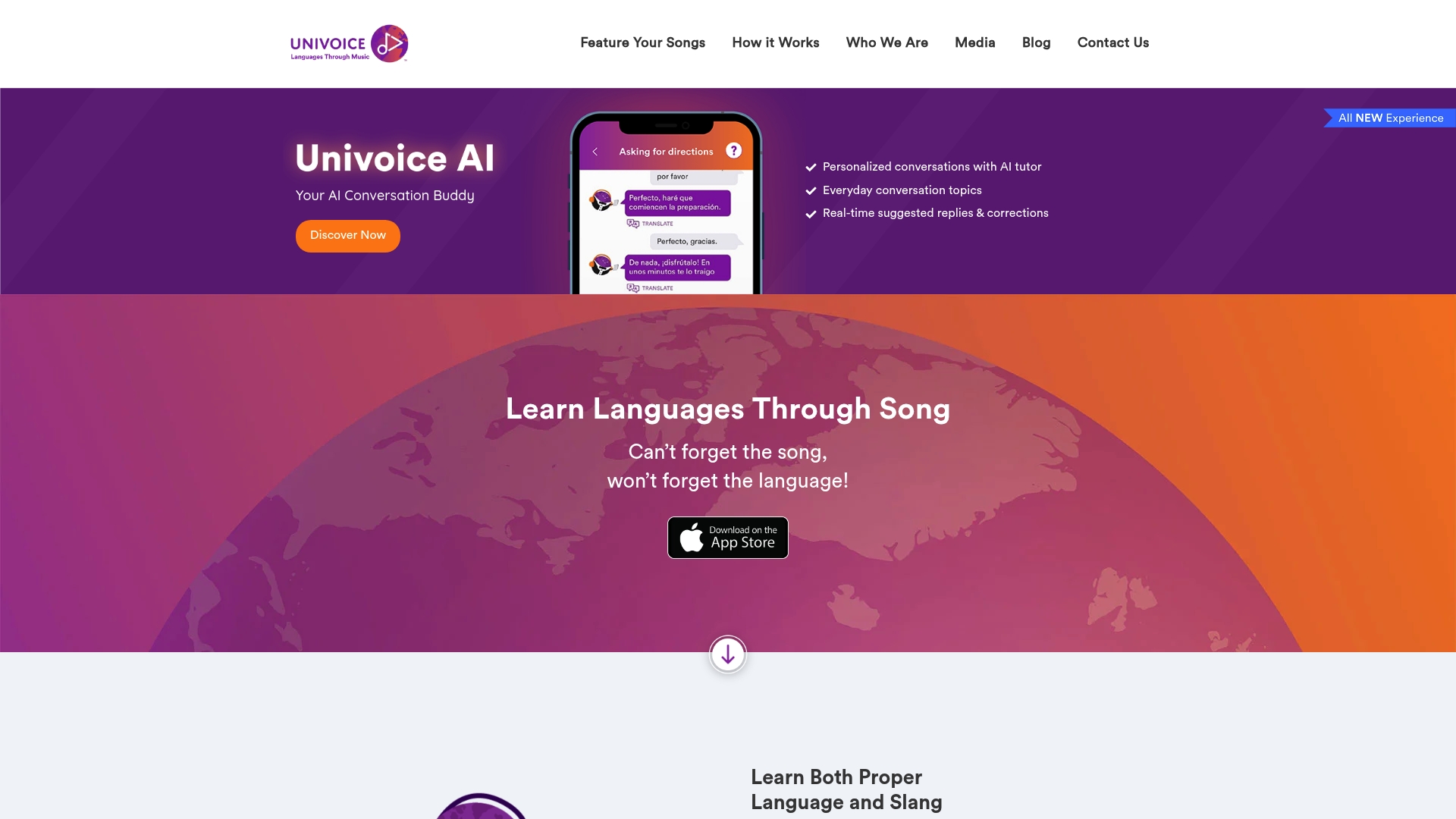
Univoice lets creators upload songs for licensing and share royalties, while learners study language through music. The site pairs catchy lyrics and translations with AI-driven practice to teach both formal speech and slang. That mix aims to improve memory for vocabulary and pronunciation while keeping lessons entertaining.
Core Features
The editorial offerings center on song based lessons that present lyrics, translations, and transcribed audio for repeated listening and study. An AI conversation buddy provides real time practice and suggests replies while also offering pronunciation corrections. The publication also highlights a pathway for artists to feature songs and pursue licensing with royalty sharing.
Key Differentiator
The standout angle is the blend of conversational AI and music based content. Univoice pairs interactive chat practice with lyric driven lessons so readers move from passive listening to speaking practice quickly. That pairing targets retention by linking melody with conversational drills.
Pros
Univoice delivers an entertaining format that helps vocabulary stick through repeated exposure to songs and transcribed audio. Readers who want to learn slang will find lessons that emphasize casual expressions alongside formal grammar. The AI conversation buddy brings interactive practice into the same space as the songs, and the platform supports creators who want to monetize tracks through licensing and royalty sharing.
Cons
-
Limited detail on subscription pricing and cost structure. This makes budgeting for classroom or long term study difficult.
-
Learning through music depends on personal preference, so the editorial style may not suit learners who prefer textbook driven study.
-
No detailed list of third party educational tool integrations is available, which complicates use alongside existing classroom resources.
When It May Not Fit
If your primary study method is grammar drills and written exercises, this publication style will feel light on traditional practice. Schools that require clear pricing and procurement paths may find the missing subscription details problematic. Programs that rely on extensive third party toolchains will notice the lack of listed integrations and may need to use additional platforms for assessment tracking.
Who It’s For
This offering fits readers who learn best from audio and context and who enjoy music as a memory aid. It also fits language learners who want to practice speaking with an AI companion and pick up slang. Music creators seeking licensing exposure will find a relevant audience inside the editorial catalog.
Real World Use Case
A reader wanting conversational Spanish uses a playlist of pop songs to learn phrases and slang. They read lyrics, listen to transcribed audio, and chat with the AI conversation buddy to practice replies and pronunciation. Over time the reader gains confidence using casual phrases in spoken exchanges.
Website: https://univoice.app
Comparison of alternatives
When comparing music-based language learning platforms, Canary stands out for integrating karaoke practice with interactive vocabulary drills, promoting active participation alongside learning. However, depending on individual learning preferences, other platforms present attributes that may appeal more strongly to particular learners.
Accessibility and entry options
Sounter attracts users with its entirely free tier that supports fundamental features such as lyric-driven lessons and community engagement. In contrast, Univoice concentrates on blending music lessons with AI-driven conversational practice, albeit with unclear pricing details. Canary, while lacking upfront clarity on cost, provides karaoke-driven learning that uniquely integrates interactive quizzes, which elevates language retention.
Community and collaboration features
Canary excels in fostering a social learning environment, enabling users to share singing performances and practice collaboratively. This sense of community can be vital for enhancing learner engagement. Alternatively, Sounter’s reward-based system encourages learner participation, while Univoice’s AI conversation buddy offers adaptive individual practice paired with song-based learning.
Best fit
- Learners seeking focused speaking practice will appreciate Canary’s karaoke mode paired with tappable vocabulary cards and quizzes.
- Users prioritizing free initial access can benefit from Sounter’s entirely free tier, which supports foundational language learning features.
- Individuals who value conversational practice with AI companions find Univoice’s AI conversation buddy effective in providing responsive pronunciation assistance.
Our pick
Canary offers a unique blend of karaoke practice and interactive vocabulary tools, making it a compelling option for learners who focus on speaking proficiency and engagement. However, users who prioritize free accessibility or specific features like conversational AI may better align with Sounter or Univoice, respectively.
Sing songs while training pronunciation effectively.
| Platform | Key Differentiator | Who It’s For | Pricing | Limitation |
|---|---|---|---|---|
| Singwithcanary | Karaoke practice mode with tappable vocabulary | Music lovers focused on pronunciation and accent | Price not published | Some website features return 404 errors |
| Sounter | Lessons built from lyrics with mobile accessibility | Learners using songs for vocabulary and rhythm | Free, optional premium | Limited grammar coverage in lessons |
| Univoice | AI conversation buddy paired with song lessons | Audio learners wanting slang and informal phrases | Price not published | Limited information on subscription pricing |
How Can You Find a Better Alternative to GMM.one for Language Learning?
If you want to move beyond standard language apps and tired study routines, Singwithcanary offers a fresh way to learn. It puts music at the heart of language practice with interactive karaoke, tappable vocabulary cards, and community features. This solves the problem of passive listening by turning songs into active speaking drills that sharpen your pronunciation and vocabulary in context.
If you are a music-loving learner who needs social feedback or a learner who likes to practice repeatedly with real songs, explore Singwithcanary today. Visit Singwithcanary to start practicing your pronunciation and vocabulary with daily song-based lessons and a vibrant international community.
FAQ
What unique feature does Singwithcanary offer for language learners?
Singwithcanary features a karaoke practice mode that turns songs into repeatable speaking drills. This unique approach helps learners improve pronunciation and retention through active practice with real songs, making language learning feel engaging and social.
How does Sounter support music-based language learning compared to Singwithcanary?
Sounter excels in providing popular song lyrics for translation and lyric work, embedding vocabulary drills alongside listening activities. While both platforms focus on music for learning, Singwithcanary’s interactive karaoke practice and tappable vocabulary cards lead to quicker speaking progress for users.
Which community features enhance learning in Singwithcanary?
Singwithcanary includes community features that allow learners to connect, practice together, and share recordings. This interaction supports pronunciation practice and provides opportunities for feedback, which enriches the learning experience.
Are there any limitations to Singwithcanary’s features?
While Singwithcanary fosters community connections, some users have reported navigating issues, such as 404 errors on certain pages of their website. To mitigate these challenges, users should explore available resources and feedback from other members within the app.
How does Univoice incorporate AI into language learning compared to Singwithcanary?
Univoice employs an AI conversation buddy that provides real-time practice and pronunciation corrections. This interactive component helps learners transition from passive listening to speaking, while Singwithcanary emphasizes karaoke practice as its main interactive feature.