TL;DR:
- Improving French listening skills requires daily active practice with content at roughly 70% comprehension to stay engaged. Shadowing, short loops, and using French subtitles accelerate understanding, while early speaking builds confidence alongside listening. Consistent, focused effort over weeks leads to noticeable progress in real-time comprehension and pronunciation.
You’ve studied French for months. You know the vocabulary. You’ve drilled the grammar. Then a native speaker opens their mouth and everything blurs into one fast, indistinct wave of sound. If that sounds familiar, you’re not alone. Knowing how to improve French listening skills is one of the most searched questions among learners at every level, and the reason is simple: listening is its own skill, completely separate from reading or writing French. This guide gives you a practical, step-by-step plan to train your ear, understand spoken French in real time, and build the speaking confidence that follows.
Table of Contents
- Key takeaways
- How to improve French listening skills: the right starting point
- Step-by-step strategies to build comprehension and pronunciation
- Common obstacles and how to get past them
- Measuring progress and knowing what to expect
- My honest take on the understanding-to-speaking gap
- Take your French listening further with Singwithcanary
- FAQ
Key takeaways
| Point | Details |
|---|---|
| Match content to your level | Choose audio where you already understand roughly 70% to stay engaged and learn from context. |
| Active beats passive | Focused listening sessions of 20 to 30 minutes daily outperform hours of background audio. |
| Shadowing links ears to mouth | Repeating what you hear aloud simultaneously builds both listening accuracy and pronunciation. |
| Keep moving when you miss a word | Freezing on one missed phrase causes you to lose the next 10 to 30 seconds of audio. |
| Consistency wins every time | Daily practice over weeks produces measurable gains that intense weekend sessions cannot match. |
How to improve French listening skills: the right starting point
Before you press play on anything, you need to set up the conditions that make practice actually work. Most learners skip this phase and then wonder why hours of listening produce almost no progress.
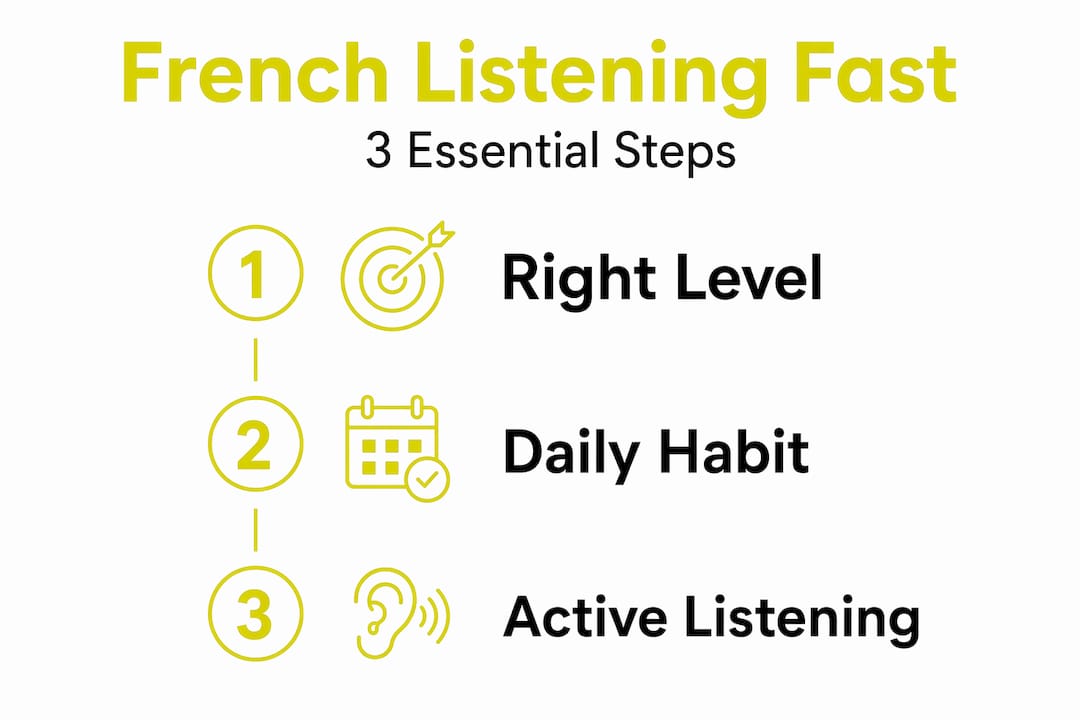
The single most important principle is choosing the right difficulty level. Aim for roughly 70% comprehension in your listening material. If you understand less than that, your brain spends too much energy just staying afloat. If you understand everything already, you are not stretching. The 70% zone keeps you in the learning sweet spot where context fills the gaps.
The difference between active and passive listening
Passive listening means putting on a French podcast while you cook or commute. It feels productive. It is not, at least not for beginners or intermediates. Active listening means giving the audio your full attention, noticing intonation, pausing to process meaning, and engaging with what you hear. Carl Rogers described real listening as a process requiring genuine empathy and presence, not just hearing words. That principle applies directly to language learning.
Here is what a balanced toolkit for French listening practice looks like:
- Podcasts with transcripts: Inner French, Coffee Break French, and Journal en français facile give you the audio plus the script so you can check what you missed
- Short video clips: Two to four minute YouTube videos in French, ideally with French subtitles, not English
- Music and song lyrics: A surprisingly underrated method that trains both vocabulary and the rhythm of spoken French
- Dedicated apps: Tools built for French audio comprehension that let you replay and analyze short clips
Pro Tip: Set a timer for 20 to 30 minutes and treat it as a non-negotiable daily appointment. Short, focused sessions compound faster than sporadic long ones.
Step-by-step strategies to build comprehension and pronunciation
Now you have the foundation. Here are the methods that actually move the needle, in the order you should apply them.
-
Start with slow, transcript-supported audio. Look for content designed for learners, not native speakers. Podcasts like Journal en français facile use slower, clearer speech. Download the transcript and read along on your first pass, then listen again without looking.
-
Use shadowing to connect sound and speech. Shadowing, where you repeat aloud what you hear almost simultaneously, is one of the most proven ways to sharpen both listening and pronunciation at the same time. Start with 30-second clips, mimic the rhythm and melody of the speaker, and do not worry about perfection.
-
Practice precision listening with short audio loops. Rather than playing a 20-minute podcast start to finish, pick a 30 to 60 second clip and loop it. Precision listening with short loops builds vocabulary acquisition far more effectively than passive long-form listening. Transcribe what you hear, compare to the real script, and target exactly where your ear is failing.
-
Use French subtitles, not English. English subtitles bypass your French processing entirely. French subtitles force your brain to connect the spoken word to the written word in the same language, which accelerates how to understand spoken French at full speed.
-
Bring music into your practice. Music and lyrics do something textbooks cannot. They embed rhythm, natural contractions, and linked sounds into your memory through repetition and emotion. Listening to a French song five times while following the lyrics does real vocabulary and ear training work.
-
Practice unpaused listening. Once you are comfortable with a type of audio, try listening all the way through without rewinding. This builds the real-time comprehension you need in actual conversations where nobody hits pause.
-
Start speaking early. Many learners delay speaking until they feel “ready.” That gap between understanding and speaking is exactly what holds people back. Early speaking practice closes that loop much faster.
Pro Tip: When shadowing, record yourself once a week. Listening back to your own recordings reveals pronunciation patterns you cannot hear in the moment, and the improvement over weeks is genuinely motivating.
Common obstacles and how to get past them
Even with the right methods, most learners hit the same walls. Recognizing these pitfalls is half the battle.

Freezing on a missed word. This is the most common. One unfamiliar word triggers a mental full stop, and by the time you recover, you have missed the next sentence. Studies confirm that freezing after a missed phrase costs you 10 to 30 seconds of audio information. The fix: let it go. Context will usually fill the meaning gap.
Translating into English in real time. If you hear “il fait chaud” and your brain goes French words to English meaning to response, you are one step too slow for a real conversation. Train yourself to respond to the emotion and image the French creates directly, without the translation detour.
Ignoring tone and intonation. A lot of meaning lives in how something is said. Frustration, enthusiasm, sarcasm, and urgency all carry comprehension clues that words alone do not. When you strip away intonation, you lose roughly a third of the communicative signal.
Writing full sentences during listening. For learners practicing with exercises or preparing for exams, the habit of taking notes in French shorthand outperforms writing full sentences in English. Full sentences slow your processing by 30 to 40%, causing you to miss what comes next.
You do not need to understand every single word to follow and respond to spoken French. Focusing on main ideas and key details is both a valid and effective listening strategy.
Skipping the preparation phase. Before any listening exercise, spend 60 seconds previewing what you know about the topic and likely vocabulary. This primes your brain to recognize words faster.
Pro Tip: When you encounter an unknown word during practice, jot it down on paper and keep going. Review your list after the session ends, not during. This builds the exact skill you need for real conversation.
Measuring progress and knowing what to expect
One of the biggest reasons learners quit is expecting too much too soon, or having no clear marker of improvement. Here is what the research and experience actually tell us.
| Timeline | What to expect |
|---|---|
| Week 1 to 2 | Increased comfort with your chosen audio source; less mental fatigue after 20 minutes |
| Week 3 to 4 | Noticeably fewer freezes on common phrases; better grasp of speaker rhythm |
| Week 4 to 6 | Measurable improvement in comprehension with 20 to 30 minutes of daily practice |
| Week 8 and beyond | Ability to follow native-speed content on familiar topics; stronger pronunciation from shadowing |
The clearest way to track gains is through transcription exercises. Record yourself transcribing a 90-second clip at the start of the month. Do it again with the same clip four weeks later. The difference will surprise you.
Consistent daily practice matters more than intensity. Forty-five minutes every day beats a three-hour marathon on Saturday. Your brain consolidates language during sleep and rest, so spreading practice across the week is not just more manageable. It is more effective.
Signs you are ready to move to harder native content: you catch humor in French audio, you anticipate words before they arrive, and you find yourself mentally finishing the speaker’s sentence. Those are real markers of comprehension depth, not just surface recognition.
Pro Tip: Keep a simple listening log: date, source, topic, and one word or phrase you did not know. After 30 days, that log becomes a personalized vocabulary list built entirely from real speech.
My honest take on the understanding-to-speaking gap
I’ve worked with French learners who could read a novel in French but fell completely silent at a dinner table with native speakers. In my experience, the problem is almost never vocabulary. It’s the muscle memory of real-time audio processing, and more importantly, the habit of producing speech before the “perfect moment” arrives.
What I’ve learned is that most learners treat listening and speaking as sequential stages. First I’ll understand French, then I’ll speak it. That sequence is a trap. The two skills reinforce each other in ways that make both grow faster when practiced together. I’ve seen learners make more progress in two weeks of daily shadowing and simple conversation than in months of solo listening.
Music changed everything for me personally. Learning French through songs gave me access to natural contractions, linked sounds, and spoken rhythm in a format I wanted to repeat. You do not resist replaying a song you love. That repetition is where the ear training actually happens.
My practical lesson: embrace being wrong out loud. Every mispronunciation you make while shadowing is data. Every word you mishear during a transcription exercise is a gap that practice will close. Progress in French listening is not linear, but it is absolutely predictable when you show up consistently and use methods that match how the brain actually acquires language.
— Ben
Take your French listening further with Singwithcanary
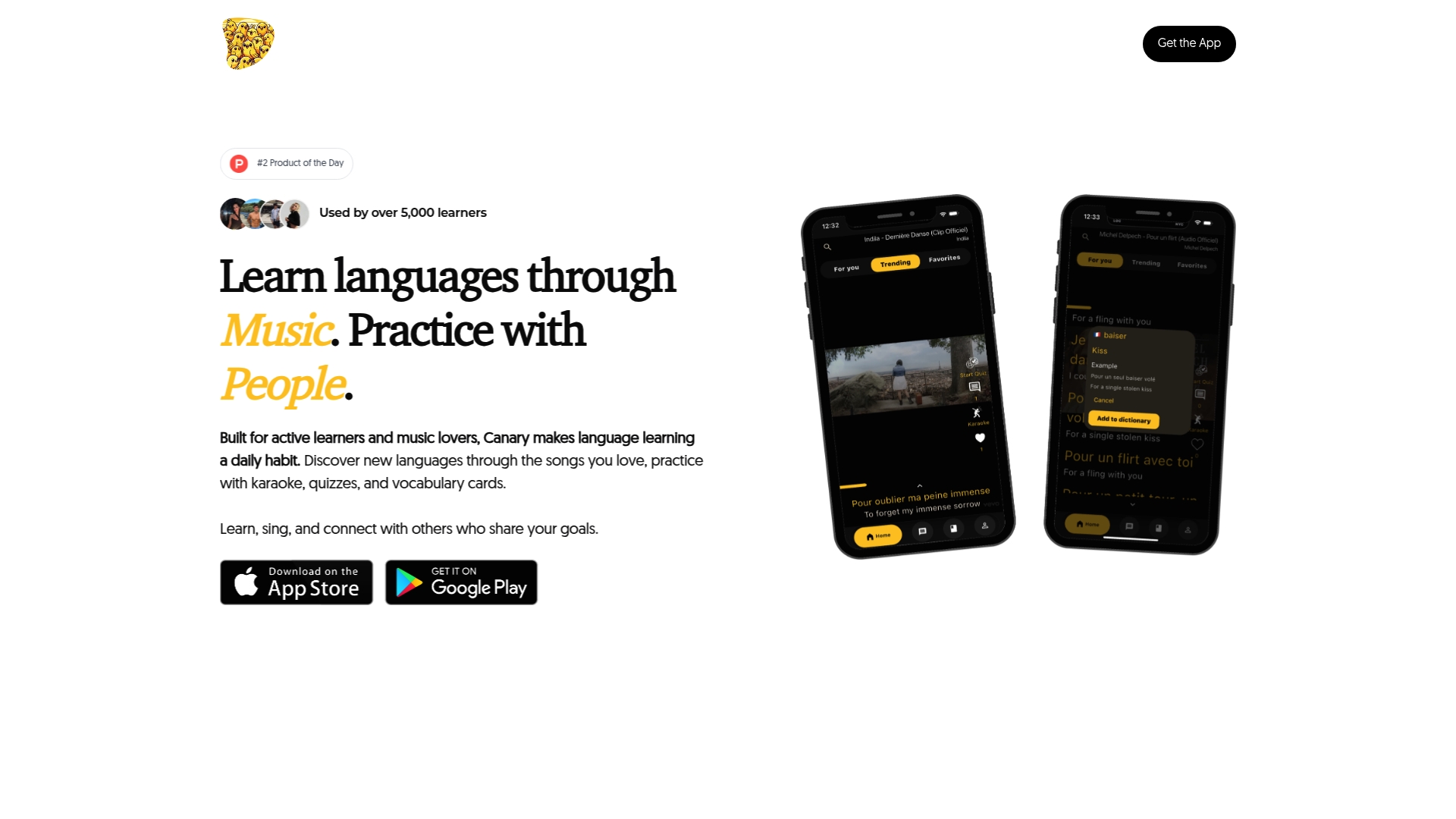
If the strategies above resonate with you, Singwithcanary was built to put them into practice every single day. The platform uses real French songs paired with lyrics, vocabulary cards, and karaoke features to train your ear while making practice something you look forward to rather than force yourself to do. Short clip repetition, pronunciation feedback, and a global community of learners give you the active, structured practice that passive listening never delivers. Whether you are at beginner or intermediate level, learning languages with music on Singwithcanary turns the techniques in this guide into a daily habit that actually sticks. Try it free and hear the difference for yourself.
FAQ
How long does it take to improve French listening skills?
Most learners notice real, measurable improvement within 4 to 6 weeks of 20 to 30 minutes of focused daily practice. Consistency over time matters far more than occasional long sessions.
Do I need to understand every word to follow French audio?
No. Skilled listening means capturing main ideas and key details, not every single word. Focusing on the overall message and using context to fill gaps is a legitimate and effective strategy at any level.
What is the best technique for beginners to understand spoken French?
Precision listening with short audio loops, combined with transcript review, gives beginners the most direct path to connecting sounds with meaning. Shadowing and French subtitles accelerate progress significantly once the basics are in place.
Why does my French comprehension drop in real conversations?
Real conversations are faster, use more contractions, and link sounds across words in ways formal recordings do not. Ear training techniques that focus on natural speech patterns and music close that gap over time.
Can music really help with French listening comprehension?
Yes. Music-infused learning builds vocabulary retention, trains your ear to the rhythm and melody of spoken French, and creates a repetition habit that is far easier to maintain than traditional drills.