You speak Spanish. People understand you. But something gives you away every single time, and you know it. That slight pause before the rolled R, the flat vowels, the rhythm that sounds just a little too English. Shaking a foreign accent in Spanish is one of the hardest challenges for adult learners, and traditional drills rarely fix it. The good news? Music offers a proven, engaging shortcut. This guide walks you through exactly how to use songs, lyric analysis, and interactive practice to develop a more natural Spanish accent, step by step.
Table of Contents
- Understand what makes a natural Spanish accent
- Gather your music-based accent toolkit
- Step-by-step: Practice your Spanish accent with songs
- Troubleshooting and common mistakes when learning with music
- How to measure and celebrate your accent progress
- Why music beats boring drills: Our take on Spanish accent mastery
- Ready to improve your Spanish accent with Canary?
- Frequently asked questions
Key Takeaways
| Point | Details |
|---|---|
| Music accelerates accent gains | Practicing with Spanish songs improves pronunciation, rhythm, and intonation more efficiently than drills. |
| Toolkit makes practice easy | Using song lyrics, clear audio, and recording tools streamlines your daily accent routine. |
| Step-by-step method works | Following structured song-based practice, from listening to singing, leads to steady progress. |
| Consistency is essential | Daily practice and feedback prevent fossilizing mistakes and fuel natural improvement. |
Understand what makes a natural Spanish accent
Before you can fix your accent, you need to know what you’re actually working on. A natural Spanish accent isn’t just about getting individual sounds right. It’s about prosody: the rhythm, stress patterns, and intonation that make speech sound fluid and native.
Spanish has a few phonetic features that trip up English speakers consistently:
- The trilled R (rr): A sound that doesn’t exist in English and requires tongue placement practice
- Pure vowels: Spanish vowels are short and consistent. English vowels shift and glide, which bleeds into your Spanish
- Syllable timing: Spanish is syllable-timed, meaning each syllable gets roughly equal weight. English is stress-timed, which is a fundamentally different rhythm
- Linking words: Native speakers blend words together in a stream, not as separate units
Traditional drills focus on isolated sounds. You repeat “rr, rr, rr” until your tongue cooperates, then move on. The problem is that real speech isn’t isolated. It’s a flowing, musical pattern where sounds shift depending on what comes before and after them.
That’s exactly why music works so well. Songs give you authentic prosody in context. You hear how a native speaker actually strings syllables together, where the stress falls naturally, and how intonation rises and falls. Music interventions significantly improve prosody including intonation, rhythm, and stress, outperforming control methods in learner comprehensibility.
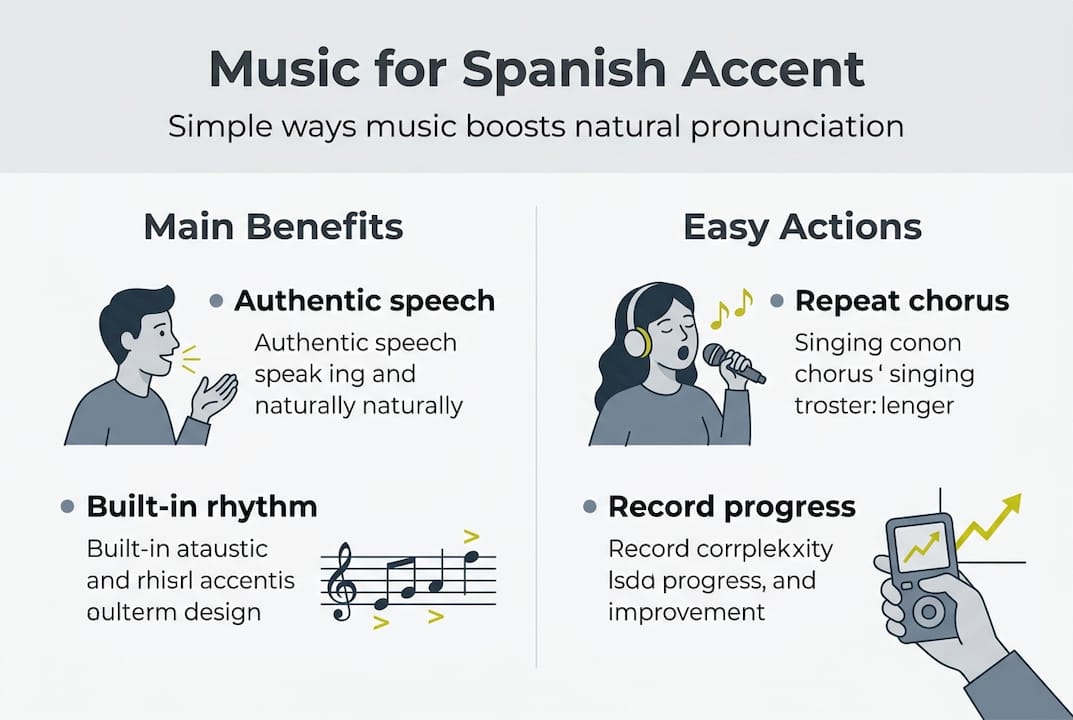
Conscious mimicry, where you repeat a phrase trying to sound “correct,” often feels forced because you’re thinking too hard. Music bypasses that self-consciousness. You absorb the rhythm emotionally before you analyze it intellectually. Explore the benefits of learning Spanish with songs and you’ll see why this approach is gaining serious traction among language educators. Understanding the role of music in Spanish learning also helps you commit to the method with confidence.
Gather your music-based accent toolkit
Good tools make the difference between casual listening and deliberate accent practice. Here’s what you actually need.
Choosing the right songs matters more than most learners realize. Not every Spanish song is equally useful for accent work. Look for:
- Clear, unhurried vocals (avoid heavily autotuned or fast rap)
- Authentic regional accents (pick one region to start: Latin American or Castilian Spanish)
- Lyrics that match natural conversational speech patterns
- Genres like bolero, ballad pop, or acoustic folk tend to work best for beginners
Lyrics analysis breaks down grammar, vocabulary, and phonetics, and repetition reinforces retention without boredom. That’s the core mechanic you’re using here.
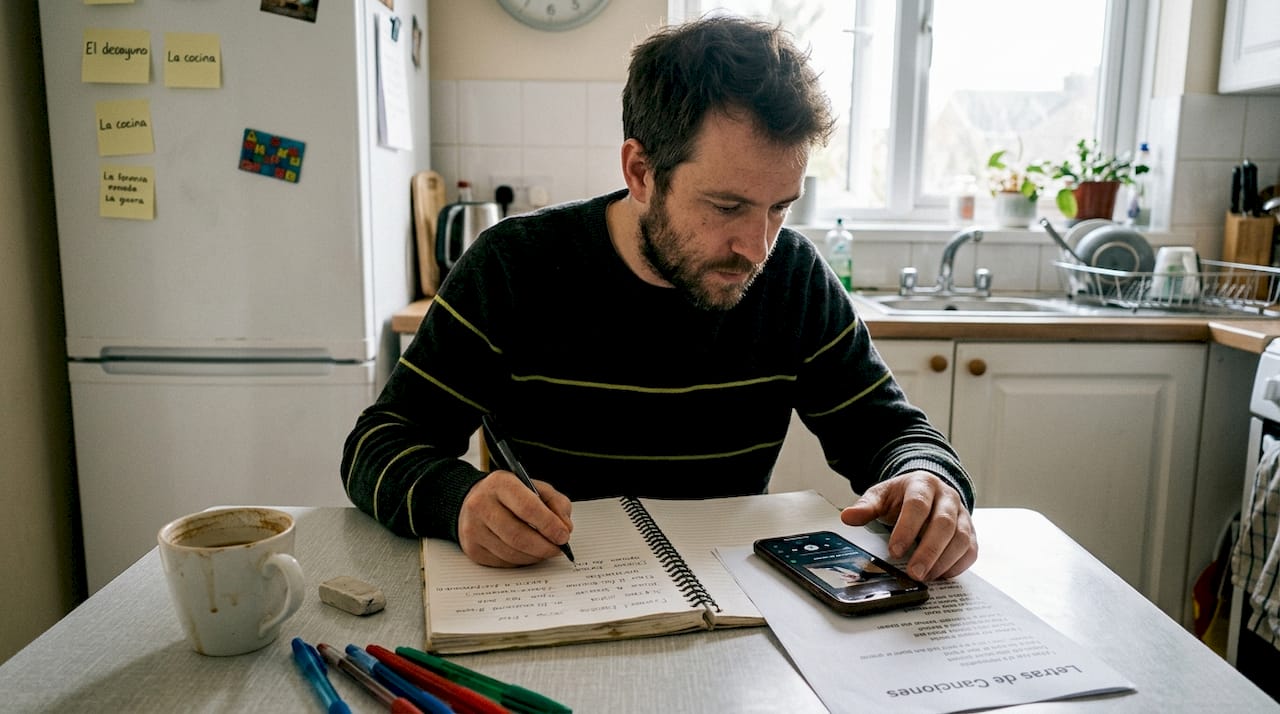
| Tool | Purpose | Best for |
|---|---|---|
| Genius.com | Lyrics with annotations | Vocabulary and context |
| Forvo.com | Native speaker pronunciation audio | Checking individual word sounds |
| Canary app | Song-based learning with karaoke and quizzes | Full accent and vocabulary practice |
| Voice Memo (phone) | Recording your own singing | Self-evaluation and tracking |
| SpanishDict | Dictionary with audio pronunciation | Quick phonetic reference |
Check out music-based Spanish practice examples for song recommendations that are already vetted for accent work. The song of the week resources on Canary are also a great way to discover new material regularly.
Pro Tip: Start with ballads or slow acoustic songs. The slower pace gives your ear time to catch individual sounds and your mouth time to mimic them accurately before you build speed.
Keep a simple practice journal. Write down which songs you’re working on, which sounds you’re struggling with, and what improved. Progress in accent work is subtle, and tracking it keeps you motivated.
Step-by-step: Practice your Spanish accent with songs
Here’s a repeatable daily routine that builds real accent improvement over time.
- Listen without lyrics first. Play the song once and just absorb the rhythm and feel. Notice where the singer speeds up, slows down, and where the melody rises.
- Read the lyrics silently. Before singing, read through the lyrics and mark any words you don’t know or sounds you find difficult.
- Listen again with lyrics. Follow along word by word. Pay attention to how the singer links words together and where stress falls in each line.
- Mimic short sections. Pick one verse or chorus. Pause after each line and repeat it out loud, matching the singer’s rhythm and intonation as closely as you can.
- Record yourself. Sing or speak the section into your phone. Don’t judge it yet, just capture it.
- Compare and adjust. Play back your recording next to the original. Listen for differences in vowel quality, rhythm, and stress. Adjust and re-record.
- Repeat the chorus daily for one week. Muscle memory in accent work comes from repetition. One week on a single chorus builds more than seven days of jumping between songs.
Music interventions significantly improve prosody in learners who practice consistently, which is exactly what this routine delivers.
| Method | Prosody improvement | Vocabulary gain | Engagement |
|---|---|---|---|
| Song only | Moderate | Low | High |
| Lyric analysis | High | High | Medium |
| Traditional drills | Low | Low | Low |
Pro Tip: Focus on the chorus. It repeats multiple times in every song, which means you get built-in repetition without extra effort. That repetition is what builds the muscle memory your accent needs.
For more structured guidance, see how to learn Spanish with music naturally and explore the broader music’s benefits for language development.
Troubleshooting and common mistakes when learning with music
Even motivated learners hit walls. Here are the most common traps and how to get out of them.
Choosing songs that are too advanced. If you can’t understand 60% of the lyrics without a dictionary, the song is too hard for accent work right now. You’ll spend all your energy on vocabulary and miss the prosody entirely.
Not checking lyric accuracy. Fan-transcribed lyrics online are often wrong. Always cross-reference with a reliable source. Singing the wrong words reinforces the wrong pronunciation.
Ignoring specific accent features. It’s easy to enjoy singing without actually targeting your weak spots. If your trilled R is the problem, choose songs that feature it prominently and drill those lines specifically.
Fossilizing mistakes. This is the big one. If you practice the same mispronunciation repeatedly, it becomes a habit that’s very hard to break. Here’s how to avoid it:
- Slow the song down using a music app before practicing at full speed
- Work with a language partner or tutor who can flag errors early
- Use singers with exceptionally clear diction as your models
“Consistent practice yields natural rhythm and intonation. Studies show superior prosody gains with music-based methods versus traditional approaches.”
Peer feedback is underrated. Singing a chorus to a native speaker friend and asking “does this sound natural?” gives you faster, more relevant feedback than any app score. Explore music’s role in language learning for deeper context on why this feedback loop matters. You’ll also find practical music learning tips that complement this troubleshooting approach.
How to measure and celebrate your accent progress
Accent improvement is gradual and easy to miss without a system. Here’s how to make it visible.
Step 1: Record a baseline. On day one, record yourself speaking or singing a short Spanish passage. Don’t edit it. Save it.
Step 2: Weekly check-ins. Every week, record the same passage again. Compare it to your baseline. You’ll hear changes you wouldn’t notice in real time.
Step 3: Test with new material. After two weeks on one song, try a new song you’ve never heard before. Notice how much easier it is to mimic the rhythm and sounds. That transfer is your accent improving.
Step 4: Seek outside feedback. Share a recording with a tutor, language exchange partner, or online community. Ask specifically about rhythm and vowel quality, not just vocabulary.
Step 5: Set a fun milestone. Post a short cover video, join a karaoke night, or sing a verse to a native speaker friend. Real-world use is the ultimate test, and it’s also the most motivating.
Music interventions significantly improve prosody in measurable ways, which means your recordings will actually show the difference over time.
| Milestone | How to track | Timeframe |
|---|---|---|
| Baseline recording | Save audio file | Day 1 |
| First rhythm match | Compare to original song | Week 2 |
| Vowel clarity improvement | Peer or tutor feedback | Week 4 |
| New song transfer | Try unfamiliar song | Week 6 |
| Real-world use | Conversation or karaoke | Month 2 |
Celebrating small wins keeps you going. Accent work is a long game, and the educational benefits of music extend well beyond pronunciation into confidence and fluency.
Why music beats boring drills: Our take on Spanish accent mastery
Here’s the honest truth that most language courses won’t tell you: drills don’t fail because they’re ineffective in theory. They fail because people stop doing them. Boredom is the real enemy of accent mastery.
Music works because it combines three things that drills can’t: authentic context, emotional engagement, and natural repetition. When you love a song, you replay it voluntarily. That voluntary repetition is worth more than any structured drill session you force yourself through.
Adult learners especially benefit from this. You have more self-awareness than a child learner, which can make conscious accent practice feel awkward and discouraging. Music sidesteps that self-consciousness. You’re not “practicing your accent.” You’re singing a song you enjoy, and the accent improvement is a byproduct.
The benefits of songs for Spanish accent development go deeper than most people expect. Consistency and enjoyment are not soft factors. They are the actual mechanism behind long-term improvement. The learners who develop native-like accents are almost always the ones who found a way to make practice feel less like work.
Ready to improve your Spanish accent with Canary?
If this guide has you excited about music-based accent practice, Canary is built exactly for this.
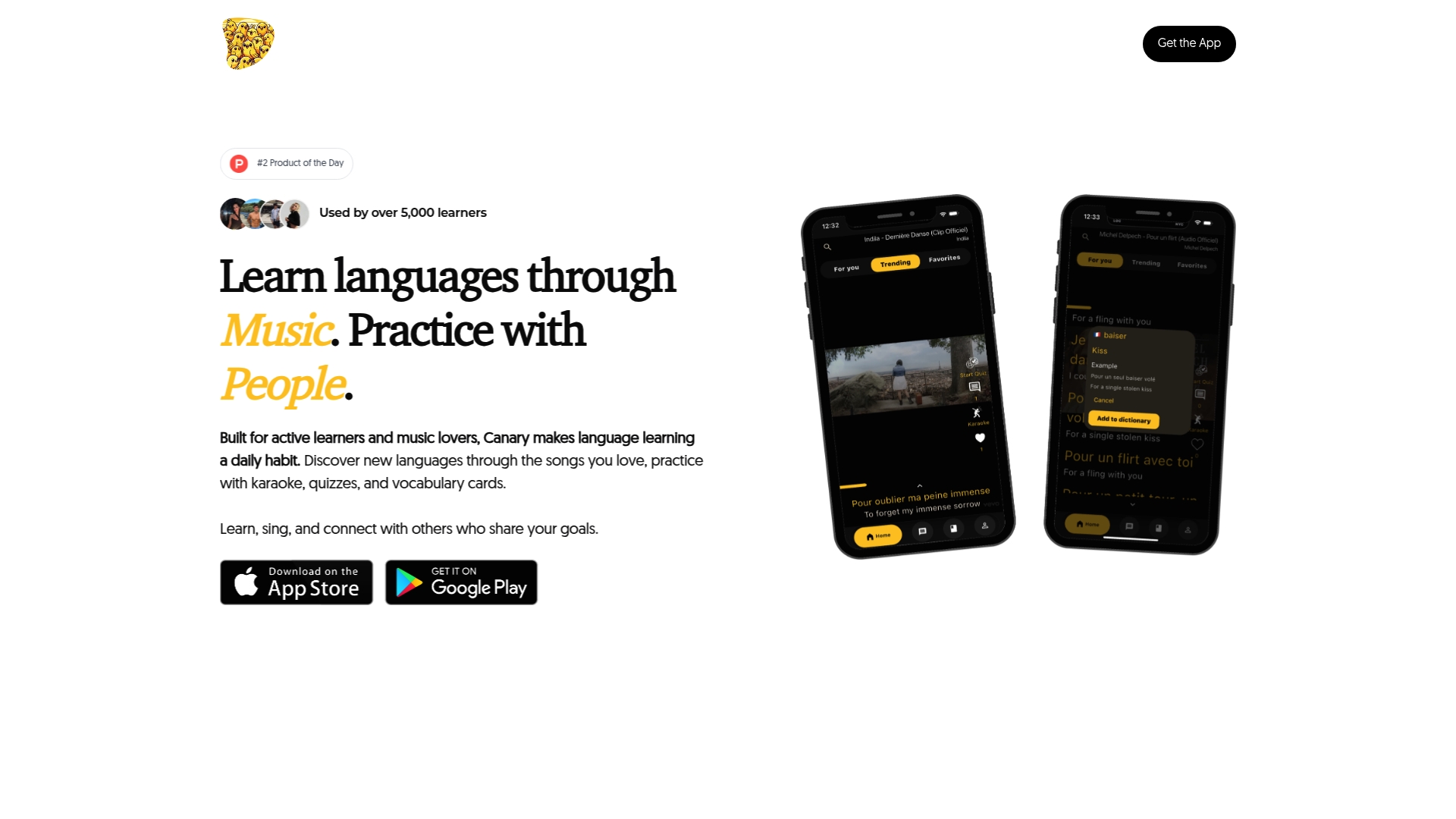
Canary brings together curated Spanish songs, karaoke-style sing-alongs, pronunciation feedback, vocabulary cards, and a global community of learners who practice together. You’re not just listening to music. You’re getting structured, interactive practice that targets the exact accent features covered in this guide. Explore the best Spanish learning tools available, connect with learning communities that keep you accountable, and start building a daily habit that actually sticks. Visit singwithcanary.com and turn your favorite songs into your most powerful accent training tool.
Frequently asked questions
Can music really help improve my Spanish accent faster than traditional drills?
Yes, research shows that music interventions improve prosody including rhythm, stress, and intonation more effectively than drill-based methods, making it a faster and more enjoyable path to a natural accent.
What kind of Spanish songs are best for accent practice?
Choose songs with clear vocals, moderate tempo, and authentic lyrics. Ballads and acoustic pop work well for beginners because lyrics analysis reinforces phonetics without overwhelming you with speed or slang.
How often should I practice with Spanish songs to see results?
Daily or near-daily practice is most effective. Consistent practice yields superior prosody gains compared to sporadic sessions, so short daily sessions beat long weekly ones.
Can singing in Spanish help with my overall fluency, not just accent?
Absolutely. Lyrics analysis builds grammar and vocabulary alongside pronunciation, so singing regularly improves your overall fluency, listening comprehension, and confidence in real conversations.