TL;DR:
- Interactive, music-based language learning improves retention and pronunciation through active participation.
- Combining songs with peer practice enhances emotional engagement and real-world conversational skills.
- Structured feedback and diverse tools are essential for maximizing progress and cultural understanding.
Most people assume language learning is a solo sport. You memorize vocabulary lists, repeat grammar drills, and hope it sticks. But research keeps pointing in a different direction: active, collaborative methods produce dramatically better results, especially for pronunciation and vocabulary retention. Music lovers are in a uniquely strong position here, because rhythm, melody, and lyrics create the kind of emotional and contextual anchoring that makes words unforgettable. This article breaks down what interactive language learning actually is, why it outperforms traditional methods, and how combining music with peer practice can fast-track your fluency.
Table of Contents
- What is interactive language learning?
- How it works: Key interactive methods and technologies
- Why interactive beats traditional: The research, results, and real-world impact
- Common challenges, best practices, and tips for getting started
- Our take: What most learners (and experts) overlook about interactive language learning
- Take your interactive learning further with Canary
- Frequently asked questions
Key Takeaways
| Point | Details |
|---|---|
| Active engagement wins | Learning with others, not alone, builds real communication skills and retention. |
| Music boosts memory | Song-based exercises make languages stick through context, rhythm, and repetition. |
| Combine tools for best results | Music apps, peer chats, and gamified platforms work even better when used together. |
| Feedback matters | Peer corrections and community input help you pronounce words correctly and avoid mistakes. |
What is interactive language learning?
Let’s clarify what interactive language learning actually involves. At its core, it flips the traditional model. Instead of passively absorbing content from a textbook or lecture, you become the center of the learning experience. You speak, respond, create, and collaborate.
Interactive learning principles define this approach as one that “emphasizes active participation and real-time engagement, using methods like role-play, discussions, and tech-driven activities.” That’s a big shift from memorizing conjugation tables alone at midnight.
The core methods include:
- Role-playing and simulations: Practicing real conversations in safe, low-stakes environments
- Peer discussions and language exchange: Talking with native or fluent speakers for authentic feedback
- Project-based learning: Creating something together in the target language, like a playlist or podcast
- Technology and gamification: Using apps, quizzes, and challenges to make practice feel like play
- Music and lyric analysis: Connecting vocabulary to melody, emotion, and cultural context
For music lovers, that last point is especially powerful. When you learn a word inside a song you genuinely love, it doesn’t just sit in your memory as an isolated unit. It has a melody attached to it, a feeling, a scene. That’s the kind of multi-layered encoding that makes recall effortless.
“Language isn’t learned in isolation. It’s learned in context, through use, through connection with others. The more senses and emotions you engage, the deeper the learning goes.”
Interactive learning also builds something rote memorization never can: communicative competence. That’s the ability to actually use a language in real situations, not just recognize it on a test. You can explore different language learning methods to see how interactive approaches compare to traditional ones, but the core advantage is always the same. Engagement drives retention. Confidence grows through practice, not passive study.
For music enthusiasts, the connection between rhythm and language is almost instinctive. You already know how a chorus gets stuck in your head. Interactive learning harnesses that exact mechanism and puts it to work for vocabulary, grammar, and pronunciation.
How it works: Key interactive methods and technologies
With a clear definition in hand, let’s explore how interactive language learning actually looks in practice.
The landscape of tools is wide, but a few categories stand out as especially effective. Interactive methods in e-learning research identifies the most impactful approaches as “communication-based learning, game-based learning, peer interaction via language exchange apps, AI-driven conversations, and music/lyrics-focused apps.”
Here’s how the main tool types compare:
| Tool type | Best for | Example apps |
|---|---|---|
| Peer chat apps | Pronunciation, cultural nuance | HelloTalk, Tandem |
| Music/lyric apps | Vocabulary, listening, rhythm | LyricsTraining, LyricFluent |
| Gamified platforms | Grammar drills, consistency | Duolingo, Busuu |
| AI conversation tools | Low-pressure speaking practice | Talkpal, Speeko |
To get the most out of these tools, combining them intentionally makes a huge difference. Here’s a simple approach that works:
- Start with a song. Pick a track in your target language that you genuinely enjoy. Use a lyric app to follow along and look up unfamiliar words.
- Sing it actively. Don’t just listen. Sing out loud, focus on pronunciation, and notice how the sounds feel in your mouth.
- Look up the cultural context. What is the song about? What slang or idioms does it use? This is where tips for music lovers can help you go deeper.
- Practice the vocabulary with a peer. Open HelloTalk or Tandem and use the new words in a real conversation. Ask your language partner to correct your pronunciation.
- Review with a gamified quiz. Reinforce what you learned using a spaced repetition or quiz feature to lock in the vocabulary.
Pro Tip: AI tools are great for drilling and reviewing at your own pace, but they can’t replace the nuance of a real conversation. Prioritize peer interaction at least two or three times a week for pronunciation and cultural accuracy. Use AI for the repetitive work.
The combination of music and peer interaction isn’t just enjoyable. It activates more parts of your brain simultaneously, which means stronger memory formation and faster progress. Language gamification adds another layer by making the process feel rewarding every single session.

Why interactive beats traditional: The research, results, and real-world impact
Knowing the tools is only half the story. Let’s dig into why these approaches work so well, and how the results compare to old-school methods.
The data is hard to argue with. Duolingo impact studies confirm that interactive platforms produce measurable gains across vocabulary, listening, reading, and speaking. But it goes beyond any single app.

| Method | Vocabulary retention | Pronunciation improvement | Engagement level |
|---|---|---|---|
| Rote memorization | Low | Minimal | Low |
| Lecture-based learning | Medium | Low | Low to medium |
| Music-based interactive | High | Significant | Very high |
| Peer interaction | High | Strong | High |
| Combined (music + peer) | Very high | Excellent | Very high |
Interactive learners retain 20 to 40% more vocabulary than those using rote methods. That’s not a marginal improvement. That’s the difference between remembering 20 words from a study session and remembering 28 to 40 of them.
Music amplifies this effect in specific ways:
- Repetition without boredom: You naturally replay songs you love, which means repeated exposure to vocabulary without it feeling like a chore
- Emotional encoding: Words tied to emotions are stored more deeply in memory
- Phonetic modeling: Singers model perfect pronunciation, giving you an authentic audio reference
- Cultural immersion: Lyrics reflect real slang, idioms, and social context that textbooks rarely capture
Apps like LyricsTraining use music to improve pronunciation, vocabulary, and listening through fill-in-the-blank exercises and active engagement with real songs. The song-based benefits go well beyond entertainment. Music creates a feedback loop where enjoyment drives repetition, and repetition drives fluency.
Motivation is also a massive factor. Traditional methods often feel like obligations. Interactive, music-based learning feels like a hobby. That emotional difference determines whether you practice for five minutes or fifty. Consistency is everything in language learning, and fun is the engine that keeps it going. Staying current with 2026 music trends can also help you find fresh content that keeps your practice feeling alive.
Common challenges, best practices, and tips for getting started
Even with all these benefits, interactive language learning isn’t autopilot. There are common mistakes and strategies you’ll want to know before you dive in.
One of the biggest pitfalls is over-relying on a single tool. Many learners download a gamified app, feel productive for a week, then plateau. Structured feedback and conscious self-correction are essential because “interactive learning needs structure and guidance to avoid superficial engagement, and music tools work best with teacher feedback or conscious self-correction.”
Here’s what to do and what to avoid:
Do:
- Set weekly goals (for example, learn 10 new words through songs and use five of them in a peer chat)
- Mix music activities with live peer conversations every week
- Record yourself speaking and compare your pronunciation to native speakers
- Use expanding vocabulary with songs as a structured strategy, not just casual listening
- Celebrate small wins to stay motivated
Don’t:
- Rely only on AI or gamified apps without real human interaction
- Skip the review step after learning new vocabulary
- Practice passively by just listening without engaging
- Ignore mistakes. Errors are data, not failures
- Expect fluency without consistent daily effort
Pro Tip: Join a music-based language community online. These groups combine accountability, shared playlists, and cultural exchange in one place. When you’re learning alongside people who share your taste in music, motivation stays naturally high. Check out expert app reviews to find the right combination of tools for your learning style.
Remember: apps are tools, not teachers. The learning happens when you engage fully, make mistakes, get corrected, and try again. That cycle of active use and real feedback is what separates learners who plateau from those who genuinely improve.
Our take: What most learners (and experts) overlook about interactive language learning
Here’s something we’ve noticed that rarely gets said directly: most people treat interactive learning as a collection of separate tools rather than a connected system. They use Duolingo for grammar, listen to music casually, and occasionally chat with a language partner. Each piece is good. But the real breakthroughs happen when these elements reinforce each other.
Music makes language memorable. But it’s peer correction that cements accurate pronunciation. You can sing a phrase perfectly in your head for months and still mispronounce it in conversation because no one ever corrected you. That’s the gap most solo learners never close.
The other thing that gets overlooked is cultural context. Language isn’t just vocabulary and grammar. It’s the way people actually talk, joke, argue, and express emotion. Music and peer interaction are the two fastest ways to absorb that layer. Vocabulary through songs gives you real-world language in emotional context. Peer conversations give you real-time feedback on whether you’re using it right.
Stepping outside your comfort zone is where the actual learning lives. Combine live interaction with music-driven practice, and you’ll find yourself improving faster than any single method could deliver.
Take your interactive learning further with Canary
If you want to put these strategies into action, Canary can help you get started. Canary is built specifically for music lovers and active learners who want more than flashcards and grammar drills. It brings together song-based language learning with interactive features like karaoke, vocabulary cards, and community challenges designed to make daily practice feel natural and genuinely enjoyable.
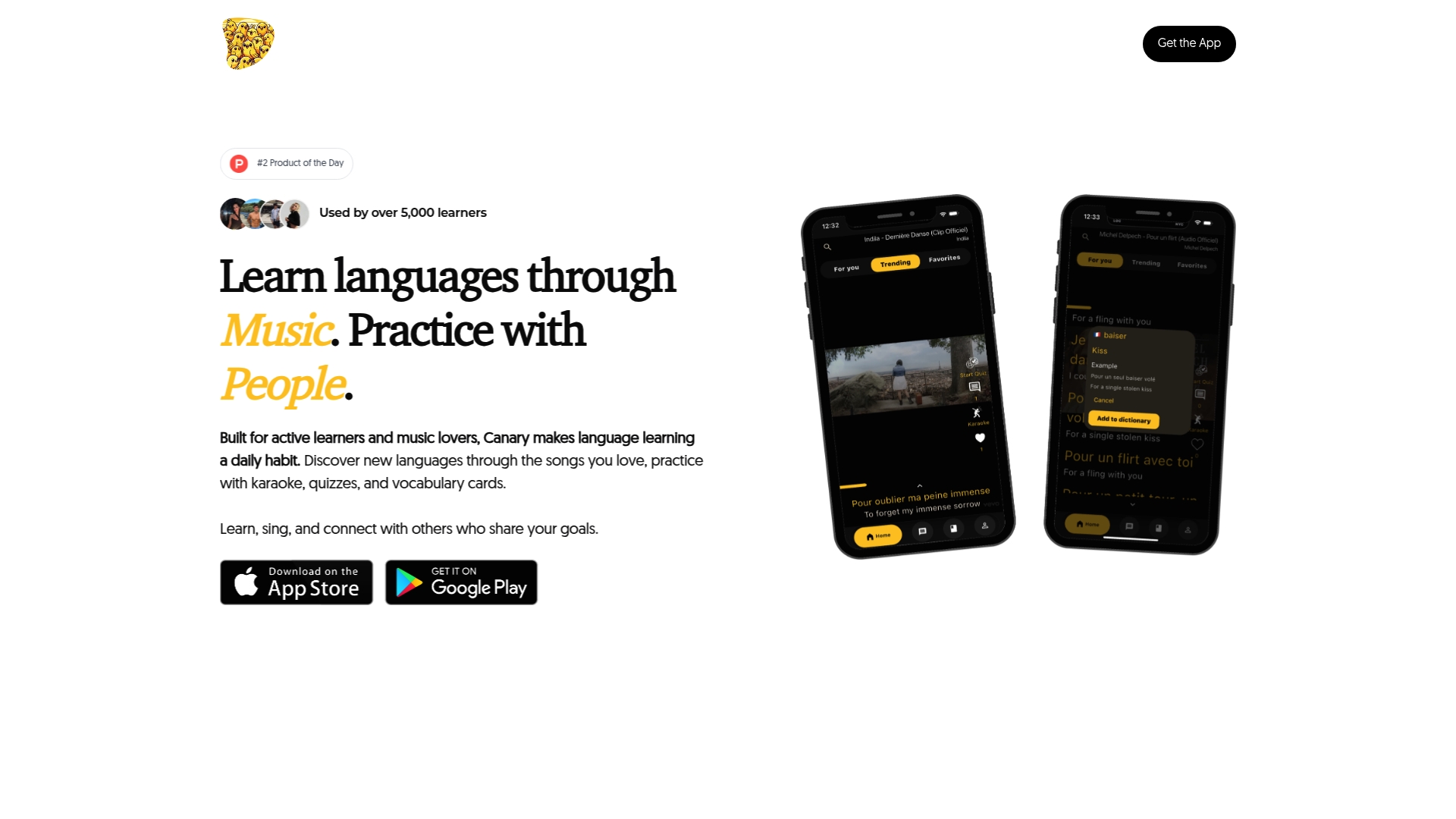
With Canary, you can practice pronunciation through real song lyrics, connect with international learners, and track your vocabulary growth in a way that feels more like a music session than a study grind. Explore how music boosts fluency and discover the educational benefits of music that make Canary a genuinely different kind of language platform. Your next language breakthrough might just start with a song.
Frequently asked questions
What makes interactive language learning more effective than traditional methods?
Interactive learning puts you in real communicative situations with peers, which builds speaking confidence and retention far faster than passive study. Interactive models outperform traditional lectures for vocabulary and language skill development.
How do music and lyrics help with language pronunciation and vocabulary?
Songs provide repetition, emotional context, and authentic phonetic modeling, all of which help words and sounds stick. Apps like LyricsTraining are specifically designed to improve pronunciation, vocabulary, and listening through active lyric engagement.
What are the best interactive language learning apps for peer practice?
HelloTalk, Tandem, LyricsTraining, and Duolingo each serve different needs. Peer apps like HelloTalk connect you with native speakers, while music apps focus on lyric-based learning and pronunciation.
Can interactive learning methods work without a teacher?
Absolutely, especially when you combine guided apps with active peer communities. That said, structured feedback through self-correction or peer review consistently improves outcomes compared to fully unguided practice.
Is AI-based language practice as good as peer conversations?
AI is excellent for low-pressure drilling and vocabulary review, but it lacks the cultural nuance and real-time correction that peers provide. Prioritize peer interaction for pronunciation accuracy and cultural fluency, and use AI to support the repetitive work.