Traditional language learning often feels like a chore, with endless grammar drills and vocabulary lists that fail to stick. But what if learning a new language could be as enjoyable as listening to your favorite songs? Interactive language learning platforms that incorporate music are transforming how we acquire new languages, offering a dynamic alternative that boosts motivation, enhances retention, and accelerates fluency. By combining gamification, song-based practice, and social interaction, these innovative tools make language learning not just effective but genuinely fun. This article explores the science-backed benefits of interactive music-based learning and how you can leverage these methods to achieve your language goals in 2026.
Table of Contents
- What Is Interactive Language Learning And Why Music Matters
- Key Benefits Of Interactive Language Learning With Music
- Challenges And Considerations With Interactive And Music-Based Learning
- How To Maximize Your Language Learning With Interactive Music Platforms
- Explore Canary For Interactive, Music-Driven Language Learning
- Frequently Asked Questions
Key takeaways
| Point | Details |
|---|---|
| Interactive learning outperforms traditional methods | Gamified apps significantly improve reading, speaking, and listening skills compared to conventional classroom instruction. |
| Music enhances vocabulary retention | Rhythm and emotional engagement help embed new words in long-term memory more effectively than rote memorization. |
| Daily practice with interactive tools accelerates fluency | Consistent use of song-based platforms with quizzes and karaoke leads to faster skill development and better pronunciation. |
| Social features boost motivation | Leaderboards, badges, and community interaction keep learners engaged and accountable over time. |
| Mixing methods maximizes results | Combining interactive music platforms with conversation practice and traditional study creates a well-rounded learning experience. |
What is interactive language learning and why music matters
Interactive language learning refers to digital tools and platforms that engage learners through active participation rather than passive consumption. Unlike traditional textbooks or lectures, these methods use gamification elements such as points, levels, challenges, and immediate feedback to keep learners motivated. Interactive language learning, particularly gamified apps like Duolingo, significantly improves L2 skills compared to traditional methods, demonstrating measurable gains in reading comprehension, vocabulary acquisition, and speaking confidence.
Music plays a unique role in this ecosystem by tapping into multiple cognitive and emotional pathways simultaneously. When you learn language through songs, you’re not just memorizing words in isolation. You’re absorbing pronunciation patterns, cultural context, and natural speech rhythms all at once. The emotional connection we form with music creates stronger memory anchors, making it easier to recall vocabulary weeks or months later.
Modern language learning methods for music lovers incorporate features designed specifically for active practice:
- Interactive lyrics that highlight vocabulary and grammar in real time
- Karaoke modes for pronunciation practice with instant feedback
- Quizzes that test comprehension of song meanings and idioms
- Vocabulary cards generated from song lyrics for spaced repetition
- Games that challenge learners to fill in missing words or match phrases
These tools transform passive listening into active learning. Song-based platforms offer interactive lyrics, games, quizzes, karaoke ideal for pronunciation and vocabulary expansion, creating an immersive environment where learners can practice multiple skills simultaneously. The combination of audio, visual, and kinesthetic engagement activates different learning styles, making the experience more effective than any single-mode approach.
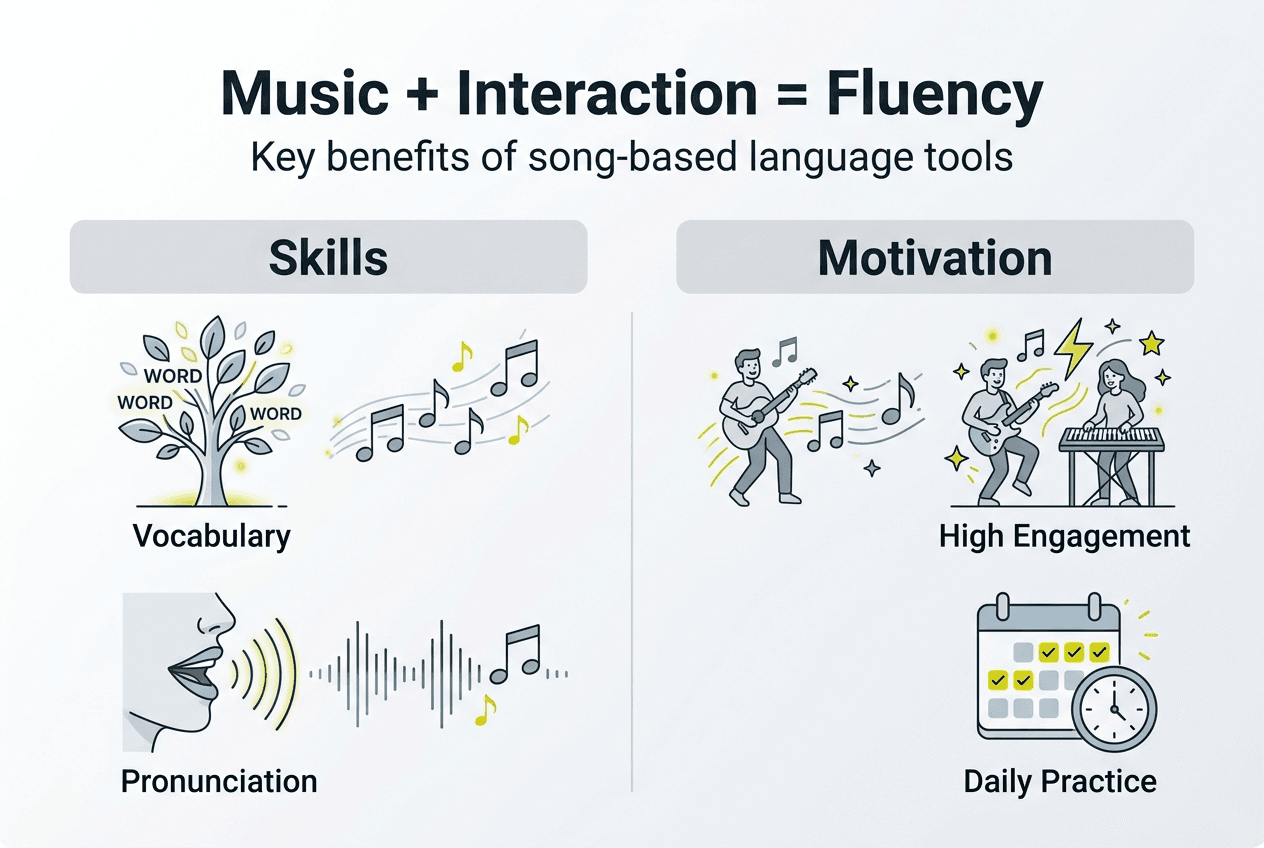
Understanding language learning gamification explained reveals why these methods work so well. Gamification doesn’t just make learning fun; it creates a feedback loop that encourages consistent practice. When you complete a challenge or unlock a new level, your brain releases dopamine, reinforcing the behavior and making you more likely to return tomorrow.
Pro Tip: Choose platforms that combine spaced repetition algorithms with engaging games and music features to maximize both retention and motivation for daily practice.
Key benefits of interactive language learning with music
The advantages of combining interactivity with music-based learning extend across multiple skill areas, backed by substantial research evidence. Meta-analyses confirm digital game-based learning promotes reading comprehension and vocabulary acquisition, with effect sizes that surpass traditional instruction methods. These improvements aren’t marginal; they represent meaningful gains that learners can measure in real-world communication scenarios.
Reading skills improve dramatically when learners engage with song lyrics interactively. Unlike static text, interactive lyrics allow you to click on unfamiliar words for instant definitions, see grammar patterns highlighted in context, and replay sections at different speeds. This immediate feedback loop accelerates comprehension and helps you internalize sentence structures naturally.

Listening comprehension benefits from the repetitive nature of music combined with the ability to slow down or isolate specific phrases. Songs expose you to authentic pronunciation, connected speech, and colloquial expressions that textbooks rarely capture. The benefits of learning languages with songs include improved ear training and the ability to distinguish subtle phonetic differences that matter in real conversations.
Speaking and pronunciation see perhaps the most dramatic improvements. Karaoke features let you practice speaking along with native speakers, comparing your pronunciation in real time. This immediate feedback helps you adjust your accent, rhythm, and intonation far more effectively than reading transcripts alone. Regular singing practice strengthens the muscle memory needed for fluent speech production.
Gamification mechanics boost motivation, engagement, and persistence, mimicking real-life communication and reducing rote memorization while making language learning feel less like work and more like play.
Motivation remains consistently high with interactive music platforms because the experience feels rewarding rather than tedious. Leaderboards, achievement badges, and progress tracking provide tangible evidence of improvement, while the inherent enjoyment of music keeps you coming back. The song of the week platform approach creates anticipation and variety, preventing the monotony that often derails traditional study routines.
Vocabulary retention improves significantly when words are learned through songs rather than isolated lists. Music boosts vocabulary retention because the rhythmic and melodic elements create multiple retrieval cues. When you hear the melody later, the associated vocabulary comes flooding back automatically.
| Feature | Interactive Music Learning | Traditional Methods |
|---|---|---|
| Engagement level | High due to gamification and emotional connection | Often low, requires significant self-discipline |
| Pronunciation practice | Immediate feedback through karaoke and recording | Limited opportunities, delayed correction |
| Vocabulary retention | Enhanced by rhythm, melody, and emotional anchors | Relies on repetition and memorization |
| Cultural immersion | Authentic content with idioms and slang | Sanitized textbook examples |
| Motivation sustainability | Built-in rewards and social features | Depends entirely on personal willpower |
Pro Tip: Use platform leaderboards and achievement badges to create friendly competition with yourself or others, maintaining consistent daily practice even when initial enthusiasm wanes.
Challenges and considerations with interactive and music-based learning
While interactive music-based learning offers substantial benefits, it’s not a universal solution for every learner or situation. Understanding the limitations helps you make informed decisions about how to integrate these tools into your overall language learning strategy.
Interactive methods may overload beginners or large classes; music less effective for preschoolers in some tasks, particularly when cognitive load becomes too high. Complete beginners with no foundation in a language might struggle with song lyrics that move too quickly or contain complex grammatical structures. The rapid pace of music can overwhelm learners who need more time to process basic vocabulary and sentence patterns.
Cognitive overload represents a real risk when platforms present too many features simultaneously. If you’re trying to read lyrics, listen to pronunciation, complete a quiz, and track your score all at once, your working memory can become saturated. This reduces learning effectiveness and can lead to frustration rather than progress.
Oral practice limitations emerge because most interactive platforms focus on recognition and repetition rather than spontaneous production. While karaoke helps with pronunciation, it doesn’t replicate the cognitive demands of constructing original sentences in real conversations. Limitations include lack of deep oral practice, advanced content, real interaction, and potential cognitive overload or distractions that learners should consider when choosing primary learning methods.
Advanced learners may find song-based content too simplistic or repetitive for their needs. Popular songs often use basic vocabulary and grammar, which helps beginners but provides limited challenge for intermediate or advanced students seeking to refine nuanced expression or master complex grammatical structures.
Distraction potential increases with highly gamified platforms. The same features that make learning fun can sometimes shift focus away from actual language acquisition toward achieving points or beating high scores. Some learners become more invested in the game mechanics than in genuine comprehension and production skills.
Access and technology requirements can create barriers. Not all learners have reliable internet connections, modern devices, or the technical literacy needed to navigate complex platforms effectively. These practical considerations matter especially for learners in resource-limited environments or older demographics less comfortable with digital tools.
The karaoke language learning boost works best when combined with other practice methods rather than used in isolation. Key factors to weigh include:
- Your current proficiency level and comfort with technology
- Whether you need more recognition practice or production practice
- Your learning style preferences and attention span
- Access to complementary resources like conversation partners
- Time available for balanced practice across multiple skill areas
How to maximize your language learning with interactive music platforms
Getting the most from interactive music-based learning requires strategic approach rather than passive consumption. These evidence-based strategies help you leverage the unique advantages while compensating for potential limitations.
-
Start with songs at your current level or slightly above. Choose tracks with clear pronunciation and moderate tempo rather than jumping immediately to fast-paced or heavily slang-laden content. Gradually increase difficulty as your comprehension improves.
-
Use active learning techniques with every song. Don’t just listen passively; engage with interactive lyrics, pause to look up unfamiliar words, and practice singing along multiple times. The difference between passive listening and active engagement determines whether vocabulary moves into long-term memory.
-
Combine music platforms with conversation practice. Learn languages with music provides excellent input and pronunciation practice, but you need output opportunities with real people to develop spontaneous speaking skills. Schedule regular conversation exchanges or tutoring sessions to practice using vocabulary you’ve learned through songs.
-
Create a daily routine that includes multiple practice modes. Spend 10 minutes on vocabulary cards, 15 minutes on karaoke practice, and 10 minutes on comprehension quizzes rather than doing one activity for 35 minutes straight. This variety prevents boredom and engages different cognitive processes.
-
Leverage emotional connections to enhance retention. Choose songs you genuinely enjoy rather than forcing yourself through content that doesn’t resonate. Duolingo users achieve reading proficiency equivalent to university semesters; music aids long-term retention via repetition and emotional engagement, demonstrating that emotional investment directly correlates with learning outcomes.
-
Track your progress systematically. Use platform analytics to identify which vocabulary you’re mastering and which words need more review. Spaced repetition works best when you can see patterns in your retention and adjust practice accordingly.
-
Join community features for accountability. Participate in challenges, share progress with friends, or join group activities that keep you motivated during inevitable plateaus. Social learning creates external accountability that supplements internal motivation.
-
Mix interactive music tools with traditional study. Use grammar resources to understand structures you encounter in songs, and use songs to see those structures in authentic context. Daily practice with songs becomes more effective when supported by complementary learning methods.
Pro Tip: Set a consistent daily practice time that includes 15 minutes of karaoke pronunciation work and 15 minutes of interactive quizzes to build sustainable habits that lead to measurable fluency gains.
The key to success lies in consistency rather than intensity. Thirty minutes daily outperforms sporadic three-hour sessions because language acquisition depends on repeated exposure over time. Interactive music platforms make daily practice enjoyable enough to sustain long-term, which ultimately determines whether you reach fluency or abandon your goals halfway through.
Different language learning methods for music lovers work better at different proficiency stages. Beginners benefit most from simple songs with repetitive vocabulary and clear pronunciation. Intermediate learners should seek out more complex lyrics with idiomatic expressions and varied grammatical structures. Advanced learners can use music to maintain skills, explore regional dialects, and stay connected to the cultural aspects of their target language.
Explore Canary for interactive, music-driven language learning
Ready to transform your language learning experience with the power of music and interactive practice? Canary offers everything discussed in this article in one comprehensive platform designed specifically for active learners who want to achieve fluency while having fun.
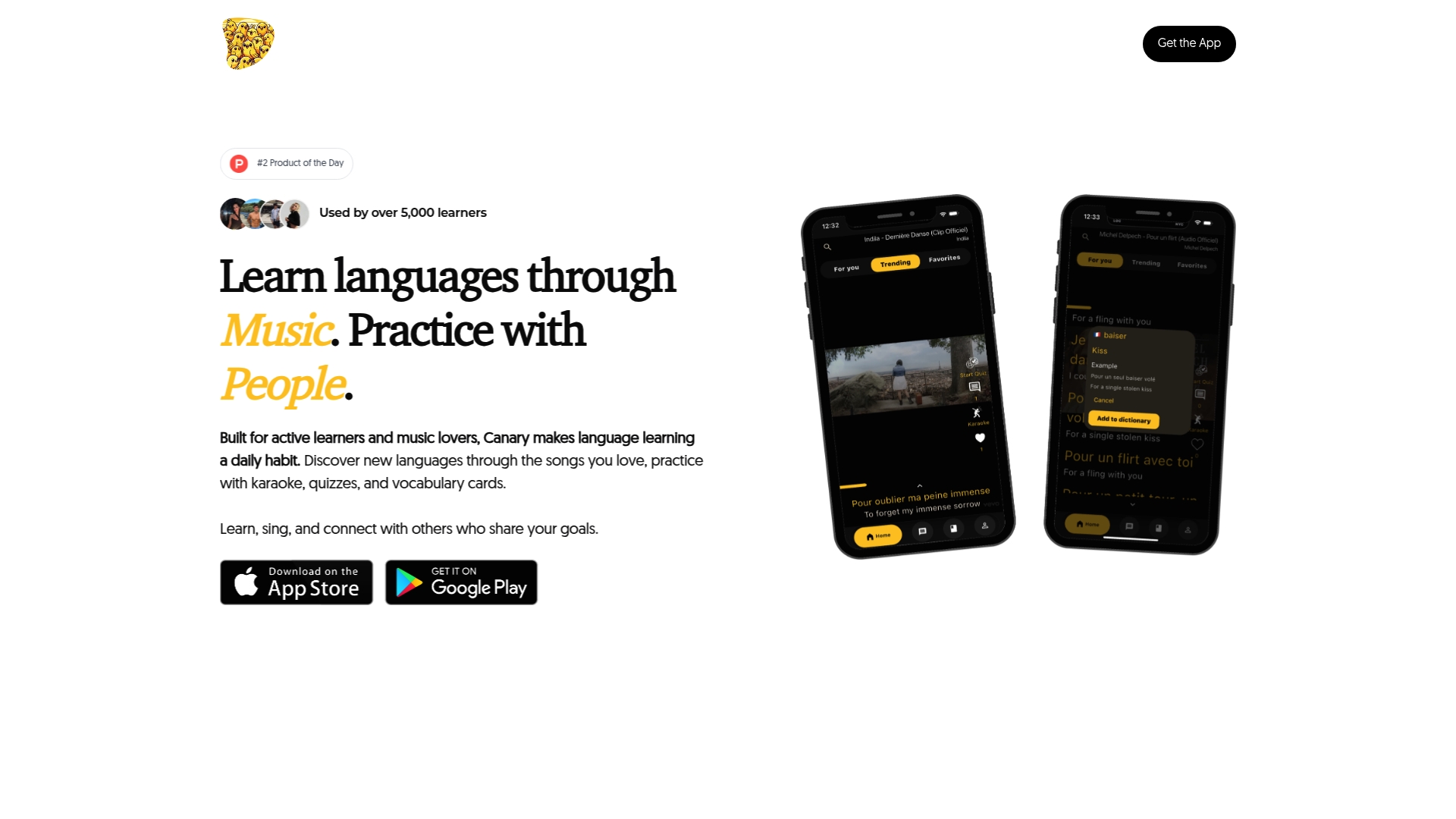
Canary combines song-based learning with social interaction, creating a community where you can practice pronunciation through karaoke, expand vocabulary with interactive lyrics and flashcards, and connect with learners worldwide. The platform’s gamified approach keeps you motivated with challenges, progress tracking, and achievement rewards that make daily practice something you look forward to rather than dread.
Whether you’re just starting your language journey or looking to refine your accent and expand your vocabulary, learn languages with music through Canary’s innovative features. Experience music-driven language mastery that adapts to your level and interests, helping you build the confidence needed for real-world conversations. Sign up for Canary today and discover why thousands of learners choose music as their path to fluency.
Frequently asked questions
What is interactive language learning?
Interactive language learning uses digital tools, games, and multimedia content to engage learners actively rather than passively. Instead of memorizing from textbooks, you participate in quizzes, challenges, and real-time feedback activities that make learning dynamic and responsive to your progress.
How does music improve vocabulary retention?
Music enhances memory through rhythm, melody, and emotional engagement that create multiple retrieval cues for vocabulary. When words are embedded in songs you enjoy, the emotional connection and repetitive structure help transfer them into long-term memory more effectively than isolated memorization.
Is interactive language learning suitable for beginners?
Interactive learning benefits active learners at most levels but may overwhelm complete beginners without proper guidance. Start with platforms that offer beginner-specific content with slower-paced songs and clear explanations. Combining interactive tools with some traditional instruction helps build a foundation before diving fully into gamified methods.
Can I improve my pronunciation using song-based platforms?
Singing along with interactive lyrics and karaoke features significantly boosts pronunciation through repetition and immediate feedback. These tools let you compare your speech to native speakers in real time, helping you adjust accent, rhythm, and intonation far more effectively than reading alone.
How often should I use interactive music tools to see results?
Daily or regular use of interactive music tools leads to faster improvements and better retention than sporadic practice. Aim for at least 20 to 30 minutes daily, mixing different activities like vocabulary review, karaoke practice, and comprehension quizzes to maintain engagement and develop well-rounded skills.