Learners practicing in social language communities retain vocabulary 50% faster than those studying alone. Language learning communities bring together people who share your passion for languages and music, creating spaces where you can practice pronunciation, expand vocabulary, and immerse yourself in culture through interactive activities. This article explores how these communities work, why music integration accelerates your progress, and how to choose the right community to transform your language learning journey.
Table of Contents
- Introduction To Language Learning Communities
- How Language Learning Communities Improve Pronunciation And Vocabulary
- Role Of Music In Language Learning Communities
- Cultural Immersion Through Peer Interactions
- Common Misconceptions About Language Learning Communities
- Comparing Types Of Language Learning Communities
- Practical Tips To Engage With Music-Infused Language Learning Communities
- Conclusion: Maximizing Language Learning Through Community And Music
- Discover Music-Powered Language Learning With Canary
- Frequently Asked Questions
Key takeaways
| Point | Details |
|---|---|
| Social learning accelerates retention | Learners in communities retain vocabulary 50% faster through peer interaction and immediate feedback. |
| Music enhances pronunciation accuracy | Music-assisted learning improves pronunciation by 30% within 8 weeks through rhythm and sound exposure. |
| Cultural immersion builds real confidence | Communities using authentic cultural materials create emotional connections that strengthen language use. |
| Beginners benefit significantly | 60% of beginners avoid communities unnecessarily, missing crucial support and guided practice opportunities. |
| Active participation drives results | Consistent engagement several times weekly yields measurable gains in vocabulary and pronunciation skills. |
Introduction to language learning communities
Language learning communities are groups of learners who practice languages together through conversation, feedback, and shared cultural activities. Unlike traditional classrooms focused on memorization or solo apps that isolate practice, these communities emphasize social interaction as key to accelerated acquisition. You engage in real conversations, receive immediate feedback, and learn from peers navigating similar challenges.
These communities thrive on three core features:
- Peer interaction creating authentic speaking opportunities
- Cultural exchange exposing you to real-world language contexts
- Supportive feedback loops that refine pronunciation and usage
For music enthusiasts, these communities offer something special. You can combine your passion for songs with language practice, making every session feel less like study and more like entertainment. The social element keeps you motivated when solo practice feels tedious.
Research shows that social interaction facilitates natural language use far better than isolated drilling. When you practice with others, you develop conversational flow, learn to think in your target language, and build confidence for real-world communication. Music lovers gain an extra advantage by accessing cultural materials that make learning stick emotionally.
How language learning communities improve pronunciation and vocabulary
Social engagement creates immediate opportunities to practice speaking and receive corrective feedback. When you mispronounce a word or use incorrect grammar, peers can catch it instantly and help you adjust. This real-time correction accelerates improvement far beyond what apps or textbooks offer.
Peer review specifically refines pronunciation faster than self-study. You hear how native speakers and advanced learners produce sounds, then mimic and adjust based on their feedback. Studies confirm that learners in social communities retain vocabulary 50% faster and show significant pronunciation improvements compared to solitary learners.
Community participation exposes you to new vocabulary in meaningful contexts. Instead of memorizing isolated word lists, you encounter terms during conversations, songs, and cultural discussions. This contextual exposure helps your brain connect words to situations, making retention natural and long-lasting.
Key benefits include:
- Authentic speaking practice that builds muscle memory for pronunciation
- Immediate peer feedback identifying errors you might not catch alone
- Contextual vocabulary exposure improving retention and recall
- Motivation through shared progress and group accountability
Pro Tip: Ask specific questions about pronunciation during community sessions. Instead of general feedback, request focus on particular sounds or phrases you struggle with to accelerate targeted improvement.
Role of music in language learning communities
Music transforms language learning by training your ear to recognize nuanced sounds, rhythms, and intonation patterns crucial for accurate pronunciation. When you sing along to songs in your target language, you practice accent development naturally without the pressure of formal conversation. Research indicates music-assisted learners show 30% improvement in pronunciation accuracy within 8 weeks and maintain higher engagement levels.

Karaoke sessions in language communities create fun, low-pressure environments for practice. You focus on rhythm and melody while simultaneously working on pronunciation, making the learning process enjoyable rather than stressful. This playful approach keeps you coming back consistently, building the daily habit essential for fluency.
Music also provides powerful cultural immersion. Songs carry idioms, slang, and emotional expressions you rarely find in textbooks. When you learn a Spanish love song or a French rap verse, you absorb cultural context that deepens your understanding of how native speakers actually communicate.
Key advantages of music integration:
- Enhanced ear training for subtle sound distinctions
- Rhythm-based memory aids improving vocabulary retention
- Cultural exposure through authentic artistic expressions
- Sustained motivation via enjoyable, engaging activities
“Music creates an emotional anchor that helps language learners retain vocabulary and pronunciation patterns significantly longer than traditional methods. The combination of melody, rhythm, and social singing accelerates the entire acquisition timeline.” — Language acquisition researcher
Explore song-based learning approaches to discover how weekly musical practice can systematically build your language skills.
Cultural immersion through peer interactions
Language learning communities facilitate authentic cultural immersion by connecting you with peers who share real stories, customs, and perspectives from their cultures. This goes beyond vocabulary mechanics to help you understand how language functions in social contexts. You learn when certain phrases are appropriate, how formality shifts between situations, and which expressions carry emotional weight.
Authentic cultural materials like music, stories, and traditions create emotional connections that textbooks cannot replicate. When you discuss a song’s meaning with native speakers or share cultural traditions through language, you build memories tied to real experiences. These emotional anchors dramatically improve retention and motivation.
Peer interactions simulate real conversations complete with interruptions, clarifications, and natural flow. You practice social language functions like agreeing, disagreeing, asking follow-up questions, and expressing opinions. These skills prove essential when you eventually use your language skills in real-world situations.
Cultural immersion benefits include:
- Understanding idioms and expressions in proper contexts
- Learning social cues and formality levels for different situations
- Developing emotional connections that enhance memory and motivation
- Practicing conversational flow with real speakers
Communities using culturally authentic materials foster deeper engagement because they tap into your interests and emotions. Music lovers particularly benefit by exploring songs that reveal cultural values, humor, and storytelling traditions unique to their target language.
Common misconceptions about language learning communities
Many beginners mistakenly believe language communities only serve advanced learners who already speak fluently. In reality, beginner-friendly communities provide guided activities, supportive peers, and structured practice perfect for early learners. Studies show 60% of beginners avoid communities fearing they lack sufficient skills, missing out on the exact support that would accelerate their progress.
Another common mistake involves confusing casual social groups with structured learning communities. While chatting with native speakers helps, dedicated learning communities offer moderation, planned activities, and feedback systems that maximize skill development. Without structure, casual groups often fail to address pronunciation errors or vocabulary gaps systematically.
Some learners undervalue the importance of active moderation and facilitation. Well-moderated communities create safe spaces where mistakes are learning opportunities rather than embarrassments. Facilitators guide discussions, introduce relevant cultural topics, and ensure all members participate regardless of skill level.
Key misconceptions to avoid:
- Thinking you need advanced skills before joining (beginners gain the most)
- Assuming any social group equals a learning community (structure matters)
- Overlooking the value of moderation and guided activities
- Believing solo practice is more efficient than community engagement
Pro Tip: Search specifically for beginner-friendly, music-integrated communities with clear learning goals and active moderation. These structured environments provide the support system that transforms hesitant beginners into confident speakers.
Comparing types of language learning communities
Different community formats offer distinct advantages depending on your learning style, schedule, and goals. Understanding these differences helps you select the right fit for your needs.
| Community Type | Key Features | Pros | Cons |
|---|---|---|---|
| Online Music-Integrated | Global access, karaoke, song quizzes, social features, vocabulary cards | High engagement, cultural immersion via music, flexible scheduling, diverse peer group | Requires internet, less face-to-face interaction |
| Traditional Online | Text chat, video calls, conversation practice, language exchange | Widely available, flexible timing, free options | Limited cultural materials, less engaging activities, minimal music integration |
| Offline Groups | In-person meetings, local cultural events, face-to-face practice | Personal connections, immediate feedback, cultural activities | Geographic limitations, fixed schedules, rarely music-focused |
| App-Based Solo | Self-paced lessons, gamification, personal progress tracking | Complete flexibility, privacy, structured curriculum | Isolated practice, no peer feedback, limited cultural context |
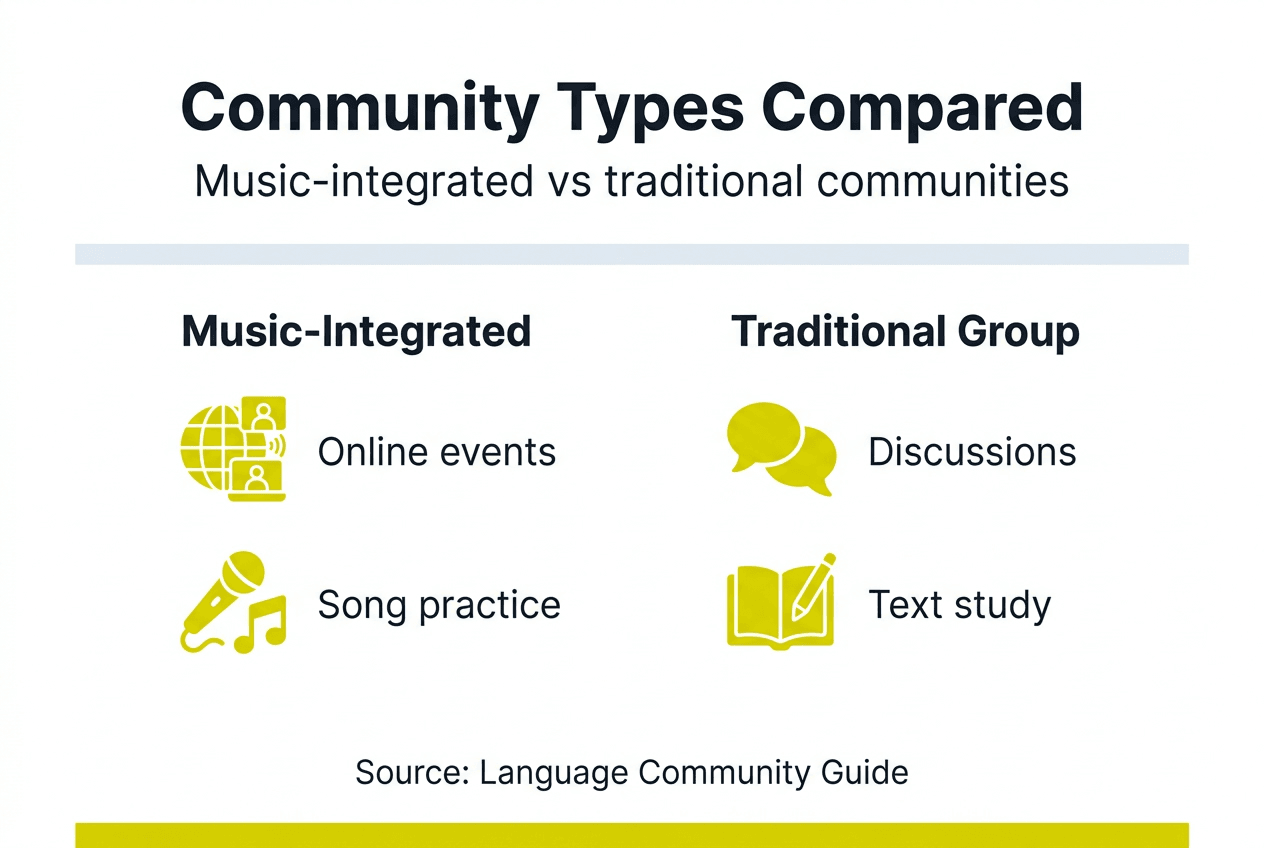
Online music-integrated communities combine the best of engagement and accessibility. You connect with learners worldwide, participate in interactive musical activities, and practice pronunciation through singing while maintaining schedule flexibility. The global reach exposes you to diverse accents and cultural perspectives impossible in local-only groups.
Traditional online communities focus heavily on conversation but often lack the motivational boost that music provides. While useful for practice, they may feel repetitive without creative, culturally rich activities to sustain long-term engagement.
Offline groups offer valuable face-to-face interaction but require geographic proximity and fixed meeting times. Few incorporate systematic music-based learning despite its proven effectiveness for pronunciation and cultural immersion.
Consider your priorities: if flexibility, cultural depth, and engaging activities matter most, music-integrated online communities deliver optimal results. If local connections are essential, supplement offline groups with online musical practice.
Practical tips to engage with music-infused language learning communities
Maximize your community experience by following these strategic steps:
-
Identify communities matching your current language level and musical interests. Search for platforms offering karaoke, song analysis, and interactive quizzes alongside peer conversation.
-
Participate actively in diverse activities. Join karaoke sessions to practice pronunciation, engage in cultural discussions to deepen context, and complete vocabulary quizzes to reinforce learning.
-
Establish consistent participation habits. Schedule regular community time several days weekly to build momentum and maintain skill development.
-
Request specific feedback on pronunciation and grammar. Direct peers to focus on your weak areas rather than accepting only general comments.
-
Contribute peer feedback generously. Teaching others reinforces your own learning and builds community relationships.
-
Explore various musical learning methods to discover which song-based approaches work best for your learning style.
-
Use community tools like vocabulary cards and song libraries for daily reinforcement between live sessions.
Pro Tip: Combine passive listening with active participation. Listen to community-recommended songs during commutes, then actively practice singing them during live sessions for maximum retention and pronunciation improvement.
Consistent, intentional engagement transforms community membership from casual practice into systematic skill development. The social accountability keeps you motivated while musical activities make every session enjoyable.
Conclusion: maximizing language learning through community and music
Language learning communities offer proven pathways to faster vocabulary retention, improved pronunciation, and authentic cultural immersion. Music integration amplifies these benefits by making practice enjoyable, training your ear for nuanced sounds, and connecting you emotionally to the language. Social interaction provides immediate feedback, real conversation practice, and motivation that solo study cannot match.
Success requires choosing well-moderated, music-infused communities aligned with your skill level and consistently participating in interactive activities. Whether you’re a beginner building foundational skills or an intermediate learner refining pronunciation, these communities provide the support, cultural context, and engaging practice essential for fluency.
Discover music-powered language learning with Canary
Ready to experience how music and community transform language learning? Canary combines everything discussed here into one platform designed specifically for music lovers. You can learn languages with music while connecting with international learners who share your passion.
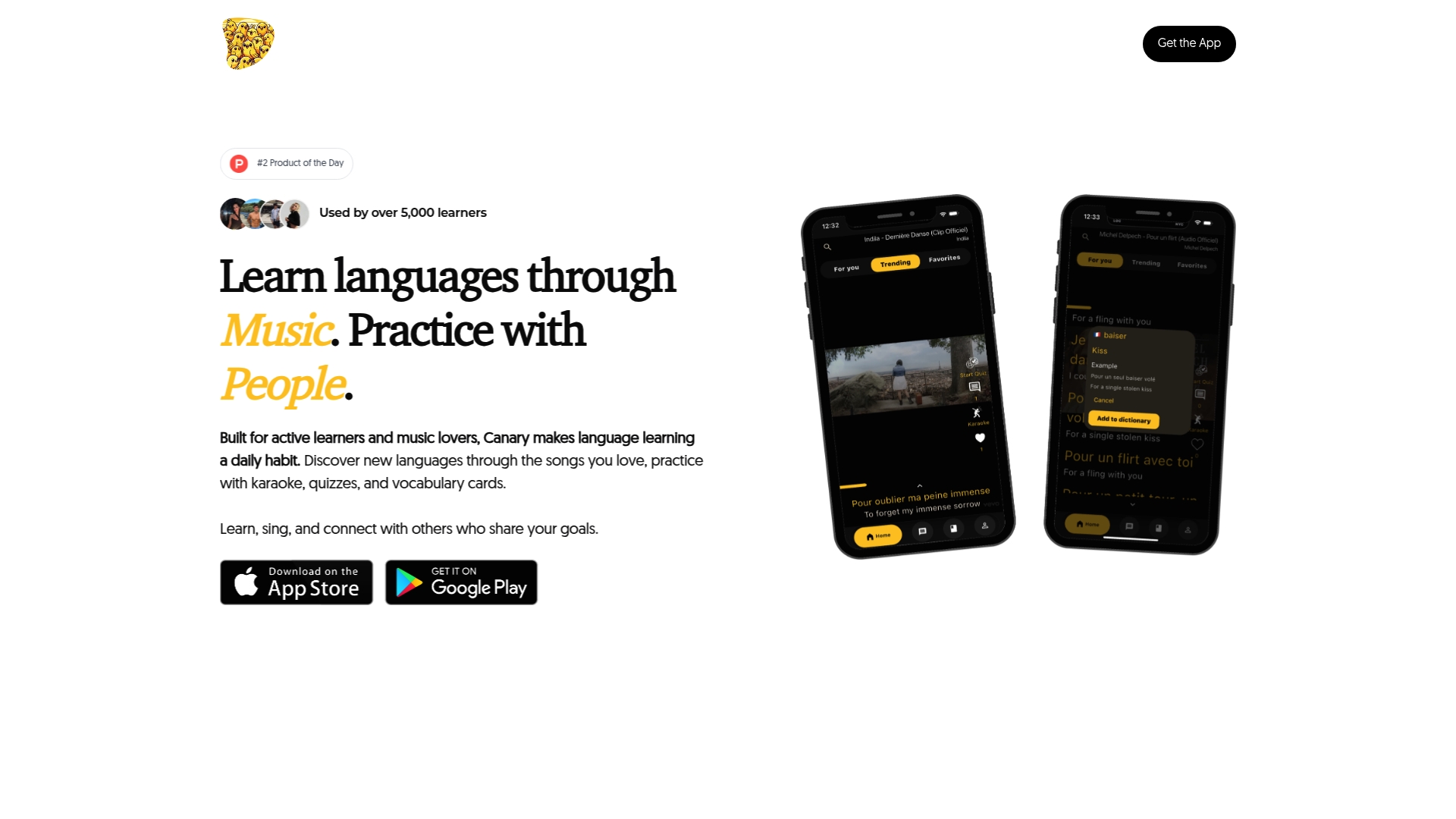
Canary offers interactive karaoke sessions, vocabulary quizzes, and song-based learning tools that make pronunciation practice feel like entertainment. Discover 7 benefits of learning languages with songs and see why thousands of learners choose this approach. The platform creates a supportive community where peer feedback and music-infused practice boost pronunciation naturally. Join today and turn your love of music into language mastery.
Frequently asked questions
What are language learning communities?
Language learning communities are groups where learners interact socially to practice and improve language skills together. They emphasize conversation, peer feedback, and cultural exchange through engaging formats like music, discussions, and collaborative activities.
How does music help improve language pronunciation?
Music exposes you to natural rhythms, accents, and sound patterns essential for clear pronunciation. Singing along enhances muscle memory and ear training, helping you produce accurate speech sounds. Research shows music-assisted learning improves pronunciation 30% within weeks.
Can beginners join language learning communities?
Absolutely. Many communities welcome beginners with guided activities, supportive peers, and structured learning paths. Look for moderated groups designed for all skill levels where mistakes are learning opportunities. Beginners often gain the most from community support during early stages.
What should I look for when choosing a language learning community?
Seek communities with active music activities like karaoke or song quizzes that match your interests. Check for good moderation, opportunities for peer feedback, and authentic cultural immersion. Ensure community size and engagement style fit your preferences. Explore different musical learning methods to find your ideal approach.
How often should I participate in these communities to see improvement?
Consistent participation several times weekly yields the best vocabulary and pronunciation gains. Regular social and musical practice builds confidence, reinforces learning, and creates the daily habit essential for fluency. Even 20 to 30 minutes per session produces measurable results when maintained consistently.