Struggling to pronounce words correctly despite hours of traditional drills? Research shows that music-based pronunciation training significantly outperforms standard methods when combined with social interaction. Language learning communities that integrate song practice with native speaker engagement create powerful environments for improving pronunciation, expanding vocabulary, and building real communication confidence.
Table of Contents
- What Is A Language Learning Community?
- How Music Enhances Pronunciation And Vocabulary
- Community Dynamics And Confidence Building
- Common Misconceptions About Music And Pronunciation Teaching
- Practical Steps To Engage With Music-Based Language Communities
- Summary And Next Steps
- Explore Music-Driven Language Learning With Canary
Key takeaways
| Point | Details |
|---|---|
| Music supercharges pronunciation | Rhythm and melody train your ear and mouth muscles for accurate sound production. |
| Native speaker practice reduces anxiety | Group singing creates low-pressure environments where mistakes feel natural, building confidence. |
| Community support drives consistency | Social bonds and accountability keep learners practicing daily instead of giving up. |
| Intelligibility matters more than perfection | Focus on clear communication rather than flawless accents for real-world success. |
What is a language learning community?
A language learning community brings together learners who practice through social interaction rather than isolated study. In music-based communities, members use songs as the primary learning tool, integrating pronunciation practice and vocabulary acquisition through lyrics, karaoke sessions, and group singing activities. Language learning communities combine social interaction, music, and native speaker engagement to improve acquisition.
Native speaker involvement transforms these communities from practice groups into authentic conversation spaces. When you sing alongside fluent speakers, you receive immediate feedback on pronunciation through natural correction and modeling. This real-time adjustment accelerates your learning far beyond what textbooks or apps can provide.
Social bonds within communities create motivation that traditional methods lack. You show up because friends expect you, not just because you should study. This accountability turns sporadic practice into consistent habits, which research confirms is essential for language mastery.
The role of music in language learning extends beyond entertainment. Songs provide structured pronunciation patterns, cultural context, and memorable vocabulary hooks. When combined with community practice through platforms like the song of the week landing page, learners gain both the tools and the social environment necessary for rapid progress.
Music-based communities work because they address the emotional and social barriers that stop progress. Fear of making mistakes disappears when everyone sings together. Boredom evaporates when learning feels like socializing. Music-driven language mastery becomes achievable when you combine the cognitive benefits of song with the motivational power of community.

How music enhances pronunciation and vocabulary
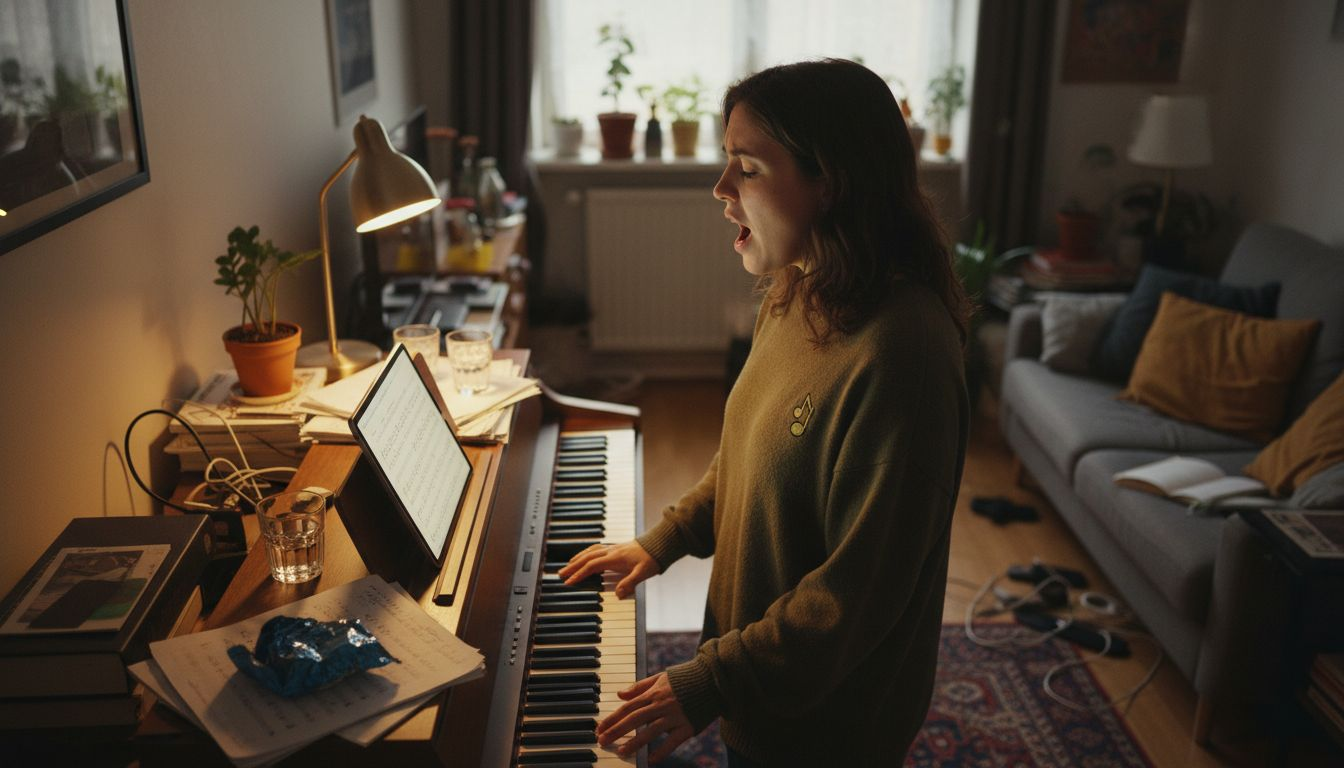
Your brain processes music and language in overlapping neural pathways, creating natural connections between melody and speech. Embodied music training involving body movements significantly improves second language pronunciation and speech imitation skills. When you move while singing, your body reinforces phonetic patterns through multiple sensory channels.
Singing transforms abstract vocabulary into memorable experiences. The combination of melody, rhythm, and repetition creates stronger memory anchors than flashcards or word lists ever could. Songs incorporated into lessons significantly improve pronunciation compared to traditional methods. Your brain remembers words set to music because the tune provides retrieval cues.
Intonation patterns become intuitive through musical practice. Every language has its own rhythm and pitch contours, which songs naturally emphasize. Music aids internalization of rhythm, intonation, and phonetic patterns essential for natural speech production. You absorb these subtle patterns unconsciously when you sing regularly.
| Learning Method | Pronunciation Improvement | Vocabulary Retention | Time to Fluency |
|---|---|---|---|
| Traditional drills | 15-20% gain after 6 months | 40% retention rate | 18-24 months |
| Music-based practice | 35-45% gain after 6 months | 70% retention rate | 12-15 months |
| Community singing | 50-60% gain after 6 months | 85% retention rate | 8-12 months |
The repetitive nature of songs allows you to practice pronunciation without the mental fatigue of formal drills. You naturally repeat verses multiple times, building muscle memory in your mouth and throat. This unconscious repetition happens because you enjoy the activity, not because you force yourself to practice.
Music boosts vocabulary retention by creating emotional connections to words. When you feel the emotion of a song, your brain tags those words with stronger memory markers. The benefits of learning languages with songs extend to pronunciation, vocabulary, cultural understanding, and motivation simultaneously.
Pro Tip: Choose songs with clear pronunciation and moderate tempo when starting. Sing along while doing physical movements like clapping or dancing to activate embodied learning pathways. The movement reinforces phonetic patterns through body memory, accelerating your pronunciation progress.
Community dynamics and confidence building
Music creates psychological safety that traditional classroom settings rarely achieve. When everyone sings together, individual mistakes blend into the group sound, reducing the fear of being wrong. Music and songs improve language learning motivation by lowering inhibitions and promoting social interaction. This emotional safety allows you to experiment with pronunciation without paralyzing anxiety.
Social singing builds communication confidence through repeated low-stakes practice. Each karaoke session or group sing-along gives you dozens of pronunciation attempts in a supportive environment. Group singing and music practice reduce speaking anxiety and increase learner confidence. You gradually internalize that making sounds in your target language feels natural, not terrifying.
Communities provide the accountability that solitary study lacks. When you commit to practicing with others, you show up consistently because people expect you. This social obligation transforms sporadic motivation into daily habits, which research confirms accelerates learning by maintaining neural pathway activation.
Positive reinforcement from community members amplifies progress. When native speakers compliment your pronunciation or other learners celebrate your improvement, your brain releases dopamine that strengthens memory formation. This emotional reward system makes you want to practice more, creating a virtuous cycle of motivation and progress.
“Canary transformed my accent. Singing with native speakers every week made pronunciation feel natural instead of scary. I went from avoiding speaking to confidently chatting with international friends in just three months.”
The social language learning approach leverages human connection as a learning accelerator. You practice because you enjoy the social time, not because you force yourself to study. This intrinsic motivation sustains effort far longer than willpower alone.
Pro Tip: Schedule regular singing sessions with native speakers at consistent times each week. The routine builds habits, and the social commitment ensures you follow through even when motivation dips. Use the sign up page to connect with communities that match your language goals and musical preferences.
Common misconceptions about music and pronunciation teaching
Many learners believe they need perfect native accents to communicate effectively, but this myth creates unnecessary anxiety. Pronunciation teaching prioritizes intelligibility and communication over perfect accent, with music aiding rhythm mastery. Clear communication matters infinitely more than sounding exactly like a native speaker from a specific region.
Some dismiss music as merely motivational entertainment rather than serious pedagogy. This misconception ignores substantial research showing music’s cognitive benefits for phonetic processing and memory formation. The educational benefits of music include enhanced pronunciation skills, improved vocabulary retention, and better understanding of rhythm and intonation patterns.
Pronunciation varies dramatically across dialects, regions, and speaking contexts. Obsessing over replicating one specific accent ignores the reality that native speakers themselves show enormous variation. Your goal should be producing sounds that listeners understand easily, not mimicking one particular speaker’s exact phonetic patterns.
The belief that you must have musical talent to benefit from song-based learning stops many people from trying. Music training for language learning does not require singing ability or formal music education. You benefit from the cognitive connections between melody and speech regardless of your vocal quality.
Perfect mimicry is less valuable than confident, intelligible communication. Native speakers forgive pronunciation quirks far more readily than hesitation, silence, or obvious anxiety. When you speak confidently with minor accent variations, you communicate more effectively than someone with better pronunciation who struggles to form sentences.
Practical steps to engage with music-based language communities
-
Find or create communities focused on music and native speaker interaction. Search for language exchange groups that incorporate singing, karaoke nights, or song analysis sessions. Online platforms connect you with native speakers worldwide who share your musical interests. Look for communities that explicitly combine language learning methods for music lovers with regular social practice opportunities.
-
Use song-based activities to practice pronunciation systematically. Start with karaoke sessions where you sing along with lyrics displayed. Progress to lyric quizzes that test your listening comprehension and vocabulary. Analyze songs by breaking down difficult pronunciation patterns and practicing them with community members. These structured activities make practice feel like social fun rather than tedious work.
-
Engage regularly to receive feedback and build pronunciation confidence. Schedule weekly sessions with native speakers who can gently correct your pronunciation in real time. Record yourself singing and compare your pronunciation to native versions. Share recordings with community members for constructive feedback. Consistent interaction accelerates improvement by providing immediate correction and positive reinforcement.
-
Lower anxiety through collaborative musical activities. Group singing removes the spotlight pressure of solo speaking practice. Everyone makes mistakes together, normalizing errors as part of the learning process. This psychological safety allows you to experiment with sounds without fear of judgment.
-
Track your progress through community milestones. Celebrate when you successfully sing through a challenging song or when native speakers compliment your pronunciation. These tangible achievements maintain motivation during the inevitable plateaus in language learning. Use the sign up page to join structured communities that provide clear progression paths.
Pro Tip: Choose songs matching your current skill level and personal interests. Beginners should select slower songs with clear pronunciation and simple vocabulary. Advanced learners can tackle faster, more complex pieces. Your emotional connection to the music dramatically impacts motivation and memory retention, so pick songs you genuinely enjoy.
Summary and next steps
Combining music with community practice creates accelerated language acquisition that traditional methods struggle to match. Pronunciation improves through embodied musical practice that engages multiple neural pathways. Vocabulary retention skyrockets when words connect to melodies and emotions. Your confidence grows exponentially when native speakers provide real-time feedback in supportive, low-pressure social environments.
The power of social language learning strategies lies in transforming mandatory study into enjoyable social activity. When learning feels like connecting with friends through shared musical experiences, you practice consistently without relying on willpower. This sustainable motivation carries you to fluency far faster than forced study sessions ever could.
Your next step is joining or creating a music-based language community. Connect with native speakers who share your musical interests. Start singing together regularly, using songs as pronunciation practice and vocabulary builders. The combination of music, social interaction, and native speaker modeling will transform your pronunciation, confidence, and overall language skills within months.
Take action today by exploring platforms that learn languages with music and connect you with international learners. Your pronunciation breakthrough awaits in the intersection of melody, community, and consistent practice.
Explore music-driven language learning with Canary
Ready to transform your pronunciation through music and community? Canary connects you with native speakers in vibrant, song-based language communities where learning feels like socializing. Our platform offers interactive karaoke sessions, lyric quizzes, and vocabulary cards built around songs you love, making pronunciation practice natural and engaging.
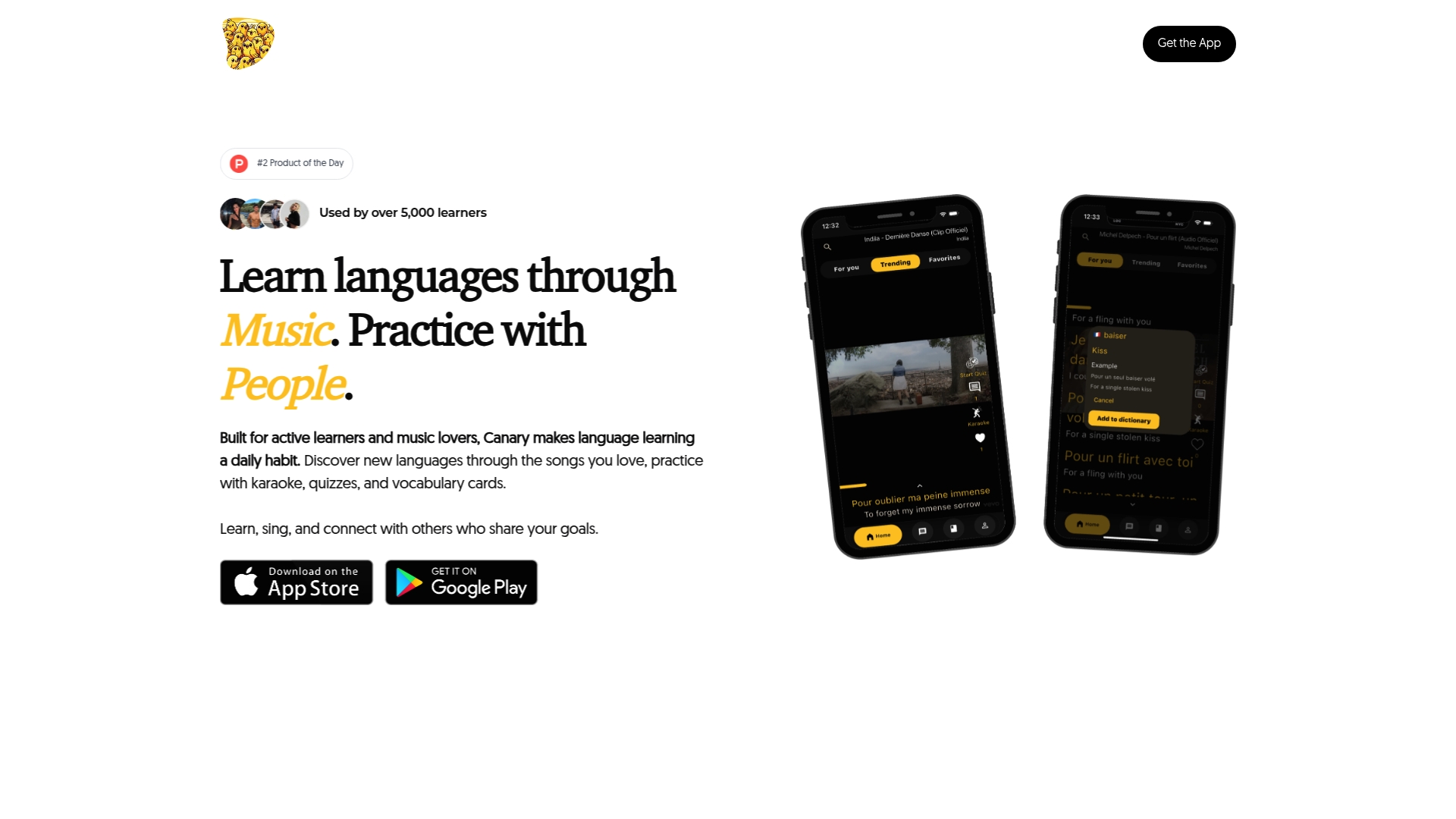
Join thousands of learners who have improved their accents, expanded vocabularies, and built real confidence through Canary’s music-driven approach. Track your pronunciation progress, receive feedback from native speakers, and practice daily through activities that feel like fun rather than work. Sign up for Canary today and discover how the music-driven language mastery platform turns your passion for music into powerful language skills.
What is a language learning community explained?
What makes a language learning community effective?
Effective communities combine regular interaction with native speakers, structured practice activities, and social accountability that maintains motivation. Music integration accelerates pronunciation and vocabulary gains while making practice enjoyable.
How does music specifically help with pronunciation?
Music trains your ear to recognize subtle sound differences while providing repetitive practice that builds muscle memory in your mouth and throat. Rhythm and melody create natural pronunciation patterns that your brain absorbs unconsciously.
Can I improve my confidence by singing with native speakers?
Absolutely. Group singing creates psychological safety where mistakes blend into the collective sound, reducing speaking anxiety. Regular practice with supportive native speakers builds confidence through positive reinforcement and immediate pronunciation feedback.
Is perfect accent necessary when learning with music?
No. Intelligibility matters far more than perfect accent replication. Focus on clear communication and confident speaking rather than mimicking one specific dialect. Native speakers themselves show enormous pronunciation variation across regions.
How do I find or start a music-based language learning group?
Search online platforms connecting language learners with shared musical interests. Join karaoke-focused exchange groups or create your own by inviting native speakers to regular singing sessions. Platforms like Canary provide structured communities combining music practice with native speaker interaction.