Scrolling through endless playlists can feel overwhelming when you want to turn your favorite music into a language learning superpower. For music lovers aiming to master French or Spanish, creating an engaging learning space and setting clear goals can transform practice from routine to remarkable. This guide will show you how to build an environment that sparks motivation, pick songs that match your skill level, and use fun interactive tools for real progress in pronunciation and vocabulary.
Table of Contents
- Step 1: Set Up Your Learning Space and Profile
- Step 2: Select Songs and Learning Goals
- Step 3: Practice Vocabulary and Pronunciation with Music
- Step 4: Engage in Karaoke and Interactive Quizzes
- Step 5: Connect and Communicate with Global Learners
- Step 6: Track Progress and Reinforce Your Skills
Quick Summary
| Key Insight | Explanation |
|---|---|
| 1. Create a Distraction-Free Learning Space | Select a quiet area with good lighting and comfortable seating to enhance focus and motivation during your language practice. |
| 2. Establish SMART Learning Goals | Define specific, measurable, achievable, relevant, and time-bound objectives to maintain motivation and guide your musical language journey. |
| 3. Use Music for Vocabulary and Pronunciation | Actively engage with song lyrics by listening, repeating, and analyzing to make vocabulary practice enjoyable and effective. |
| 4. Engage with Karaoke and Quizzes | Participate in karaoke sessions and quizzes to develop confidence, improve pronunciation, and reinforce vocabulary in a fun, interactive way. |
| 5. Connect with Global Learners | Join language exchange groups and chat rooms to practice your language skills through authentic, meaningful conversations with native speakers. |
Step 1: Set Up Your Learning Space and Profile
Setting up your language learning environment is crucial for maintaining motivation and creating an immersive experience that supports your musical language journey. Your physical space and digital profile will become the foundation for consistent, enjoyable practice.
Start by selecting a dedicated learning area in your home that minimizes distractions and provides good lighting and comfortable seating. Active learning spaces enhance engagement and help you stay focused during practice sessions. Ideally, choose a spot with the following characteristics:
- Consistent internet connection for streaming music and accessing learning platforms
- Natural lighting or good artificial lighting to reduce eye strain
- Minimal background noise
- Comfortable chair and desk or workspace
- Access to headphones for clear audio during pronunciation practice
Next, create your Canary profile to personalize your learning experience. Select a profile picture that represents your musical interests, and complete your language learning goals section. Choose your target language and indicate your current proficiency level so the platform can recommend appropriate songs and learning materials.
Pro tip: Position your learning space near a window or in a room with good natural light to help maintain energy and motivation during study sessions.
Pro tip: Consider setting up a small bulletin board or digital mood board near your learning space to display your language learning progress and keep yourself motivated.
Step 2: Select Songs and Learning Goals
Picking the right songs and establishing clear language learning objectives are essential steps in creating an effective and enjoyable musical language learning journey. Your song selection and goal-setting will determine the trajectory of your learning experience and keep you motivated throughout the process.
Language study planning involves strategic goal-setting that aligns with your personal interests and current proficiency level. Start by defining your language learning goals using the SMART framework:
- Specific: Choose precise objectives like “Learn 50 Spanish words through reggaeton songs”
- Measurable: Track vocabulary acquisition and pronunciation improvement
- Achievable: Select songs matching your current language level
- Relevant: Pick music genres you genuinely enjoy
- Time-bound: Set weekly or monthly milestones for learning
When selecting songs, consider your language proficiency and musical preferences. Beginners should start with slower, clearer songs in their target language, focusing on genres like pop, folk, or acoustic tracks that offer clear pronunciation. Create a playlist that balances challenge and comprehension, gradually increasing difficulty as your skills improve.
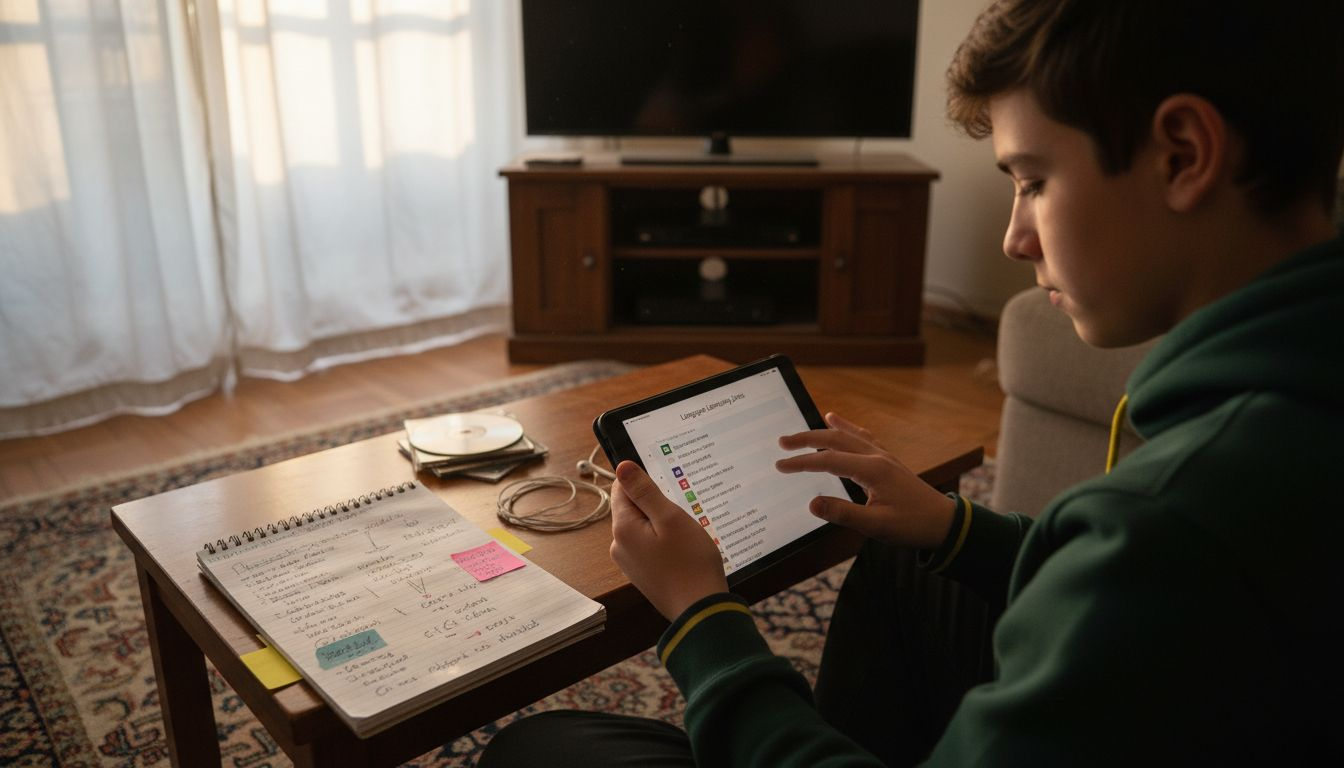
Here’s a summary of recommended song types for different language learning stages:
| Proficiency Level | Song Type | Benefits |
|---|---|---|
| Beginner | Slow pop or folk | Easier pronunciation, clear lyrics |
| Intermediate | Modern pop or R&B | Expands vocabulary, introduces idioms |
| Advanced | Rap or complex genres | Challenges grammar skills, increases fluency |
Effective language learning through music requires finding a balance between enjoyment and linguistic challenge.
Pro tip: Create a dedicated playlist in your music app that mixes your favorite songs with progressively more complex tracks in your target language to maintain motivation and steady learning.
Step 3: Practice Vocabulary and Pronunciation with Music
Learning a new language through music transforms vocabulary practice from a tedious task into an engaging, immersive experience. By strategically using songs, you can develop your linguistic skills while enjoying your favorite tunes.
Instructional strategies for vocabulary building demonstrate that music provides a powerful context for language acquisition. Implement the following techniques to maximize your learning:
- Listen actively: Focus on understanding lyrics, not just hearing sounds
- Repeat choruses: Use repetitive sections to practice pronunciation
- Break down lyrics: Translate and analyze unfamiliar words
- Record yourself: Compare your pronunciation with native singers
- Use lyric annotations: Mark challenging words for later study
Begin by selecting songs with clear pronunciation and comprehensible lyrics. Start with slower, more enunciated tracks in genres like pop or acoustic, which offer clearer word articulation. Use the Canary platform’s lyric features to highlight and translate words in real-time, creating an interactive learning experience.
Consistent musical practice transforms language learning from a chore into an enjoyable journey of discovery.
Pro tip: Create a dedicated language learning notebook where you transcribe song lyrics, noting new vocabulary, pronunciation challenges, and cultural context to reinforce your musical language learning.

Step 4: Engage in Karaoke and Interactive Quizzes
Karaoke and interactive quizzes are powerful tools that transform language learning from a passive experience into an active, engaging challenge. By participating in these dynamic activities, you’ll develop confidence, improve pronunciation, and reinforce vocabulary in a fun and supportive environment.
Interactive learning strategies demonstrate the effectiveness of immersive practice methods. Implement these techniques to maximize your language learning potential:
- Start with familiar songs: Choose tracks you already know
- Use lyric guides: Follow along with synchronized lyrics
- Practice pronunciation: Focus on mimicking native speaker intonation
- Review quiz results: Analyze your performance after each attempt
- Challenge yourself gradually: Increase difficulty as your skills improve
The Canary platform offers unique karaoke features that allow you to record your singing, compare pronunciation with native speakers, and receive real-time feedback. Interactive quizzes complement this experience by testing your comprehension of song lyrics, vocabulary, and grammatical structures.
Consistent practice through interactive tools transforms language learning from a challenge into an enjoyable personal journey.
Pro tip: Set a weekly goal to complete at least three karaoke sessions and two vocabulary quizzes, tracking your progress to maintain motivation and see tangible improvements in your language skills.
Step 5: Connect and Communicate with Global Learners
Language learning transcends textbooks and apps - it’s about creating meaningful connections with people around the world. By engaging with global learners, you’ll transform your language skills from theoretical knowledge to practical, dynamic communication.
Language learning within global communities emphasizes authentic interactions that bring language to life. Take advantage of Canary’s social features to expand your linguistic and cultural horizons:
- Join language exchange groups: Connect with native speakers
- Participate in themed chat rooms: Discuss music, culture, and interests
- Use voice and video chat features: Practice real-time conversation skills
- Collaborate on song translations: Work with international learners
- Share cultural insights: Learn beyond language mechanics
The platform’s community features allow you to match with learners who share similar musical interests, creating a supportive and engaging environment for language practice. Each interaction becomes an opportunity to refine your pronunciation, expand vocabulary, and gain cultural understanding.
Authentic communication transforms language from a subject of study into a living, breathing means of connection.
Pro tip: Set a weekly goal to have at least two meaningful conversations with native speakers, focusing on listening as much as speaking to accelerate your language learning journey.
Step 6: Track Progress and Reinforce Your Skills
Tracking your language learning progress transforms sporadic practice into a structured, intentional journey. By systematically monitoring your musical language acquisition, you’ll maintain motivation and identify precise areas for improvement.
Language learning study techniques reveal that consistent progress tracking accelerates skill development. Use these strategies to reinforce your musical language learning:
- Create a learning journal: Document song vocabulary and pronunciation challenges
- Use performance metrics: Track quiz scores and karaoke accuracy
- Review weekly achievements: Reflect on new words learned
- Set incremental goals: Gradually increase song complexity
- Analyze pronunciation improvements: Compare earlier and recent recordings
Canary’s platform provides comprehensive tracking tools that visualize your language learning trajectory. The built-in dashboard displays vocabulary growth, pronunciation accuracy, and social interaction metrics, transforming abstract learning into tangible progress you can see and celebrate.
The table below highlights how Canary’s platform features support musical language learning:
| Feature | Purpose | Impact on Learning |
|---|---|---|
| Profile Customization | Personalizes goals and content | Keeps motivation high, tailored experience |
| Karaoke Mode | Practice pronunciation live | Builds confidence, reinforces retention |
| Lyric Translation | Real-time word support | Accelerates vocabulary acquisition |
| Progress Dashboard | Visual performance tracking | Makes improvement measurable and actionable |
Consistent tracking turns language learning from a random activity into a strategic, measurable skill development process.
Pro tip: Schedule a monthly self-review where you listen to your first recordings and compare them with current performances to appreciate your remarkable language learning journey.
Transform Your Language Learning with Music and Community
Struggling to find the right balance between fun and effective language practice can make mastering songs feel overwhelming. This article highlights common challenges like setting clear learning goals, selecting suitable songs, practicing pronunciation, and maintaining motivation through interactive methods such as karaoke and quizzes. Canary addresses these pain points by creating a vibrant, music-driven learning environment where you can personalize your language journey, engage with global learners, and track your progress effortlessly.
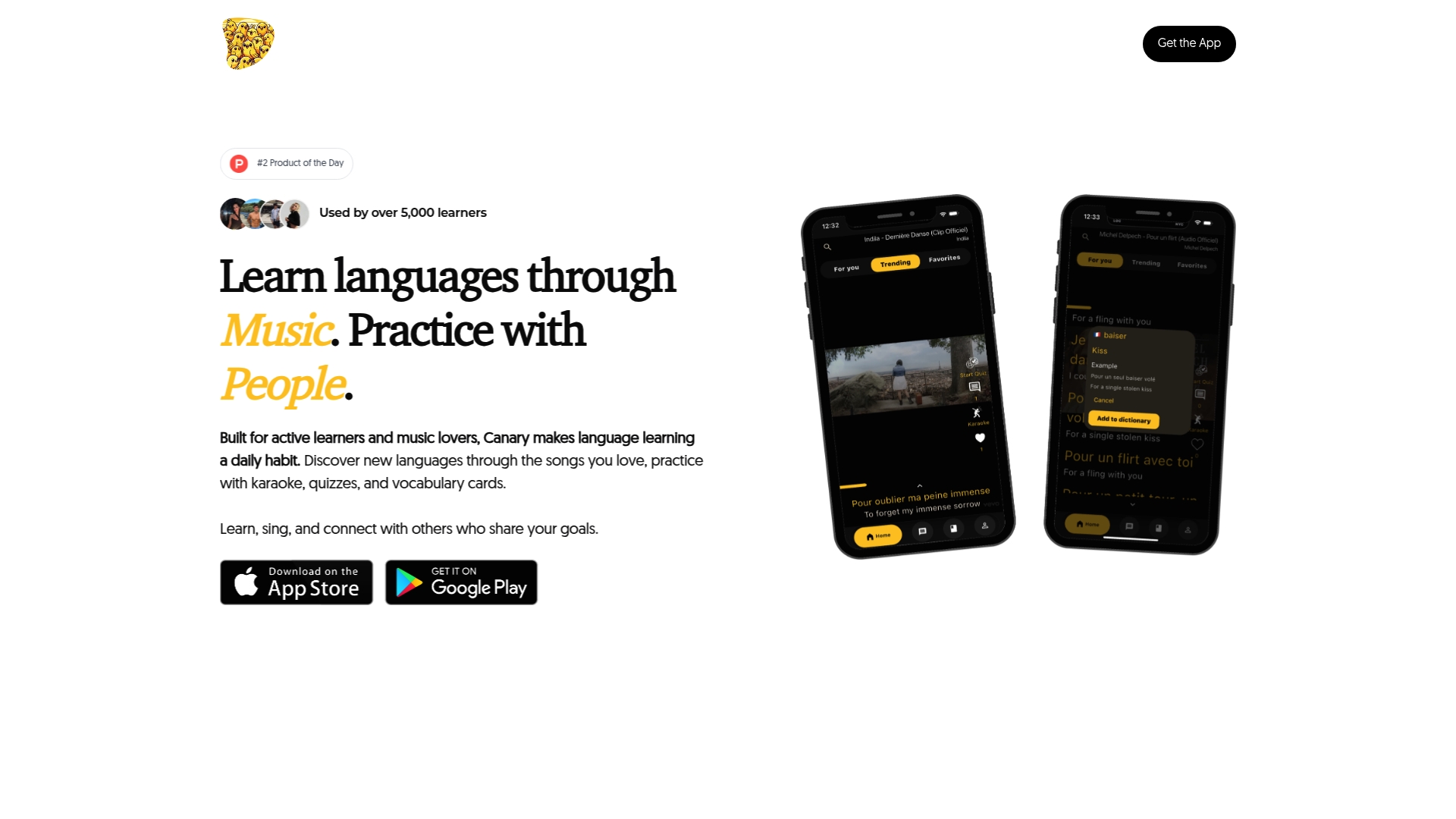
Discover how you can learn faster and enjoy every step by joining Canary’s platform. With features tailored for beginners to advanced learners, including real-time lyric translation, karaoke practice, and interactive vocabulary quizzes, Canary transforms your language workflow into an inspiring music adventure. Start now to build confidence, improve pronunciation, and connect with international peers all in one place. Experience the difference today at https://singwithcanary.com.
Frequently Asked Questions
How can I set up my learning space for language learning through songs?
To create an effective learning space, find a quiet area with good lighting and minimal distractions. Make sure you have a comfortable chair, a stable internet connection for streaming music, and access to headphones for clarity during practice.
What types of songs should I choose based on my language proficiency?
Select songs that align with your proficiency level: beginners should start with slower pop or folk songs that have clear lyrics, while intermediate learners can explore modern pop or R&B. This targeted approach will help expand your vocabulary while keeping you engaged.
How do I track my vocabulary and pronunciation progress in my language learning?
You can track your progress by creating a learning journal to document new words and any pronunciation challenges. Regularly review your metrics, like quiz scores and karaoke accuracy, to identify areas for improvement and set new goals.
What are the benefits of using karaoke for language learning?
Karaoke provides a fun way to practice pronunciation and build confidence. By singing along with lyrics, you can mimic native speech patterns and improve your fluency as you enjoy your favorite songs.
How can I effectively connect with other global learners?
Join language exchange groups or participate in themed chat rooms to engage with native speakers. Use voice and video chat features to practice conversation skills, which will enhance your language proficiency and cultural understanding.
What should my learning goals look like when using music for language learning?
Your learning goals should be Specific, Measurable, Achievable, Relevant, and Time-bound (SMART). For example, aim to learn 50 new vocabulary words from selected songs within a month, which keeps your learning focused and manageable.