TL;DR:
- Effective language practice with natives involves structured sessions with clear goals, timed practice, and prior topic preparation. Prioritizing intelligibility over accent helps learners communicate confidently, while a well-managed correction system maintains motivation and fluency. Combining native conversations with AI pronunciation tools and cultural exchanges deepens engagement and accelerates progress.
Most language learners hit the same wall: textbook study gets you to intermediate, but actual fluency only comes from talking to real people. The best language practice tips with natives aren’t about finding any conversation partner and hoping for the best. They’re about structure, consent, correction styles, and knowing when to let technology carry some of the load. This article breaks down exactly how to make every session count, from setting up your first exchange to managing feedback without killing your motivation.
Table of Contents
- Key Takeaways
- 1. The language practice tips with natives that set successful exchanges apart
- 2. How to use timed blocks to stop one language from taking over
- 3. Preparing conversation topics and phrases before each session
- 4. Why intelligibility beats a perfect native accent every time
- 5. How to set up a correction system that actually helps
- 6. Using voice notes and async tools between live sessions
- 7. Comparing native speaker practice with AI pronunciation tools
- 8. Integrating cultural exchange to deepen engagement
- 9. Building a habit that lasts beyond the first few sessions
- My honest take on native speaker practice
- Take your practice further with Singwithcanary
- FAQ
Key Takeaways
| Point | Details |
|---|---|
| Structure every session | Agree on warm-up, focused talk, and correction time before each session starts. |
| Balance speaking time | Use timed blocks to make sure both partners get equal practice in their target language. |
| Prioritize clarity over accent | Focus on being understood, not sounding native. Intelligibility matters more than perfection. |
| Manage feedback by consent | Agree upfront on how and when your partner corrects you to stay motivated and on track. |
| Combine tech with human practice | Use AI pronunciation tools alongside native conversations for consistent, well-rounded improvement. |
1. The language practice tips with natives that set successful exchanges apart
Before you say a single word in your target language, the most productive conversation partners have already done something most learners skip: they’ve agreed on how the session will run. Session structure that includes a warm-up, focused conversation, a correction window, and a brief wrap-up produces measurably more progress than unstructured chat. Think of it the way a good workout has sets and rest periods. Random movement is still movement, but it won’t get you to your goal.
Setting clear goals for each session changes everything. “Let’s talk about food” is weak. “Let’s talk about food. I’m working on past tense verb forms and regional vocabulary, and I’ll flag when I want corrections” is a real learning frame. That specificity turns small talk into deliberate practice.
Topic planning matters as well. Pairing different substantial topics in each language block prevents one partner from coasting through familiar territory while the other struggles. If you talk about your job in English and then switch to Spanish for the same subject, one of you is getting a real workout and the other is repeating material they already know cold.
Pro Tip: Before your first session with a new partner, send a short message asking three things: how they prefer to be corrected, what topics interest them, and what their current weak spots are. It sets a professional tone and tells you a lot about how seriously they take their practice.
2. How to use timed blocks to stop one language from taking over
Language exchange sessions have a gravitational pull toward the stronger language. If one partner is more fluent or more confident, that language quietly starts taking over. The fix is physical time separation. Timed 15 to 20 minute blocks, alternating who starts each week, is a simple system that works.
Use your phone timer. When it goes off, you switch. No negotiation, no “just let me finish this thought.” Strict time discipline feels awkward for the first two sessions, then it becomes second nature. The learner who has been dominating in their native language suddenly has to sit with mild discomfort as the session pivots, and that discomfort is where real learning happens.
Rotating who starts each session is also worth doing. The person who speaks in their native language first tends to set the energy and vocabulary direction for that block. By alternating, you prevent either partner from always showing up as the “helper” or always arriving as the “learner.”
3. Preparing conversation topics and phrases before each session
Showing up to a language exchange without preparation is a common beginner mistake. You end up staring at each other waiting for inspiration, or defaulting to “so what did you do this weekend” for the fifth session in a row. The solution is a running shared list.

Keep a simple note or shared document with five to ten potential topics. These can be current events, personal interests, hypothetical scenarios, or culturally specific questions you genuinely want answered. “How do people your age usually handle disagreements with parents?” is a more interesting question than “What food do people eat in your country?” and the answer will teach you vocabulary you will not find in any textbook.
Preparing a few target phrases also gives you a specific reason to try something new rather than defaulting to the grammar you are already comfortable with. If you are working on conditionals, build two or three conditional questions into your topic list. Then actually use them, even when they come out awkward the first time.
4. Why intelligibility beats a perfect native accent every time
This is the most liberating reframe in language learning, and most learners find it out too late. Pronunciation intelligibility depends on factors including listener familiarity, background noise, word stress, and the listener’s own first language. Accent is only one variable in a much larger equation.
Chasing a perfect native accent sets a moving target that very few adult learners ever hit, and the research does not actually support it as the right goal. What matters is whether your listener understands you with minimal effort. That means clear word stress, consistent vowel sounds, and not running words together in ways that create confusion.
When you practice pronunciation with natives, ask for feedback on specific words that caused confusion, not general impressions of your accent. “Did I say that word clearly?” is more useful than “Does my accent sound okay?” You can improve your pronunciation systematically by focusing on the sounds that actually trip up comprehension rather than polishing sounds that are already landing correctly.
Pro Tip: Record yourself speaking for 60 seconds at the start and end of each month. You will hear progress you would miss if you only judge yourself in the moment. Share the recordings with your exchange partner for feedback that is more considered than live reaction.
5. How to set up a correction system that actually helps
The single biggest reason language exchanges fail is poorly managed corrections. One partner corrects constantly and interrupts the flow. The other says nothing for fear of seeming rude. Neither approach works. Partners who agree on correction focus and timing before their first session report higher motivation and better retention.
Here is a practical framework:
- Live corrections only for meaning-blocking errors. If your partner says something grammatically imperfect but you understand exactly what they mean, let it go in the moment.
- Note repeated errors. Keep a quick mental or written list of patterns you notice. Save these for the wrap-up.
- Ask permission before switching styles. If your partner wants more frequent corrections, they will tell you. Don’t assume.
- End each session with a two-minute recap. Go through two or three things that came up repeatedly. This is where most learning gets consolidated.
Selective correction that focuses on errors blocking meaning rather than every small mistake keeps the conversation flowing and protects the learner’s confidence. Constant interruption reduces both fluency and motivation, even when the corrector has the best intentions.
6. Using voice notes and async tools between live sessions
Live conversation is irreplaceable, but the gap between sessions doesn’t have to be dead time. Voice notes are one of the most underused tools in a language learner’s kit. Send your exchange partner a 90-second voice note about something that happened in your day, in the target language. Ask them to reply in kind. You get pronunciation practice, listening comprehension, and real vocabulary in real context, all without scheduling a call.
This also gives both of you material to discuss at the start of your next live session. You arrive with a shared reference point rather than blank-slate small talk. The listening practice between sessions also trains your ear for your partner’s specific speech patterns, which makes comprehension easier when you are live.
Other async tools worth using: shared vocabulary apps where you add words from your sessions, short text messages in the target language, or even commenting on each other’s social media posts in the language you are learning. The key is maintaining a daily touchpoint that keeps the language active in your brain.
7. Comparing native speaker practice with AI pronunciation tools
This comparison is not about which method wins. It is about understanding what each one does that the other cannot. CAPT-based tools provide consistent, unbiased feedback without the variation that comes from live instruction. Learners using these tools achieved significantly higher intelligibility and intonation scores, with mean pronunciation accuracy measurably higher than in native speaker-led groups alone.
| Method | Strengths | Limitations |
|---|---|---|
| Native speaker practice | Cultural context, natural variability, real conversation flow | Inconsistent feedback, depends on partner skill |
| AI pronunciation tools | Consistent feedback, available anytime, structured repetition | No cultural nuance, limited spontaneity |
| Combined approach | Covers pronunciation accuracy and real-world application | Requires more planning and commitment |
Native speakers give you something no algorithm can fully replicate: the cultural layer. Idioms, tone shifts, humor, and social norms are absorbed through real human exchange. Combining both methods gives you the structured pronunciation feedback of technology and the messy, valuable reality of actual conversation.
Use AI tools for drilling specific sounds and getting objective feedback. Use native speakers for the rest.
8. Integrating cultural exchange to deepen engagement
The most memorable language exchange sessions go beyond vocabulary and grammar. When you ask a native speaker about their actual experience of a cultural moment, a holiday, a local controversy, or a generational difference in attitude, you both become more invested in the conversation. That investment produces better language acquisition because emotion and memory are linked.
Cultural language exchange is not just a bonus feature. It is one of the most effective ways to build vocabulary that sticks. Words learned in an emotionally engaging context are retained far longer than words on a flashcard. Asking your Spanish-speaking partner how their family discusses politics, or asking your Japanese exchange partner about the difference between formal and informal texting etiquette, teaches you things that no course covers and creates genuine connection.
This connection also motivates consistency. The number one reason language exchanges fall apart is that one or both partners stop showing up. Having a relationship that is genuinely interesting to both people solves that problem. You can explore international social connections as a core part of your learning strategy rather than a side benefit.
9. Building a habit that lasts beyond the first few sessions
Most language exchange partnerships dissolve within a month. Not because people stop caring, but because life fills in around any habit that is not anchored to something specific. The solution is treating your sessions like appointments with a colleague, not catch-ups with a friend.
Schedule at the same time each week. Keep sessions short enough that neither person ever dreads them. Forty-five minutes done consistently beats two-hour marathon sessions that happen twice and then disappear. Use a daily language workflow that includes your exchange sessions as one component alongside other practice methods.
Celebrate visible progress together. When your partner notices your pronunciation improving, or when you catch yourself using a phrase they taught you three sessions ago, name it out loud. These small acknowledgments build the kind of positive feedback loop that sustains long-term habit formation.
My honest take on native speaker practice
I’ve watched a lot of language learners spend months searching for the perfect native speaker partner, waiting for some ideal setup before they actually start. That waiting is the real obstacle, not the practice itself.
In my experience, the learners who improve fastest are not the ones who find the most fluent partners. They are the ones who show up to imperfect sessions with a clear structure and genuine curiosity. I’ve seen exchanges between two intermediate learners, neither speaking the other’s language perfectly, produce better outcomes than exchanges where one person was completely fluent and did most of the work.
The goal of sounding exactly like a native speaker is also, frankly, the wrong target for most people. Research backs this up: targeting comprehensibility rather than native-like accent is more realistic and more useful for the way most people actually use a second language. You are not trying to fool anyone. You are trying to connect. Those are different things.
What I’ve found actually works is combining short structured sessions with an honest correction agreement and real cultural curiosity. Add an AI pronunciation tool for drilling sounds between sessions, and you have a system that keeps improving even when life gets busy.
— Ben
Take your practice further with Singwithcanary
If you’re looking for a way to make immersive language learning a daily habit rather than a monthly appointment, Singwithcanary was built for exactly that. The platform pairs song-based pronunciation practice with a community of learners from around the world, so you get structured repetition and real social interaction in one place.
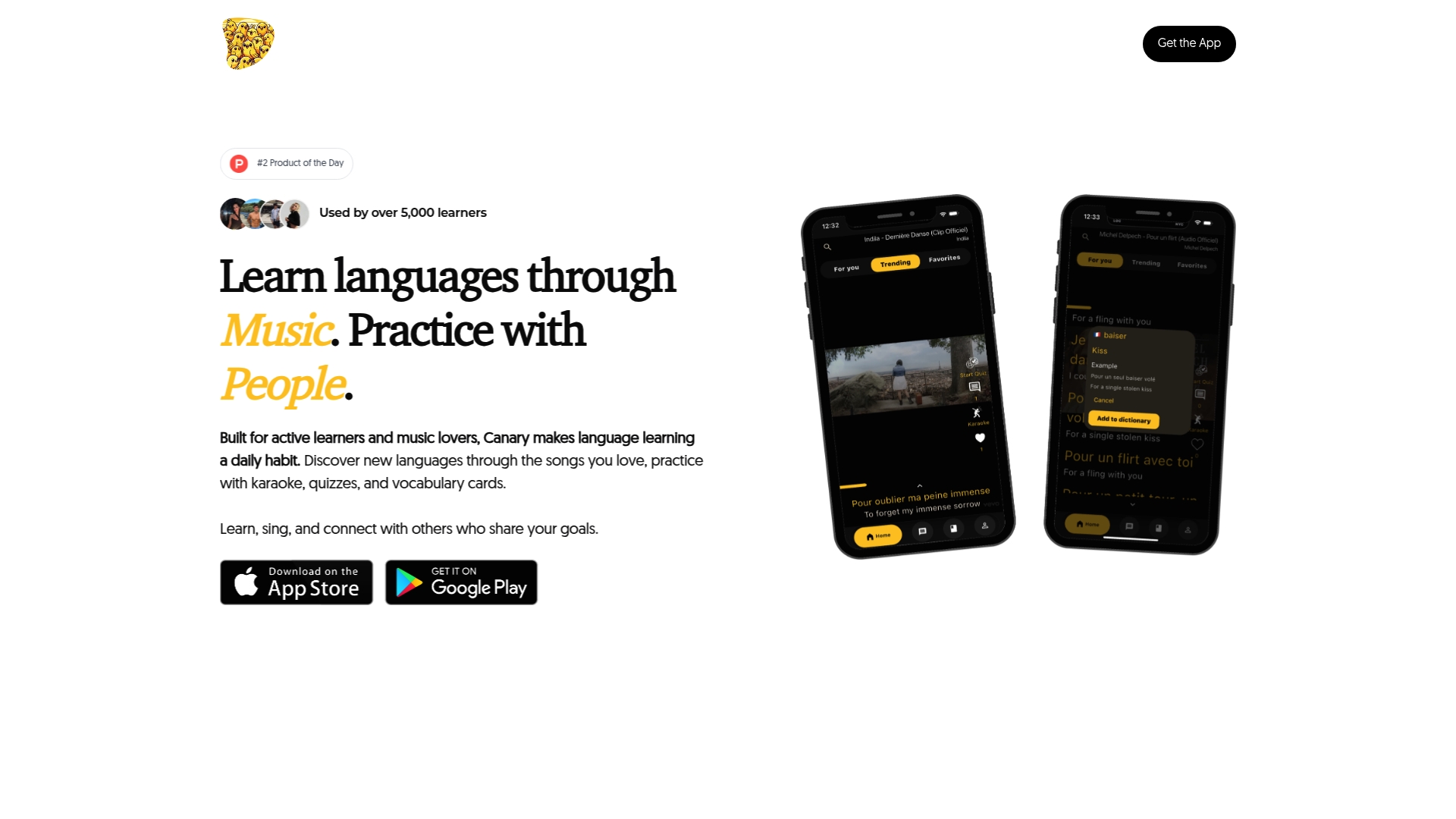
Features like karaoke, vocabulary cards, and quizzes keep your ears and your speaking skills sharp between live exchanges. The weekly song format also gives you natural conversation material to bring to your next native speaker session. Whether you are just getting started or looking to sharpen an accent you’ve been working on for years, you can start learning with music today. Check out the best apps for practicing with natives to round out your toolkit.
FAQ
How often should I practice with a native speaker?
Two to three sessions per week, each lasting 30 to 45 minutes, is a realistic and effective frequency for most learners. Consistency matters more than session length.
What should I do if my exchange partner corrects me too much?
Have a direct conversation before your next session and agree on a selective correction style. Ask them to save most feedback for the end of the session rather than interrupting mid-sentence.
Do AI pronunciation tools replace native speaker practice?
No. AI tools and native practice serve different purposes. AI gives consistent pronunciation feedback, while native speakers provide cultural context and real conversation that no app can fully replicate.
How do I keep a language exchange partnership going long-term?
Schedule sessions at a fixed time each week, keep them short enough that neither partner dreads them, and bring genuine cultural curiosity to each conversation. Shared interest sustains the relationship far longer than obligation does.
Is it better to focus on grammar or pronunciation when talking with natives?
Focus on whichever produces more communication breakdowns in your specific conversations. Pronunciation clarity that affects intelligibility is worth prioritizing, but grammar errors that do not block meaning can be logged and addressed in the wrap-up rather than mid-conversation.