Music isn’t just entertainment; it’s a powerful language learning tool that activates both brain hemispheres simultaneously, supercharging your ability to absorb and retain French. When you learn through songs, you engage memory centers, auditory processing, and emotional connections all at once. This article explores how music accelerates vocabulary acquisition, sharpens pronunciation, and creates the emotional and social foundation you need for lasting fluency in French.
Table of Contents
- The Power of Music in Language Learning
- How Music Enhances French Language Acquisition
- Social and Emotional Benefits of Learning French with Music
- Common Misconceptions about Learning French with Music
- Comparing Music Based Learning to Traditional Methods
- Practical Tips for Learning French with Music on Canary
- Discover Canary: Your Partner for Learning French with Music
- Frequently Asked Questions
Key Takeaways
| Point | Details |
|---|---|
| Dual Brain Activation | Music engages both hemispheres, maximizing memory and cognitive processing for language learning. |
| Enhanced Vocabulary | Songs boost vocabulary retention by over 20% compared to traditional memorization methods. |
| Pronunciation Gains | Singing trains your ear and mouth, improving accent and confidence in spoken French. |
| Complementary Method | Music enhances traditional study but works best when combined with grammar and writing practice. |
The Power of Music in Language Learning
Music activates both hemispheres of the brain simultaneously, maximizing memory and language learning. While your left hemisphere processes lyrics and grammar patterns, your right hemisphere absorbs melody, rhythm, and emotional tone. This dual engagement creates stronger neural pathways than traditional study methods alone.
Beyond neuroscience, music transforms abstract vocabulary into lived experience. When you hear a French word embedded in melody and rhythm, you connect it to emotion, context, and physical sensation. This emotional anchor makes recall effortless compared to flashcard drilling.
French ranks as one of the most important languages globally, spoken across five continents with rich musical traditions spanning chanson, rap, pop, and electronic genres. Learning through French music gives you access to:
- Authentic pronunciation models from native speakers
- Contemporary slang and colloquial expressions
- Cultural immersion through French music contexts that textbooks miss
- Immediate emotional rewards that fuel consistent practice
Music creates a dynamic, multi sensory learning environment that traditional methods struggle to replicate, engaging memory through repetition without tedium.
Traditional classroom approaches focus heavily on written grammar and isolated vocabulary lists. Music offers something different: natural speech patterns, cultural context, and the joy that keeps you coming back daily.
How Music Enhances French Language Acquisition
Active engagement with music improves speech perception and pronunciation in a new language by training auditory discrimination and rhythm sensitivity. Your brain learns to distinguish subtle phonetic differences between similar sounds, crucial for mastering French nasal vowels and the uvular r.
The mechanisms behind music’s learning power include:
- Repetitive Exposure: Chorus sections repeat vocabulary naturally, embedding words through enjoyable repetition rather than forced memorization
- Contextual Learning: You absorb words within complete phrases and stories, understanding usage patterns intuitively
- Auditory Training: Melodic contours highlight pronunciation patterns, helping you hear and reproduce authentic French sounds
- Memory Encoding: Melody serves as a retrieval cue; when you recall the tune, the words follow automatically
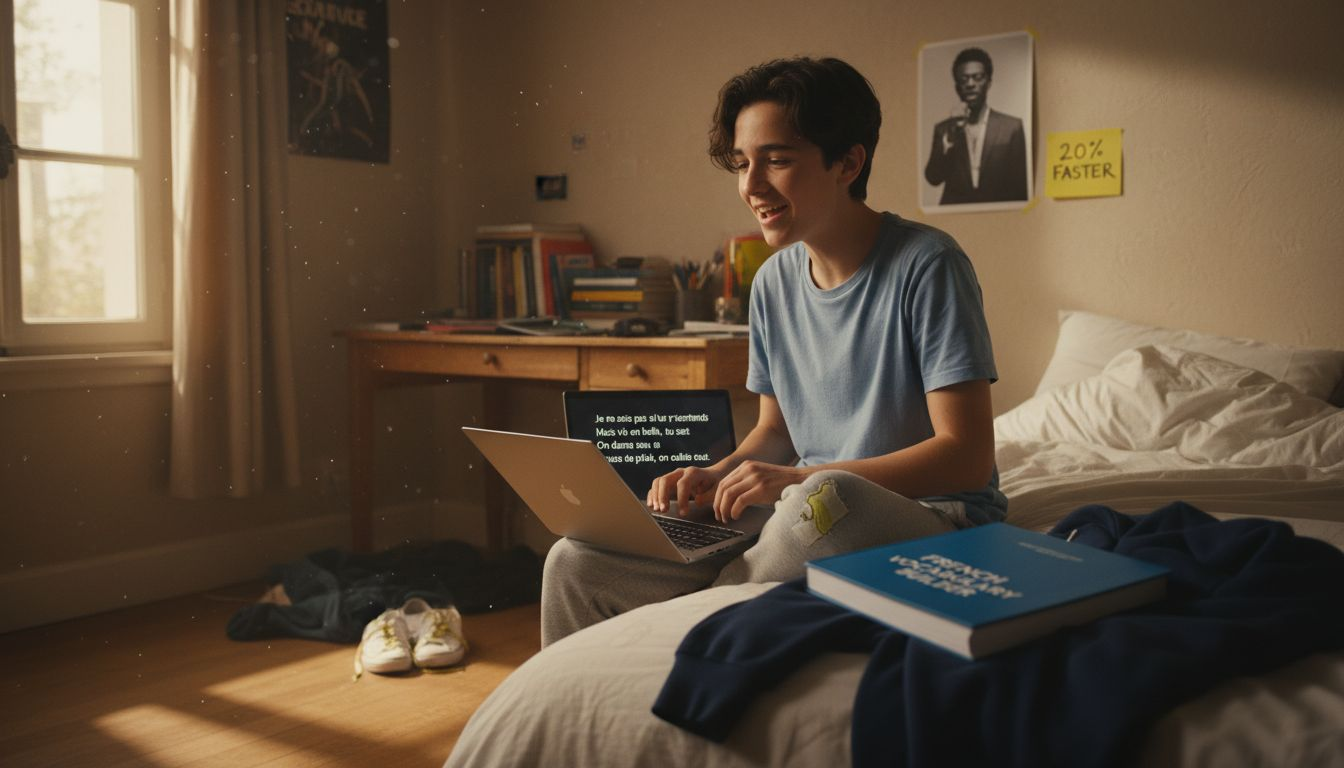
Vocabulary retention rates increase by over 20% when learned through song lyrics versus isolated word lists. This advantage compounds over time, building a robust vocabulary foundation faster than traditional methods.
| Method | Retention Rate | Context Understanding | Pronunciation Benefit |
|---|---|---|---|
| Song Lyrics | 85%+ after 1 week | High (words in phrases) | Excellent (native models) |
| Flashcards | 65% after 1 week | Low (isolated words) | Minimal |
| Textbook Lists | 60% after 1 week | Medium (example sentences) | Poor |
Pro Tip: Choose songs at your proficiency level with clear vocals. Beginners should start with slower ballads or children’s songs, while intermediate learners can tackle rap and faster pop. Check lyrics first to ensure you understand at least 60% of words for optimal learning.
When you sing along, you physically practice pronunciation. Your mouth, tongue, and vocal cords rehearse the movements needed for French sounds. This kinesthetic reinforcement accelerates accent improvement beyond passive listening. Platforms that combine music with active practice, like learning French with music naturally, maximize these benefits through interactive features.
The cognitive benefits for language learning extend beyond vocabulary. Music improves overall auditory processing, helping you parse rapid native speech in real conversations.
Social and Emotional Benefits of Learning French with Music
Learning music improves emotional regulation, self confidence, and motivation, positively influencing language learning outcomes. When you learn French through songs you love, study stops feeling like obligation and becomes genuine pleasure. This emotional shift sustains long term practice habits that separate fluent speakers from perpetual beginners.
Music addresses the emotional barriers that derail most language learners:
- Reduced Anxiety: Singing feels playful rather than evaluative, lowering the fear of mistakes that blocks speaking practice
- Increased Confidence: Mastering a complete song provides tangible achievement milestones, building self efficacy
- Enhanced Motivation: The intrinsic reward of enjoying music creates sustainable motivation beyond external goals
- Emotional Connection: Songs linked to memories or feelings create deeper engagement with the language itself
Music creates shared social experiences that increase learner engagement and practicing confidence, transforming isolated study into communal activity.
Group singing and musical learning methods with social interaction amplify these benefits. When you practice with others, you normalize mistakes, celebrate progress together, and build accountability through community.
Listening to French music reduces anxiety and stress, facilitating better learning focus and memory encoding. The relaxation response triggered by music you enjoy creates optimal brain states for absorbing new information. Unlike studying in stressed states, which impairs memory formation, music based learning happens when your brain is most receptive.
Pro Tip: Join French music communities or online singing groups to practice regularly with fellow learners. Social pressure keeps you consistent, and singing with others accelerates confidence faster than solo practice. Look for karaoke nights, virtual singalongs, or dedicated music learning platforms with community features.
The emotional payoff of music transforms French from an academic subject into a source of daily joy. This shift makes the difference between giving up after a few months and reaching genuine fluency.
Common Misconceptions about Learning French with Music
Despite proven benefits, several myths persist about music’s role in language acquisition. Understanding these misconceptions helps you use music effectively rather than expecting unrealistic results.
Myth 1: Any music helps you learn equally. Music improves performance on simple tasks but may hinder complex tasks requiring deep concentration. Background music works for vocabulary review but can distract during grammar analysis or essay writing. Choose music strategically based on your study activity.
Myth 2: Music replaces traditional study methods. Music excels at pronunciation, listening comprehension, and vocabulary acquisition. It cannot teach grammatical rules, writing skills, or formal register mastery. Effective learners combine music with structured study for well rounded proficiency.
Myth 3: Passive listening is enough. Simply playing French songs in the background provides minimal benefit. Active engagement matters: reading lyrics, singing along, analyzing word meanings, and using interactive features all multiply learning gains. The educational benefits of music require your active participation.
Myth 4: Music is just for fun, not serious learning. Research consistently shows measurable cognitive and retention benefits from music based language acquisition. When used intentionally, music is among the most effective tools for developing listening skills and authentic pronunciation.
Myth 5: You need musical talent to learn languages through songs. Language learning through music requires no special singing ability. You benefit from listening, reading lyrics, and attempting pronunciation regardless of vocal skill. The act of trying improves your ear and mouth coordination.
Recognizing these misconceptions allows you to integrate music intelligently into your French study routine, maximizing benefits while avoiding pitfalls.
Comparing Music Based Learning to Traditional Methods
Both approaches offer distinct advantages. Understanding their complementary strengths helps you build an effective study strategy.
| Aspect | Music Based Learning | Traditional Methods |
|---|---|---|
| Pronunciation | Excellent native models and rhythm training | Limited audio exposure, often non native |
| Vocabulary | High retention through context and repetition | Lower retention from isolated lists |
| Grammar | Implicit pattern recognition only | Explicit rules and structured progression |
| Listening Skills | Superior for real speech speed and accent variety | Scripted audio at slower, clearer pace |
| Writing | Minimal direct benefit | Focused practice and feedback |
| Cultural Context | Authentic contemporary language and references | Often dated or academic examples |
| Motivation | Intrinsically rewarding and emotionally engaging | Requires external discipline |
| Social Practice | Natural through singing communities | Formal conversation partners or classes |
Music shines in areas requiring auditory skills, emotional engagement, and cultural authenticity. Traditional methods excel at systematic grammar instruction and formal writing development.
Ideal scenarios for each approach:
- Choose music when: practicing pronunciation, building listening comprehension, learning colloquial expressions, maintaining daily motivation, or preparing for real conversations
- Choose traditional study when: mastering verb conjugations, learning formal writing, preparing for exams, understanding complex grammar, or developing academic French
Pro Tip: Dedicate 60% of practice time to music and interactive listening, 40% to traditional grammar and writing study. This balance builds conversational fluency while maintaining grammatical accuracy. Adjust ratios based on your specific goals and weaknesses.
The musical language learning methods available today combine the best of both worlds through interactive features, structured progression, and community engagement.
Effective learners don’t choose between music and traditional methods; they strategically use both to address different skill areas and keep learning fresh.
Practical Tips for Learning French with Music on Canary
Applying these insights requires a structured approach. Canary’s platform provides tools specifically designed to maximize music’s learning benefits.
-
Select appropriate songs: Start with Canary’s Song of the Week feature, which curates French tracks by difficulty level. Choose songs where you understand at least 60% of lyrics for optimal challenge.
-
Study lyrics before listening: Read through lyrics with translations to prime your brain. Identify unfamiliar words and their meanings so you recognize them when sung.
-
Use karaoke mode actively: Canary’s karaoke features provide real time feedback on pronunciation. Sing along repeatedly, focusing on matching native rhythm and intonation patterns.
-
Reinforce with quizzes: After singing, complete vocabulary quizzes based on song lyrics. This active recall strengthens memory pathways formed during listening.
-
Engage socially: Share your progress, join group singing sessions, and practice with other learners through Canary’s community features. Social accountability boosts consistency.
-
Create vocabulary cards: Build custom flashcard sets from song lyrics you’re learning. Canary’s vocabulary tools let you organize words by song for contextual review.
-
Practice consistently: Aim for 15 minutes daily rather than long weekend sessions. Regular exposure creates habit and maintains neural pathway strength.
Pro Tip: Balance active singing practice with passive listening during commutes or chores. Active sessions build production skills; passive exposure maintains ear training. Aim for 70% active, 30% passive for maximum benefit.
The platform’s combination of learning French naturally with music and social features addresses motivation, pronunciation, and vocabulary simultaneously. By following these steps systematically, you transform casual music enjoyment into structured language acquisition.
Explore various musical learning methods on Canary to find what resonates with your learning style and musical preferences.
Discover Canary: Your Partner for Learning French with Music
Ready to transform how you learn French? Canary combines everything covered in this article into one interactive platform designed for music lovers and language learners.
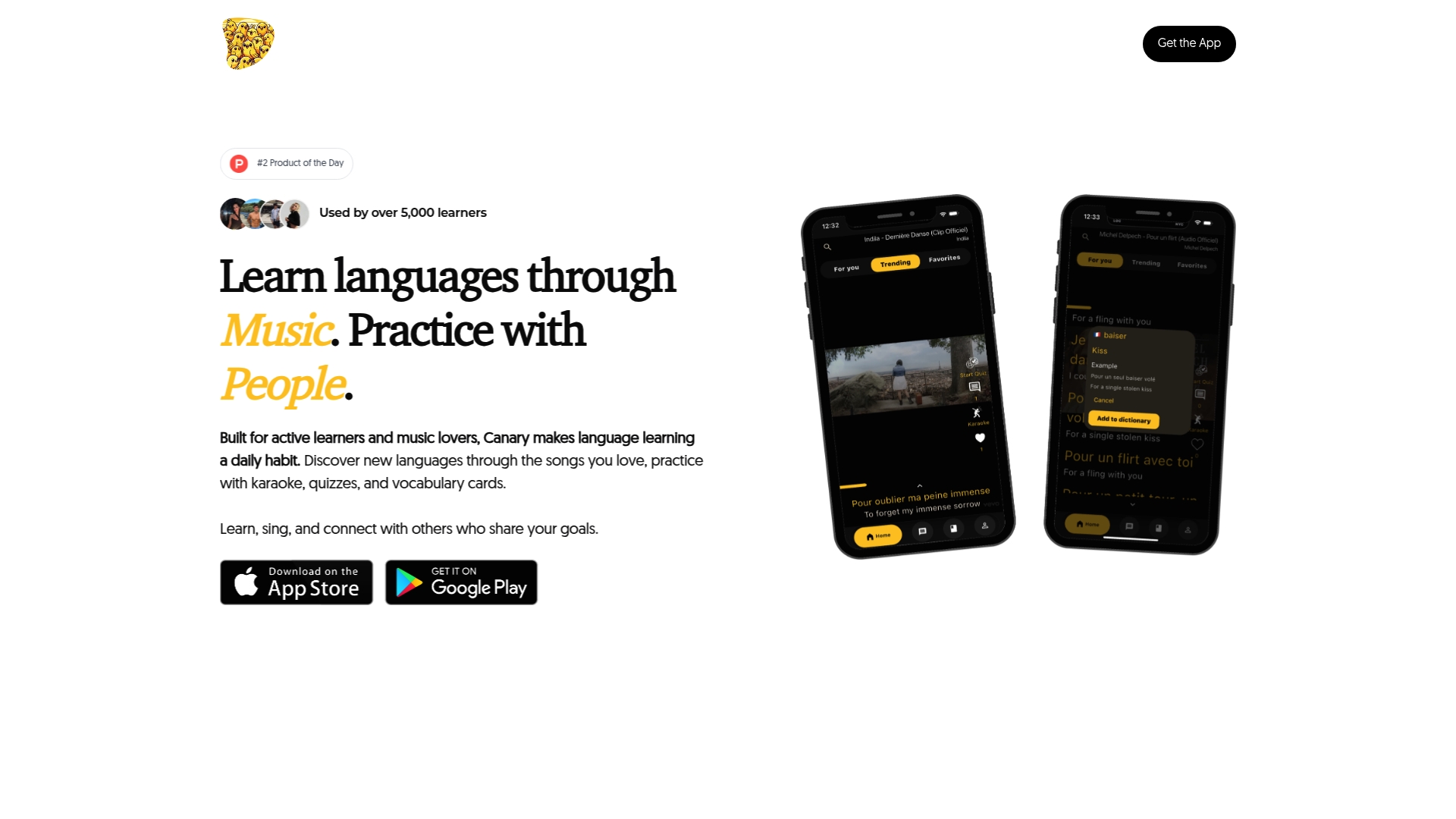
With features including karaoke with pronunciation feedback, lyric based quizzes, vocabulary cards, and vibrant community features, Canary makes daily French practice something you genuinely look forward to. Whether you’re a complete beginner or intermediate learner, the platform adapts to your level with curated song selections and progressive difficulty.
Join thousands of learners who’ve discovered that learning languages with music on Canary accelerates progress while making the journey enjoyable. Start with the Song of the Week feature to experience how interactive music learning works.
Sign up for Canary today and discover how music and community can unlock your French fluency faster than you imagined possible.
Frequently Asked Questions
What’s the best time to listen to French music for learning?
Morning sessions work best for active practice when your brain is fresh and alert. Use commute time for passive listening to maintain exposure without dedicated study blocks.
Are all music genres equally effective for learning French?
Slower genres like ballads and chanson offer clearer pronunciation models for beginners. Rap and fast pop challenge advanced learners but may overwhelm newcomers. Match genre to your current proficiency level.
Can I rely solely on music to learn French?
No. Music excels at pronunciation, listening, and vocabulary but cannot teach grammar rules or writing skills. Combine music with traditional study for comprehensive proficiency and balanced skill development.
How can I practice French pronunciation with songs?
Use karaoke features with real time feedback to compare your pronunciation to native speakers. Record yourself singing, then listen critically to identify areas needing improvement. Repeat challenging phrases slowly before singing at full speed.
Does singing French songs help with accent reduction?
Yes. Regular singing trains your mouth and tongue to produce French sounds naturally. The rhythm and melody provide pronunciation frameworks that pure speaking practice lacks. Consistent practice yields noticeable accent improvements within weeks.