Musical training can boost your language learning abilities by up to 30%, according to recent research on pronunciation accuracy. This surprising scientific insight challenges the common belief that traditional study methods alone are the most effective path to language mastery. Learning German through music offers an engaging, interactive approach that improves pronunciation, expands vocabulary, and deepens cultural understanding. By integrating songs into your study routine, you tap into powerful cognitive mechanisms that enhance memory retention and make language acquisition feel less like work and more like play. This article explores how music-based learning methods can transform your German language journey into an enjoyable, effective experience.
Table of Contents
- The Science Behind Learning German With Music
- How Songs Boost Vocabulary And Retention In German Learning
- Selecting The Right German Songs For Effective Learning
- Practical Tips To Integrate Music Into Your German Learning Routine
- Discover Canary: Your Partner In Learning Languages With Music
- FAQ
Key takeaways
| Point | Details |
|---|---|
| Music enhances pronunciation | Singing along improves rhythm recognition and articulation accuracy significantly |
| Songs boost vocabulary retention | Music-based methods increase word recall by 20-30% compared to traditional study |
| Musical training improves memory | Musical expertise strengthens verbal memory performance crucial for language learning |
| Song selection matters | Choosing clear, relatable songs matched to proficiency level maximizes learning outcomes |
| Integration amplifies results | Combining music with grammar exercises and speaking practice produces additive benefits |
The science behind learning German with music
The connection between music and language learning runs deeper than simple entertainment. Singing along enhances pronunciation accuracy by up to 30% and improves rhythm recognition, making it a powerful tool for mastering German sounds. When you sing in German, you practice the natural flow and intonation patterns that make native speech sound authentic.
Research reveals that music training improves verbal memory performance, a critical component of language acquisition. Your brain processes musical patterns and linguistic structures through overlapping neural pathways, creating synergies that boost your ability to remember new words and grammatical constructions. This cognitive overlap explains why musicians often excel at learning new languages.
The acoustic and organizational parallels between speech and music create natural learning advantages. Both rely on rhythm, pitch, melody, and temporal patterns. When you engage with German songs, you train your ear to distinguish subtle sound differences that separate native speakers from learners. Musical expertise benefits speech processing in ways that directly support second language acquisition.
Consider these scientifically-backed benefits:
- Enhanced auditory discrimination helps you hear and reproduce German phonemes accurately
- Improved working memory capacity allows you to process longer German sentences
- Stronger pattern recognition skills help you internalize grammar rules naturally
- Better attention control enables focused practice sessions
The role music plays in language learning extends beyond cognitive benefits to emotional engagement. Music triggers dopamine release, creating positive associations with your German study sessions. This emotional connection transforms learning from a chore into an activity you genuinely look forward to.
“Musical training and language learning share fundamental cognitive processes that, when combined, produce measurable improvements in verbal memory, auditory processing, and pronunciation accuracy.”
These scientific foundations validate what language learners have intuitively known for years. Music isn’t just a fun addition to your study routine; it’s a neurologically optimized learning tool that accelerates your path to German fluency.
How songs boost vocabulary and retention in German learning
Songs create rich contextual frameworks that anchor new German vocabulary in your memory far more effectively than isolated word lists. When you learn the word “Sehnsucht” (longing) through a poignant ballad, the melody, emotional tone, and narrative context combine to create a multi-sensory memory trace. This depth of encoding makes recall significantly easier when you need that word in conversation.
Learners using music-based methods show 20% higher vocabulary recall compared to traditional flashcard approaches. The repetitive nature of song choruses provides natural spaced repetition, one of the most effective memorization techniques known to cognitive science. Each time you sing along to your favorite German track, you reinforce neural pathways associated with those words.

Research confirms that music-based learning enhances vocabulary acquisition by 20-30% compared to conventional methods. The rhythm and melody of songs act as retrieval cues, helping you access stored vocabulary more quickly and reliably. This explains why you can easily remember song lyrics from years ago but struggle to recall vocabulary you studied last week.

| Learning Method | Vocabulary Retention Rate | Recall Speed | Contextual Understanding |
|---|---|---|---|
| Music-based learning | 75-85% after 4 weeks | Fast (melody triggers recall) | High (narrative context) |
| Traditional flashcards | 55-65% after 4 weeks | Moderate (requires effort) | Low (isolated words) |
| Textbook exercises | 60-70% after 4 weeks | Moderate to slow | Moderate (sentence examples) |
| Immersive conversation | 70-80% after 4 weeks | Fast (practical use) | Very high (real situations) |
The cognitive mechanisms behind this enhanced retention involve multiple memory systems working together. Procedural memory (knowing how to sing the melody) links with declarative memory (knowing what the words mean), creating redundant storage that protects against forgetting. Your brain essentially saves the same information through different channels.
Consider how music boosts vocabulary retention through these specific processes:
- Emotional arousal during engaging songs strengthens memory consolidation
- Rhythmic patterns chunk information into manageable, memorable units
- Melodic contours provide organizational structure for word sequences
- Repeated listening creates automatic retrieval without conscious effort
Pro Tip: Choose songs with clear, relatable lyrics that tell stories or express emotions you connect with personally. The stronger your emotional engagement, the deeper the vocabulary will embed in your long-term memory.
The cumulative effect of these advantages explains why learning with music produces measurable success across diverse learner populations. Whether you’re a complete beginner or an advanced student, integrating songs into your German study routine accelerates vocabulary growth and improves retention rates substantially.
Selecting the right German songs for effective learning
Not all German songs deliver equal learning value. The most effective choices feature clear pronunciation, moderate tempo, and lyrics you can actually understand without excessive slang or complex metaphors. Songs by artists like Nena, Herbert Grönemeyer, or Andreas Bourani often strike this balance perfectly, offering accessible language wrapped in memorable melodies.
Choosing songs with clear pronunciation and relatable themes proves crucial for effective learning. When lyrics articulate each syllable distinctly, you can map sounds to written words more accurately. Avoid songs with heavy dialect, rapid-fire delivery, or mumbled vocals until your listening comprehension reaches intermediate levels.
Relatable themes dramatically increase engagement and contextual understanding. Songs about everyday experiences, relationships, travel, or personal growth provide vocabulary you’ll actually use in conversation. A pop song about morning routines teaches more practical German than a heavy metal track about medieval battles, though both have their place depending on your interests and goals.
Matching song difficulty to your proficiency level prevents frustration and maximizes learning efficiency. Beginners benefit from children’s songs, folk music, or simplified pop arrangements with repetitive structures. Intermediate learners can tackle mainstream pop and rock with more complex grammar. Advanced students might explore rap, poetry-based lyrics, or regional music styles that challenge comprehension.
Effectiveness depends on proficiency alignment and cultural relevance. A song that resonates culturally provides insights into German-speaking societies beyond mere language. You learn idioms, cultural references, and social values embedded in lyrics, enriching your understanding of contexts where German is spoken.
Consider these selection criteria:
- Pronunciation clarity: Can you distinguish individual words when listening?
- Tempo appropriateness: Can you sing along without getting lost?
- Lyrical accessibility: Do you understand at least 60-70% of words?
- Cultural relevance: Does the song reflect contemporary German life or timeless themes?
- Personal appeal: Do you genuinely enjoy the music enough to listen repeatedly?
Supplementary materials amplify learning outcomes significantly. Use lyrics sheets to follow along visually, reinforcing the connection between sounds and spelling. Grammar exercises based on song lyrics help you analyze sentence structures in context. Vocabulary lists with definitions and example sentences ensure you grasp nuanced meanings rather than rough translations.
Pro Tip: Explore Goethe-Institut resources for curated song recommendations organized by proficiency level and learning objectives. Their didactic materials include pre-made exercises that transform passive listening into active learning.
The right song becomes a learning companion you return to repeatedly, each listen revealing new layers of meaning and linguistic detail. This depth of engagement, impossible with random song selection, separates effective music-based pronunciation practice from mere entertainment.
Practical tips to integrate music into your German learning routine
Building an effective music-based learning routine requires more structure than simply playing German songs in the background. Deliberate practice transforms passive listening into active skill development that accelerates your progress toward fluency.
Follow this step-by-step integration process:
- Choose a song matching your current proficiency level and personal interests
- Listen through once for overall comprehension and emotional connection
- Study the lyrics with translations, noting unfamiliar vocabulary and grammar patterns
- Listen again while reading along, connecting sounds to written words
- Sing along repeatedly, focusing on pronunciation and rhythm accuracy
- Review grammar structures and vocabulary in context through targeted exercises
- Return to the song periodically for spaced repetition and deeper analysis
Integrating music with lyrics sheets and grammar exercises maximizes learning outcomes by engaging multiple cognitive systems simultaneously. This multi-modal approach creates stronger, more durable memories than any single method alone.
| Approach | Vocabulary Growth | Pronunciation Improvement | Grammar Understanding | Engagement Level |
|---|---|---|---|---|
| Music alone | Moderate | Moderate | Low | High |
| Music plus structured study | High | High | High | Very high |
| Traditional methods only | Moderate | Low to moderate | Moderate to high | Low to moderate |
Research shows that music training combined with language classes produces additive verbal memory benefits. The synergy between musical engagement and structured learning creates results greater than either approach alone. Your brain builds multiple pathways to the same information, making retrieval faster and more reliable.
Interactive exercises reinforce both musical enjoyment and language skills effectively. Try karaoke-style practice where you sing along with lyrics displayed, testing your pronunciation in real time. Create fill-in-the-blank exercises from song lyrics to practice vocabulary recall. Use songs as dictation exercises, writing out lyrics from memory to strengthen spelling and listening comprehension.
Balancing music-based learning with speaking and reading practice ensures comprehensive skill development. While songs excel at building listening skills, pronunciation, and vocabulary, they can’t replace conversation practice or extensive reading. Allocate roughly 30-40% of your study time to music-based activities, reserving the remainder for complementary methods.
Consider how music enhances pronunciation practice when integrated thoughtfully into a broader learning strategy. The role music plays in comprehensive language learning extends across multiple skill areas, making it a versatile tool that adapts to various learning objectives.
Pro Tip: Regularly revisit favorite songs even after you’ve mastered them. This enjoyable repetition reinforces language retention while providing measurable progress markers as you notice details you missed initially.
Consistency matters more than intensity. Fifteen minutes of daily music-based practice produces better long-term results than occasional marathon sessions. Build songs into existing routines like morning preparation, commutes, or workout sessions to create sustainable habits that stick.
Discover Canary: your partner in learning languages with music
Transforming your German learning journey from tedious memorization to joyful discovery becomes effortless with the right tools. Canary offers music-based learning tools specifically designed for immersive language acquisition that feels more like entertainment than study. The platform combines karaoke features, interactive quizzes, and vocabulary cards built around authentic German songs, creating a comprehensive learning environment.
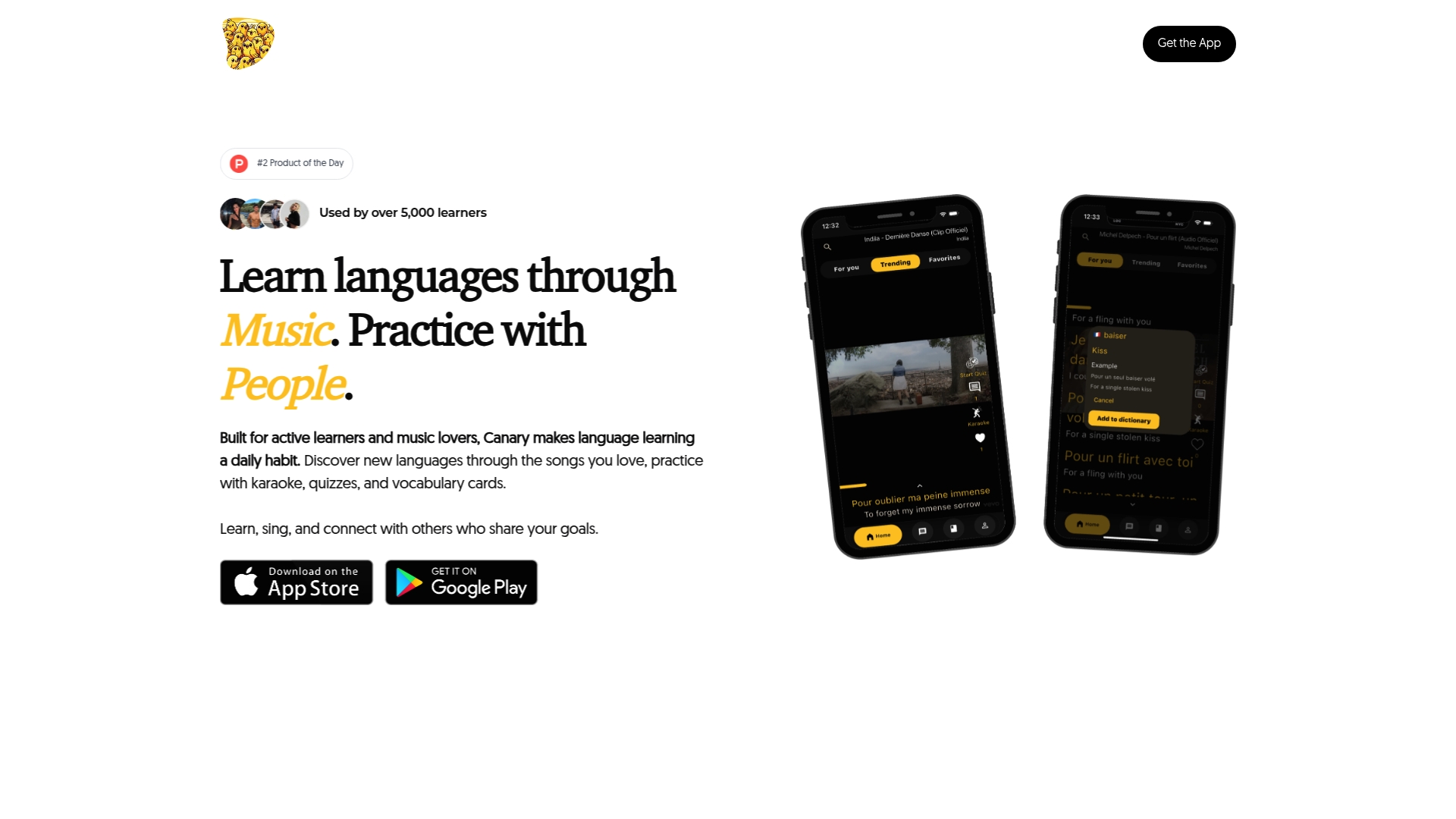
Join a vibrant community of language enthusiasts who share your passion for music-driven learning. Social language learning through music amplifies motivation and provides opportunities to practice with international learners. The interactive exercises complement your music listening and singing practice, reinforcing skills through varied activities that keep engagement high. Start your musical German learning journey today and experience how effective language acquisition can be when it’s built around something you love.
FAQ
Is learning German with music effective for beginners?
Music can effectively support beginners by gradually building listening skills and pronunciation through repetitive, enjoyable practice. Start with simple songs featuring clear lyrics and slower tempos, using supplementary materials like translations and vocabulary guides for best results. The key is choosing age-appropriate content that matches your current comprehension level while challenging you slightly.
What types of German songs are best for language learning?
Songs with clear pronunciation, moderate tempo, and relatable themes deliver the strongest learning outcomes. Both traditional folk music and contemporary pop songs can be effective choices, depending on your interests and proficiency level. The critical factors are lyrical clarity, vocabulary accessibility, and your personal engagement with the musical style.
Can music improve German pronunciation and rhythm?
Singing along significantly improves articulation and rhythm recognition by training your mouth muscles and auditory perception simultaneously. Scientific studies demonstrate up to 30% improvement in pronunciation accuracy when learners regularly practice with music-based methods. The melodic and rhythmic patterns in songs provide natural frameworks for mastering German sound patterns.
How can I combine music with other German learning methods?
Use lyrics study alongside grammar exercises and speaking practice to create a comprehensive learning approach. Incorporate music as a regular complement rather than your sole method, allocating roughly 30-40% of study time to song-based activities. This balanced integration produces additive benefits where multiple methods reinforce each other, accelerating overall progress toward fluency.