Start with hiragana and katakana, then learn some of the most frequent Japanese words using spaced repetition paired with example sentences, not isolated flashcards. That combination, backed by research on frequency-based vocabulary, gets you further in a month than memorizing random lists ever will.
Here’s the plan to start today:
- Days 1 to 14: Learn hiragana and katakana (a few characters per session, twice daily).
- Week 3 onward: Add 10 to 15 new words a day through an SRS app like Anki, aiming toward the roughly 800 words that cover JLPT N5.
- Every session: Learn each word inside a short sentence, not alone. A tool like Singwithcanary can fold this into song lyrics instead of dry decks.
Key Takeaways
Beginners learn Japanese vocabulary fastest by combining kana literacy, frequency-based word lists, spaced repetition, and daily sentence-level input.
| Point | Details |
|---|---|
| Learn kana first | Master hiragana and katakana in one to three weeks before building heavy vocabulary. |
| Prioritize frequency | Target the roughly 800 words covering JLPT N5 before chasing rare kanji or vocabulary. |
| Use spaced repetition | Review new words with an SRS app like Anki right before you’d naturally forget them. |
| Learn words in sentences | Pair every new word with a short example sentence to lock in particle use and context. |
| Practice with music | Singwithcanary’s karaoke, quizzes, and lyric-based vocabulary cards turn repetition into a habit you’ll keep. |
Table of Contents
- Learning Japanese Words: Essential Greetings and Survival Phrases
- Numbers, Time, and Calendar Basics
- High-Frequency Verbs and Adjectives You’ll Use Constantly
- Everyday Nouns: Food, Family, Places, and Shopping
- Pronunciation Basics: Why Kana Come Before Kanji
- How to Remember Japanese Words: Techniques That Actually Work
- Why Music Helps You Learn Japanese Vocabulary Faster
- Trusted Resources and a Realistic Timeline
- An Editorial Take on What Actually Moves the Needle
- Try Canary: A Music-Based Way to Learn Vocabulary
- Frequently Asked Questions
- Sources
Learning Japanese Words: Essential Greetings and Survival Phrases
These fifteen phrases cover most first encounters, from meeting someone to asking a shopkeeper a question. Learn them as full chunks, not word-by-word translations.
- おはようございます (ohayou gozaimasu) — good morning (polite)
- こんにちは (konnichiwa) — hello / good afternoon
- こんばんは (konbanwa) — good evening
- さようなら (sayounara) — goodbye (formal, semi permanent)
- じゃあね (jaa ne) — see you later (casual)
- ありがとうございます (arigatou gozaimasu) — thank you (polite)
- すみません (sumimasen) — excuse me / sorry
- ごめんなさい (gomennasai) — I’m sorry
- お願いします (onegaishimasu) — please (requesting something)
- はい / いいえ (hai / iie) — yes / no
- わかりません (wakarimasen) — I don’t understand
- 英語を話せますか (eigo wo hanasemasu ka) — do you speak English?
- いくらですか (ikura desu ka) — how much is it?
- トイレはどこですか (toire wa doko desu ka) — where’s the restroom?
- はじめまして (hajimemashite) — nice to meet you
Notice the pattern: verbs ending in ます (masu) are the polite form you’ll use with strangers and shopkeepers, while casual versions drop that ending entirely for friends. Studies on Japanese vocabulary acquisition show learners retain phrases far longer when they hear them spoken aloud by native speakers rather than reading them silently, so pair this list with real audio before moving on. You’ll find audio pairings and printable versions of this exact list in the resources section further down.
Numbers, Time, and Calendar Basics
Counting in Japanese unlocks prices, schedules, and dates almost immediately. Learn these ten numbers first: 一 (ichi, 1), 二 (ni, 2), 三 (san, 3), 四 (yon, 4), 五 (go, 5), 六 (roku, 6), 七 (nana, 7), 八 (hachi, 8), 九 (kyuu, 9), 十 (juu, 10). Add 時間 (jikan, hour/time), 分 (fun, minute), 今日 (kyou, today), 明日 (ashita, tomorrow), 月 (getsu, month), and 週間 (shuukan, week).
Pro Tip: Some numbers have two readings. Four is usually “yon,” not “shi,” because “shi” sounds like the word for death. Seven often shifts between “nana” and “shichi” depending on context, so learn both but default to “yon” and “nana” as a beginner.
To ask the time, you’d say 何時ですか (nanji desu ka), literally “what hour is it?” That same question pattern works for dates once you swap in the right word.
High-Frequency Verbs and Adjectives You’ll Use Constantly
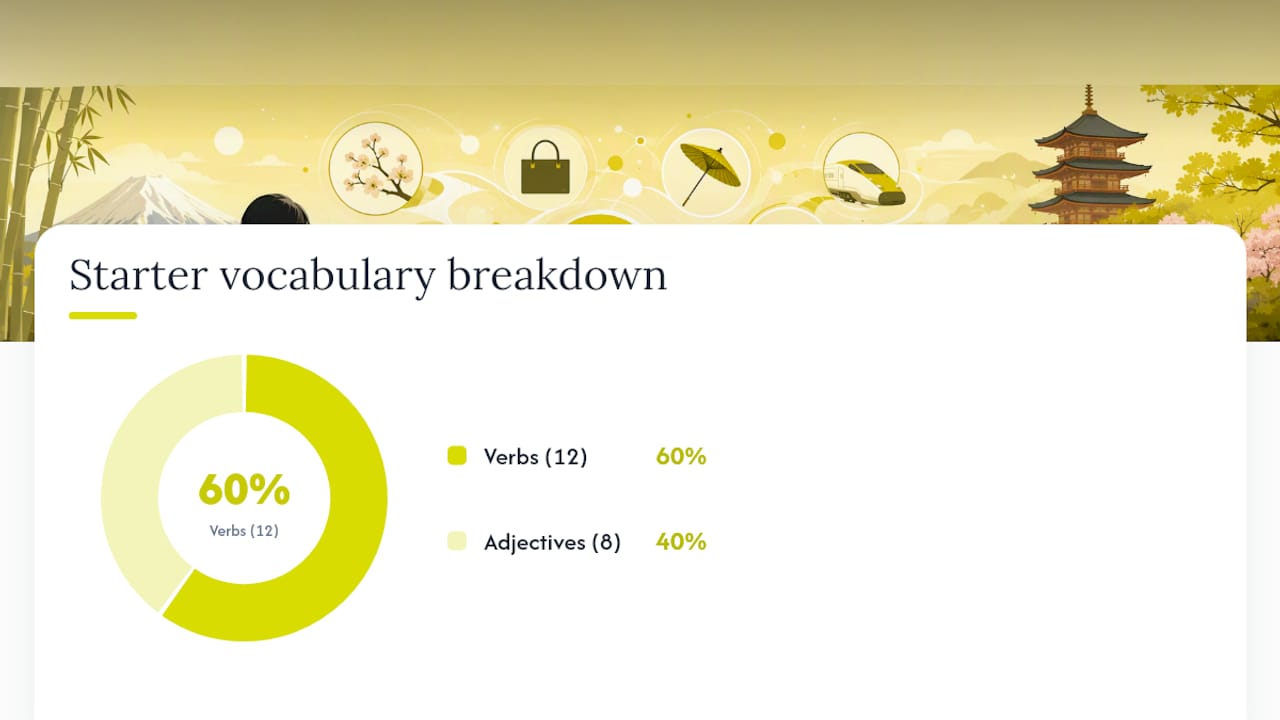
Verbs and adjectives turn a pile of nouns into actual sentences. Here are twelve verbs worth learning first, each with the particle it typically pairs with:
- 食べる (taberu) — to eat: 何を食べますか (what do you eat?)
- 飲む (nomu) — to drink
- 行く (iku) — to go: 学校に行く (go to school, using に for direction)
- 来る (kuru) — to come
- する (suru) — to do
- 見る (miru) — to see/watch
- 聞く (kiku) — to listen/hear
- 話す (hanasu) — to speak
- 買う (kau) — to buy: 本を買う (buy a book, using を for the object)
- 会う (au) — to meet
- 住む (sumu) — to live: 東京に住む (live in Tokyo)
- 働く (hataraku) — to work
Eight adjectives that show up everywhere: 大きい (ookii, big), 小さい (chiisai, small), 新しい (atarashii, new), 古い (furui, old), いい (ii, good), 楽しい (tanoshii, fun), 高い (takai, expensive/tall), 安い (yasui, cheap).
Every verb here has a polite ます form and a plain dictionary form. Learn the ます version first since it works in almost any conversation, then add the plain form once you’re comfortable, since particle patterns matter more early on than formality.
Everyday Nouns: Food, Family, Places, and Shopping
Group your nouns by category and you’ll retain them faster than learning them alphabetically or randomly.
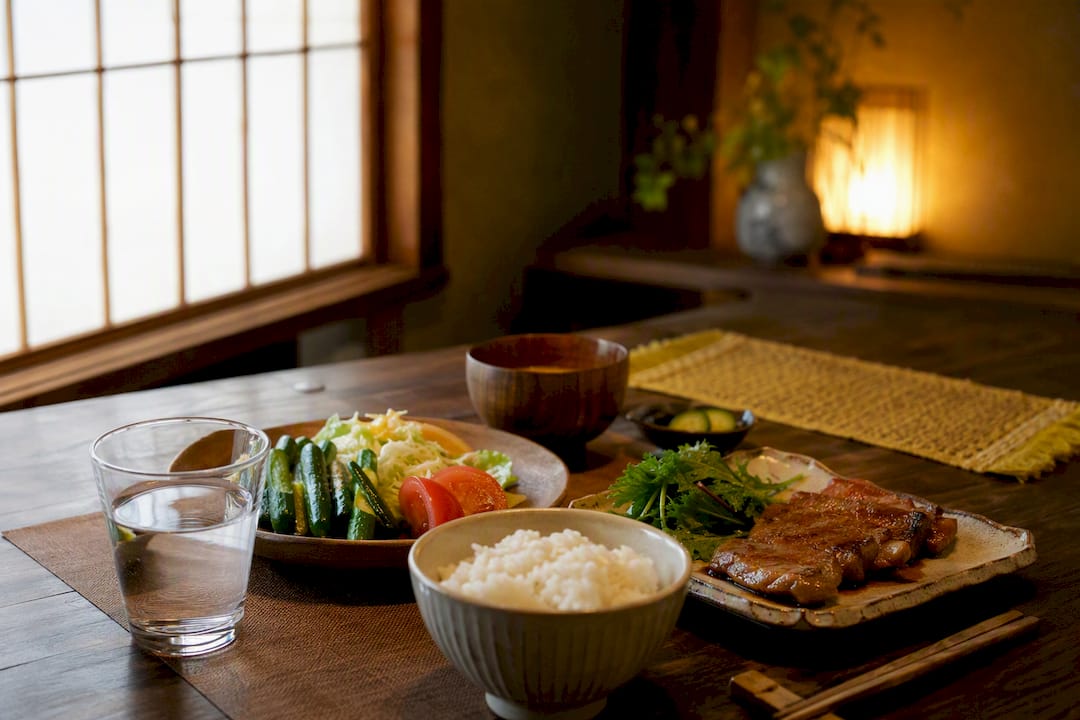
Food: ご飯 (gohan, rice/meal), 水 (mizu, water), 肉 (niku, meat), 野菜 (yasai, vegetables). Try: ご飯を食べます (I eat rice).
Family: 家族 (kazoku, family), 母 (haha, mother), 父 (chichi, father), 兄弟 (kyoudai, siblings).
Places: 学校 (gakkou, school), 駅 (eki, station), 店 (mise, shop), 家 (ie, home). Try: 駅に行きます (I’m going to the station).
Shopping: お金 (okane, money), 値段 (nedan, price), レジ (reji, cash register), 袋 (fukuro, bag).
If you’re traveling soon, prioritize places and shopping. If you’re settling into daily life or watching Japanese media, food and family words pay off faster.
Pronunciation Basics: Why Kana Come Before Kanji
Skip hiragana and katakana at your own risk. Every beginner who leans on romaji (Japanese written in Roman letters) for more than a few weeks ends up relearning pronunciation habits later, because romaji hides sound distinctions the kana make obvious. Beginner-focused research recommends learning both kana systems in one to three weeks before building serious vocabulary, since hiragana handles native Japanese words and grammar while katakana handles foreign loanwords and emphasis.
- Hiragana: rounded characters, used for grammar particles and native words.
- Katakana: angular characters, used for loanwords like コーヒー (koohii, coffee).
- Kanji: layer these in gradually alongside vocabulary rather than treating them as a separate project, since the thousands of characters in regular use are learned more efficiently in context.
Pro Tip: Use furigana (small hiragana printed above kanji) as training wheels when reading. Don’t avoid kanji entirely, just don’t stall your vocabulary growth waiting to master it first. Basic pitch accent, the rise and fall in pronunciation, is worth a passing look once kana feel automatic.
How to Remember Japanese Words: Techniques That Actually Work
A simple daily loop beats a complicated one you abandon after a week. Here’s what a sustainable 20 minute session looks like:
- Review your SRS deck first (5 to 10 minutes) while your focus is sharpest.
- Add new words in short sentences, not isolation (5 minutes).
- Read or listen to something short in Japanese and pull out one new word or phrase (5 to 10 minutes).
The techniques behind that loop are well established:
- Spaced repetition (SRS): Anki-style apps schedule reviews right before you’d forget, which cuts review time dramatically compared to rereading a list.
- Sentence mining: pull real sentences from shows, songs, or books instead of inventing your own.
- Mnemonics: link a word’s sound or shape to something memorable.
- Active recall: test yourself before checking the answer, every time.
- Speaking aloud: say the word, don’t just read it silently.
Stick to 10 to 15 new words a day if you have time to spare, or 5 to 10 if life is busy. Our vocabulary retention guide walks through how to keep review load from snowballing once your deck grows past a few hundred cards.
Why Music Helps You Learn Japanese Vocabulary Faster
Songs repeat the same words and phrases across a chorus, which gives your brain the exact kind of spaced, natural exposure that flat vocabulary lists can’t replicate. Melody also acts as a memory hook. Most people can recall song lyrics years after hearing a track a handful of times, which is far more repetition than a textbook sentence ever gets.
Pro Tip: Try the listen, shadow, mine loop: listen to a song once for meaning, shadow it by singing along on a second pass, then pull three or four unfamiliar words into your SRS deck with the lyric line as context.
- Karaoke mode reinforces pronunciation by timing your voice against the original vocal line.
- Quizzes built from the song’s own lyrics test the words you just heard, not random unrelated vocabulary.
- Vocabulary cards generated from real lyrics tie each word to a specific emotional and musical context, not a sterile example sentence.
- Social features let you practice the same song with other learners, which adds the accountability a solo deck can’t offer.
That’s the loop Singwithcanary builds its practice sessions around, and it maps almost exactly onto the sentence mining approach language researchers already recommend.
Trusted Resources and a Realistic Timeline
Combine a kana app, a frequency-based deck, and daily audio, and you’ll cover more ground in a month than any single resource manages alone.
- Kana apps: drill hiragana and katakana recognition until it’s automatic.
- Frequency decks: ranked word lists like Wiktionary’s Japanese frequency list tell you which words to learn first.
- Graded readers: short, simplified stories that reuse your known vocabulary.
- Native audio: podcasts, songs, or shows with transcripts.
- Speaking practice: apps or conversation partners to convert recognition into real use.
At a steady pace of 10 to 15 words a day, most learners cover the 800 words tied to JLPT N5 within two to three months. Free tools (Anki, kana apps, YouTube audio) get you most of the way there; paid options mainly save you setup time and add structured curricula.
An Editorial Take on What Actually Moves the Needle
Most beginners overinvest in kanji and underinvest in frequency. It’s backward. The Zipf-style frequency curve means a small set of common words carries an outsized share of daily conversation, so chasing rare kanji before nailing the top 500 words is time misspent.
Music works precisely because it forces repetition you don’t resent. Nobody minds hearing a chorus four times. Nobody enjoys rereading a flashcard four times. Singwithcanary’s whole bet is built on that gap. Start small, stay consistent, and let the words come from things you’d want to hear anyway.
Try Canary: A Music-Based Way to Learn Vocabulary
Singwithcanary turns the study loop covered in this piece, sentence mining, spaced repetition, and repeated audio exposure, into something you’ll actually stick with. Instead of grinding flat flashcards, you get karaoke sessions that check your pronunciation against native vocal lines, quizzes pulled straight from song lyrics, and vocabulary cards that carry real context instead of sterile dictionary definitions.
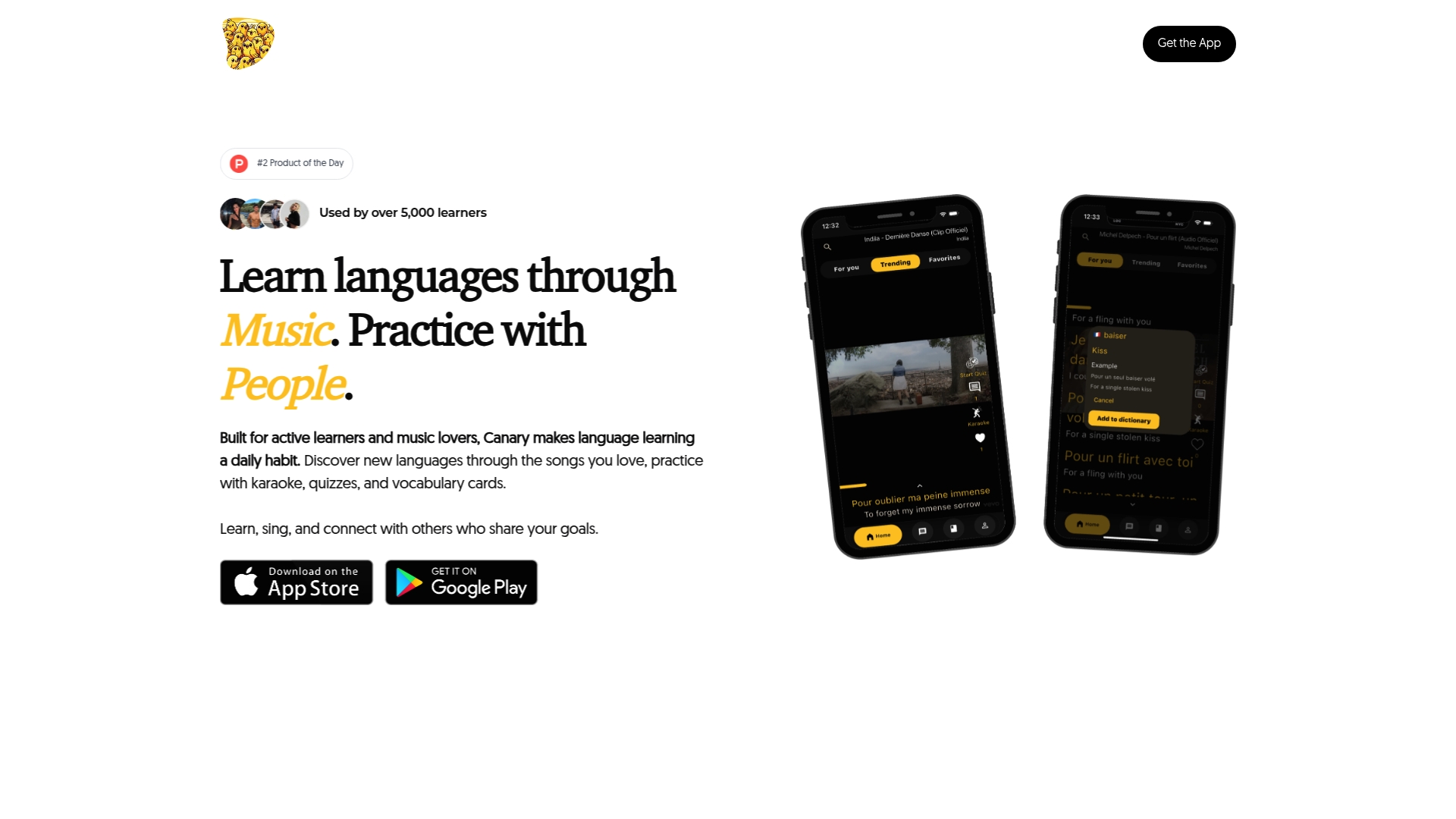
You also get social practice, singing and reviewing alongside other learners, which fixes the biggest weakness of solo SRS apps: nobody’s checking whether you’re actually showing up. If the fifteen phrases and daily plan above got you curious, the fastest way to see whether songs work better for your memory than lists is to try it yourself. Sign up for Canary’s free tier and start your first song today.
Frequently Asked Questions
How many Japanese words should a beginner learn per day? Most learners sustain 10 to 15 new words a day without their SRS review pile becoming unmanageable. If you’re short on time, 5 to 10 words a day still adds up to real fluency over a few months.
Should I learn kanji before learning vocabulary? No. Learn hiragana and katakana first, then let kanji grow alongside your vocabulary instead of studying it as a separate project up front.
What’s the fastest way to memorize Japanese words? Spaced repetition combined with sentence context beats memorizing isolated word lists. Add audio and speaking practice, and retention improves further.
Do I need to learn Japanese particles right away? Yes, at least the basics. Particles like は (wa), が (ga), の (no), を (o), に (ni), and で (de) define how a word functions in a sentence, so learning them alongside vocabulary saves you from relearning sentence structure later.
Can music actually help me learn Japanese vocabulary? Yes. Repetition in choruses and melodic memory cues make song lyrics easier to retain than flat word lists, which is the approach apps like Singwithcanary build their practice sessions around.
Sources
- How to Learn Japanese Vocabulary (and Actually Remember It) · Shinobi Japanese
- Vocabulary size research (Goulden) | Victoria University of Wellington