TL;DR:
- A music-based speaking practice workflow enhances fluency by combining rhythm, repetition, and structured output. It lowers anxiety and improves motivation and pronunciation through activities like singing, paraphrasing, and self-review. Incorporating physical movement and peer roles further boosts progress in language acquisition.
A music-based speaking practice workflow is a structured method that uses songs, lyrics, and rhythm to build speaking fluency in a target language. Research shows this approach produced a 91% improvement in speaking fluency among learners in a controlled study. That result is not an accident. Music lowers the Affective Filter, the psychological barrier that blocks natural language output when learners feel anxious or self-conscious. When you combine melody, rhythm, and structured speaking tasks, you get a practice routine that is both effective and genuinely enjoyable. Singwithcanary is built on exactly this principle.
What does a music-based speaking practice workflow require?
Every effective music-driven speaking routine starts with the right setup. You need a device with reliable playback, access to curated song playlists, a way to display lyrics in real time, and a tool to record your own voice. Skipping the recording step is the most common mistake learners make. Without playback, you cannot hear the gap between your pronunciation and the original.
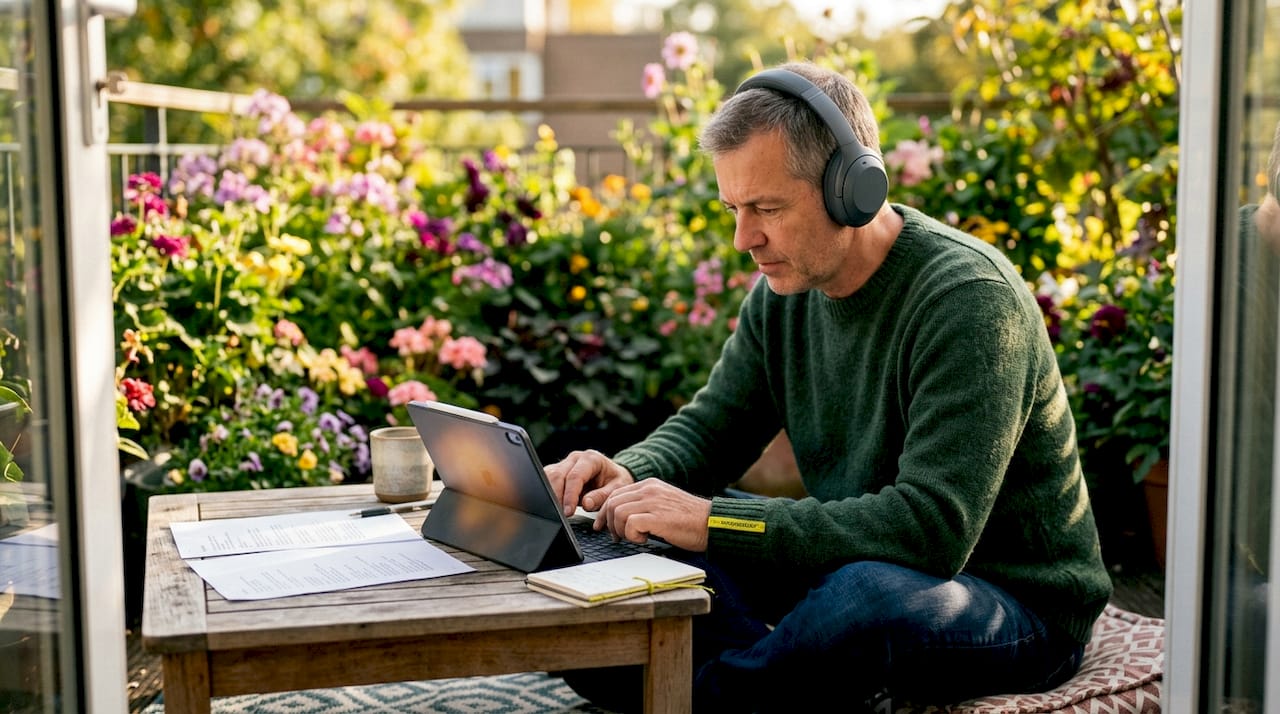
Choosing the right song matters as much as the tools you use. Pick songs where you understand at least 70% of the vocabulary. Songs with fast, slurred, or heavily accented delivery will frustrate you before you make progress. Start with clear vocal tracks and moderate tempo, then move to more complex material as your ear improves.
Digital music platforms with lyric displays and playback controls significantly increase learner motivation and engagement. The combination of visual lyrics and audio input activates more cognitive pathways than reading or listening alone.
| Tool type | Function | Example use |
|---|---|---|
| Music streaming app | Playback with speed and loop controls | Slow down a verse to catch every syllable |
| Lyric display app | Real-time text sync with audio | Read along while listening to check comprehension |
| Voice recorder | Capture your speaking output | Compare your pronunciation to the original |
| Vocabulary card tool | Build word lists from song lyrics | Review new words after each session |
Pro Tip: Use the loop and slow-down features in your music app to isolate a single line. Repeat it at 75% speed until your mouth knows the shape of every word, then bring it back to full speed.
How to implement a step-by-step music-based speaking practice workflow
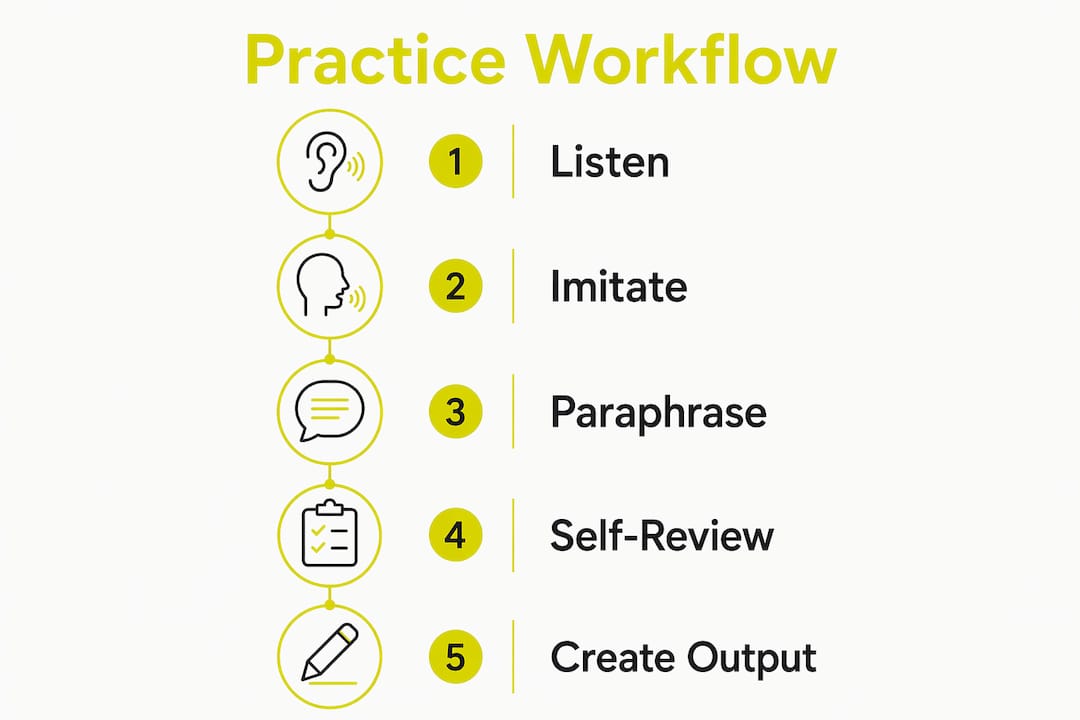
A repeatable sequence is what separates casual listening from real language practice. Follow these five steps every time you work with a new song.
-
Active listening with lyric reading. Play the song once while reading the full lyrics. Do not sing yet. Focus on meaning. Identify words you do not know and look them up before moving forward. Repetitive lyric analysis improves vocabulary retention and pronunciation confidence over time.
-
Sing along for rhythm and intonation. Play the song again and sing with it. The goal here is not perfect pitch. You are training your mouth and ear to match the stress patterns and intonation of a native speaker. Rhythmic sensitivity predicts how accurately learners produce intonation and stress, more so than melody alone. Repeat this step three to five times with the same verse.
-
Verse imitation and paraphrasing. Pause the song after each verse. Speak the lines aloud from memory, then paraphrase them in your own words. This is where passive listening becomes active speaking. Paraphrasing forces you to use the grammar and vocabulary in a new way, which is the step most learners skip entirely.
-
Structured peer practice with assigned roles. If you practice with a partner or in a group, assign specific roles. Structured peer roles like Word Boss and Grammar Boss prevent learners from falling back on safe, low-level language. The Word Boss tracks interesting vocabulary used during discussion. The Grammar Boss notes correct and incorrect structures. A Time Keeper keeps each speaker on task. These roles push every participant to use more complex language than they would choose on their own.
-
Record, review, and repeat. Record yourself speaking or singing a section of the song. Listen back and compare your output to the original. Note specific sounds or stress patterns that differ. Target those in your next session. This self-review loop is what turns a single practice session into measurable progress.
Pro Tip: Balance repetition with creative output. After mastering a verse through imitation, write three new sentences using the same grammatical structure but your own vocabulary. This moves the language from passive memory into active use.
What are common challenges in music-based speaking practice and how to overcome them?
The most frequent problem learners face is staying stuck at a comfortable level. When a song feels easy, the temptation is to keep singing it instead of pushing into harder material. Comfort is the enemy of progress in speaking practice.
Embodied music training shows that adding body movement and percussion to singing improves speech imitation better than singing alone. Clapping the rhythm of a line while speaking it forces your body to internalize the stress pattern. This is especially useful for learners whose first language has a very different rhythm from their target language.
Anxiety in group speaking activities is real, and music helps reduce it. The Affective Filter theory explains that music lowers anxiety, making learners more willing to produce output in the target language. Starting a group session with a shared sing-along before any speaking task warms up both the voice and the confidence.
Practical solutions for the most common obstacles:
- Choose songs with clear pronunciation and moderate vocabulary. If you need a dictionary for every other line, the song is too advanced for speaking practice right now.
- Do not skip lyric analysis. Listening without reading the text means you miss the grammar and vocabulary that make the song useful for language learning.
- Use peer roles in group sessions to prevent one person from dominating and others from going silent.
- Add physical movement. Tap the beat, clap stressed syllables, or walk the rhythm while speaking lines aloud.
- Record every session. Learners who skip self-review miss the most direct feedback available to them.
How does music integration scientifically enhance speaking skills?
The evidence for music-based language learning is specific and measurable. A study of 100 students and teachers in Casablanca using a quasi-experimental design found that music-based instruction produced a 91% improvement in speaking fluency and a 94.3% boost in student motivation. Those numbers reflect a method that works at scale, not just in isolated cases.
Vocabulary gains are equally documented. A paired sample t-test with 22 eighth-grade students showed that music-integrated vocabulary practice raised test scores from 60.86 to 73.61 after the intervention. That is a meaningful jump in a short period. The mechanism is repetition through enjoyment. Learners hear and use the same words multiple times without the fatigue that comes from traditional drilling.
“The primary benefit of music in language practice is lowering the affective filter to make practice more natural and enjoyable.” — Language teaching research on music and anxiety reduction
Rhythm is the most underrated element in this process. Research from the University of Talca confirms that rhythmic sensitivity predicts a learner’s ability to produce accurate intonation and stress patterns better than melody alone. This means drumming a beat or clapping syllables is not just fun. It is training the same neural pathways that control spoken language.
| Condition | Speaking fluency outcome | Motivation level |
|---|---|---|
| Traditional instruction only | Baseline improvement | Standard engagement |
| Music-based instruction | 91% fluency improvement | 94.3% motivation boost |
Embodied music training adds another layer. When learners combine body movement with singing, their speech imitation accuracy improves beyond what singing alone produces. The physical engagement encodes the sound patterns more deeply. For accent work specifically, this approach outperforms passive listening by a wide margin. If you want to sound like a native speaker, embodied rhythm practice is one of the most direct paths there.
Key Takeaways
A music-based speaking practice workflow works because it combines rhythm, repetition, and structured output to build fluency faster than traditional methods.
| Point | Details |
|---|---|
| Start with the right song | Choose tracks where you understand at least 70% of the vocabulary to avoid frustration. |
| Follow the five-step sequence | Active listening, sing-along, paraphrasing, peer roles, and self-review form the complete workflow. |
| Use structured peer roles | Word Boss and Grammar Boss roles push learners to use complex language instead of safe phrases. |
| Rhythm matters more than melody | Rhythmic sensitivity predicts intonation accuracy, so clap and move while you practice. |
| Record every session | Self-review is the fastest feedback loop available and the step most learners skip. |
Why I think most learners underuse the rhythm element
Most learners treat music-based practice as a listening exercise with occasional singing. That is a waste of the method’s real power. The research on rhythmic sensitivity changed how I think about this entirely. Melody is pleasant. Rhythm is functional. When you clap the stress pattern of a sentence while speaking it, you are doing something closer to physical therapy for your accent than casual language study.
I have watched learners spend months with songs they love and make almost no progress in speaking, because they never moved past passive listening. The moment they started paraphrasing verses aloud and recording themselves, the gap between their output and native speech became obvious and fixable. That discomfort is productive. Avoiding it is why so many learners plateau.
The peer role structure surprised me too. Assigning a Grammar Boss in a group session sounds rigid, but it changes the entire dynamic. Learners stop coasting on easy phrases because someone is actually paying attention to their language choices. The benefits of song-based learning multiply when there is social accountability built into the session.
My honest recommendation: treat the recording step as non-negotiable and add one physical movement to every speaking exercise. Those two changes alone will produce more progress than doubling your practice time without them.
— Ben
Singwithcanary puts this workflow into practice
Singwithcanary is built for learners who want to practice speaking through music with real structure and real people. The platform combines lyric displays, karaoke-style playback, vocabulary cards, and social speaking activities into one place.
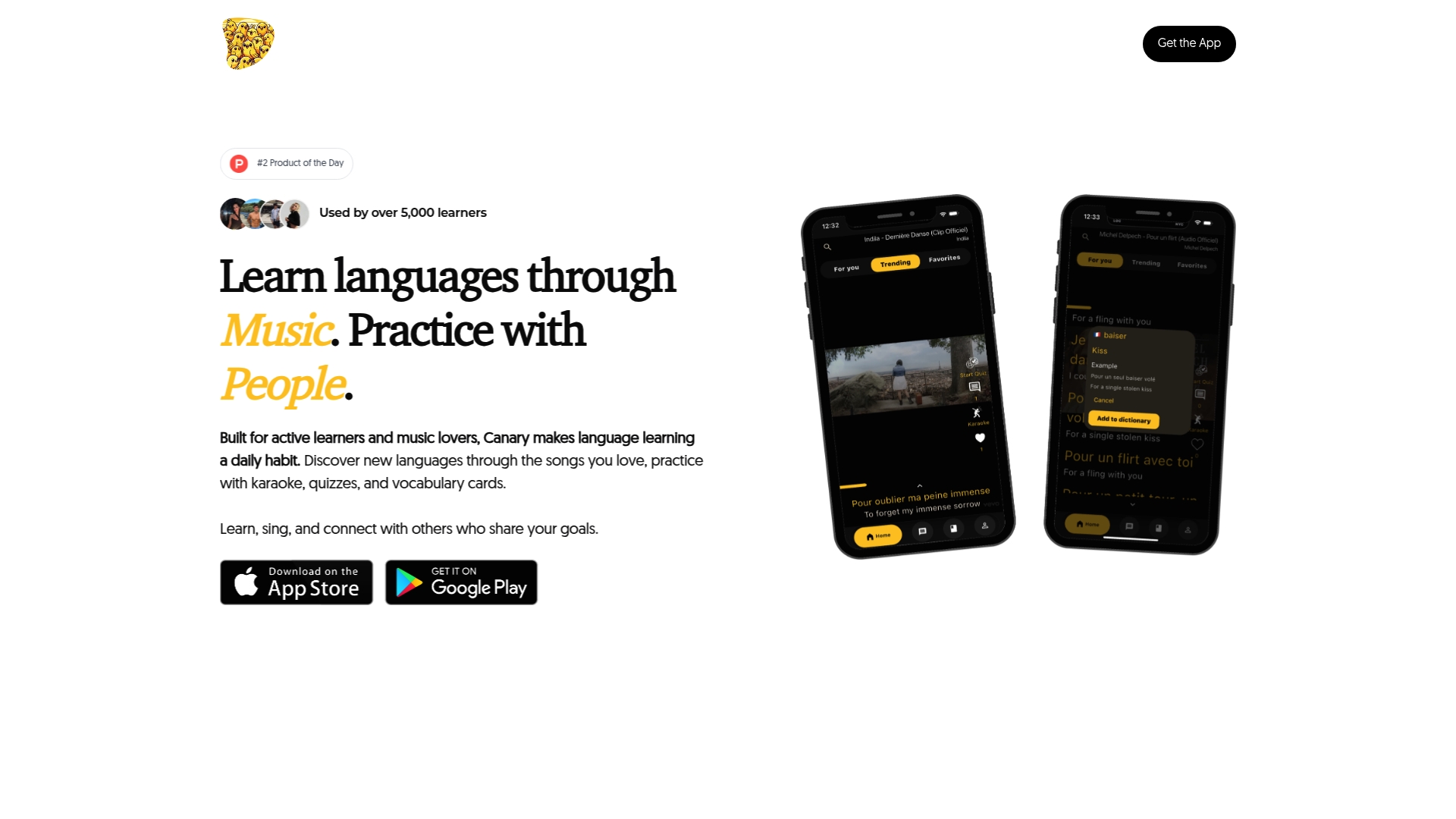
Learners use Singwithcanary to work through songs at their own pace, build vocabulary from lyrics, and practice pronunciation with an international community. The social layer is what makes it different. You are not just singing alone. You are practicing with other learners who are working toward the same goals. Singwithcanary’s Song of the Week gives you a fresh, structured lesson every week so your routine never goes stale. If you are ready to put this workflow into action, start learning with music on Singwithcanary today.
FAQ
What is a music-based speaking practice workflow?
A music-based speaking practice workflow is a structured sequence of listening, singing, paraphrasing, and self-review tasks that use songs to build speaking fluency. It combines rhythm, vocabulary, and output practice into a repeatable daily routine.
How much does music actually improve speaking fluency?
A quasi-experimental study of 100 learners found that music-based instruction produced a 91% improvement in speaking fluency. That result also came with a 94.3% increase in student motivation.
What peer roles work best in group music speaking practice?
Word Boss, Grammar Boss, and Time Keeper are the three roles that prevent learners from defaulting to simple language. Each role holds a specific participant accountable for tracking vocabulary, grammar, or speaking time during the session.
Why is rhythm more important than melody for speaking practice?
Research from the University of Talca shows that rhythmic sensitivity predicts a learner’s ability to produce accurate intonation and stress patterns better than melody alone. Clapping beats and tapping stressed syllables trains the same neural pathways that control spoken language.
How does music reduce speaking anxiety?
Music lowers the Affective Filter, the psychological barrier that blocks natural language output when learners feel stressed. Starting a session with a shared sing-along before any speaking task reduces anxiety and increases willingness to produce output in the target language.