TL;DR:
- Music-fueled language exchange engages learners emotionally and socially, improving retention and fluency.
- Active activities like lyric translation and karaoke transform music into effective language practice tools.
- It offers a fun, low-pressure alternative that builds confidence and consistency in language learning.
Many language learners know that music helps with memorization, but most stop there. They listen, maybe hum along, and call it practice. The real breakthrough comes when you stop being a passive listener and start using songs as a launchpad for live conversation with real people around the world. Music-fueled language exchange combines the emotional pull of your favorite tracks with the accountability and connection of peer interaction. It is not just a fun add-on to your study routine. For music lovers who want to actually speak a new language with confidence, it might be the most effective method available.
Table of Contents
- What is music-fueled language exchange?
- How music enhances language learning
- Popular formats and activities in music-fueled language exchange
- Getting started with your own music-fueled language exchange
- The deeper value: why music-fueled language exchange succeeds where textbooks fail
- Start your music-fueled language journey today
- Frequently asked questions
Key Takeaways
| Point | Details |
|---|---|
| Active learning | Music-fueled language exchanges use real songs and conversations to deeply engage both the mind and memory. |
| Peer-driven practice | You’ll build skills with partners through fun, structured activities rather than studying alone. |
| Global cultural connection | These exchanges help you interact with international peers, boosting your language skills while exploring new music and cultures. |
| Flexible formats | You can join groups, events, or use online tools to find the exchange style that fits your personality and schedule. |
What is music-fueled language exchange?
Music-fueled language exchange is the practice of using songs as the starting point for cross-language conversation, cultural sharing, and active learning between people from different linguistic backgrounds. Instead of a textbook exercise or a grammar drill, you and a partner or group pick a song, dig into the lyrics, and use that shared experience to practice speaking, listening, and understanding in a new language.
Think of it as a conversation club where the agenda is always a song. You might spend ten minutes translating a verse together, then another fifteen discussing what the lyrics mean culturally, and finish with a live karaoke round to practice pronunciation. Every step is active, social, and grounded in real language as it is actually used.
Music-based approaches actively improve vocabulary and listening comprehension, which is why this format works so well beyond simple entertainment. The key is that songs give you context. Words in a melody are easier to remember than words on a flashcard because they carry emotion, rhythm, and story.
Here are the core elements that make up a music-fueled language exchange session:
- Song selection: Choosing tracks that are rich in everyday vocabulary or cultural references
- Lyric analysis: Breaking down meaning, slang, idioms, and pronunciation together
- Cultural sharing: Discussing the song’s background, artist, and what it means in its home culture
- Live practice: Speaking, singing, or reading aloud to build fluency and confidence
- Vocabulary review: Pulling key words and phrases from the song for follow-up study
| Session element | Learning benefit | Time needed |
|---|---|---|
| Song selection | Motivation and relevance | 5 to 10 minutes |
| Lyric analysis | Vocabulary and context | 15 to 20 minutes |
| Cultural discussion | Listening and speaking | 10 to 15 minutes |
| Karaoke or read-aloud | Pronunciation and fluency | 10 to 15 minutes |
Exploring music-based vocabulary learning before your first session will help you understand why certain song types work better than others for your target language.
Pro Tip: Pick songs with clear enunciation and moderate tempo for your first sessions. Pop ballads and folk songs tend to work better than fast rap tracks when you are just starting out. Once your ear adjusts, you can challenge yourself with more complex genres.
How music enhances language learning
Traditional language learning often relies on repetition without meaning. You memorize a word list, practice a grammar rule, and hope it sticks. Music changes the equation by attaching language to emotion, melody, and social experience, all of which are proven memory anchors.
Singing in a target language offers measurable retention and accent improvements compared to traditional memorization. That is not a minor difference. When you sing a phrase, your brain encodes it through multiple pathways at once: auditory, motor, emotional, and linguistic. Compare that to reading a word in a textbook once or twice.
Here is how the process works step by step:
- Hear the language in context. Songs place words inside sentences with natural rhythm and stress patterns.
- Repeat without boredom. You naturally replay songs, which creates repetition without it feeling like a chore.
- Absorb pronunciation. Melody forces you to shape sounds the way native speakers do.
- Connect meaning to feeling. Emotional songs make vocabulary stick because the brain links memory to emotion.
- Practice with peers. Discussing lyrics out loud with a partner activates speaking skills in a low-pressure setting.
“The moment I started singing along and then talking about the lyrics with my exchange partner, my accent improved faster in two weeks than it had in six months of app-based study.” — Canary community member
Let’s look at how music-fueled exchange stacks up against other popular methods:
| Method | Vocabulary retention | Pronunciation practice | Social connection | Motivation over time |
|---|---|---|---|---|
| Textbook study | Moderate | Low | None | Drops quickly |
| Language apps | Moderate | Low to moderate | Minimal | Variable |
| Music-fueled exchange | High | High | Strong | Stays high |
| Immersion travel | Very high | Very high | Strong | Context-dependent |
The educational benefits of music go beyond vocabulary. Rhythm training sharpens your ear for tonal differences, which matters enormously in languages like Mandarin, Vietnamese, or Portuguese. Understanding music’s impact on language acquisition helps you see why this is not just a fun experiment but a genuinely effective strategy. The benefits of song-based learning compound over time, especially when you combine them with consistent peer interaction.

Popular formats and activities in music-fueled language exchange
One of the best things about this approach is its flexibility. You do not need to be in the same city, or even the same time zone, as your exchange partner. Music-fueled language exchange works in real time and on your own schedule.
Practices such as lyric translation, karaoke, and song analysis are common in group-based language exchanges, and each format serves a slightly different learning goal. Here is a breakdown of the most popular options:
- Group karaoke sessions: Live or virtual events where participants sing together in the target language, then discuss vocabulary and pronunciation as a group
- 1:1 lyric translation exchanges: You translate a song from your native language, your partner does the same from theirs, and you compare notes together
- Culture swap conversations: Each person shares a song that is meaningful in their culture and explains the context, history, or emotions behind it
- Themed song challenges: Groups pick a weekly theme (love, travel, seasons) and each member brings a song in their target language that fits
- Asynchronous song-sharing: You record yourself reading or singing lyrics and share the audio with your partner for feedback on pronunciation
- Vocabulary card sessions: After a song discussion, participants build shared vocabulary lists from the lyrics and quiz each other
Exploring song of the week formats is a great way to see how structured music events can fit into a regular learning schedule. You can also look into types of music-based methods to find the format that matches your learning style and availability.

Pro Tip: If you are brand new to music-fueled exchanges, start with an asynchronous format. Record yourself reading a song’s lyrics out loud, share it with a partner, and ask for feedback. It removes the pressure of live performance and builds your confidence before you join a group session.
Getting started with your own music-fueled language exchange
The barrier to entry here is genuinely low. You do not need special equipment, a formal class, or a tutor. What you need is a language goal, access to music, and a willingness to connect with someone new.
Flexible platforms and apps now make it easy to connect with global music and language partners, which means your first session could happen this week. Here is a simple process to get started:
- Choose your target language. Pick one language and commit to it for at least a month before adding another.
- Find music in that language. Search streaming platforms for popular artists or playlists in your target language. Ask native speakers for recommendations.
- Select your first song. Choose something you genuinely like. Motivation matters more than difficulty level at the start.
- Find a partner or group. Join a language exchange community, a music-based learning app, or a social media group focused on your target language.
- Plan your first session. Share the song in advance, prepare a few questions about the lyrics, and set a time to meet online or in person.
- Reflect and repeat. After each session, note the new words you learned and review them before your next meeting.
A few things to keep in mind as you get started:
- Bring an open mind about music genres. Your partner’s taste may be very different from yours, and that is part of the learning.
- Respect cultural context. Some songs carry deep historical or political meaning. Ask before assuming.
- Be patient with your own pronunciation. Improvement takes time, and your partner is there to help, not judge.
- Follow basic online safety practices when meeting new people on digital platforms.
The music-based language learning guide covers platform options and community resources in detail. For ongoing practice, the tips for music-fueled learning section offers practical strategies to keep your momentum going.
The deeper value: why music-fueled language exchange succeeds where textbooks fail
Here is something most language learning content will not say plainly: textbooks do not fail because of bad content. They fail because they are emotionally inert. There is no feeling attached to a grammar chart. No memory hook on a conjugation table. And crucially, no human being on the other side waiting to hear what you think.
Music-fueled language exchange works because it reverses all of that. You are emotionally engaged from the first note. You have a real person listening and responding. The song-based language success that so many learners report is not accidental. It is the direct result of combining emotional resonance with social accountability.
First-time participants almost universally report feeling less anxious than in a traditional class setting. Why? Because the song is the focus, not your grammar. The pressure shifts from performing correctly to exploring together. That shift is enormous for adult learners who carry years of classroom anxiety.
The myth that serious learning cannot include fun is one worth challenging directly. Engagement is not a bonus feature. It is the mechanism. When you enjoy what you are doing, you come back tomorrow. And the day after. Consistency is what actually builds fluency, and music gives you a reason to stay consistent.
Start your music-fueled language journey today
If this article has sparked something for you, the next step is simpler than you might think. Canary is built exactly for learners like you, people who love music and want to use it as a real path to fluency.
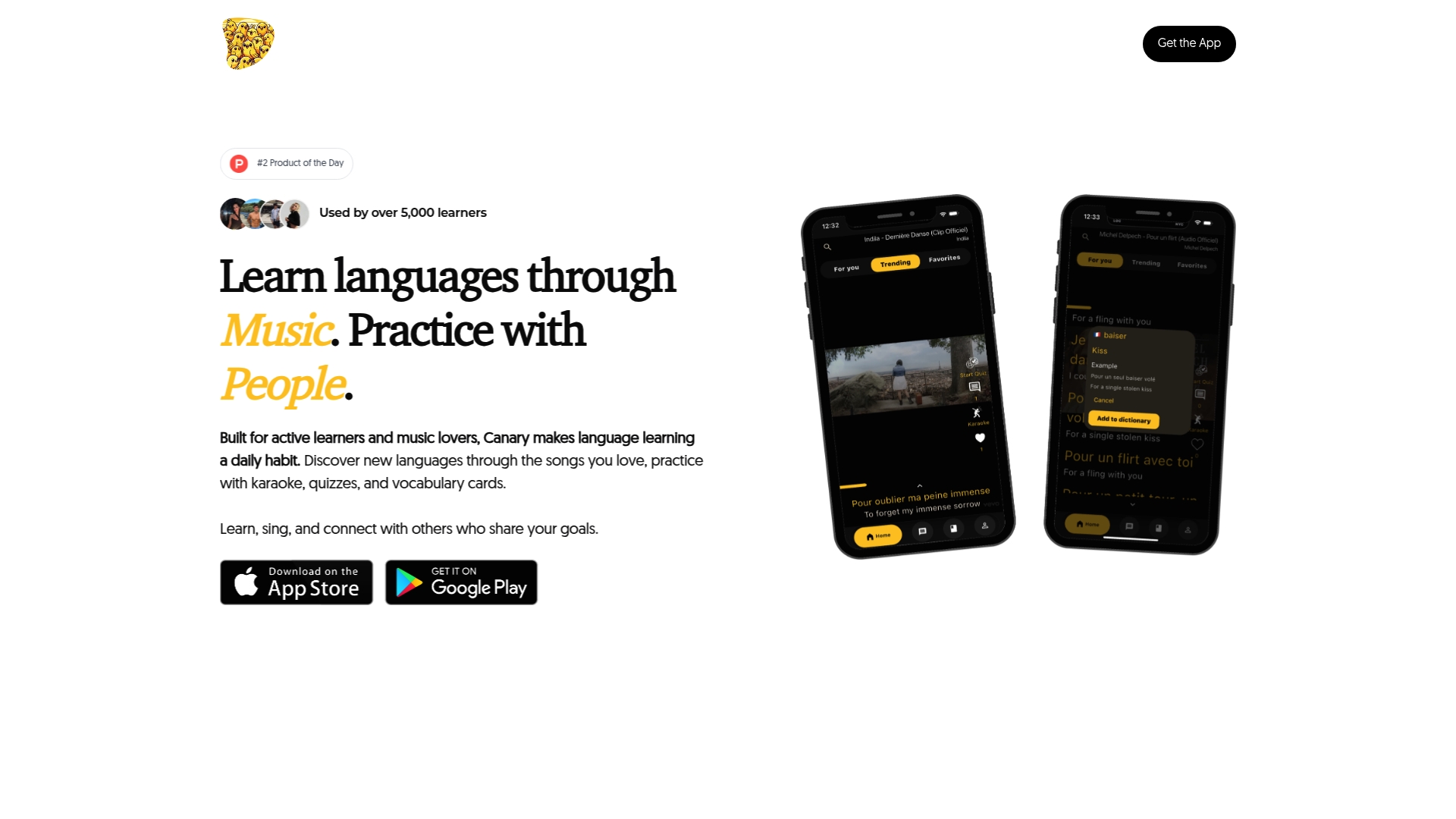
With Canary, you can learn languages with music through karaoke sessions, vocabulary cards, and interactive lyric tools, all designed to make practice feel like play. You can see educational benefits backed by research and shared by thousands of learners in the community. Ready to jump in? Try a song-based event and experience your first music-fueled exchange with a global group of learners who share your passion. Your next language breakthrough might just start with a song.
Frequently asked questions
What is music-fueled language exchange in simple terms?
Music-fueled language exchange is a way to learn languages by combining song-based activities with conversations and cultural sharing between peers. Music-based learning can enhance vocabulary retention and engagement in ways that traditional methods often cannot.
Do I need musical talent to join?
No musical talent is required. All you need is an interest in music and a genuine desire to learn a new language alongside others.
What types of activities happen in a music-fueled exchange?
Common activities include group karaoke, lyric translation, song discussions, and sharing music from different cultures. Karaoke and lyric analysis are among the most popular music-fueled language activities in structured group settings.
How do I find a group or partner for music-fueled language exchange?
You can search dedicated platforms, join online communities, or use language learning apps that support music-based exchanges. Flexible platforms and apps support organizing and joining music-powered exchanges with partners worldwide.
Does this method work for any language?
Yes, music-fueled exchanges are effective for a wide range of languages and skill levels. Song-based learning is adaptable to nearly all languages, making it one of the most versatile methods available to modern learners.