Struggling with pronunciation despite hours of repetition drills? You’re not alone. Traditional language learning methods often fail to capture the natural rhythm and melody of native speech, leaving learners frustrated with stilted accents. Music offers a surprising solution that transforms pronunciation practice from tedious repetition into an engaging, effective experience. By combining song-based learning with interactive features and native speaker feedback, you can master authentic pronunciation while enjoying the process. This article reveals why music works so well for accent improvement and how to apply it to your language journey.
Table of Contents
- Key takeaways
- How music supports authentic pronunciation
- Comparing music-based pronunciation practice with traditional methods
- How to practice pronunciation effectively with music
- Common challenges and how to overcome them in music-based pronunciation practice
- Unlock your accent potential with Canary
- Frequently asked questions
Key Takeaways
| Point | Details |
|---|---|
| Music improves pronunciation | Music transforms pronunciation by exposing you to native rhythm, stress, and intonation through songs, helping you internalize authentic speech patterns. |
| Interactive practice accelerates learning | Interactive features such as karaoke, recording, social feedback, and vocabulary cards make practice faster and more engaging than traditional drills. |
| Emotional engagement boosts retention | Emotional engagement with melody and lyrics strengthens memory and motivation for consistent pronunciation practice. |
| Practical song selection tips | Apply music by choosing songs slightly below your level and using native speaker feedback to progressively improve accuracy. |
How music supports authentic pronunciation
Music naturally exposes you to native pronunciation patterns in ways textbooks cannot replicate. When you listen to songs, you absorb the rhythm, stress patterns, and intonation that define authentic speech. Music reinforces speech rhythm and intonation patterns crucial for pronunciation, creating neural pathways that help you recognize and reproduce native sounds automatically.
The melody and rhythm in songs mirror the natural flow of conversation. Singing along engages your vocal muscles in ways that build muscle memory for authentic pronunciation. This physical practice helps your mouth, tongue, and throat adapt to new sound patterns that may not exist in your native language. The repetitive nature of choruses and verses reinforces these patterns without feeling like tedious drill work.
Music embeds language learning in emotional contexts that boost retention dramatically. When you connect pronunciation practice with melody and lyrics that resonate emotionally, your brain forms stronger memory associations. This emotional engagement makes it easier to recall correct pronunciation when speaking. The benefits of learning languages with songs extend beyond pronunciation to vocabulary and grammar retention.
Interactive features in modern music apps enhance pronunciation practice significantly:
- Karaoke modes let you sing along with lyrics displayed, helping you match timing and pronunciation
- Recording features allow you to compare your voice with native speakers and identify specific areas for improvement
- Social elements connect you with native speakers who provide real-time feedback on your accent
- Vocabulary cards linked to song lyrics help you understand pronunciation in context
The role of music in language learning goes beyond entertainment. It creates an immersive environment where pronunciation practice feels natural and enjoyable. You’re not just memorizing sounds; you’re experiencing language as native speakers use it in authentic contexts.
Pro Tip: Choose songs slightly below your current language level at first. Clear pronunciation in simpler songs builds confidence and accuracy before tackling complex vocabulary or rapid lyrics.
Successful examples of language learning with music show that learners who incorporate songs into daily practice develop more natural accents faster than those relying solely on traditional methods. The combination of auditory input, physical practice, and emotional engagement creates ideal conditions for pronunciation mastery.
Comparing music-based pronunciation practice with traditional methods
Traditional pronunciation methods typically rely on repetitive drills, phonetic charts, and isolated sound practice. While these approaches teach technical aspects of pronunciation, they often lack the context and engagement needed for natural accent development. Students spend hours repeating sounds in isolation, which rarely translates to fluent, authentic speech in real conversations.
Music-driven practice offers distinct advantages that address traditional method limitations:
| Feature | Traditional Methods | Music-Based Practice |
|---|---|---|
| Engagement level | Low, often feels tedious | High, emotionally rewarding |
| Context | Isolated sounds and words | Complete phrases in natural speech |
| Memory retention | Moderate, requires conscious effort | Strong, enhanced by melody and emotion |
| Real-world application | Limited transfer to conversation | Direct exposure to authentic usage |
| Motivation | Decreases over time | Sustained through enjoyment |
| Social interaction | Usually solo practice | Opportunities for native speaker feedback |
Music-driven practice engages learners more than rote repetition and improves retention significantly. The combination of auditory, physical, and emotional learning channels creates stronger neural connections than traditional drill-based approaches. When you sing along to a song, you’re practicing pronunciation within complete sentences and phrases, not just individual sounds.
Traditional methods struggle with several key limitations:
- Monotony leads to decreased practice frequency and motivation
- Lack of emotional connection makes pronunciation harder to remember
- Isolated sound practice doesn’t prepare learners for connected speech patterns
- Limited exposure to natural rhythm and intonation of native speakers
- Absence of immediate, authentic feedback on accent accuracy
The types of language learning methods for music lovers demonstrate how song-based approaches naturally incorporate multiple learning styles simultaneously. Visual learners benefit from reading lyrics, auditory learners absorb pronunciation through listening, and kinesthetic learners engage through singing and physical practice.
Music practice also addresses the motivation challenge that derails many language learners. Traditional drills feel like work, while singing feels like entertainment. This psychological difference matters enormously for long-term success. When pronunciation practice is enjoyable, you’re far more likely to maintain daily habits that lead to fluency.

The benefits of songs in language learning include authentic exposure to connected speech, where sounds blend and change based on surrounding words. This prepares you for real conversations in ways that isolated pronunciation drills cannot match. Native speakers don’t speak in isolated phonemes; they use flowing, connected speech that music naturally models.

Social features in modern music-based platforms add another dimension traditional methods lack. Practicing with native speakers through interactive song sessions provides immediate feedback and motivation that textbooks and audio files cannot offer. This human element accelerates accent improvement and builds confidence for real-world communication.
How to practice pronunciation effectively with music
Effective music-based pronunciation practice requires strategic song selection and deliberate practice techniques. Start by choosing songs with clear vocals and pronunciation that matches your target language level. Pop, folk, and acoustic genres typically feature clearer enunciation than heavy metal or rap, making them ideal for beginners and intermediate learners.
Follow these steps to maximize pronunciation improvement:
- Listen to your chosen song multiple times without singing, focusing solely on how native speakers pronounce words and phrases
- Read the lyrics while listening to connect written words with spoken sounds and identify pronunciation patterns
- Sing along slowly at first, prioritizing accuracy over speed and matching the native pronunciation as closely as possible
- Record yourself singing and compare your recording with the original to identify specific pronunciation differences
- Practice problem areas in isolation, then integrate them back into the full song for context
- Share your recordings with native speakers through social features to get constructive feedback on your accent
Interactive song-based practice with native speakers boosts pronunciation skills faster than solo practice alone. The feedback loop created by recording, comparing, and receiving input from others accelerates your accent improvement dramatically.
Consistency matters more than duration for pronunciation mastery. Short daily sessions of 10 to 15 minutes produce better results than occasional marathon practice sessions. Your brain needs regular exposure to new sound patterns to build the neural pathways required for automatic, natural pronunciation.
Pro Tip: Use playback speed controls to slow down fast songs initially. Practice at 75% speed until you master the pronunciation, then gradually increase to normal tempo as your accuracy improves.
Interactive tools enhance your music-based practice significantly:
- Karaoke features that highlight lyrics in real time help you match timing and pronunciation precisely
- Vocabulary cards linked to song lyrics provide instant definitions and pronunciation guides for unfamiliar words
- Recording features let you track progress over time and celebrate improvements in your accent
- Social challenges and leaderboards add gamification elements that boost motivation and consistency
Platforms offering interactive pronunciation practice with music combine these features into comprehensive learning experiences. You can sign up for pronunciation practice that integrates song-based learning with native speaker interaction for optimal results.
Weekly song rotations keep your practice fresh and expose you to diverse pronunciation patterns. The song of the week practice approach introduces new vocabulary and pronunciation challenges regularly, preventing boredom and expanding your linguistic range. Each new song presents different sounds, rhythms, and intonation patterns that broaden your pronunciation skills.
Focus on mimicking native speaker mouth positions and breathing patterns when singing. Pay attention to where stress falls in multi-syllable words and how sounds connect between words in natural speech. These subtle details make the difference between textbook pronunciation and authentic native-sounding speech.
Regular practice with varied songs builds pronunciation flexibility. You’ll develop the ability to adapt to different accents, speaking speeds, and communication styles. This versatility translates directly to improved comprehension and speaking confidence in real-world conversations.
Common challenges and how to overcome them in music-based pronunciation practice
Fast lyrics present the most common obstacle in music-based pronunciation practice. When songs move quickly, distinguishing individual words and matching native pronunciation becomes difficult. Learners might struggle with song speed, unfamiliar vocabulary, or lack of feedback, but strategies exist to handle these challenges effectively.
Speed-related difficulties require strategic solutions:
- Use playback speed controls to reduce tempo by 25% to 50% initially, allowing you to hear and practice each word clearly
- Focus on mastering one verse or chorus at a time rather than attempting the entire song immediately
- Break particularly fast sections into smaller phrases and practice them separately before combining
- Gradually increase speed as your pronunciation accuracy improves, building up to normal tempo over several practice sessions
Unfamiliar vocabulary and pronunciation can derail your practice flow. When you encounter words you don’t recognize, pause to look up both meaning and pronunciation. Many language learning platforms provide integrated vocabulary cards that explain words within song context. This contextual learning helps you understand not just what words mean, but how native speakers actually use them.
Lack of immediate feedback creates uncertainty about pronunciation accuracy. You might think you’re pronouncing words correctly when subtle errors persist. Recording yourself and comparing with native speakers reveals these hidden mistakes. Even better, share your recordings with native speakers through social features for personalized feedback that addresses your specific pronunciation challenges.
Motivation naturally fluctuates during long-term language learning. Combat this by:
- Joining social challenges that create accountability and friendly competition
- Tracking your progress through recordings to see tangible improvement over time
- Switching between different genres and artists to maintain novelty and interest
- Celebrating small wins like mastering a difficult phrase or receiving positive feedback from native speakers
Pronunciation plateaus happen when you’ve mastered current material but haven’t introduced new challenges. The solution is regular song rotation that exposes you to different vocabulary, accents, and pronunciation patterns. Each new song pushes your skills forward and prevents stagnation.
Perfectionism can paralyze progress if you expect flawless pronunciation immediately. Accept that accent improvement is gradual and that mistakes are essential learning opportunities. Native speakers appreciate effort and improvement more than perfection. Focus on consistent practice and incremental gains rather than immediate mastery.
Technical difficulties with apps or platforms can frustrate learners. Ensure you have reliable internet connection for streaming, download songs for offline practice when possible, and familiarize yourself with all features before starting intensive practice. Most platforms offer tutorials or support to help you maximize their tools.
Balancing music practice with other language learning activities prevents over-reliance on a single method. While music excels at pronunciation training, combine it with conversation practice, reading, and grammar study for comprehensive language development. Music should complement, not replace, a well-rounded learning approach.
Unlock your accent potential with Canary
Ready to transform your pronunciation practice from tedious drills into an engaging musical journey? Canary combines everything you’ve learned in this article into one comprehensive platform designed specifically for music-loving language learners like you.
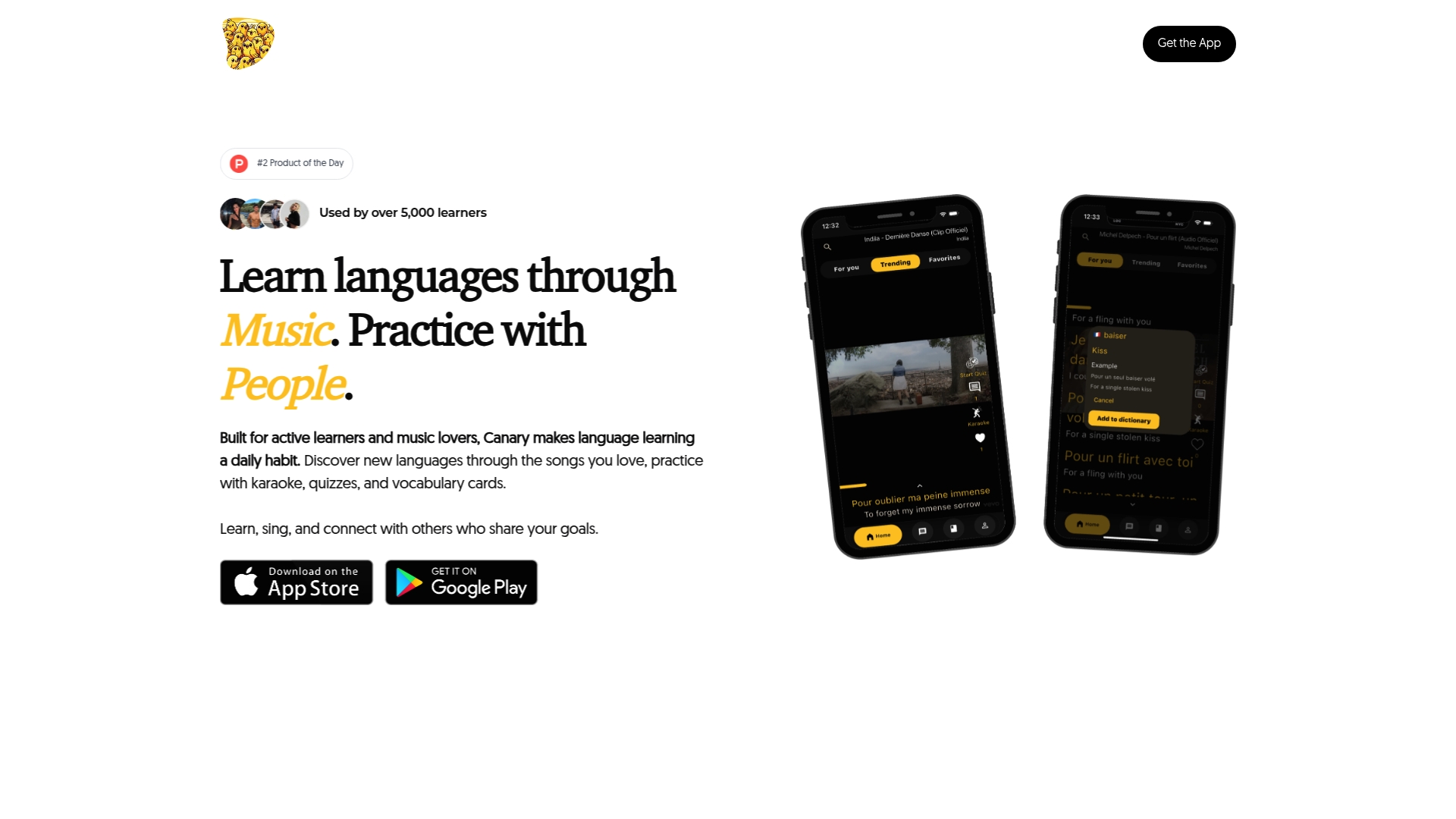
Canary offers interactive song-based learning that connects you with native speakers for real-time feedback on your pronunciation. Practice with curated songs that match your skill level, record your performances, and get personalized input from fluent speakers worldwide. The platform’s social features turn solitary practice into collaborative learning, keeping you motivated through challenges, leaderboards, and community support.
Join thousands of learners who are learning languages with music and achieving authentic pronunciation faster than traditional methods allow. Sign up for Canary today and access weekly curated songs, interactive karaoke features, and a global community of language enthusiasts. Start with this week’s featured song through the song of the week practice and experience how music accelerates your accent improvement.
Frequently asked questions
What are the best song genres for improving pronunciation?
Pop, folk, and acoustic genres typically offer the clearest vocals for pronunciation practice. These styles feature distinct enunciation and moderate tempos that make individual words easier to distinguish and imitate. Ballads and singer-songwriter music also work well because artists often emphasize lyrical clarity over production effects.
Can I practice pronunciation with music if I’m a beginner?
Absolutely. Start with simple children’s songs or basic pop songs that use common vocabulary and clear pronunciation. Use playback speed controls to slow down songs and repeat challenging sections multiple times. Interactive apps with lyric displays and vocabulary support make music-based practice accessible even at beginner levels.
How does singing with native speakers improve my accent?
Native speaker interaction provides authentic pronunciation modeling and immediate feedback on your accent accuracy. When you practice with fluent speakers, they can identify subtle errors you might miss and suggest specific improvements. This real-time correction accelerates accent development far more effectively than solo practice. Sign up for native speaker practice to experience these benefits firsthand.
How often should I practice pronunciation with music to see results?
Daily sessions of 10 to 15 minutes produce the best results for pronunciation improvement. Consistency matters more than duration because your brain needs regular exposure to build neural pathways for new sound patterns. Even short daily practice yields better outcomes than occasional longer sessions because frequent repetition strengthens muscle memory and accent accuracy.