TL;DR:
- Focusing on correcting errors that cause misunderstandings improves communication more than trying to sound like a native. Consistent, brief practice targeting one specific problem, such as final consonants or word stress, produces noticeable progress within weeks.
The single most effective step you can take right now is to stop trying to sound like a native speaker and start fixing the errors that actually cause misunderstandings. Research confirms that accent strength and intelligibility are only weakly correlated, which means a clear foreign accent rarely blocks communication. Dropped final consonants, wrong word stress, and collapsed vowel contrasts do. Here are three fixes you can try in the next five minutes:
- Exaggerate your final consonants. Say “sto-P,” “goo-D,” “nigh-T” with deliberate emphasis on the last sound. It will feel theatrical. That is the point.
- Slow down by 10–20%. Most adult learners speak faster under pressure, which compresses consonants. Slowing down gives your mouth time to finish each word.
- Run one minimal-pair drill. Pick a pair you know you confuse, like “ship/sheep” or “light/right,” and say each word ten times, alternating. Notice the difference in your mouth position.
Pro Tip: Consonants are the first sounds to disappear when you speak casually. Consciously putting about 10% more physical effort into your mouth movements, especially at word endings, produces faster clarity gains than almost any other single adjustment.
Table of Contents
- Why do adults find pronunciation so hard to change?
- What are the most common speech challenges adult ESL learners face?
- What are the best drills for fixing adult pronunciation problems?
- How should you structure your pronunciation practice?
- When should you get a teacher, coach, or speech-language pathologist?
- Why intelligibility matters more than accent elimination
- Key Takeaways
- The part most adult learners get wrong
- Singwithcanary makes daily pronunciation practice something you actually want to do
- Useful resources for continued practice
Why do adults find pronunciation so hard to change?
The short answer: your brain has already built a sound system, and it is very good at its job.
By adulthood, your first language (L1) has trained your auditory and motor systems to recognize and produce a specific set of sounds. When you encounter English sounds that do not exist in your L1, your brain often maps them onto the closest familiar sound instead of registering them as distinct. This is called phonological fossilization, and it is cognitive, not physical. Your mouth can physically make almost any sound; the challenge is that your brain does not yet hear the difference clearly enough to signal the right muscle movement.

L1 transfer is the other major factor. Spanish speakers tend to add a vowel before consonant clusters (“espeak” for “speak”). Mandarin speakers often drop final consonants because Mandarin syllables rarely end in them. Japanese speakers frequently substitute /r/ for /l/ because the distinction does not exist in Japanese phonology. These are not careless errors. They are systematic, predictable patterns rooted in linguistic distance between the two languages.
A third factor gets less attention: reduced articulatory energy. In casual speech, adults naturally minimize muscular effort. That is efficient in your native language, where listeners fill in gaps automatically. In English as a second language, those same shortcuts drop the consonants and vowel distinctions that listeners need to decode meaning.
Research from the Center for Applied Linguistics shows that prosodic features, including stress, rhythm, and intonation, often affect intelligibility more than individual sound errors. Fixing a single vowel sound matters less than getting word stress right.
What this means practically:
- Prioritize sounds and features that create real confusion, not just “foreign-sounding” ones.
- Work on word stress and sentence rhythm alongside individual sounds.
- Accept that a foreign accent is normal and compatible with being fully understood.
- Expect cognitive retraining to take consistent, focused repetition, not just exposure.
What are the most common speech challenges adult ESL learners face?
Knowing exactly which problem is causing misunderstandings saves you weeks of practicing the wrong thing. The list below covers the areas that come up most often, with a quick example showing why each one matters.
- Dropped final consonants. “I need a boa-” instead of “boat.” Listeners cannot distinguish “bode,” “bow,” “bone,” or “boat” without that final sound. This is one of the highest-impact intelligibility errors.
- Consonant clusters. English packs consonants together in ways many languages do not: “strengths,” “scripts,” “twelfths.” Simplifying these (“scrips” for “scripts”) changes the word entirely.
- The /l/ vs. /r/ contrast. “Light/right,” “collect/correct,” “glass/grass.” This pair causes genuine confusion in real sentences, not just in drills.
- The /th/ sounds. Both the voiced /ð/ (“this,” “the”) and the voiceless /θ/ (“think,” “three”) are absent from most of the world’s languages. Substituting /d/, /t/, /s/, or /z/ is common and noticeable.
- Vowel contrasts. “Ship/sheep,” “bit/beat,” “full/fool.” English has more vowel distinctions than most languages, and collapsing them changes meaning. “I want to leave” versus “I want to live” is one example where the stakes are obvious.
- Word stress. “REcord” (noun) versus “reCORD” (verb). “PREsent” versus “preSENT.” Wrong stress often makes a word unrecognizable even when every sound is correct.
- Sentence stress and intonation. English uses stress to signal new information and contrast. “I didn’t say SHE took it” means something different from “I didn’t SAY she took it.” Flat intonation makes speech harder to follow and can sound unintentionally rude.
- Linking and reduction. “Did you eat?” becomes “Didja eat?” in natural speech. “Want to” becomes “wanna.” If you never practice connected speech, you will struggle to understand native speakers and your own speech will sound choppy.
The errors most likely to block communication are dropped final consonants, wrong word stress, and collapsed vowel contrasts. Intonation and linking matter for fluency and naturalness, but they rarely cause a listener to mishear the word entirely.
What are the best drills for fixing adult pronunciation problems?
These are the activities with the strongest practical return. Each one targets a specific weakness, takes under 15 minutes, and can be done alone.

Minimal pairs
Purpose: Train your ear and mouth to distinguish sounds your L1 treats as the same.
- Choose a pair you know you confuse: “ship/sheep,” “light/right,” “think/sink.”
- Listen to a recording of both words three times, focusing on the difference in mouth position.
- Say each word aloud ten times, alternating: “ship, sheep, ship, sheep.”
- Record yourself and compare to the original.
- Use minimal pair lists from Warwick University as a ready-made resource.
Time: 5–10 minutes. Self-check: Can you hear the difference in your own recording?
Shadowing
Purpose: Build rhythm, stress, and connected speech by imitating a native speaker in real time.
- Find a short audio clip (30–60 seconds) at a level slightly above your comfort zone.
- Listen once without speaking.
- Play it again and speak simultaneously, matching the speaker’s rhythm and stress.
- Replay and focus on one feature you missed: a stressed syllable, a linked phrase, a reduced vowel.
- Repeat the segment three times.
Time: 10 minutes. Song lyrics work particularly well for this because the rhythm is fixed and predictable, which is one reason music-based practice accelerates shadowing gains.
The Last Sound Technique
Purpose: Retrain the habit of dropping final consonants.
- Choose five words with final consonants you tend to drop: “stopped,” “asked,” “world,” “fact,” “next.”
- Say each word with a dramatically exaggerated final sound: “stopp-T,” “ask-T,” “worl-D.”
- Record yourself doing this.
- Now say the same words at normal volume, keeping the final consonant audible but not theatrical.
- Notice that “normal” now sounds clearer than your previous normal.
This technique works because exaggeration recalibrates your baseline. Language coaches report that applying even a small increase in physical effort to consonants produces rapid, noticeable clarity gains.
Tongue twisters for target sounds
Purpose: Build muscle memory for sounds you avoid.
Pick a tongue twister that targets your weak sound. For /th/: “The thirty-three thieves thought that they thrilled the throne throughout Thursday.” Say it slowly three times, then at normal speed. The goal is not speed; it is accuracy on the target sound. TEFL activity banks include dozens of these organized by sound.
Chunking and chunk-reading
Purpose: Improve rhythm and reduce choppy, word-by-word delivery.
Read a sentence aloud, but group words into natural chunks: “When I arrived / at the office / the meeting / had already started.” Pause briefly between chunks. The University of Technology Sydney’s pausing and chunking guide is a practical starting point for this technique.
Record and compare
Purpose: Give yourself honest, specific feedback.
- Record yourself reading a standard passage (the Rainbow Passage is a classic choice).
- Listen back and note three specific moments where clarity broke down.
- Identify the pattern: final consonant? Wrong stress? A specific vowel?
- Drill that pattern for five minutes.
- Re-record the same passage and compare.
Pro Tip: Most learners are surprised by how different they sound on a recording versus how they think they sound. That gap is useful data. The first time you record yourself, just listen. Do not judge. On the second listen, write down the three clearest problems. That list is your next week’s practice plan.
How should you structure your pronunciation practice?
Consistency beats intensity. Three 10-minute sessions spread across a week produce more lasting change than one 90-minute session, because pronunciation is a motor skill. The brain consolidates new muscle patterns during rest, not during practice.
Session templates
| Session type | Time | Focus | Expected short-term outcome |
|---|---|---|---|
| Daily micro-session | 10 min | One drill (minimal pairs or Last Sound Technique) + one recorded sentence | Noticeable improvement on the drilled sound within 2–4 weeks |
| Alternating focus | 20 min | 10 min segmental (sounds) + 10 min suprasegmental (stress/intonation) | Broader clarity gains; rhythm starts to feel more natural |
| In-depth session | 30 min | Shadowing (10 min) + record-and-compare (10 min) + one new drill (10 min) | Tracks overall progress; builds self-assessment habit |
A practical step-by-step pronunciation improvement framework suggests starting with the 10-minute daily session for the first two weeks before adding longer sessions. That keeps the habit sustainable.
Realistic timelines
Many adult learners notice a difference on a drilled sound after consistent daily focused practice. Tougher sounds, like /th/ or English vowel contrasts, typically take several months of consistent work. Suprasegmental features (stress, rhythm, intonation) often show faster gains than individual sounds because they respond well to shadowing and chunking, which are easy to practice in short bursts.
The motor-skill research is clear on three training pillars: frequency (daily short sessions), specificity (work on the one sound causing the most breakdown), and feedback (recording or real-time correction). All three are necessary. Practicing daily but never recording yourself removes the feedback loop that tells you whether the drill is working.
Weekly progress checklist
Use this at the end of each week:
- Did I practice at least four days this week?
- Can I hear a difference in my recordings compared to last week?
- Did I identify one new specific problem to target?
- Did I practice at least one suprasegmental feature (stress, rhythm, or intonation)?
- Did I get any feedback from a listener, a recording, or an app?
Listening skills are as important as speaking practice. If you cannot hear the distinction, your mouth cannot reliably produce it. Pair every speaking drill with an active listening component.
When should you get a teacher, coach, or speech-language pathologist?
Self-study works well for most adult learners, but there are situations where professional help accelerates progress significantly, and a few where it is genuinely necessary.
Signs that professional help makes sense
- You have practiced a specific sound consistently for three or more months with no measurable improvement.
- Your pronunciation varies unpredictably on the same word across attempts, even after focused drilling.
- You notice difficulty with sounds that go beyond L1 transfer, such as inconsistent articulation of sounds you can produce correctly in isolation.
- A neurological event (stroke, traumatic brain injury) has affected your speech.
- You need to meet a specific professional standard, such as medical or legal communication, within a defined timeframe.
Who does what
ESL pronunciation teacher: Focuses on English-specific patterns, L1 transfer errors, and communicative practice. Best for learners who want structured lessons and accountability. Communicative language teaching approaches are common in this setting, emphasizing real interaction over drills alone.
Accent coach: Specializes in modifying specific accent features for professional or personal goals. Works well for learners who are already intelligible but want to reduce specific patterns. Typically more expensive than ESL instruction.
Speech-language pathologist (SLP): A licensed clinician who assesses and treats speech sound disorders. Relevant when pronunciation difficulties have a clinical component, such as motor speech issues or post-neurological changes. SLP approaches include auditory discrimination training, minimal pairs therapy, and oral-motor exercises.
The distinction matters: an accent coach works on preference and professional polish; an SLP addresses clinical need. Most adult ESL learners need neither. A good ESL pronunciation teacher or a structured self-study plan covers the majority of cases.
Questions to ask in a first session
- What specific patterns do you see in my speech that are causing the most misunderstanding?
- How will we measure progress, and over what timeframe?
- How much practice outside sessions do you expect, and what form should it take?
- Can you show me a sample exercise from a typical session?
- What is your approach: drill-based, communicative, or a mix?
Pro Tip: Bring a short recording of yourself speaking naturally (not reading aloud) to a first appointment. A two-minute clip of you explaining something you know well gives a teacher or SLP far more diagnostic information than any test they can run in the room.
What to bring: a list of words or phrases you are frequently asked to repeat, a recording of your natural speech, and one or two specific situations where communication broke down.
Why intelligibility matters more than accent elimination
The most important reframe for adult learners is this: you do not need to sound American or British to be understood. You need to be understood.
Research confirms that accent strength and intelligibility are only weakly correlated. A strong foreign accent does not automatically make you hard to understand. What does make you hard to understand is a specific, short list of errors: dropped final consonants, collapsed vowel contrasts that change meaning, and wrong word stress. Fix those, and most listeners will follow you without difficulty, regardless of your accent.
This changes drill selection immediately. Instead of spending time on sounds that are “foreign-sounding” but do not cause confusion, you focus on the minimal pairs that actually create misunderstandings in your daily conversations. Instead of trying to neutralize your vowels across the board, you target the two or three contrasts that your L1 collapses.
“The goal of pronunciation instruction should be intelligibility, not the elimination of accent. A foreign accent is not a communication problem.” This framing, supported by best practices research in adult ESL instruction, shifts the entire practice agenda.
The motor-skill framework reinforces this. Frequency, specificity, and feedback are the three pillars. Practicing daily for 10 minutes on the one sound causing the most breakdown, with a recording to check your progress, outperforms an hour of unfocused general practice every time. Understanding what pronunciation practice actually is and why specificity matters is the foundation of any plan that works.
Pro Tip: After each conversation, note one moment where you felt misunderstood. Was it a final consonant? A stressed syllable? A vowel? That single observation, repeated over a week, gives you a clearer practice target than any generic exercise list.
Key Takeaways
Fixing the pronunciation errors that actually block communication, not eliminating your accent, is the fastest path to being clearly understood in English.
| Point | Details |
|---|---|
| Target intelligibility, not accent | Accent strength and intelligibility are only weakly correlated; fix dropped consonants and wrong stress first. |
| Daily short sessions win | 10 minutes of focused daily practice on one specific sound produces measurable gains within 2–4 weeks. |
| Record yourself every week | A weekly recording comparison is the simplest feedback loop available and costs nothing. |
| Seek professional help when stuck | If a specific sound shows no improvement after three months of focused practice, an ESL teacher or SLP can diagnose the block. |
| Singwithcanary for daily habit | Singwithcanary’s karaoke-style shadowing, lyric-based drills, and community practice features support the daily short-session model. |
The part most adult learners get wrong
Most adult learners spend their practice time on the wrong thing. They work on sounds that feel foreign to them, not sounds that confuse their listeners. Those are different lists.
The sounds that feel hardest to you are usually the ones your L1 does not have at all, like /th/ in English. But /th/ substitution rarely causes a real misunderstanding. “I sink so” for “I think so” is perfectly clear in context. What does cause misunderstandings is dropping the final consonant off “fact” so it sounds like “fa,” or stressing the wrong syllable in “develop” so the listener hears a word they do not recognize.
The research on intelligibility versus accent is not new, but it has not reached most learners. They still arrive at practice with the goal of “sounding more American,” which is both harder to achieve and less useful than the actual goal: being understood the first time, every time.
There is also a physical dimension that gets overlooked. Pronunciation is a motor skill. You are training muscles, not memorizing facts. That means short, frequent, specific practice beats long, infrequent, general practice, every single time. A 10-minute daily session where you drill one minimal pair and record one sentence will do more for your clarity in a month than a weekly 90-minute class where you cover everything.
The last thing worth saying: progress is real, and it is faster than most adult learners expect when the practice is focused. Two weeks on final consonants, done consistently, produces a noticeable difference. That is not a long time.
Singwithcanary makes daily pronunciation practice something you actually want to do
The hardest part of any practice plan is keeping it going past the first week. Singwithcanary is built specifically for that problem. Instead of isolated drills that feel like homework, you practice pronunciation through real songs, karaoke-style speaking exercises, and a community of learners from around the world.
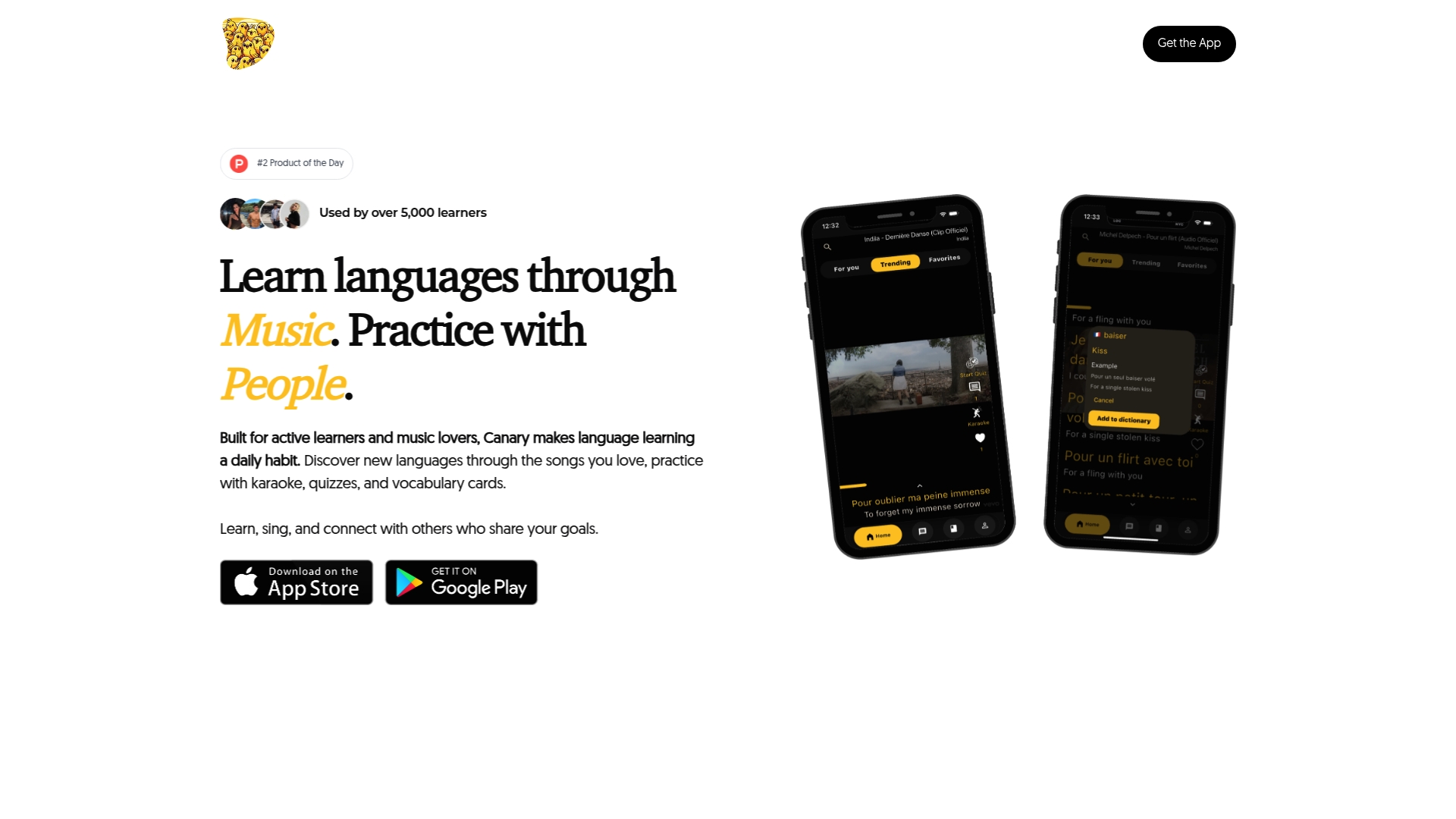
The drills in this article map directly onto Singwithcanary’s features. Shadowing with lyrics replaces generic audio clips with songs you actually want to hear again. The recording and playback feature gives you the weekly comparison tool described in the practice plan above. Vocabulary cards and quizzes add context so you are not just drilling sounds in isolation. And the social layer means you can practice with real people, which is the fastest feedback loop available.
The 10-minute daily session fits naturally into a song-of-the-week practice session, where one song becomes the week’s shadowing material, minimal-pair source, and recording benchmark all at once. Sign up for Singwithcanary and turn your next 10 minutes into a session you will actually come back to tomorrow.
Useful resources for continued practice
These are the most reliable sources for practice materials, demo videos, and research-backed guidance. Each one is free or freely accessible.
-
Minimal pair lists, University of Warwick — Organized by sound contrast; best for self-study drills. Start here if you are not sure which vowel or consonant pairs to target.
-
Pausing and chunking guide, University of Technology Sydney — A short, practical handout on chunk-reading and natural pausing. Use it alongside any reading-aloud practice.
-
Teaching Pronunciation to Adult English Language Learners, CAELA Network / CAL — The most thorough free overview of evidence-based pronunciation teaching for adults. Best used with a teacher, but the activity descriptions are clear enough for self-study.
-
Adult ESL Pronunciation Activities Videos, ATLAS ABE — Short classroom demo videos showing how activities like minimal pairs and shadowing work in practice. Useful if you learn better by watching than reading.
-
Audacity (free audio recording software) — The standard free tool for recording and comparing your speech. Download it, record a passage, and use the waveform view to see where your consonants are dropping off.
-
Best practices for teaching pronunciation to adult learners (2025 research review) — A peer-reviewed summary of current evidence on prosody, minimal pairs, shadowing, and technology-assisted feedback. Best for teachers or learners who want the research behind the drills.
-
Pronunciation training: what it is and how it works, Singwithcanary — Explains how music-based practice supports the specific drills covered in this article, including shadowing, recording, and repeated practice with real audio.