Every language lover knows the struggle of memorizing endless grammar rules and textbook phrases, only to freeze when chatting with a native speaker. For young adults passionate about music, there is a smarter way. Music not only entertains but supercharges your language journey, making pronunciation sharper and memory stronger. By fusing rhythm and real-world lyrics, music connects learners to authentic accents and builds bridges for genuine cultural exchange.
Table of Contents
- Defining Music’s Role In Language Acquisition
- Key Cognitive Benefits Of Song Integration
- How Music Enhances Pronunciation And Memory
- Cultural Insights And Social Engagement Through Music
- Common Pitfalls And Maximizing Learning Outcomes
Key Takeaways
| Point | Details |
|---|---|
| Music Enhances Language Learning | Engaging with music activates cognitive processes that significantly improve pronunciation, memory retention, and linguistic skills. |
| Cognitive Benefits | Music improves phonological processing and auditory working memory, providing a neurological advantage in language acquisition. |
| Cultural Connection | Music facilitates deeper cultural insights and emotional engagement, enriching the language learning experience beyond vocabulary. |
| Strategic Implementation | Selecting songs with clear linguistic content and integrating active listening can maximize educational outcomes during music-based learning. |
Defining Music’s Role in Language Acquisition
Music is far more than entertainment—it represents a powerful cognitive tool that transforms language learning from a challenging task into an engaging, immersive experience. Groundbreaking research on music’s linguistic potential reveals how rhythms, melodies, and harmonies can unlock profound language acquisition mechanisms that traditional methods often miss.
At its core, music shares fundamental structural similarities with language, creating a natural bridge for learners. Cognitive researchers have identified several key connections that make music an exceptional language learning catalyst:
- Rhythm synchronization supports speech pattern recognition
- Melodic structures mirror grammatical hierarchies
Particularly fascinating is how musical properties directly influence language development, impacting everything from phonological awareness to semantic processing. The brain processes musical and linguistic information through remarkably similar neural pathways, which means engaging with music can dramatically accelerate language learning.
Language learners benefit from music’s multisensory approach, which simultaneously challenges and supports different cognitive skills. By integrating auditory, rhythmic, and emotional components, music creates a holistic learning environment that traditional textbook methods cannot replicate. This immersive experience helps learners internalize linguistic patterns more naturally and with greater retention.

Here’s how music-based language learning compares to traditional textbook methods:
| Aspect | Music-Based Approach | Textbook Approach |
|---|---|---|
| Engagement | Highly immersive and enjoyable | Often repetitive and dry |
| Memory Retention | Boosted through melody and rhythm | Relies on rote memorization |
| Pronunciation | Improved by singing and mimicking | Limited phonetic practice |
| Cultural Exposure | Authentic, real-world content | Mostly formal, less contextual |
Pro tip: Select music with clear lyrical pronunciation and themes that match your current language learning level to maximize comprehension and engagement.
Key Cognitive Benefits of Song Integration
Music transforms language learning by activating multiple cognitive processes that traditional study methods cannot replicate. Musical ability directly correlates with language acquisition skills, offering learners a sophisticated neurological advantage in comprehending new linguistic systems.
Researchers have identified several critical cognitive mechanisms that make music an exceptional language learning tool:
- Enhanced phonological processing
- Improved auditory working memory
- Advanced sound segmentation capabilities
- Strengthened neural language processing pathways
Acoustic dimensions of music perception demonstrate how rhythmic and melodic elements train the brain to process linguistic sounds more efficiently. By engaging with music, language learners develop sophisticated auditory discrimination skills that directly translate into improved pronunciation, comprehension, and communication abilities.
The neurological connection between music and language is profound. Musical training activates brain regions responsible for pattern recognition, sound processing, and semantic understanding—the same neural networks critical for language learning. This means that engaging with songs isn’t just enjoyable; it’s a targeted cognitive workout that builds linguistic competence from multiple neurological angles.

Pro tip: Select music genres and artists from the language you’re learning to maximize linguistic exposure and cultural context.
How Music Enhances Pronunciation and Memory
Music’s remarkable ability to improve language learning transforms pronunciation and memory skills in ways traditional studying cannot match. By integrating melodic structures with linguistic patterns, learners can develop more sophisticated language acquisition techniques that engage multiple cognitive systems simultaneously.
Researchers have identified several key mechanisms through which music enhances language memory and pronunciation:
- Repetitive lyrical exposure reinforces vocabulary retention
- Melodic patterns support sound pattern recognition
- Emotional engagement increases memory consolidation
- Rhythmic structures help internalize linguistic cadences
Musical integration in language teaching offers profound benefits for learners, particularly in developing phonological awareness. The rhythmic and tonal qualities of songs create a unique learning environment where pronunciation becomes more intuitive and memory formation more efficient. By mimicking song lyrics, language learners can naturally improve their accent, intonation, and sound production.
The neurological connection between music and language learning is particularly fascinating. Musical experiences activate multiple brain regions simultaneously, creating stronger neural connections that support both memory formation and linguistic skill development. This means that when you sing along to a song, you’re not just enjoying music—you’re literally rewiring your brain to become a more effective language learner.
Pro tip: Create personalized playlists with songs in your target language, focusing on genres and artists that use clear pronunciation and enunciation.
Cultural Insights and Social Engagement Through Music
Music breaks down cultural barriers in language learning, transforming language acquisition from a mechanical process into a rich, immersive cultural experience. By connecting learners with authentic linguistic expressions, music becomes a powerful bridge between different cultural worlds, enabling deeper understanding beyond mere vocabulary and grammar.
Key dimensions of cultural engagement through music include:
- Exposure to native language idioms and expressions
- Understanding regional dialects and communication nuances
- Exploring social contexts and cultural narratives
- Developing emotional intelligence across cultural boundaries
Songs as cultural artifacts provide learners with unparalleled insights into the social dynamics, emotional landscapes, and historical contexts of target language communities. Music acts as a living historical document, capturing the spirit, struggles, and aspirations of different cultural groups through lyrical storytelling and musical styles.
Beyond linguistic learning, music creates powerful social connections. Collaborative musical experiences like group singing, karaoke, or discussing song meanings generate interactive environments where language learners can practice communication skills, build confidence, and form meaningful cross-cultural connections. These shared musical moments transcend traditional language learning boundaries, creating genuine human connections rooted in shared emotional experiences.
Pro tip: Create a music exchange group with international language learners, where members share songs from their native cultures and discuss their meanings and cultural significance.
Common Pitfalls and Maximizing Learning Outcomes
Music learning strategies require careful implementation to prevent common pitfalls that can derail language acquisition progress. While music offers tremendous potential as a learning tool, learners must approach it strategically to transform melodic experiences into meaningful linguistic development.
Common challenges in music-based language learning include:
- Selecting songs without clear educational objectives
- Focusing exclusively on entertainment over linguistic skill development
- Neglecting systematic vocabulary and grammar analysis
- Overlooking pronunciation nuances within lyrics
- Failing to contextualize cultural references
Effective music integration demands purposeful educational strategies that balance entertainment with structured learning. Successful language learners approach music as an intentional tool, carefully selecting songs that offer rich linguistic content, clear pronunciation, and meaningful cultural insights. This means moving beyond passive listening to active engagement with lyrical content.
Maximizing learning outcomes requires a multifaceted approach. Learners should develop systematic methods for extracting linguistic value from music, such as creating vocabulary lists from song lyrics, analyzing grammatical structures, and exploring cultural contexts. By treating music as an interactive learning resource rather than mere background noise, language learners can transform musical experiences into powerful educational opportunities.
Below is a summary of strategic steps for maximizing linguistic progress with music:
| Step | Purpose | Example Action |
|---|---|---|
| Song Selection | Target clear lyrics, cultural value | Choose native-speaking artists |
| Active Listening | Focus on grammar, new vocabulary | Pause, repeat challenging lines |
| Note-Taking | Track language and cultural points | Keep a learning journal |
| Group Interaction | Build confidence, social learning | Join a music discussion circle |
Pro tip: Create a structured listening journal where you document new vocabulary, grammatical structures, and cultural insights discovered through each song.
Transform Your Language Learning Experience with Music and Social Interaction
The article highlights the challenges of traditional language learning methods and demonstrates how music can enhance pronunciation, memory retention, and cultural understanding. If you struggle with repetitive textbook approaches or want to make learning more immersive and enjoyable, you are not alone. Music-based techniques offer multisensory engagement that supports phonological processing, vocabulary expansion, and authentic cultural insights.
Canary is an innovative platform addressing these exact challenges by integrating music and social interaction to make language learning natural and fun. With features like karaoke, quizzes, and vocabulary cards, it helps learners practice pronunciation, improve accent, and internalize grammar through song lyrics. Join a vibrant community of active learners worldwide to build confidence while enjoying your favorite songs.
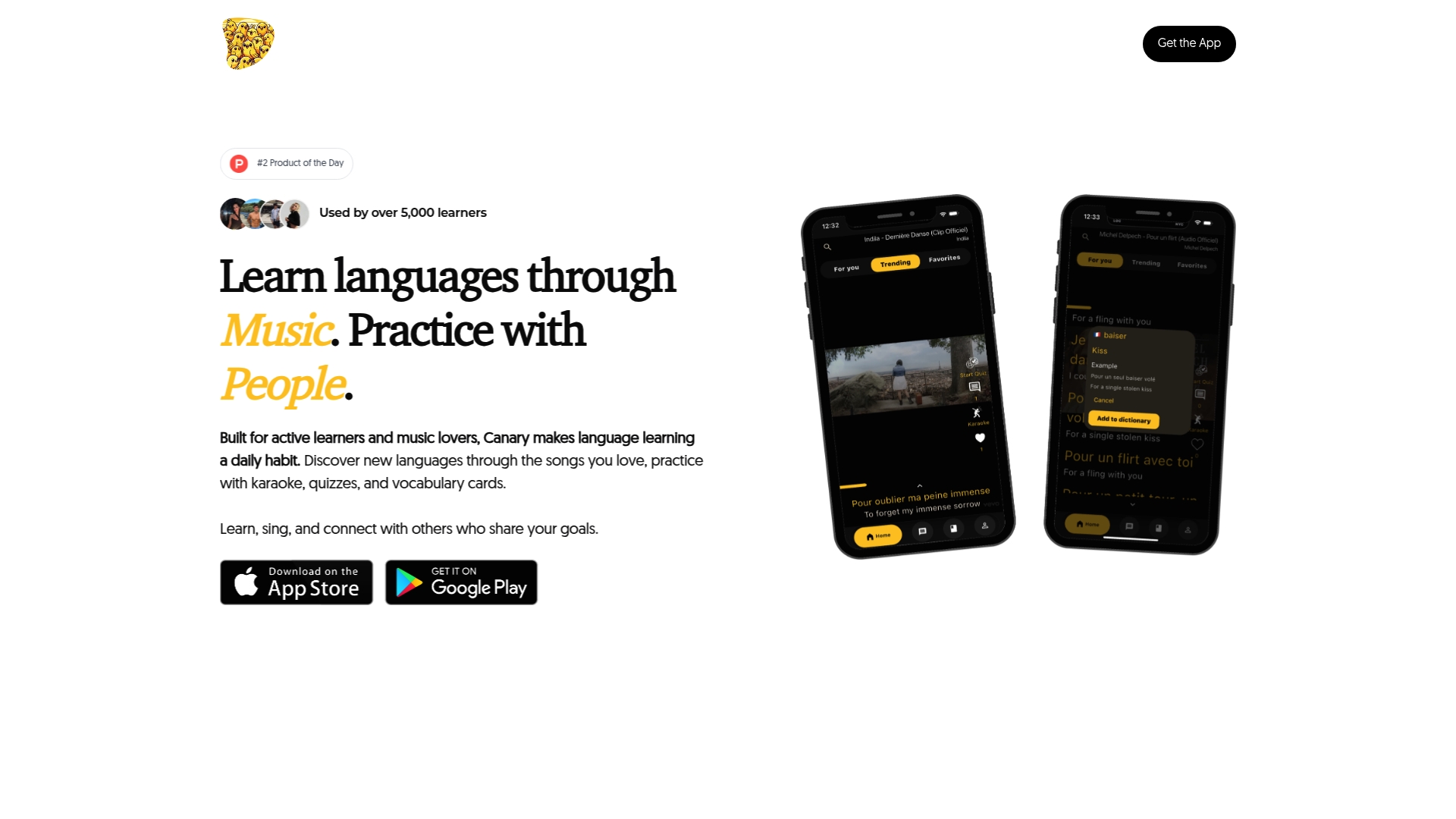
Start your music-infused journey now by visiting Canary. Discover how combining song-based learning with interactive practice can turn language challenges into rewarding milestones. Don’t wait to transform your language acquisition with Canary’s language learning platform today and experience a fresh, culturally immersive way to learn languages more effectively.
Frequently Asked Questions
How does music aid in language learning?
Music aids in language learning by engaging multiple cognitive processes, improving memory retention, pronunciation, and cultural understanding simultaneously. Its rhythmic and melodic components help learners internalize linguistic patterns more naturally.
What cognitive benefits does music provide for language learners?
Music enhances phonological processing, auditory working memory, and sound segmentation abilities, all of which contribute to improved language acquisition skills and faster comprehension of new linguistic systems.
Can music improve my pronunciation and memory in a new language?
Yes, engaging with music can significantly enhance pronunciation and memory. The repetition of lyrics and melodic patterns helps reinforce vocabulary retention and supports sound pattern recognition.
What are common pitfalls in using music for language learning?
Common pitfalls include selecting songs without clear educational objectives, focusing only on entertainment rather than linguistic development, and neglecting systematic analysis of vocabulary and grammar in the lyrics.