Learning Spanish or French through music feels natural until you realize that meaning shifts with every setting, mood, and group you sing with. For many music lovers wanting to refine pronunciation, the secret lies in understanding your personal learning context—not just memorizing lyrics. Context covers your motivation, current skills, and the environment where you practice. Discover how using context changes your approach, helping songs become powerful tools for real communication and deeper connections.
Table of Contents
- Defining Context In Language Learning
- Types Of Context: Linguistic, Cultural, Situational
- Music And Social Interaction As Context
- How Context Improves Pronunciation And Retention
- Common Mistakes With Out-Of-Context Learning
Key Takeaways
| Point | Details |
|---|---|
| Importance of Context | Understanding your learning context enhances language retention and pronunciation by connecting emotional and social elements. |
| Types of Context | Incorporate linguistic, situational, and cultural contexts to improve comprehension and communication skills. |
| Music and Social Interaction | Combining music with social interaction boosts language learning effectiveness by facilitating engagement and memory. |
| Avoiding Out-of-Context Learning | Isolated learning can lead to confusion and constant errors; integrating context is essential for actual communication. |
Defining context in language learning
Context in language learning isn’t just about the words you’re studying. It’s the complete picture of who you are as a learner right now: your current knowledge, your goals, what motivates you, and the environment where you’re learning.
Think of it like listening to a song in Spanish or French. The same lyrics mean something different when you’re learning with friends versus studying alone, or when you’re emotionally connected to the melody versus hearing it for the first time. That’s context at work.
Context in language learning describes your immediate learning situation—where you are, why you’re learning, what you already know, and what you need next. It’s not static. Your context shifts as you progress, as your motivation changes, or as your learning environment evolves.
What context actually includes
Context pulls together multiple layers:
-
Your knowledge state: What vocabulary you already know, which grammar rules you’ve mastered, how much you understand when native speakers talk at natural speed
-
Your motivation and goals: Whether you’re learning Spanish to connect with music you love or French because you want to travel—these reasons shape how you learn best
-
Your learning environment: Are you practicing alone with an app, singing karaoke with others, or having conversations in real time? Each setting demands different skills
-
Cultural and social factors: The way language works changes depending on who you’re talking to, where you are, and what relationship you have with them
Language always operates within specific circumstances that shape what words mean and how communication actually happens. Understanding these circumstances helps you communicate authentically, not just mechanically.
Why this matters for music-based learning
When you’re learning through songs, context becomes your biggest advantage. A phrase in a love song carries emotional weight. A rap verse teaches slang and rhythm that textbooks miss. Singing with others changes how you practice pronunciation compared to singing alone.
Your age, your musical taste, your peer group—all of this is context. It’s why learning Spanish through reggaeton hits lands differently than learning from classical poetry. Your motivation stays higher because the context matches what you care about.
Context isn’t background noise—it’s the fuel that makes language stick in your brain and helps you use it naturally in real conversations.
Pro tip: Identify your personal learning context before each practice session: Are you learning for social connection, cultural curiosity, or travel? This awareness helps you choose the right songs and practice methods that align with your actual goals.
Types of context: linguistic, cultural, situational
Context comes in three distinct flavors, and understanding each one transforms how you learn. Linguistic, situational, and cultural contexts each play a unique role in helping you understand meaning, use language appropriately, and communicate authentically.
Think of them as three lenses. Put on the wrong one, and even words you know become confusing. Use all three together, and language suddenly makes sense.
Linguistic context: words around words
Linguistic context is the text and language surrounding the words you’re learning. It’s what helps you figure out meaning when you don’t know every single word.
When you hear a Spanish song lyric mentioning “amor,” the surrounding words tell you whether it’s romantic love, love for family, or love for music. The verb tense, the adjectives nearby, the overall tone—all of this creates linguistic context.
In learning, this means:
-
Seeing new vocabulary in complete sentences instead of isolated lists
-
Noticing how grammar connects ideas together
-
Understanding word relationships through context clues, not memorization
-
Recognizing how stress and intonation shift meaning in spoken language
This is why songs are powerful. One phrase appears in multiple lines, with different surrounding words. Your brain absorbs meaning through repetition and variation, not rules.
Situational context: where and when
Situational context is the physical and social environment where communication happens. It answers: Who’s talking? Where are they? What’s their relationship?
Imagine the phrase “Comment ça va?” You’d say it casually to a friend at a café differently than to a professor in an office. Same words, different situation, different meaning and delivery.
Situational context includes:
-
The relationship between speakers (formal or casual)
-
The physical location (classroom, concert, street, online)
-
The timing and urgency of the conversation
-
The purpose of communication (greeting, asking help, sharing joy)
When you practice with others online, your situation changes everything. Singing karaoke with friends creates humor and relaxation that studying alone never will. Your pronunciation improves faster because you’re nervous and excited, not just focused.

Cultural context: shared meaning
Cultural context is the background knowledge, norms, and values that shape how language works in a specific community. It’s why the same word can be funny in one culture and offensive in another.
Cultural context means understanding:
-
Historical references embedded in common phrases
-
Humor styles and what people find amusing
-
Values and sensitivities around certain topics
-
Traditions and celebrations that influence language use
-
Social hierarchies and respect markers in speech
When you learn Spanish through reggaeton or French through indie pop, you’re absorbing cultural context simultaneously. You learn slang because artists use it naturally. You understand emotion because songs tap into cultural feelings. You connect with people because you understand what they care about.
All three contexts work together. Remove any one, and language becomes mechanical and disconnected from real communication.
Pro tip: When learning a song, analyze all three contexts: What words surround unfamiliar vocabulary (linguistic)? Who’s singing to whom and why (situational)? What cultural values or references does the song reflect (cultural)? This triple-lens approach makes lyrics stick and meaning click.
Here’s a quick overview contrasting the three core types of context in language learning:
| Context Type | Essential Focus | Key Example | Main Benefit |
|---|---|---|---|
| Linguistic | Language structure and usage | Deciphering nuanced meanings | Enhances comprehension |
| Situational | Setting and relationships | Greeting a friend vs. teacher | Enables appropriate response |
| Cultural | Shared values and references | Understanding song references | Fosters authentic connection |

Music and social interaction as context
Here’s where learning gets real. Music and social interaction don’t just help you learn—they fundamentally change how your brain processes language. When you combine them, something powerful happens.
Music and social interaction jointly facilitate word learning, especially in adult learners. Your cognitive systems activate differently when you’re singing with others than when you’re drilling vocabulary alone.
Why music matters as context
Music creates emotional anchors for language. A Spanish song about heartbreak doesn’t just teach you vocabulary—it connects those words to feeling. Your brain remembers emotional experiences better than random facts.
Music also provides rhythm and repetition without boredom. You hear the same phrases multiple times naturally. Your ear trains itself to recognize pronunciation patterns, stress, and intonation because you’re following the melody, not consciously studying.
Additionally, music offers cultural immersion. When you learn French through contemporary indie artists, you’re absorbing modern slang, current cultural references, and authentic accent patterns all at once.
Why social interaction transforms everything
Social interaction activates different learning mechanisms. When you sing karaoke with someone, you’re nervous, engaged, and motivated. Your brain stays alert. You care about pronouncing words correctly because another person is listening.
Singing with others creates:
-
Accountability: You can’t zone out if someone’s waiting for your turn
-
Real-time feedback: You hear yourself compared to native speakers and peers
-
Shared experience: Learning together builds confidence and connection
-
Competitive and cooperative energy: Both push you to try harder
Human musical behavior, including communal music-making, plays a critical role in social bonding. When you make music with others, your brains synchronize. The same neural pathways activating for rhythm and coordination also handle language processing.
The combined effect
Music alone helps. Social interaction alone helps. Together, they create a context that mirrors real communication. You’re not practicing language in isolation—you’re using it socially, emotionally, and rhythmically, exactly like native speakers do.
When you’re singing a Spanish reggaeton track with friends online, you’re not just memorizing lyrics. You’re bonding, laughing, competing, and experiencing language as connection, not curriculum.
Music plus social interaction creates context that sticks because it mirrors how humans naturally learn to communicate—through shared experience and emotional connection.
Pro tip: Choose songs you genuinely love and find singing partners at your level or slightly above. The combination of authentic music you care about plus people you want to impress creates the ideal context for rapid pronunciation improvement and vocabulary retention.
This table summarizes how music and social interaction uniquely support language learning outcomes:
| Factor | Supports Pronunciation | Boosts Vocabulary Retention | Adds Emotional Engagement |
|---|---|---|---|
| Music | Trains rhythm and stress | Repeats key phrases naturally | Connects words to feelings |
| Social Interaction | Encourages accurate speech | Reinforces words via feedback | Motivates through bonding |
| Both Combined | Mirrors native situations | Strengthens memory connections | Deepens learning experience |
How context improves pronunciation and retention
Context doesn’t just make learning easier—it fundamentally changes how your brain stores and retrieves language. When you encounter words in rich, meaningful situations, they stick harder and longer.
Why context locks in pronunciation
Your brain learns through patterns, not isolation. When you hear a Spanish word alone, it’s just a sound. When you hear it sung in a melody, with emotional weight, surrounded by related words, your brain activates multiple memory systems simultaneously.
Higher contextual information significantly improves vocabulary understanding and retention. The same applies to pronunciation. You don’t just learn how a word sounds—you learn it in rhythm, melody, and emotional context.
Context helps pronunciation because:
-
Rhythm and melody provide natural stress patterns you absorb unconsciously
-
Emotional connection creates stronger neural encoding for accent and intonation
-
Repetition in varied contexts prevents robotic pronunciation and builds natural variation
-
Social accountability pushes you to match native-like pronunciation when singing with others
How context strengthens retention
When you learn vocabulary in isolation, your brain stores it weakly. You might remember the definition, but forget the pronunciation or how to use it naturally.
Rich context activates multiple memory pathways. A French phrase in a love song connects to emotion, melody, lyrics before and after it, and the artist’s voice. Your brain encodes all of this together.
This is why you remember song lyrics from years ago but forget vocabulary from textbooks within weeks. The context makes retention automatic.
Authentic, interactive contexts produce the strongest results. Situated learning environments where you use language in authentic, collaborative contexts improve speaking skills, fluency, and long-term retention significantly more than isolated practice.
Context prevents forgetting
Spaced repetition works, but context works faster. When you encounter a word multiple times in different songs, sung by different artists, in different emotional contexts, your brain can’t forget it.
Each new context creates a new memory hook. The word becomes woven into multiple experiences instead of sitting in a single, fragile memory file.
When you sing with others, you encounter pronunciation variations, peer feedback, and social stakes. All of this drives the word deeper into long-term memory.
Context transforms learning from mechanical repetition into authentic communication, which is why contextual language sticks while isolated drills fade.
Pro tip: Don’t just learn songs passively. After each session, sing the same song with different people, at different times, and in different emotional states. Each new context creates another anchor for retention, making pronunciation and vocabulary stick permanently.
Common mistakes with out-of-context learning
Learning language without context feels efficient at first. You memorize vocabulary lists, drill grammar rules, repeat isolated phrases. But this approach creates problems that haunt you later when you try to actually use the language.
The isolation trap
Out-of-context learning tricks your brain into false confidence. You might recognize a word on a vocabulary quiz but freeze when hearing it in a real conversation. Your brain never learned the word in context, so it has no mental anchor for retrieval.
Out-of-context language learning leads to performance and competence errors that disrupt actual communication. These aren’t small mistakes—they’re the ones that make native speakers confused about what you’re trying to say.
Common errors from isolation include:
-
Pronunciation mistakes because you learned the word visually, not aurally
-
Grammar overgeneralization because you applied rules without seeing exceptions
-
Unnatural word choices because you picked dictionary definitions instead of observing real usage
-
Wrong stress and intonation because you never heard rhythm or emotion attached to words
Fossilization: when mistakes become permanent
Without context, errors calcify in your brain. When you practice isolated phrases repeatedly, incorrect patterns become automatic. Later, trying to fix them requires conscious effort every single time.
Error analysis reveals that out-of-context learning causes fossilization through insufficient contextualized input. Your brain treats the isolated phrase as correct because you’ve repeated it without correction or authentic comparison.
This is why someone who studied Spanish grammar for years still sounds unnatural. They never heard native speakers use those grammar rules in real conversation.
First language interference
Without context showing you how languages differ, your first language bleeds through. You translate word-for-word instead of grasping meaning. You apply English grammar patterns to Spanish because no contextual example showed you the difference.
Context prevents this. When you hear a French phrase used in a real situation, your brain understands it works differently than English. You absorb the difference naturally.
Why spaced drilling fails
Repetition without variation doesn’t build usable knowledge. Drilling “Hello, how are you?” fifty times teaches you a script, not communication. You can’t adapt it to different situations because you never learned the underlying patterns.
With contextual learning through songs and social practice, you encounter phrases multiple ways. Your brain builds flexible understanding instead of brittle memorization.
Out-of-context learning creates the illusion of progress while building habits and errors that stick for years.
Pro tip: If you’ve been learning from flashcards or grammar drills, spend this week learning just two songs thoroughly instead. Sing them with others, analyze context, hear how words function in real communication. This single switch breaks the isolation cycle faster than months of traditional study.
Unlock Language Learning Success with Music and Social Connection
The article reveals the crucial role of context in mastering pronunciation and vocabulary retention. If you have ever felt stuck using isolated drills or flashcards that fail to bring real-life communication, you are not alone. The challenge is clear: without engaging linguistic, situational, and cultural contexts your language skills stay mechanical and disconnected. You want learning that sticks, that connects emotionally, and propels you toward confident conversation.
Canary understands these pain points and offers a solution perfectly aligned with this article’s insights. Our innovative platform combines the power of music-based practice and social interaction to create immersive contexts where language naturally sticks. Singing internationally loved songs with others sharpens your pronunciation while vibrant karaoke sessions build real-time feedback loops. You absorb cultural references effortlessly, making vocabulary memorable without the frustration of isolation.
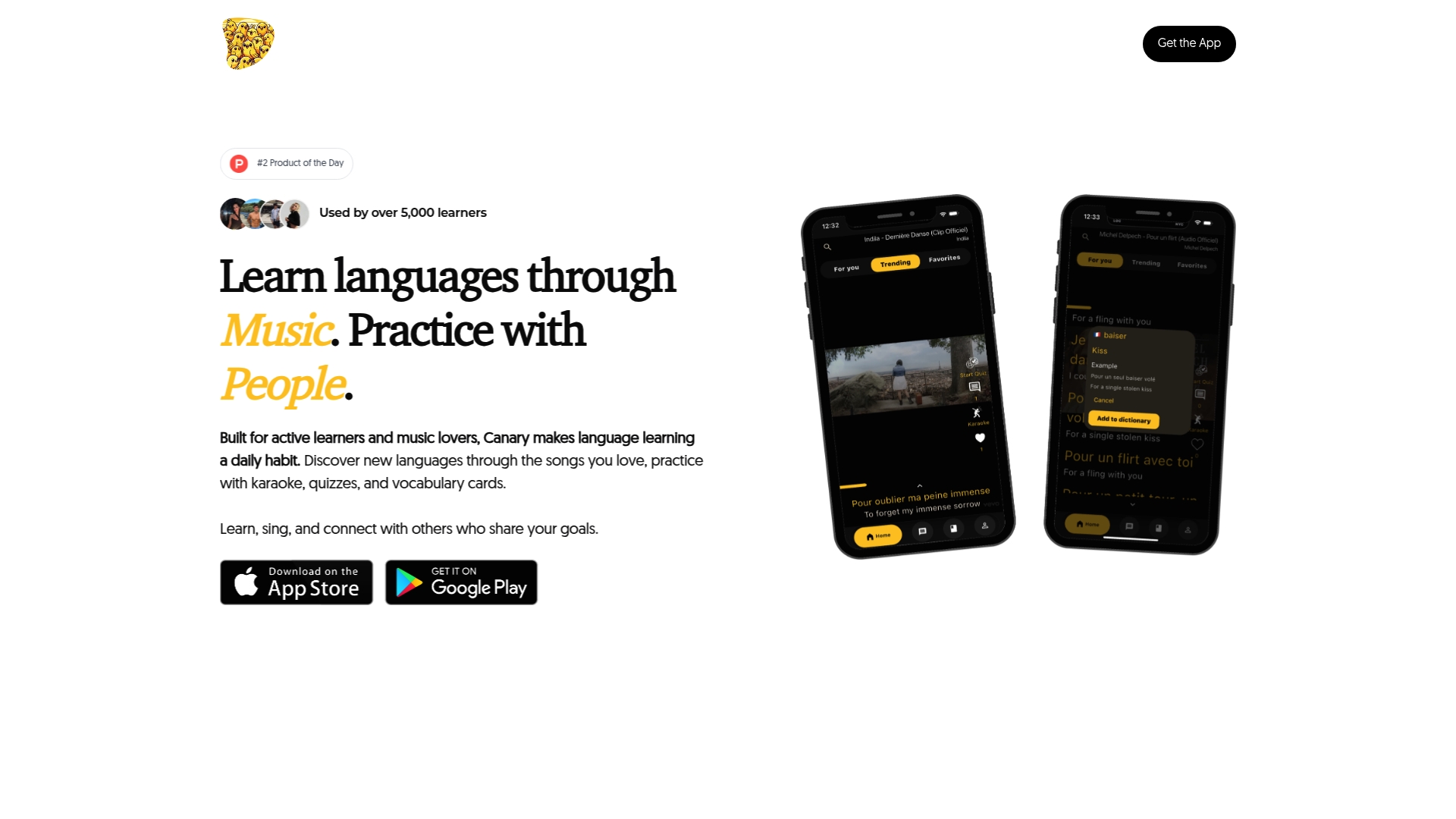
Join thousands of active learners who have transformed their language habits through Canary’s unique approach. Experience how context unlocks your language potential and makes learning enjoyable rather than a chore. Start your journey now at Canary and explore why song-based, socially connected practice beats traditional study methods. Don’t wait to see how effortlessly language flows when you learn the way humans were meant to — through connection, music, and culture.
Explore the Canary platform to dive into immersive song learning. See how our interactive karaoke sessions harness social energy for rapid progress. Visit https://singwithcanary.com and start turning context into your strongest learning ally today.
Frequently Asked Questions
What is the role of context in language learning?
Context in language learning refers to the complete situation surrounding the learner, including their existing knowledge, motivations, goals, and the environments in which they practice. It plays a crucial role in how effectively one can learn and use a language.
How does musical context impact language retention?
Musical context enhances language retention by creating emotional connections to words and phrases, leveraging rhythm and repetition, and providing cultural immersion, all of which make it easier for learners to remember and use the language naturally.
Why is social interaction important in language learning?
Social interaction activates different cognitive mechanisms that enhance learning. It encourages real-time feedback, builds accountability, and creates shared experiences that make the learning process more engaging and effective.
How can I analyze the context when learning a song?
To analyze context while learning a song, consider three aspects: linguistic context (the surrounding words), situational context (who is singing and the relationship to the audience), and cultural context (the references and values within the song). This approach helps deepen your understanding and enhances retention.