Social interaction reliably boosts cognitive processing, motivation, and socio-emotional skills that support learning — and the single fastest thing you can do today is assign a structured pair-explanation task where one student teaches a concept to another, then swap roles. That one move activates at least three evidence-backed mechanisms at once.
- Peer-assisted learning produces gains for both sides of the exchange: tutees build knowledge and confidence while tutors deepen their own understanding through the act of explaining, according to a scoping review of 24 systematic reviews.
- Social connectedness is linked to measurable improvements in physical and mental health outcomes, not just academic performance.
- Social presence, not raw interaction count, predicts perceived learning and satisfaction in both face-to-face and online settings.
The practical implication: designing for quality of interaction matters more than scheduling more of it. A 10-minute structured discussion with clear roles outperforms 30 minutes of unstructured group time in most classroom contexts.
Key Takeaways
Social interaction benefits learners most when tasks are designed for genuine interdependence, explicit explanation, and social presence — not simply when students are placed near each other.
| Point | Details |
|---|---|
| Design for quality, not quantity | A 10-minute structured pair explanation outperforms 30 minutes of unstructured group time in most classroom contexts. |
| Tutors gain as much as tutees | Peer tutors often deepen their own content retention because teaching requires retrieval, organization, and gap-detection. |
| Social presence predicts outcomes | Students who feel genuinely present in interactions report higher perceived learning and satisfaction, regardless of raw participation counts. |
| Scaffold before you step back | Assign explicit roles, model good explaining, and use sentence starters before expecting students to collaborate productively. |
| Singwithcanary for daily practice | Singwithcanary’s music-based social features give language learners a low-anxiety, multimodal way to build the consistent practice habit that research links to proficiency gains. |
Table of Contents
- What does the research say about social interaction benefits for learners?
- What specific outcomes does social interaction improve?
- Which peer-learning models have the strongest evidence?
- Practical classroom strategies you can use tomorrow
- How do online and hybrid approaches support social learning?
- How do you measure social connection and its learning impact?
- What are the most common challenges in social learning, and how do you fix them?
- How Singwithcanary’s music-based approach works in practice
- What the research gets right, and what classrooms still get wrong
- Singwithcanary brings music and social practice together for language learners
- Sources
What does the research say about social interaction benefits for learners?
The evidence base here is genuinely strong, though it comes with important caveats about context and design.
What the literature shows
Peer-assisted learning (PAL) has been studied across health professions, STEM, and K–12 settings. A scoping review synthesizing 24 systematic reviews found consistent reciprocal benefits: tutees typically improve their knowledge and self-efficacy, while tutors gain deeper subject mastery and develop leadership and communication skills. Some outcome measures, particularly standardized test scores, show mixed results across contexts, which is worth flagging honestly.
For language learning specifically, the case is even more direct. Learners rarely reach high proficiency without meaningful social contexts that supply multimodal cues, real-time feedback, and the kind of negotiated meaning-making that drills cannot replicate. A review published in npj Science of Learning argues that social interaction shapes second-language acquisition at a fundamental level, and that tools like VR can recreate ecologically valid social environments when in-person practice is limited.
The mechanisms that explain why
Several distinct mechanisms connect interaction to learning gains:
Social presence is the feeling of being a real person in a shared space with others. An SNA-based study found that social presence mediates the relationship between participation patterns and perceived learning outcomes. Students who felt socially present reported higher achievement and satisfaction even when their raw interaction counts were similar to peers who did not.
Cognitive congruence explains why a near-peer tutor sometimes outperforms an expert instructor for a struggling student. Peers share contextual mental models and can translate concepts into language that matches where the learner actually is, not where the curriculum assumes they are.
Distributed cognition describes how groups collectively hold and process more information than individuals. When a team works through a problem, each member’s partial understanding contributes to a shared solution that none could reach alone.
Observational learning and encoding specificity in social contexts round out the picture: watching a peer make and correct an error is often more memorable than hearing a teacher explain the correct answer, because the social context creates a richer retrieval cue.
Where the evidence is robust vs. conditional
Effects are most consistent for conceptual understanding, self-efficacy, and communication skills. Effects on standardized test scores are more variable and depend heavily on task design, group composition, and whether explicit scaffolding is in place. Online-only interactions show benefits for self-regulated learners but weaker gains for those who need more structure.
What specific outcomes does social interaction improve?
Cognitive and academic gains
When students explain a concept to a peer, they are doing something cognitively demanding: retrieving information, organizing it, and monitoring whether the listener understands. Research on peer tutoring confirms that tutors often gain more from this process than tutees, because teaching requires the kind of deep processing that passive study does not. This is sometimes called “learning twice” — once when you study, again when you teach.

Peer explanation also drives retrieval practice, one of the most durable learning strategies in cognitive psychology. When a student has to recall and articulate a concept without notes, they consolidate it more effectively than if they re-read it.
Deeper comprehension follows from argumentation and disagreement within groups. When students have to defend a position or reconcile conflicting answers, they process material at a level that lecture-based instruction rarely reaches.
Socio-emotional development
Social interaction builds self-efficacy — the belief that you can succeed — through two channels: direct performance (you explained it and they understood) and vicarious experience (you watched a peer struggle and succeed with something you also found hard). Both are more powerful than verbal encouragement alone.
Group belonging and social acceptance matter especially for students who are marginalized or new to a learning environment. Online social networking research shows that platforms enabling self-recognition and social acceptance can support university acculturation and affective wellbeing, though these benefits are conditional on learners’ self-regulation.
Empathy develops naturally when students work through problems together and encounter perspectives different from their own. This is not a soft outcome — it correlates with reduced conflict and better group performance over time.
Motivation and wellbeing
Engagement tends to be higher in social learning contexts because the presence of peers creates mild positive accountability. Students are less likely to disengage when someone else is counting on their contribution.
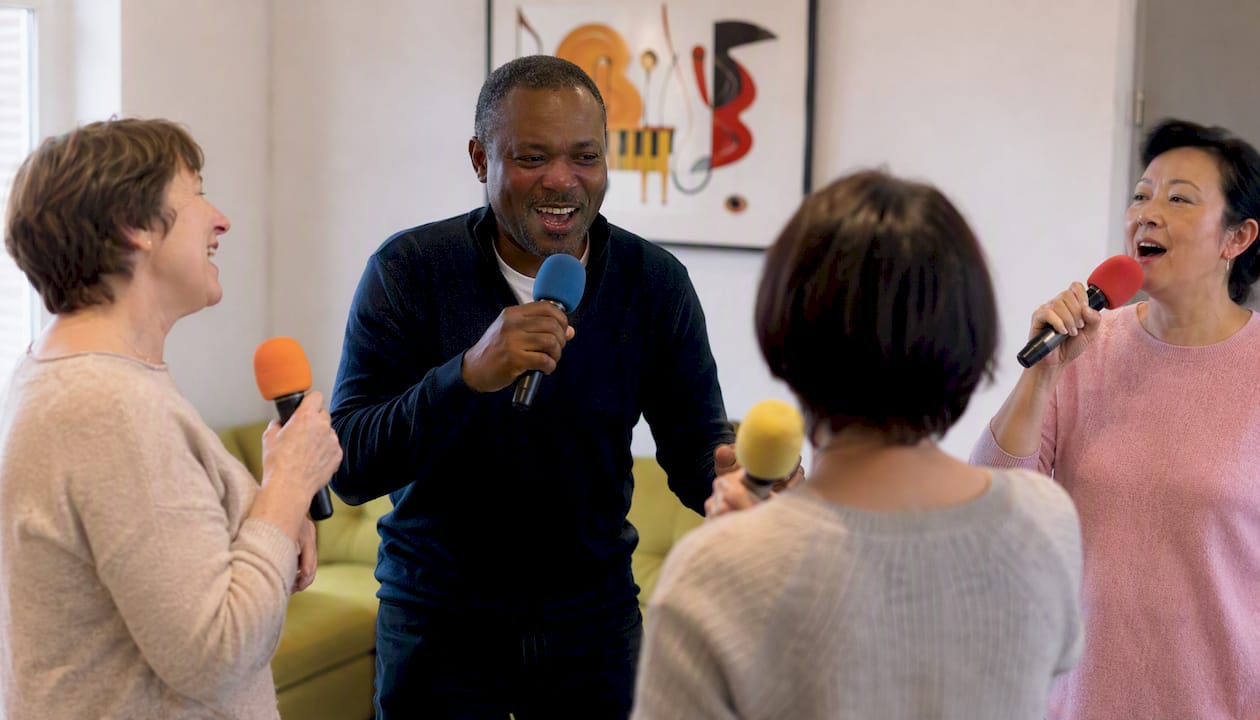
Anxiety around performance can go either way. Structured, low-stakes peer interaction typically reduces speaking anxiety, particularly in language learning. Unstructured or high-stakes group work can increase it, especially for students who already feel academically insecure. The design of the activity matters more than the activity type.
Sustained practice habits form more reliably when learning has a social component. The CDC’s guidance on social connectedness links regular social engagement to long-term wellbeing outcomes, and the same principle applies in educational settings: learners who practice with others tend to practice more consistently than those who study alone.
Which peer-learning models have the strongest evidence?
The Harvard HILT peer learning research identifies four design factors that consistently correlate with better outcomes: positive interdependence, requiring explanation or argumentation, explicit scaffolding, and deliberate team rapport-building. The named models below each embody a different combination of these factors.
Jigsaw splits a topic into segments and assigns each student one segment to master, then teaches to the group. Every member holds unique information the others need, which creates genuine interdependence. It works well for content-heavy units where coverage breadth matters. The main caveat: students who struggle with their segment can inadvertently spread misconceptions, so teacher monitoring during the “expert” phase is non-negotiable.
Peer Instruction (developed by Eric Mazur at Harvard) uses a question-vote-discuss-revote cycle. Students commit to an answer individually, then discuss with neighbors, then vote again. The discussion phase is where learning happens: students who got it right explain their reasoning to those who did not. It is particularly effective for conceptual understanding in STEM and works well in large classes.
Problem-Based Learning (PBL) presents a complex, real-world problem before instruction. Groups must identify what they know, what they need to find out, and how to divide the work. PBL builds collaboration skills and self-directed learning alongside content knowledge, but it requires more preparation time and works best when students already have baseline procedural fluency.
Peer-Assisted Learning (PAL) pairs a more experienced learner with a less experienced one in a structured tutoring format. The scoping review evidence is clearest here: both parties benefit when the tutor is trained, the sessions are structured, and the content is well-defined. Unstructured PAL tends to produce inconsistent results.
Decision checklist for choosing a model:
- Skill practice with immediate feedback → Peer Instruction or PAL
- Conceptual depth and argumentation → Peer Instruction or Jigsaw
- Collaboration and self-direction skills → PBL
- Formative assessment of peer understanding → PAL or Peer Instruction
- Large content volume to cover → Jigsaw
All four models require explicit scaffolding, especially early in the school year before group norms are established. Skipping the scaffold phase is the most common reason peer learning underperforms in practice.
Practical classroom strategies you can use tomorrow
These activity templates are designed to be low-prep and immediately usable. Each includes a launch script, a scaffold for lower-ability learners, and a quick formative check.
-
Structured pair explanation (10–15 minutes). Partner A explains a concept to Partner B without notes for 2 minutes. Partner B asks one clarifying question. Roles swap. Launch script: “Your job is to explain this as if your partner has never heard it before. You don’t need to be perfect — gaps are useful.” Scaffold: Give lower-ability learners a sentence starter (“This concept means… because…”). Formative check: Ask each pair to write one thing their partner explained well and one thing that was still unclear.
-
Reciprocal peer tutoring (20–30 minutes). Pairs take turns as tutor and tutee on alternating problems. The tutor works through a problem aloud while the tutee listens and identifies errors. Scaffold: Provide tutors with a prompt list (“Did you check your units? Can you explain why you did that step?”). Peer tutoring research confirms that preparing to teach forces the retrieval and organization that deepens retention.
-
Jigsaw lesson outline (45–60 minutes). Divide a reading or topic into 3–4 segments. Form “expert groups” that each study one segment for 15 minutes, then regroup into “teaching groups” with one expert from each segment. Each expert teaches their piece. Formative check: Exit ticket asking students to summarize what they learned from a peer, not from their own segment.
-
Discussion protocol: “Claim, Evidence, Reasoning” (15 minutes). Each student writes a claim about the topic, finds one piece of evidence, and explains their reasoning. Pairs share and challenge each other’s reasoning. Launch script: “You’re not trying to win — you’re trying to find where your reasoning breaks down.” Scaffold: Provide a sentence frame (“My claim is… My evidence is… This supports my claim because…”).
-
Collaborative problem-solving with assigned roles (20–25 minutes). Groups of 3–4 tackle a problem with explicit roles: Reader (reads the problem aloud), Strategist (proposes an approach), Skeptic (challenges assumptions), Recorder (documents the solution). Rotate roles across sessions. This addresses the dominant-voice problem directly.
-
Music-based social practice (15–20 minutes). Play a short song in the target language. Students identify 3 vocabulary items they do not know, look them up, then explain their meaning and context to a partner using the lyric as the example sentence. This maps directly to the educational benefits of music in language learning and provides a low-anxiety entry point for reluctant speakers.
Pro Tip: The most common teacher mistake in peer learning is launching the activity before establishing what “good explaining” sounds like. Spend 3 minutes modeling a bad explanation and a good one before the first session. Students who have never been asked to explain before will default to reading from their notes — modeling breaks that habit before it forms.
How do online and hybrid approaches support social learning?
Online environments can support the social interaction benefits for learners that face-to-face settings provide, but only when the design prioritizes social presence over convenience.
The SNA research on social presence is unambiguous on this point: students who felt genuinely present in their online interactions reported better learning outcomes and higher satisfaction, even when their raw participation counts were comparable to peers who did not feel that presence. This has direct design implications: small-group video beats large-group forums, and named, camera-on interactions beat anonymous text threads.
What works in online and hybrid formats:
Live small-group video (3–5 students) with a structured task replicates most of the social presence conditions of in-person work. Structured forum tasks with social prompts (“Respond to a peer’s post by asking one question they cannot answer with a yes or no”) produce more learning than open-ended discussion boards. Music-based synchronous practice, where students sing along together or quiz each other on lyrics, adds multimodal cues that text-only formats lack. The role of social interaction in language learning is particularly well-supported in multimodal, synchronous formats.
For language learners, the evidence from npj Science of Learning is clear: multimodal, socially situated practice supports high-level proficiency in ways that isolated drill-and-recall methods do not. VR environments can recreate ecologically valid social contexts, though access and cost remain barriers for most classrooms.
Where online-only falls short:
Online social networking can promote self-recognition, social acceptance, and academic skill-building, but these benefits are conditional on learners’ self-regulation. Students who struggle with self-directed learning tend to gain less from asynchronous online formats. Offline interactions still play a critical role, particularly for younger learners and those building foundational social skills.
Digital platforms that optimize social rewards can act as what one theoretical paper calls a “prosthetic social milieu” that enhances learning for some students, but gains vary and require attention to platform design and learner self-regulation. Equity and access concerns are real: not every student has reliable internet, a private space for video calls, or a device they do not share with siblings.
Practical cautions: Moderate online forums actively. Set explicit norms for camera use and participation. Build in offline alternatives for students with access barriers. Do not assume that a student who is quiet online is disengaged — they may simply lack the technical conditions for participation.
How do you measure social connection and its learning impact?
Measurement does not need to be elaborate. A short, consistent set of indicators collected at three points (baseline, mid-cycle, post-intervention) gives you enough signal to know whether your social learning strategies are moving outcomes.
Sample survey items (validated-feeling, short scales)
For social presence (rate 1–5, Strongly Disagree to Strongly Agree):
- “I felt like a real person to my classmates during this activity.”
- “I could tell that my partner was genuinely listening to me.”
- “I felt comfortable sharing an idea I was unsure about.”
For belonging and social acceptance:
- “I feel like I belong in this class.”
- “My classmates value my contributions.”
For perceived learning:
- “I understood the material better after discussing it with a peer.”
- “Explaining to my partner helped me find gaps in my own understanding.”
Peer-work rubric (4-point scale)
| Criterion | 1 (Beginning) | 2 (Developing) | 3 (Proficient) | 4 (Exemplary) |
|---|---|---|---|---|
| Explanation clarity | Unclear or incomplete | Partially clear | Clear with minor gaps | Clear, complete, well-organized |
| Active listening | Distracted or passive | Occasional engagement | Consistent engagement | Asks probing follow-up questions |
| Constructive feedback | None offered | Vague or generic | Specific and relevant | Specific, kind, and actionable |
| Task contribution | Minimal | Partial | Full | Full, plus supports peers |
Evaluation timeline
- Baseline (Week 1): Administer the 6-item social presence and belonging survey. Record a baseline academic score (quiz, exit ticket, or pre-test).
- Formative check (Week 3–4): Re-administer 3 social presence items. Use the peer-work rubric on one observed activity. Adjust groupings or scaffolds based on results.
- Post-intervention (Week 6–8): Full survey re-administration plus academic outcome measure. Compare social presence scores against learning gains to see whether the relationship holds in your context.
Key indicators to track:
- Change in social presence scores from baseline to post-intervention
- Rubric scores on explanation clarity and active listening across sessions
- Academic outcome measure (quiz score, written response quality, or oral assessment)
- Student-reported anxiety level before and after peer activities (single item: “How nervous did you feel before today’s peer activity?” 1–5 scale)
What are the most common challenges in social learning, and how do you fix them?
Group work fails in predictable ways. The good news: most failure modes have well-tested fixes.
Dominant voices and status differences. In any group, one or two students tend to take over. This is not just a personality issue — it reflects existing status hierarchies that the classroom did not create but can inadvertently reinforce. Fix: assign explicit roles (Facilitator, Skeptic, Recorder, Reporter) and rotate them every session. The Skeptic role is particularly useful because it gives quieter students a legitimate reason to push back.
Social loafing. Students who know their individual contribution will not be assessed tend to let others carry the load. Fix: use individual accountability structures alongside group tasks. Each student submits their own explanation or reflection after a group activity. Peer-work rubrics with individual contribution criteria also help.
Unequal access and equity concerns. Group activities can advantage students who already have strong language skills, social confidence, or prior knowledge. This is especially acute in mixed-ability or multilingual classrooms. Fix: use structured heterogeneous grouping for some tasks (so stronger students scaffold weaker ones) and homogeneous grouping for others (so lower-ability students are not always in the dependent role). Provide sentence starters, vocabulary supports, and visual scaffolds for students who need them.
Off-task behavior. Peer time becomes social time without clear task structures and time limits. Fix: use a visible timer, assign a specific product (a written answer, a diagram, a ranked list), and circulate actively during the activity rather than using the time to prep the next lesson.
Online safety and moderation. In digital formats, unmoderated peer interaction can expose students to inappropriate content or interpersonal conflict. Fix: use closed, teacher-monitored platforms. Set explicit community norms at the start of any online peer activity. For younger learners, synchronous formats with teacher presence are safer than asynchronous forums.
Equity checklist before launching a peer activity:
- Does every student have the vocabulary and background knowledge to participate meaningfully?
- Are groups structured so no student is always in the low-status role?
- Do students with language barriers, learning differences, or anxiety have a scaffold that lets them contribute?
- Is the task designed so that every student’s contribution is visible and valued?
- For online activities: does every student have reliable access to the required technology?
How Singwithcanary’s music-based approach works in practice
Music-driven social practice maps directly onto the mechanisms covered in this article: multimodal input, social presence, retrieval through articulation, and low-anxiety speaking practice. Here is how a classroom session using Singwithcanary might look.
Platform features that support social practice
Singwithcanary combines karaoke-style lyric practice, vocabulary cards, quizzes, and community interaction with international learners. The karaoke feature provides multimodal input (audio, text, rhythm) that supports pronunciation and ear training simultaneously. Vocabulary cards tied to song lyrics give students a contextual anchor for new words rather than a decontextualized list. The community features allow learners to practice with native speakers and other learners globally, which recreates the social, multimodal conditions that research identifies as central to language proficiency.
A sample classroom session (20–25 minutes)
Setup (3 minutes): Teacher selects a song in the target language and assigns pairs. Each pair has one device between them (device-sharing is viable here because the activity is collaborative by design).
Listening and vocabulary identification (5 minutes): Partners listen together and each identifies 2–3 words they do not recognize. They compare lists and select 3 to look up using the vocabulary card feature.
Peer explanation (7 minutes): Each partner explains their chosen words to the other using the lyric as the example sentence. The listener asks one question about each word.
Karaoke practice (5 minutes): Both students sing the chorus together, focusing on the words they just learned. The social, low-stakes format reduces speaking anxiety while providing pronunciation practice.
Exit reflection (3 minutes): Each student writes one word they will remember and why. This is the retrieval consolidation step.
Equity adaptations
For low-bandwidth settings, the vocabulary card and quiz features work offline. For classrooms with limited devices, the karaoke and listening phases work well on a single shared screen projected for the group. Students without home access can use the app’s weekly song activity as a self-contained practice session that requires minimal data.
What the research gets right, and what classrooms still get wrong
The evidence for social learning is solid. What is less solid is how most classrooms implement it.
The research consistently shows that the design of social interaction matters far more than the amount of it. Yet the most common classroom response to “add more collaboration” is to add more unstructured group time. Students sit in groups but work individually. Or one student does the work while others watch. Or the discussion runs for 20 minutes and produces nothing a teacher can assess.
The mechanisms that make peer learning work — cognitive congruence, social presence, retrieval through explanation — do not activate automatically when you put students near each other. They activate when the task requires genuine interdependence, when every student has a role that demands contribution, and when the teacher has modeled what good explaining looks like before asking students to do it.
There is also a tendency to treat social learning as a motivational tool rather than a cognitive one. It is both, but the cognitive case is stronger and more defensible to skeptical parents or administrators. When a student explains a concept to a peer, they are doing something neurologically distinct from re-reading their notes. That distinction is worth making explicit to students too — telling them why they are explaining to each other, not just asking them to do it.
The other underappreciated finding: the benefits flow in both directions, but they are not symmetrical. Tutors often gain more than tutees in terms of deep content retention. If you are designing a peer program and only measuring tutee outcomes, you are missing half the story.
Singwithcanary brings music and social practice together for language learners
Language learners who want to practice speaking but dread the awkwardness of conversation practice have a specific problem: they need social interaction to improve, but the social stakes feel too high to practice regularly. Singwithcanary addresses that gap directly.
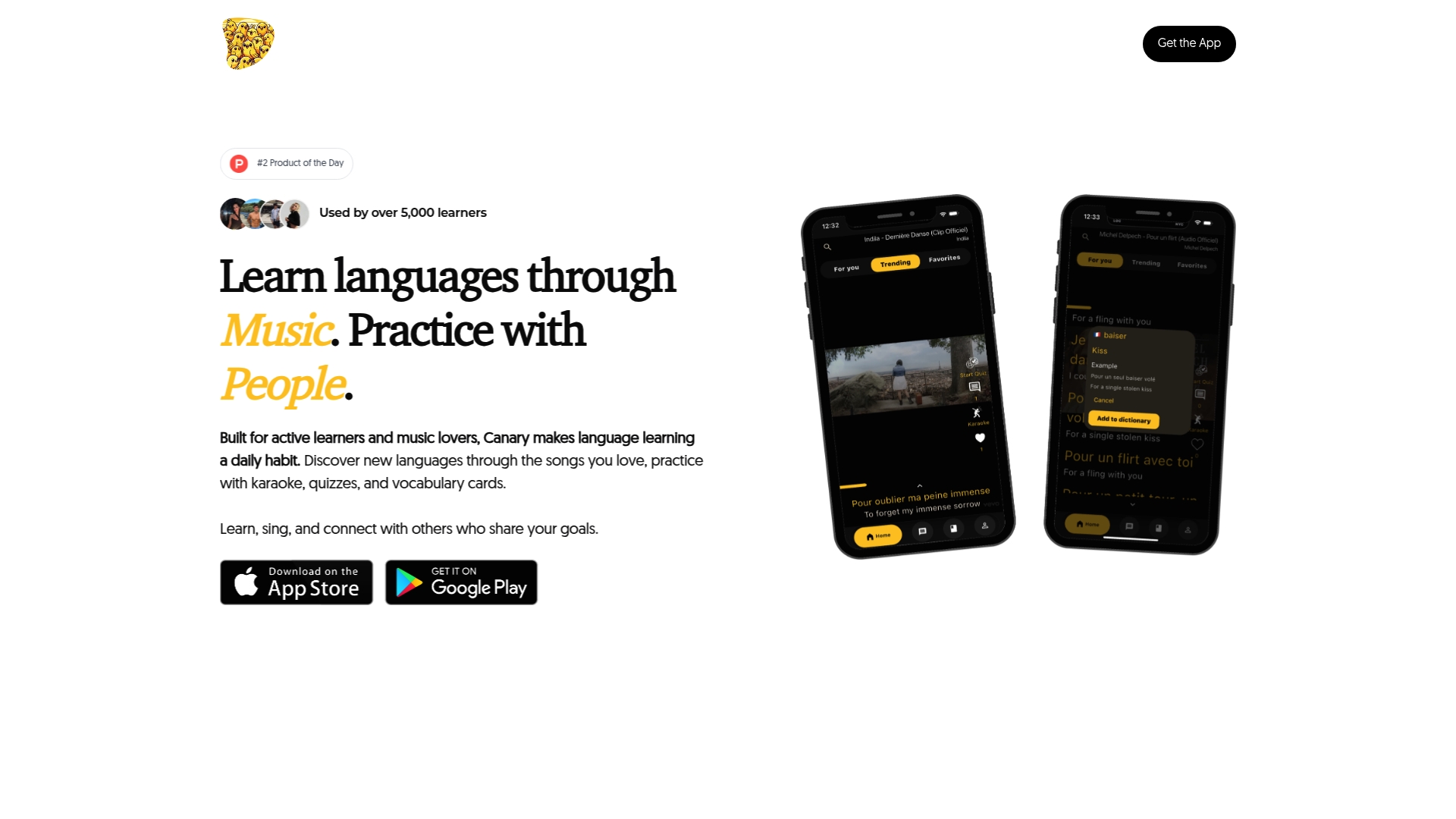
The platform pairs song-based vocabulary and pronunciation practice with community features that connect learners to native speakers and other students worldwide. Karaoke, quizzes, and vocabulary cards tied to real song lyrics give learners a structured, low-anxiety entry point into social practice. The music context levels the playing field: everyone is working from the same lyrics, which reduces the status anxiety that makes traditional conversation practice feel intimidating.
Singwithcanary fits best for adult and motivated learners who want daily practice that does not feel like homework, and for educators looking for a supplementary tool that adds a social, multimodal dimension to language instruction. It is not a replacement for structured classroom instruction, but as a daily practice habit, it delivers the kind of consistent, socially situated exposure that research links to real proficiency gains.
Start your free trial at Singwithcanary and see whether music-driven social practice fits your learners’ needs.
Sources
- Effectiveness of Peer-Assisted Learning in health professional education: a scoping review of systematic reviews | BMC Medical Education | Springer Nature Link
- Social interaction shapes and boosts second language learning: virtual reality can show us how | npj Science of Learning
- Embedded self-conceptualization and social learning in online social networking platforms - PMC
- Peer tutoring benefits both tutors and tutees (PLOS One article)