TL;DR:
- Integrating music into language practice leverages emotional connections and memorability to make learning more effective and enjoyable.
- Choosing the right songs and techniques based on your goals, schedule, and preferences enhances your progress and maintains motivation.
You set a goal to learn a new language, you download the app, and you study hard for two weeks. Then life happens, motivation fades, and the streak dies. Sound familiar? The problem usually isn’t willpower. It’s that most daily practice routines feel like homework, and homework is easy to skip. Music is different. You already listen to it every day, you connect to it emotionally, and you remember song lyrics years after you’ve forgotten a vocabulary list. Blending your love of music with intentional language practice doesn’t just make learning more enjoyable. It actually makes it more effective.
Table of Contents
- How to choose the right song-based practice tips for you
- The top 9 song-based language practice tips for your daily routine
- How do song-based methods compare to traditional daily practice?
- Pitfalls to avoid and best practices for song-powered routines
- A music-first routine: Why song-based language learning beats ‘just studying’
- Level up your daily routine with guided song-based tools
- Frequently asked questions
Key Takeaways
| Point | Details |
|---|---|
| Shadowing accelerates fluency | Repeating lyrics alongside music improves real-time speaking skills and pronunciation more than delayed repetition. |
| Singing deepens vocabulary | Listening and singing back phrases strengthens memory retention and recall of new words. |
| Music increases motivation | Song-based routines keep daily language practice fun and sustainable for adults. |
| Mix methods for best results | Combining traditional study with song-based tips leads to higher accuracy and overall language growth. |
How to choose the right song-based practice tips for you
Now that you know what makes daily language routines effective, let’s explore how music-specific strategies can jumpstart progress, starting with how to select the right approach for your lifestyle.
The first step is identifying your biggest goal. Are you struggling with pronunciation and accent, or is your vocabulary holding you back in conversation? Maybe it’s both. Understanding your main weakness helps you pick the right technique instead of doing everything at once and burning out.
Next, think honestly about intensity. Some learners have forty-five minutes in the morning and want a structured session. Others can realistically spare five to ten minutes during a commute or lunch break. Casual methods like listening and humming along work well in short windows. Intensive methods like lyric breakdown or shadowing demand fuller attention and a quieter space. Matching the method to your actual schedule is what separates a practice habit that sticks from one that falls apart by week two.
You should also think about the music itself. The benefits of song-based learning are strongest when you genuinely enjoy what you’re listening to, but don’t stay in a comfort zone forever. Songs you already love are great entry points, but music packed with unfamiliar vocabulary is where the real growth happens.
Key factors to evaluate when choosing your approach:
- Goal focus: Pronunciation vs. vocabulary vs. conversational fluency
- Session length: Five minute micro-sessions vs. full thirty-minute deep dives
- Engagement style: Active (singing, writing) vs. passive (listening, absorbing)
- Language level: Beginner tracks with slower tempos vs. advanced hip-hop with dense slang
- Social preference: Solo practice vs. community-based challenges with other learners
Pro Tip: Rotate genres every two to three weeks. Pop gives you clean diction and common vocabulary. Folk offers storytelling structures and nature-based idioms. Hip-hop delivers rapid-fire slang and street-level colloquialisms. Each genre exposes you to a different accent, rhythm, and register of the language you’re learning.
The top 9 song-based language practice tips for your daily routine
With your criteria set, let’s break down the nine most effective ways to use songs for language breakthrough and how each one fuels daily improvement.
1. Shadow the singer. This means speaking along in near real-time while the track plays, matching the singer’s exact rhythm, stress, and intonation. Shadowing is a core pronunciation mechanism that trains your mouth and ears simultaneously, making it one of the fastest routes to a more natural accent.
2. Sing back phrases. After listening to a verse, pause the track and sing the phrase back from memory. This “listen then reproduce” loop is where the real magic happens. Singing outperforms speaking in some foreign-language memorization tasks because the melody creates an extra retrieval cue in your brain, giving you two ways to recall a word instead of one.
3. Highlight and translate new lyrics. Print or pull up the full lyrics and mark every unfamiliar word before you even press play. After your first listen, write a quick translation and your best guess at context. This builds a personal vocabulary bank that is tied to real emotional moments in a song, which are far more memorable than flashcard definitions.
4. Use slow-down tools for tricky lines. Apps like Amazing Slow Downer or the variable speed function in many music players let you hear blurred or fast syllables clearly. Native-speed pronunciation often swallows consonants and blends words together. Slowing it down by thirty percent makes the phonetics visible without distorting the pitch too badly.
5. The rhyme challenge. Pick a verse you know well and swap out key words with new vocabulary you’re trying to learn, keeping the melody and rhyme scheme intact. Writing these substitutions forces you to think about grammar, word stress, and syllable count all at once. Then perform your version out loud.
6. Record yourself and compare. This is the single most underused technique. Use your phone, sing or speak a verse, then play it back beside the original. Your ear will immediately catch pronunciation gaps that you completely miss during live practice. Consistent recording creates a personal audio log of your progress over weeks and months.
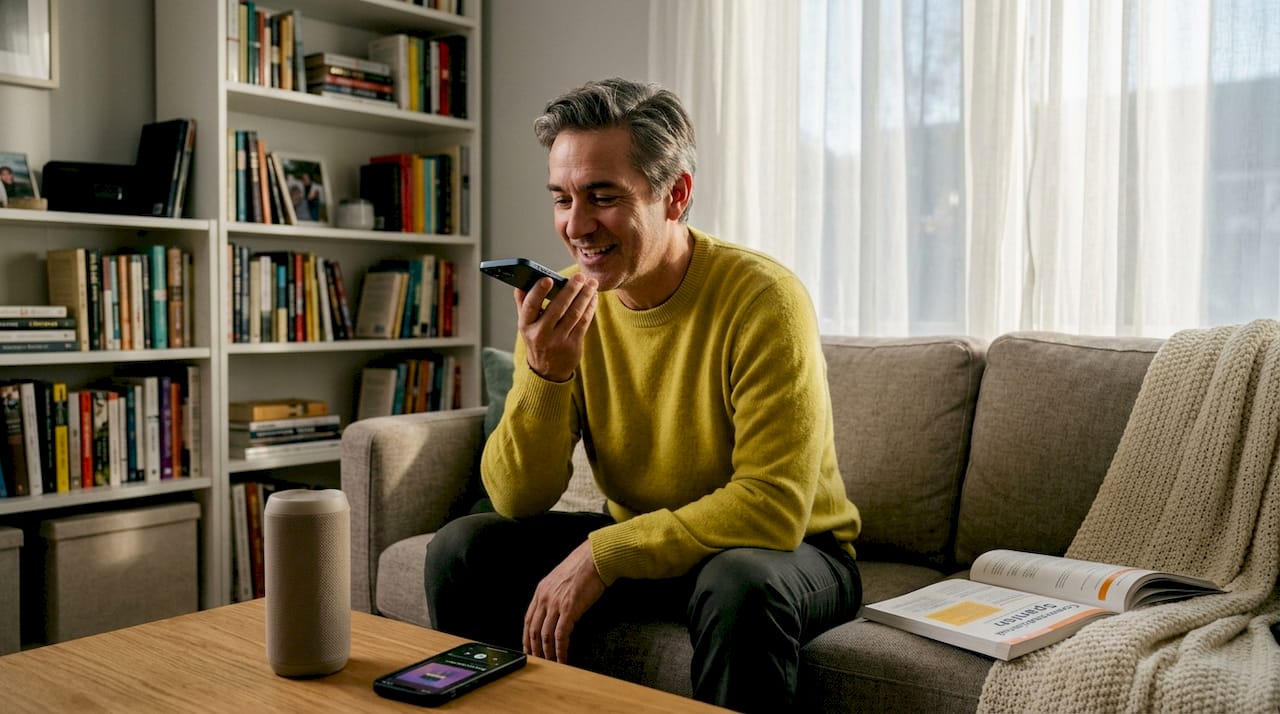
7. Quiz yourself with fill-in-the-blank. Cover the lyrics, listen to the song, and write down every word you catch. Then compare to the original. This builds listening comprehension and spelling at the same time. For an advanced twist, try it with songs in a dialect or regional accent you find challenging.
8. Vary artists and styles deliberately. Different singers use different registers of the same language. A French chanson singer uses formal, poetic structures. A French-speaking rapper from Marseille uses slang, fast delivery, and regional phonetics. Rotating between both makes your ear flexible and your vocabulary broader. Check out these learning success stories to see how diverse genre exposure changed real learners’ fluency arcs.
9. End with a recap sing-along. After any language study session, finish with a full sing-along of something you know well in your target language. This is a deliberate confidence builder. It reinforces what you’ve already absorbed, ends the session on a positive emotional note, and makes your brain associate language practice with enjoyment rather than struggle.
For a structured approach to turning these tips into a repeatable system, the music language routine for faster results guide walks you through exactly how to sequence these techniques day by day.
Pro Tip: Tie your daily song session to an activity you already do without thinking, like making your morning coffee or folding laundry. The habit stacks onto an existing behavior and requires zero extra motivation to start.
How do song-based methods compare to traditional daily practice?
As you experiment with these tips, it’s helpful to see how musical routines stack up against more traditional study. Here’s a clear comparison.
| Factor | Song-based routine | Traditional study |
|---|---|---|
| Vocabulary retention | High (melodic context as memory anchor) | Moderate (repetition-dependent) |
| Pronunciation accuracy | High (shadowing and imitation) | Low to moderate (text-focused) |
| Engagement level | Very high | Low to moderate |
| Grammar precision | Moderate (informal registers) | High (structured exercises) |
| Time commitment | Flexible (5 to 45 min) | Fixed (usually 20 to 60 min) |
| Emotional motivation | Strong (music triggers positive affect) | Weak to neutral |
| Real-world fluency | Strong for speaking rhythm and flow | Stronger for written accuracy |
Research supports the advantages shown in this table. Song-based instruction can improve measurable speaking outcomes including accuracy, fluency, and lexical complexity, though some studies rely on limited designs. That’s an important honest note: the evidence is real but the field is still growing.
“Singing may reinforce recall more than spoken repetition because the melody provides a second retrieval pathway that spoken drills simply don’t create.”
The research on singing for memory backs this view up. Participants in melody-based learning conditions recalled significantly more target words than those who used speech-only methods, even after delays of several days.
One legitimate caveat: music is informal by nature. If your goal is academic writing or formal business communication, you’ll want to pair song-based practice with structured grammar work. Think of music as your spoken fluency trainer and grammar study as your precision tool. Neither replaces the other. The beginner’s guide to song-based learning covers how to build that balanced foundation if you’re just starting out.
Pitfalls to avoid and best practices for song-powered routines
Now that you know the methods and how they compare, make your music routine last by sidestepping these pitfalls and leveraging best practices.
The biggest trap is passive listening. Putting a foreign language playlist on while you scroll your phone feels productive. It almost certainly isn’t. The educational benefits of music for language learning require active engagement with the lyrics, the sounds, and the meaning. Background listening builds familiarity at best and false confidence at worst.
A second common mistake is staying comfortable. If you only ever play songs you already know and love, you’re rehearsing, not learning. Growth requires encountering unfamiliar vocabulary, tricky grammar structures, and phonetic patterns that don’t exist in your native language. Push yourself with new material at least half the time.
Common pitfalls and how to fix them:
- Only listening passively: Switch to focused lyric engagement for at least one song per session
- Sticking to familiar songs: Introduce one completely new track each week
- Skipping the recording step: Even one sixty-second recording per session creates useful feedback
- Ignoring grammar context in lyrics: Note how verbs conjugate and sentences are structured, not just vocabulary
- No progress check: Review your vocabulary notes and recordings every Sunday to catch plateaus early
| Common mistake | Research-backed fix |
|---|---|
| Passive listening only | Active lyric engagement with annotation |
| Using overly simple songs | Gradually increase lyric complexity |
| Practicing alone with no feedback | Record and compare, or practice with peers |
| Skipping genre variety | Rotate at least three genres per month |
| No structured review | Weekly recap using fill-in-the-blank tests |
Some study designs have limitations worth understanding, so set realistic expectations. Music will accelerate your spoken fluency and vocabulary faster than most alternatives. It won’t replace writing practice or formal grammar instruction entirely. Understanding how music speeds up language learning from a research angle helps you build a smarter, more balanced routine.
A music-first routine: Why song-based language learning beats ‘just studying’
Now, stepping beyond research and routines, here’s what’s actually transformed language mastery for the most consistent adult learners we’ve worked with.
Traditional drills work. Nobody is arguing that flashcards and grammar tables are useless. But here’s what they don’t do: they don’t make you feel anything. And feeling something is what creates a lasting memory. When you connect a Spanish phrase to a soaring chorus that gave you chills, that phrase is stored differently in your brain than a word you copied from a list five times. It’s not just stored as information. It’s stored as experience.
The adult learners who actually reach conversational fluency are almost never the ones who studied the hardest in a clinical way. They’re the ones who found a reason to engage every single day without forcing themselves. Music provides that reason. It transforms your practice from an obligation into something that resembles a creative ritual, more like playing an instrument than cramming for an exam.
Here’s a genuine challenge worth accepting: pick one week and switch entirely to music-based practice. No flashcard apps, no textbook grammar drills. Just songs, lyrics, shadowing, recording, and singing. Then measure two things at the end: how many sessions you actually completed (versus your usual rate) and how confident you felt speaking out loud. Most learners are surprised by both numbers.
The other piece that consistently separates fast movers from those who plateau is community. Sharing your daily song progress with even one other learner creates accountability and connection. Reading through real music learning stories from people who pushed through exactly the same moments of doubt shows you what’s possible when motivation and method align.
Pro Tip: Find one learning partner and share your weekly “song of the week” voice memo with each other. The accountability and feedback loop this creates is more powerful than any solo streak tracker.
Level up your daily routine with guided song-based tools
Ready to put your new language-and-music routine into practice? Here’s how to get started with helpful resources and join a community of like-minded learners.
Canary is built specifically for music-loving language learners like you. The platform combines karaoke-style lyric practice, interactive vocabulary cards, pronunciation feedback, and community challenges all in one place, so you don’t have to stitch together a dozen separate apps.
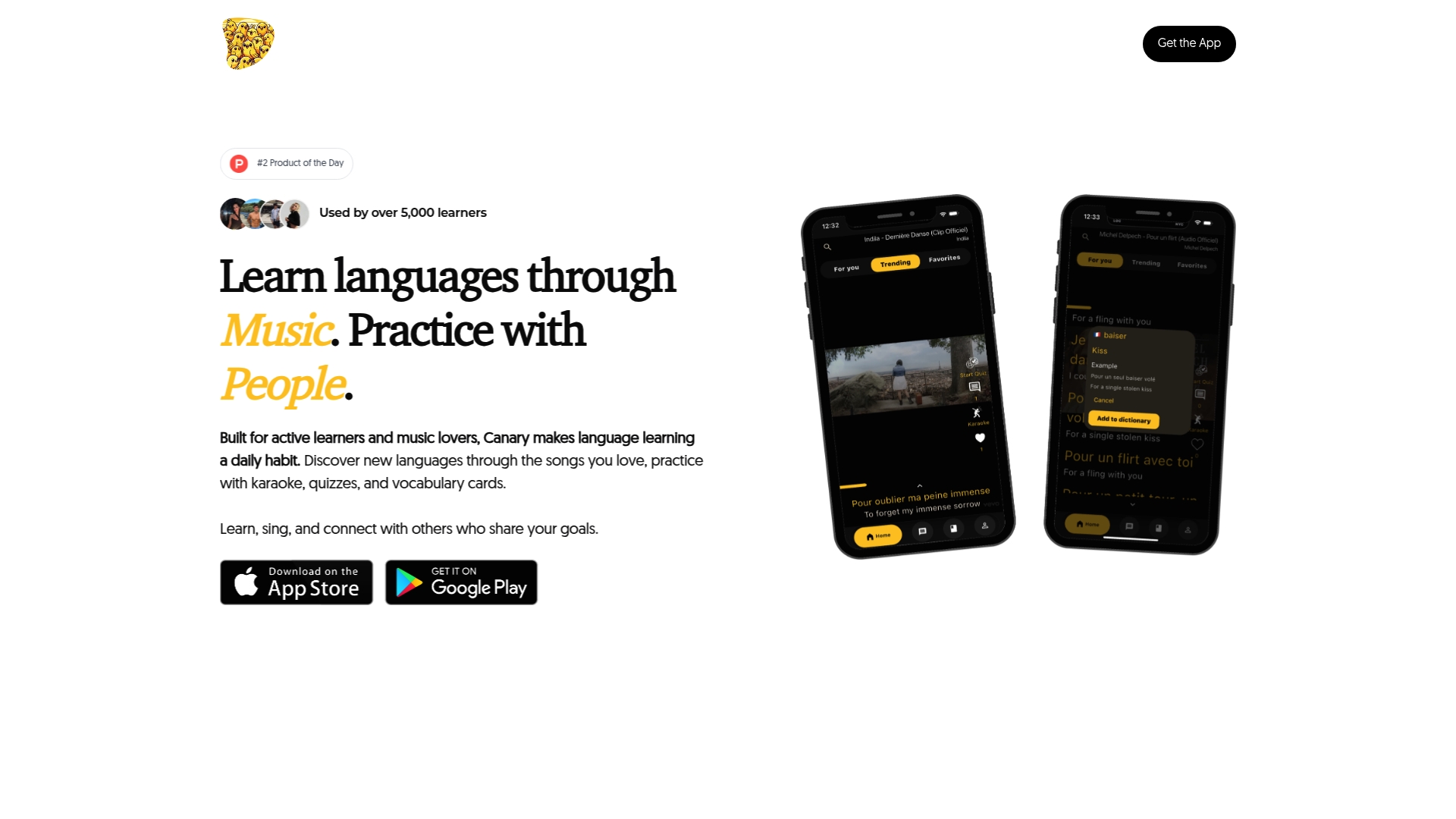
One of the best entry points is the song of the week challenge, a community-driven feature that gives you a new curated track each week with guided vocabulary and pronunciation activities built right in. It turns every one of the nine tips above into a structured, repeatable experience you can complete in under fifteen minutes. For more ways to maximize your progress, browse the full collection of tips for music-loving language learners and connect with learners across the globe who are on the same journey.
Frequently asked questions
Does singing out loud really help with language pronunciation?
Yes, singing enhances pronunciation and memory retention better than speaking drills alone because the melody creates an additional memory pathway that reinforces correct sound patterns.
What is ‘shadowing’ and why is it effective for language learning?
Shadowing is near-simultaneous repetition of spoken or sung audio, which forces your brain to process authentic speech patterns in real time, building fluency and accent accuracy faster than passive review.
How much time should I spend on song-based practice each day?
Even five to ten focused minutes of active lyric engagement per day builds real progress, especially if you combine techniques like shadowing, annotation, and recording within the same short session.
Will using music alone be enough for full language proficiency?
Music is a powerful accelerator for speaking fluency and vocabulary, but song-based instruction works best when paired with grammar study and real conversation practice for well-rounded proficiency.