TL;DR:
- Step-by-step language immersion involves consistent daily practice in listening, recall, and speaking to build fluency without relocating. It emphasizes controlling your environment, using varied media, and integrating cultural elements for emotional engagement. Maintaining a low-pressure routine, like 15 minutes daily, ensures steady progress and habit formation.
Step by step language immersion is the process of systematically surrounding yourself with your target language in manageable, daily phases that build fluency and cultural insight through real-world practice. The industry term for this approach is “self-directed immersion,” and it works because it prioritizes input flooding over grammar drills. Consistent daily sessions outperform sporadic longer study blocks for retention and fluency. You do not need to move abroad. You need a structured plan and the right habits.
What do you need before starting step by step language immersion?
Most learners think immersion requires high initial fluency. Immersion is the tool that builds that fluency, starting from controlling your environment. Getting that mindset right is the first real step.
Change your digital environment first. Switching your phone, tablet, and smart assistant to your target language takes under 2 minutes and creates continuous ambient exposure throughout your day. Every notification, menu label, and autocorrect suggestion becomes a micro-lesson. This single change costs nothing and pays off daily.
Gather your core materials before day one. You need at least three types of input resources:
- Graded readers or beginner books in your target language
- Podcasts or audio content designed for language learners (look for “slow” or “beginner” versions)
- Films, TV shows, or YouTube channels in the target language with subtitles available
- A vocabulary notebook or flashcard app like Anki for active recall
Set a baseline and a realistic goal. Write down what you can currently do in the language: recognize words, hold a basic conversation, or nothing at all. Then set one specific goal for 30 days, such as understanding a two-minute news clip without subtitles. Vague goals like “get better” produce vague results.
Pro Tip: Set your phone language to your target language tonight. If you get stuck navigating menus, that frustration is productive. It means you are actively processing new vocabulary in a real context.
How do you design your daily immersion routine?
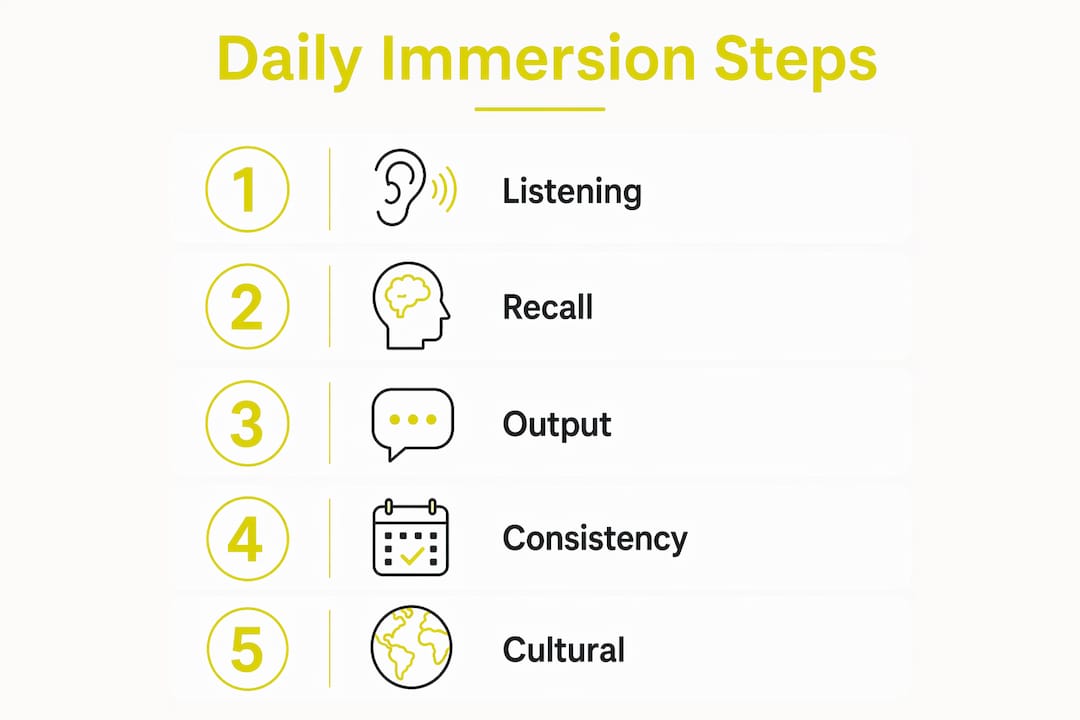
A structured daily routine is the engine of effective language acquisition. Experts recommend dividing your session into three phases: listening input, active recall, and speaking output. Even 15 minutes a day, split across these phases, builds measurable baseline progress.
The table below shows how to allocate time across three common session lengths.
| Session length | Listening input | Active recall | Speaking or writing output |
|---|---|---|---|
| 15 minutes | 5 minutes | 5 minutes | 5 minutes |
| 30 minutes | 12 minutes | 10 minutes | 8 minutes |
| 60 minutes | 25 minutes | 20 minutes | 15 minutes |
Listening input phase
Start every session with pure listening. Play a podcast episode, a graded audio lesson, or a short video clip. Do not pause to look up every word. Train your ear to catch patterns and familiar sounds. This phase builds the subconscious recognition that makes language feel intuitive over time.

Active recall phase
Active recall means retrieving words and phrases from memory, not just recognizing them on a page. Use flashcard decks, write out vocabulary from memory, or answer comprehension questions about what you just heard. This phase is where retention actually happens. Passive review feels productive but rarely is.
Speaking or writing output phase
Speak aloud or write in your target language for the final phase. Narrate what you did today, describe an object in the room, or write three sentences about the audio content you just heard. Journaling daily in your target language, even for 5–10 minutes, deepens vocabulary internalization beyond passive recognition.
Pro Tip: Time-block your immersion session the same way you would a meeting. Put it in your calendar at a fixed time. Learners who treat practice as optional skip it when life gets busy. Learners who schedule it do not.
What are the most effective language immersion techniques?
A daily routine gives you structure. These techniques give you depth. The best practices for language immersion go beyond textbooks and into the way you consume media, interact with people, and train your ear.
-
Shadowing. Repeat what a native speaker says immediately after hearing it, matching their rhythm, speed, and intonation. Shadowing builds pronunciation muscle memory without living abroad. Professional interpreters use this technique. You can start with a 60-second audio clip and shadow it five times in a row. For a detailed guide on making shadowing work for accent development, the shadowing technique guide at InPronunci covers the mechanics thoroughly.
-
Media redesign. Replace your native-language entertainment with target-language content. Watch films with target-language subtitles, not English ones. Listen to music in the language and read the lyrics. Follow social media accounts that post in the language. This shifts your passive hours into low-effort immersion time.
-
Language exchanges. Find a native speaker who wants to learn your language and trade 30-minute conversation sessions. Apps and online communities connect learners globally. You practice their language for 15 minutes, they practice yours for 15 minutes. Real conversation pressure accelerates fluency faster than solo study.
-
Role-play scenarios. Practice specific real-world situations: ordering food, asking for directions, or negotiating a price. Culturally grounded role play combined with native speaker interaction outperforms traditional classroom learning for practical skill. Script the scenario first, then try it without the script.
-
Music-based learning. Songs repeat vocabulary in emotionally memorable contexts. Singing along to lyrics trains pronunciation, rhythm, and vocabulary simultaneously. Platforms like Singwithcanary combine song-based learning with karaoke, vocabulary cards, and quizzes to make this technique structured and trackable.
-
Input flooding. Read and listen to far more than you speak, especially in the early stages. Immersion prioritizes input flooding through listening and reading to make language intuitive rather than analytical. Think of it as filling a tank before you can draw from it.
The key insight across all these techniques is that moving from analytical study to intuitive language use requires pattern recognition built through consistent input and shadowing. No single technique does this alone. Combining three or more from this list accelerates the process significantly.
What challenges will you face, and how do you fix them?
Every learner hits walls. Knowing what they are before you hit them makes them easier to push through.
Burnout is the most common reason learners quit. The fix is not motivation. It is reducing the minimum. On hard days, commit to just 15 minutes. Consistent daily sessions at low friction beat irregular marathon sessions every time. A 15-minute day still counts. A zero-minute day breaks the chain.
Comprehension frustration happens when content is too hard. The solution is calibration. Aim for content where you understand 70–90% with support. That range keeps you in the productive learning zone: challenged enough to grow, supported enough to follow along. If you understand less than 70%, the content is too advanced for immersion right now.
Plateauing feels like progress has stopped. It usually means your input has become too comfortable. Raise the difficulty of one content source. Add a new technique from the list above. Introduce a native speaker conversation partner. Plateaus are a signal to change one variable, not to quit.
Common challenges and their fixes at a glance:
- Burnout: Drop to a 15-minute minimum on hard days. Never skip entirely.
- Comprehension frustration: Calibrate content to the 70–90% comprehension zone.
- Plateauing: Increase content difficulty or add a new immersion technique.
- Isolation: Join a language exchange community or social language practice group to stay accountable.
- Cultural disconnect: Add one culturally specific element weekly, such as a traditional song, a local news clip, or a regional recipe in the target language.
Pro Tip: Embed one cultural element into your weekly routine. Cook a dish from a country that speaks your target language while listening to local radio. Cultural connection makes the language feel worth learning, not just worth studying.
Key Takeaways
Structured daily immersion, built around listening input, active recall, and speaking output, is the most reliable path to real fluency without relocating abroad.
| Point | Details |
|---|---|
| Start with your environment | Switch device languages and gather graded materials before your first session. |
| Use the three-phase routine | Divide every session into listening, active recall, and speaking output for maximum retention. |
| Layer in proven techniques | Combine shadowing, media redesign, language exchanges, and music-based learning for depth. |
| Stay in the learning zone | Target content you understand at 70–90% to avoid frustration and maintain progress. |
| Protect the daily habit | Commit to a 15-minute minimum on hard days. Consistency beats intensity every time. |
Why immersion is a lifestyle, not a sprint
Here is the uncomfortable truth I have seen play out repeatedly: most learners treat immersion as a temporary project with a finish line. They study hard for six weeks, plateau, and conclude they are “not a language person.” That conclusion is wrong. The plateau is not failure. It is the transition from conscious effort to subconscious pattern recognition, and it is supposed to feel slow.
What actually works is treating the language as part of your daily life, not a task on your to-do list. I changed my phone language to Spanish years ago and never changed it back. I did not do it because I was disciplined. I did it because friction is the enemy of habits, and removing friction is the only reliable strategy. The learners I have seen reach genuine fluency share one trait: they stopped treating practice as optional.
The cultural piece matters more than most guides admit. Emotional connection to a language accelerates acquisition in ways that grammar drills cannot replicate. When you love a song in French, you will memorize its lyrics without trying. When you care about a TV character’s story, you will follow the dialogue harder. Find the cultural entry point that genuinely interests you, and build your immersion around it. The music and social practice approach works precisely because it taps into that emotional engagement.
Celebrate small wins. Understanding a joke in your target language for the first time is a real milestone. So is reading a menu without translating. Progress in language learning is nonlinear, but it is always cumulative.
— Ben
How Singwithcanary fits into your immersion routine
Music is one of the most underused immersion tools available, and Singwithcanary is built around exactly that gap.
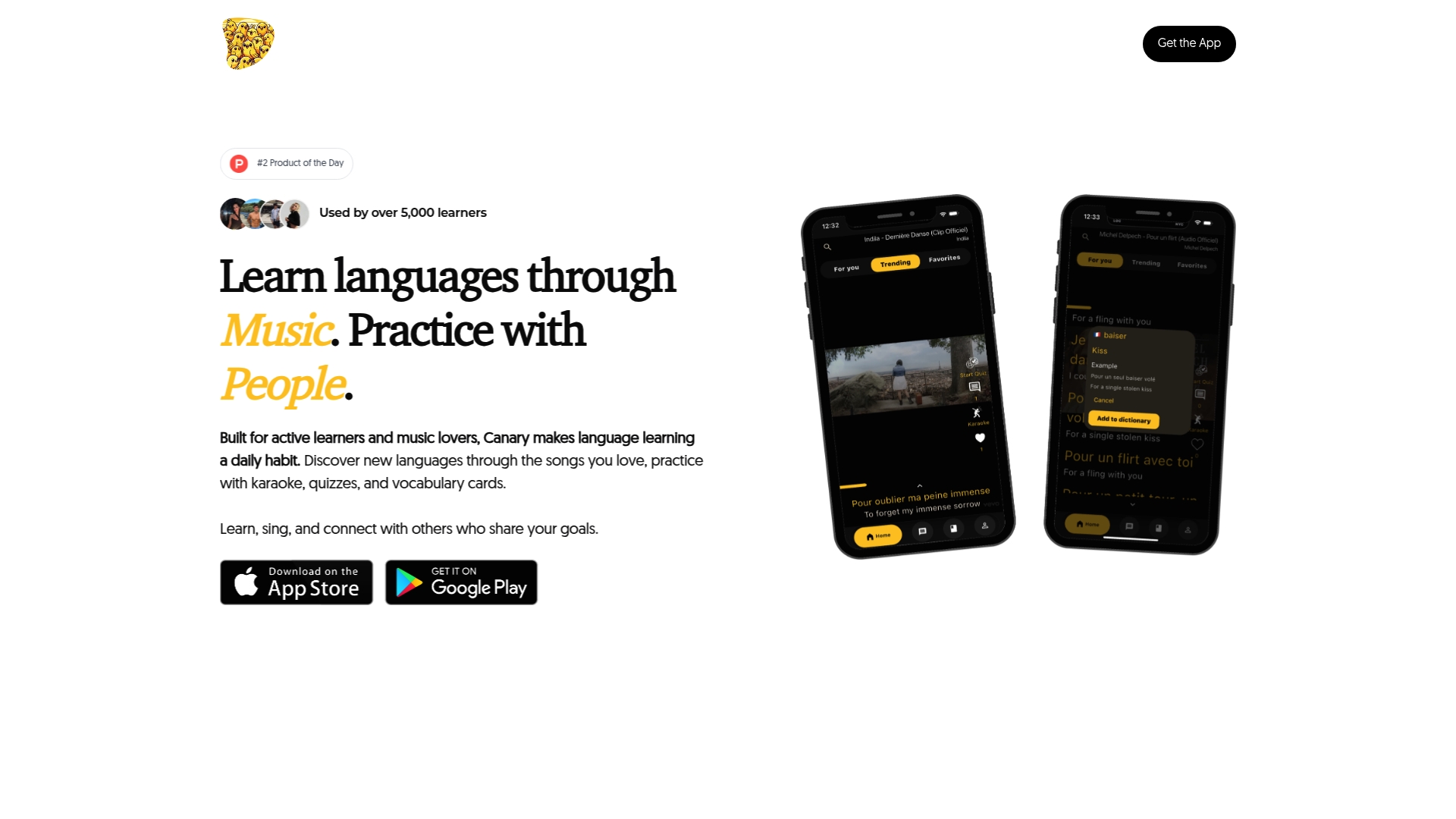
Singwithcanary combines song-based learning with karaoke, vocabulary cards, and quizzes to make daily immersion both structured and genuinely enjoyable. You practice pronunciation by singing along to real lyrics, build vocabulary in emotional context, and connect with other learners around the world through a community-driven platform. It fits naturally into the listening input and speaking output phases of your daily routine. If you want to learn languages with music and make your immersion habit one you actually look forward to, Singwithcanary is worth exploring.
FAQ
What is step by step language immersion?
Step by step language immersion is a structured method of surrounding yourself with a target language through daily, phased practice covering listening, recall, and speaking. It builds fluency gradually through consistent real-world exposure rather than grammar-focused study.
How long should a daily immersion session be?
Even 15 minutes a day divided into listening, active recall, and speaking phases builds measurable progress. Longer sessions of 30–60 minutes accelerate results, but daily consistency matters more than session length.
Can I do language immersion without traveling abroad?
Yes. Switching device languages, consuming media in the target language, practicing shadowing, and joining online language exchanges all replicate immersion conditions at home. The key is controlling your environment to maximize daily exposure.
What is the shadowing technique in language learning?
Shadowing means repeating what a native speaker says immediately after hearing it, matching their rhythm and intonation. It builds natural pronunciation and pacing and is used by professional interpreters as a core training method.
How do I avoid burnout during language immersion?
Set a non-negotiable daily minimum of 15 minutes and never drop below it. Calibrate your content to the 70–90% comprehension zone so practice feels productive, not overwhelming. Cultural elements like music and films keep motivation high over the long term.