TL;DR:
- Music enhances vocabulary retention and motivation more effectively than traditional rote methods.
- Social activities like karaoke and group singing reinforce language skills and build confidence.
- Combining music with targeted grammar practice yields the best results for comprehensive language mastery.
Flashcards, grammar drills, and repetitive conjugation tables have a way of draining the joy right out of language learning. Most learners quit not because they lack talent, but because the process feels like homework. Music changes that equation completely. Songs carry emotion, rhythm, and repetition, which are three ingredients that make vocabulary stick far better than a word list ever could. Add social interaction, singing games, and karaoke into the mix, and you have a method that feels less like studying and more like a night out with friends. This guide walks you through a clear, evidence-backed process for learning a language through music and social fun.
Table of Contents
- Gather your materials: Tools and song selection
- Step 1: Immerse yourself — Listening, singing, and lyric integration
- Step 2: Enhance memory and interaction — Games, group sing-alongs, and karaoke
- Step 3: Monitor progress and troubleshoot — Feedback, common mistakes, and mixed research
- A fresh take: Why music-powered learning beats dry drills (but needs smart adaptation)
- Go further with Canary: Song-powered language mastery
- Frequently asked questions
Key Takeaways
| Point | Details |
|---|---|
| Music boosts memory | Song-based learning dramatically improves vocabulary retention and recall. |
| Social interaction matters | Group activities like karaoke accelerate learning and reduce performance anxiety. |
| Mixed evidence for kids | Songs are highly motivating, but grammar and word acquisition for children may require traditional methods. |
| Balance your approach | Supplement music-driven methods with structured grammar and vocabulary practice for best results. |
Gather your materials: Tools and song selection
Before you sing a single note, you need the right setup. Think of this phase as building your practice studio. You do not need expensive equipment, just a few smart choices about where to find music and how to organize what you learn.
Top tools to get started:
- Spotify or Apple Music for streaming songs in your target language
- YouTube for music videos with on-screen lyrics
- Genius.com or LyricsTranslate.com for bilingual lyric breakdowns
- Anki or Quizlet for turning song vocabulary into flashcard decks
- Canary for weekly song selections curated specifically for language learners
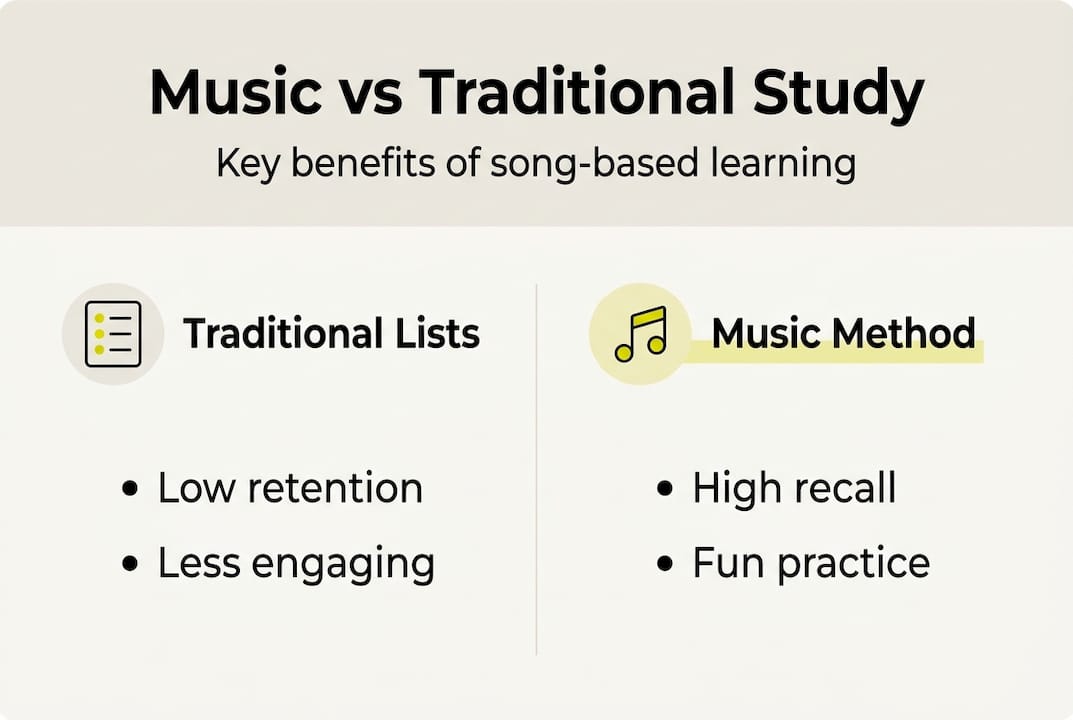
Now, here is where song-based learning pulls ahead of traditional methods. Research confirms that song-based methods improve vocabulary retention and learning speed compared to conventional vocabulary lists. The reason is simple: melody acts as a memory hook. When a word is attached to a tune, your brain files it differently, making retrieval faster and more reliable.
Traditional vocabulary lists vs. song-based study:
| Feature | Traditional lists | Song-based study |
|---|---|---|
| Emotional engagement | Low | High |
| Repetition built in | Manual | Natural via chorus |
| Pronunciation modeling | None | Native speaker audio |
| Context for meaning | Minimal | Rich, narrative-driven |
| Motivation over time | Declines | Stays strong |
The table above makes the case visually, but the real difference shows up in your daily practice. With a word list, you have to force yourself to review. With a song you love, you replay it voluntarily, which means you are drilling vocabulary without even noticing.
Understanding music’s impact on language learning also helps you choose the right songs from the start. Not every track is equally useful for learners.
Pro Tip: Choose songs with repetitive choruses and clear, unhurried pronunciation. Pop, reggaeton, and acoustic folk tracks tend to work better for beginners than fast rap or heavily accented regional music. Once your ear adjusts, you can level up to more complex styles.
Step 1: Immerse yourself — Listening, singing, and lyric integration
With your tools ready, the real work begins. This step is about turning passive listening into active language absorption. The difference between background music and intentional learning comes down to how you engage with the lyrics.
Follow this sequence for each new song:
- Listen once without lyrics. Let the melody and mood wash over you. Notice which words you already catch.
- Read the lyrics while listening. Follow along line by line, matching sounds to written words.
- Look up every unknown word. Do not skip this step. Add words to your flashcard app immediately.
- Sing along quietly. Mumbling is fine at first. Focus on matching the rhythm and vowel sounds.
- Sing out loud with confidence. Repeat this until the lyrics feel natural in your mouth.
- Shadow the pronunciation. Pause after each line and mimic the singer’s exact accent and intonation.
This process works because it activates multiple memory systems at once. You are hearing, reading, speaking, and feeling the language simultaneously. Studies on vocabulary improvements through song show that AI-song groups demonstrated significant gains compared to control groups using traditional methods, with some studies recording vocabulary score jumps of over 30 points.
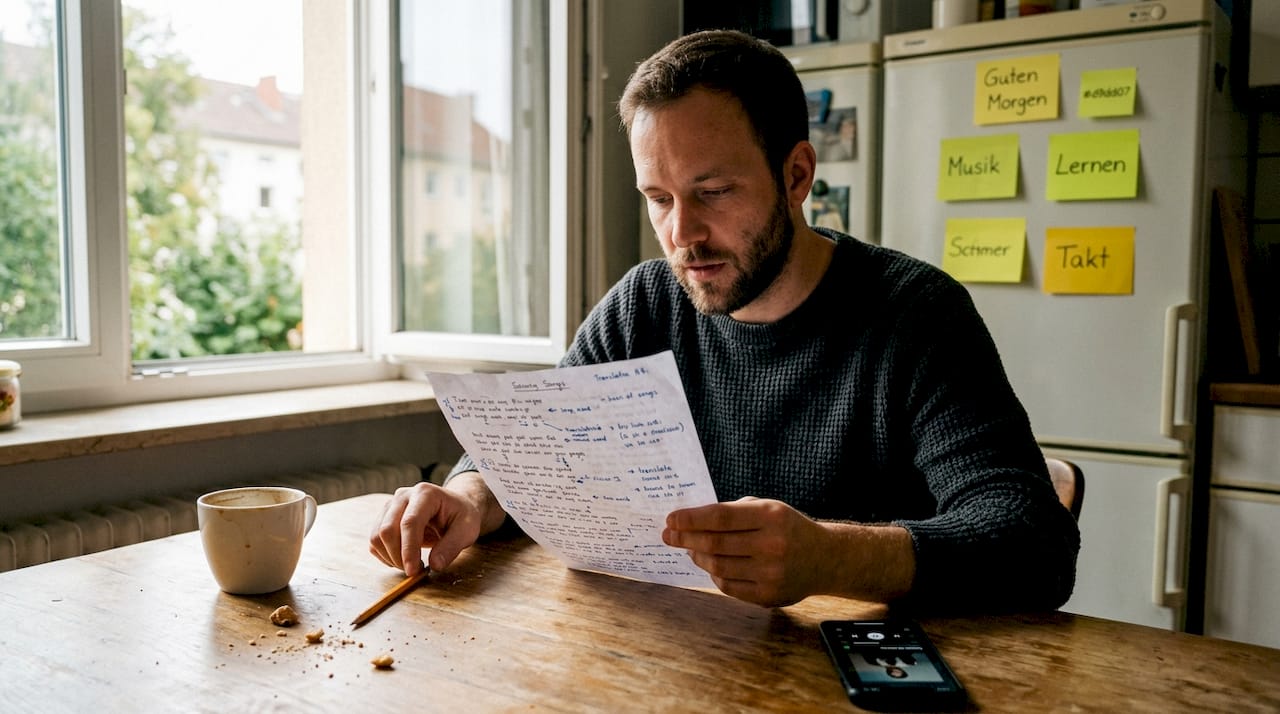
For deeper results, explore tips for maximizing vocabulary through music, which covers annotation strategies and spaced repetition techniques that pair perfectly with this approach.
Pro Tip: Use a lyrics annotation app like LyricsTraining or even a simple notes app to highlight unfamiliar phrases in color. Green for words you know, yellow for words you are learning, and red for total unknowns. Watching the red shrink over time is genuinely motivating.
The goal of this step is not perfection. It is familiarity. By the time you move to the social phase, you want the song to feel like a comfortable friend, not a foreign object. Learning to boost fluency with music is about building that comfort layer first, then layering interaction on top.
Step 2: Enhance memory and interaction — Games, group sing-alongs, and karaoke
Solo practice builds your foundation, but social interaction is where retention truly locks in. Speaking in front of others, even in a low-stakes game, forces your brain to retrieve vocabulary actively rather than passively recognize it.
Social activities that accelerate learning:
- Lyric unscramble: Print or display lyrics with lines out of order. Teammates race to put them back in sequence.
- Blank fill-in games: Remove key vocabulary from lyrics and challenge partners to guess the missing words.
- Memory challenges: One person reads a line, the next person repeats it and adds the following line.
- Group karaoke: Sing together using a screen, focusing on pronunciation and timing rather than performance.
- Discussion rounds: After singing, discuss the song’s meaning in the target language. What is the story? What emotions does it carry?
Karaoke deserves special mention here. Research shows that karaoke accelerates learning by 30% and reduces speaking anxiety considerably, which is one of the biggest barriers for intermediate learners.
“Singing in a group removes the spotlight from any one individual. That shared vulnerability is exactly what makes karaoke such a powerful language tool.”
The role of music in learning extends beyond vocabulary. Group singing builds listening skills, cultural awareness, and real-time comprehension under pressure, all of which transfer directly to conversation.
Solo vs. group learning outcomes:
| Outcome | Solo practice | Group/social practice |
|---|---|---|
| Vocabulary recall | Moderate | High |
| Speaking confidence | Low | High |
| Pronunciation accuracy | Moderate | High (peer feedback) |
| Motivation and consistency | Variable | Stronger (accountability) |
| Cultural context | Limited | Rich (shared discussion) |
Gamified language learning takes this even further by adding points, challenges, and rewards that keep the energy high session after session. Music’s boost to engagement and enjoyment is well-documented, and that engagement is exactly what keeps learners coming back daily instead of abandoning their practice after two weeks.
Step 3: Monitor progress and troubleshoot — Feedback, common mistakes, and mixed research
Active engagement is essential, but so is stepping back to check whether it is actually working. Many learners skip this phase entirely and wonder why their progress stalls after an exciting start.
Progress monitoring checklist:
- Can you sing the target song from memory without reading lyrics?
- Can you explain the song’s meaning in the target language using your own words?
- Have you used at least three vocabulary words from the song in a real conversation?
- Are you noticing those same words appearing in other songs, shows, or conversations?
- Has your pronunciation of specific sounds improved compared to your first attempt?
If you answer no to most of these after four weeks, something needs to change. Common pitfalls include choosing songs that are too complex, skipping the annotation step, or relying entirely on music without any grammar support.
Here is the nuanced truth: mixed research results show that songs may not work equally well for all learners and ages. Evidence is strongest for motivated teens and adults. For young children, results are more variable, and songs sometimes underperform direct speech instruction for word mapping.
This does not mean music is the wrong tool. It means music is a powerful tool that works best when paired with structure. Research on choral performance and language confirms that integrating technology and varied repertoire improves outcomes across learner types.
For stronger grammar results, check out strategies for boosting vocabulary retention that combine music with targeted grammar exercises.
Pro Tip: Every two weeks, record yourself speaking or singing in the target language and compare recordings over time. Your ear will catch improvements that your day-to-day practice makes invisible. Progress feels slow until you hear the difference.
A fresh take: Why music-powered learning beats dry drills (but needs smart adaptation)
Here is something most language apps will not tell you: music is not a magic shortcut. It is a powerful accelerant that works best when you treat it as one part of a larger system, not the whole system.
We have seen learners build impressive vocabularies through song, only to freeze when asked to write a formal sentence. That gap exists because music teaches language the way immersion does: naturally, emotionally, and contextually. But grammar has its own logic that lyrics rarely teach directly.
The evidence is clearest for motivated teen and adult learners, where song-based methods consistently outperform drills for vocabulary and pronunciation. For younger learners, the picture is more complex, and pure song-based approaches need more scaffolding.
Our honest take: combine music sessions with short, focused grammar drills. Fifteen minutes of singing followed by ten minutes of targeted grammar practice creates a rhythm that keeps things fun while closing the structural gaps. Research on sensory experience and language supports this multisensory approach. Explore examples of music-driven language success to see how real learners have made this combination work.
Pro Tip: Try blending song-based sessions with quick grammar drills for balanced progress. Even ten minutes of focused grammar work after a singing session can dramatically improve your writing and formal speaking skills.
Go further with Canary: Song-powered language mastery
Ready to take everything you have learned and put it into a structured, social, music-driven practice? Canary was built exactly for this moment.
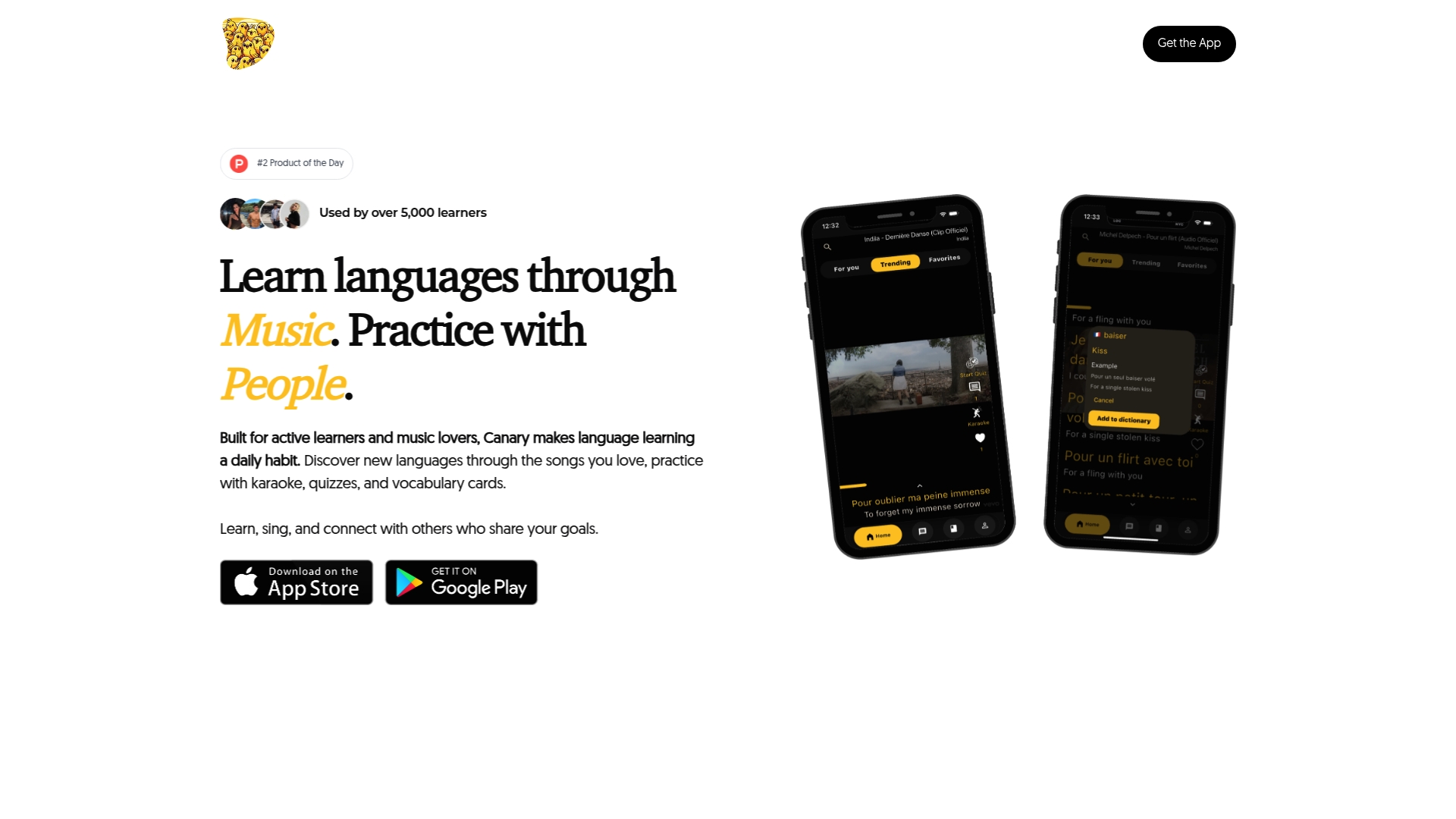
Canary lets you learn languages with music through karaoke, vocabulary cards, quizzes, and a global community of learners who practice together daily. Whether you want to drill pronunciation on a pop hit or challenge a friend to a lyric game, the platform makes it feel effortless. You can explore karaoke for language learning or jump straight into this week’s featured weekly song to start applying today’s steps immediately. The community is already singing. Come join them.
Frequently asked questions
What evidence supports song-based language learning?
Empirical studies show that songs improve vocabulary retention significantly, with some research recording grammar and vocabulary score gains of over 30 points in song-based groups, alongside improvements in pronunciation and motivation, especially for teens and adult learners.
What are common pitfalls of using songs for language acquisition?
Songs work best for vocabulary and pronunciation but may not build grammar mastery on their own. Supplement with direct grammar instruction and structured drills, particularly if you are a younger or less motivated learner, for the strongest overall results.
Is karaoke scientifically shown to help language learning?
Yes. Research shows that karaoke speeds up acquisition by 30% and reduces speaking anxiety considerably, making it one of the most effective low-pressure speaking practice tools available to language learners.
Should children use songs for language learning?
Research shows mixed results for children, with songs boosting motivation and pronunciation but sometimes underperforming direct speech instruction for word mapping in preschool-age learners, so pairing songs with structured speaking activities is recommended.