Struggling to remember vocabulary or pronounce words correctly in your target language? Traditional textbook methods often feel tedious and disconnected from real-world communication. Song-based language learning transforms this frustration into an enjoyable, rhythm-driven journey that activates multiple brain areas simultaneously. This guide walks you through a proven step-by-step process to harness music for faster vocabulary retention, improved pronunciation, and genuine confidence in speaking. Whether you’re just starting or looking to break through an intermediate plateau, you’ll discover practical methods to turn your favorite songs into powerful learning tools that stick.
Table of Contents
- What You Need: Prerequisites For Song-Based Language Learning
- Step-By-Step Instructions For Learning Language Through Songs
- Troubleshooting Common Challenges And Mistakes
- Measuring Progress: Expected Results And Confirmation Methods
- Discover Canary: Your Partner In Language Learning With Music
- Frequently Asked Questions
Key takeaways
| Point | Details |
|---|---|
| Music reduces anxiety | Songs create a relaxed environment that lowers stress and encourages natural language absorption. |
| Enhanced memory retention | Rhythm and melody activate multiple brain regions, making vocabulary and grammar easier to remember. |
| Progressive skill building | Step-by-step methods work for beginners through intermediate learners, adapting to your growing abilities. |
| Technology amplifies results | Lyrics with phonetic guides and spaced repetition tools boost comprehension and long-term recall. |
| Measurable progress tracking | Self-tests and recordings reveal improvements in pronunciation, vocabulary, and listening skills over weeks. |
What you need: prerequisites for song-based language learning
Starting your musical language journey requires minimal equipment but careful song selection. Beginners should start with slower-paced songs and lyrics with phonetic guides to aid pronunciation and understanding. Your primary tools include reliable audio playback devices, access to song lyrics with translations, and a notebook for tracking new vocabulary. Most learners find success with streaming platforms that offer lyric displays, though dedicated language learning apps provide additional phonetic support.
Your mindset matters more than your current skill level. Approach each song with curiosity rather than perfectionism, treating mistakes as natural stepping stones. You don’t need advanced listening abilities to begin, just willingness to repeat phrases and embrace the rhythm. Many successful learners report that choosing songs from familiar genres increases motivation and engagement, making daily practice feel less like work and more like entertainment.
Technology integration enhances your learning without overwhelming beginners. Websites offering side-by-side translations help you understand context while phonetic guides clarify pronunciation challenges. The educational benefits music language connection shows how these tools work together to create memorable learning experiences.
Essential materials checklist:
- Audio playback device with repeat function
- Lyrics with translations and phonetic transcriptions
- Notebook or digital app for vocabulary tracking
- Headphones for focused listening sessions
- Recording device to monitor your pronunciation progress
| Material Type | Purpose | Beginner Priority |
|---|---|---|
| Song audio files | Listening practice and melody familiarization | High |
| Phonetic lyrics | Pronunciation guidance and accuracy | High |
| Translation tools | Contextual understanding of vocabulary | Medium |
| Recording equipment | Self-assessment and progress tracking | Medium |
| Spaced repetition app | Long-term vocabulary retention | Low to Medium |
Pro Tip: Start with children’s songs or theme songs from popular shows in your target language. These typically feature clear pronunciation, slower tempos, and repetitive structures that build confidence quickly.
Step-by-step instructions for learning language through songs
Your learning process begins with passive listening to build familiarity. Listen to your chosen song three to five times without reading lyrics, focusing solely on melody, rhythm, and emotional tone. This initial exposure primes your brain to recognize sound patterns before adding the complexity of written words. Music-based language learning leverages the brain’s dual-hemisphere activation, enhancing memory and retention of vocabulary and grammar.
Once the melody feels familiar, introduce the lyrics during your next listening session. Read along while the song plays, matching written words to sounds you’ve already internalized. Circle or highlight unfamiliar vocabulary and pronunciation challenges, creating a personalized study guide. This visual-auditory connection strengthens neural pathways that support long-term retention.

Break the song into manageable segments of 15 to 30 seconds each. Practice one segment at a time, repeating it aloud until your pronunciation matches the original artist. Record yourself to identify specific areas needing improvement, comparing your version against the source material. The master language learning with lyrics approach emphasizes this chunking method for maximum effectiveness.
Your five-step daily practice routine:
- Listen to the full song twice without lyrics to reinforce melody recognition
- Read lyrics while listening, marking new vocabulary and difficult pronunciations
- Practice one 20-second segment repeatedly, focusing on accurate sound production
- Record yourself singing that segment and compare against the original
- Review previously learned segments using spaced repetition before moving forward
Spaced repetition transforms short-term exposure into permanent knowledge. Review your song vocabulary on day one, day three, day seven, and day fourteen after initial learning. This scientifically proven schedule combats the forgetting curve, ensuring words move from working memory into long-term storage. Many learners create flashcards with song lyrics on one side and translations on the other, reviewing them during commutes or breaks.

Pro Tip: Sing along with the original track once you’ve mastered individual segments. This full-song practice builds fluency and reveals how words connect in natural speech patterns, preparing you for real conversations.
Troubleshooting common challenges and mistakes
Fast-paced songs overwhelm beginners who haven’t built sufficient listening stamina. If you struggle to catch individual words, slow the playback speed using audio editing software or apps designed for language learners. Start at 75% speed, gradually increasing as your ear adjusts to native pronunciation patterns. This graduated approach prevents frustration while building the neural processing speed needed for normal conversation.
Mispronunciation anxiety stops many learners from practicing aloud, yet speaking practice drives improvement. Remember that music helps lower language anxiety, making it easier to absorb meaning and remember phrases. Your first attempts will sound awkward, but consistent vocal practice rewires your mouth muscles to produce unfamiliar sounds. Privacy concerns disappear when you reframe singing practice as a judgment-free zone for experimentation.
Time management challenges derail consistent practice schedules. Integrate song learning into existing routines rather than creating separate study blocks. Listen during morning routines, practice pronunciation while commuting, and review vocabulary before bed. The 7 benefits of learning languages with songs multiply when you maintain regular exposure, even in short bursts.
Common mistakes and quick fixes:
- Skipping lyric study and relying only on listening reduces comprehension by 60%
- Choosing songs beyond your current level creates discouragement; select appropriately challenging material
- Neglecting pronunciation guides leads to fossilized errors that become harder to correct later
- Avoiding repetition prevents vocabulary from moving into long-term memory storage
- Ignoring context and cultural references limits your understanding of idiomatic expressions
Technology tools solve pronunciation mysteries that frustrate independent learners. Phonetic transcription websites show you exactly how to position your tongue and lips for challenging sounds. Translation apps with audio features let you hear individual words in isolation, clarifying how they blend within song lyrics. These resources transform confusion into clarity, keeping you motivated through difficult learning phases.
Pro Tip: Join online communities where learners share their song covers and pronunciation attempts. Peer feedback provides encouragement and identifies blind spots in your speaking that you might miss during solo practice.
Measuring progress: expected results and confirmation methods
Tracking vocabulary recall reveals your learning trajectory with concrete data. Test yourself weekly by writing down all words you remember from your practice songs without looking at lyrics. Compare your results against previous weeks, noting both quantity and accuracy improvements. Most dedicated learners recognize 30 to 50 new words per song after consistent practice, with retention rates improving as your brain adapts to musical learning patterns.
Pronunciation improvement becomes evident through recording comparisons. Save your initial attempts at singing segments alongside recordings made two weeks later. Listen for clarity in consonant sounds, vowel accuracy, and natural rhythm that mirrors native speakers. Students showed a big improvement in hearing linking sounds after lessons using English songs, with increased confidence and interest.
Listening comprehension advances faster than speaking ability in the early stages. Notice when you start catching words in conversations or media that previously sounded like undifferentiated noise. This receptive skill development precedes productive speaking, building the foundation for confident communication. The examples of learning with music demonstrate how consistent exposure accelerates this natural progression.
| Progress Indicator | Timeline | Measurement Method |
|---|---|---|
| Initial vocabulary recognition | 1 to 2 weeks | Self-test without lyrics |
| Pronunciation clarity | 2 to 4 weeks | Recording comparison |
| Listening comprehension | 3 to 6 weeks | Understanding songs in same genre |
| Speaking confidence | 6 to 8 weeks | Conversational attempts with natives |
| Long-term retention | 3 to 6 months | Vocabulary recall without review |
Realistic expectations for song-based learners:
- Beginner level: 20 to 40 new words per song with 70% retention after one month
- Intermediate level: 40 to 60 words per song with 80% retention and improved grammar intuition
- Pronunciation gains appear within three weeks of daily 15-minute practice sessions
- Listening speed comprehension increases by roughly 15% after mastering five songs
- Confidence speaking jumps noticeably once you’ve internalized three complete songs
Peer feedback through language exchange communities provides external validation of your progress. Native speakers notice improvements you might overlook, particularly in accent reduction and natural phrase construction. Record yourself having brief conversations or describing topics related to your practice songs, then share these recordings for constructive feedback. This social accountability keeps motivation high during plateaus.
Pro Tip: Adjust song difficulty every four to six weeks as your skills grow. Moving to faster tempos or more complex vocabulary challenges your brain to continue developing rather than coasting on familiar material.
Discover Canary: your partner in language learning with music
Ready to transform your language learning with a platform designed specifically for music lovers? Canary combines everything you’ve learned in this guide with interactive features that accelerate your progress. Our learn languages with music approach integrates song lyrics, phonetic guides, and spaced repetition into one seamless experience.
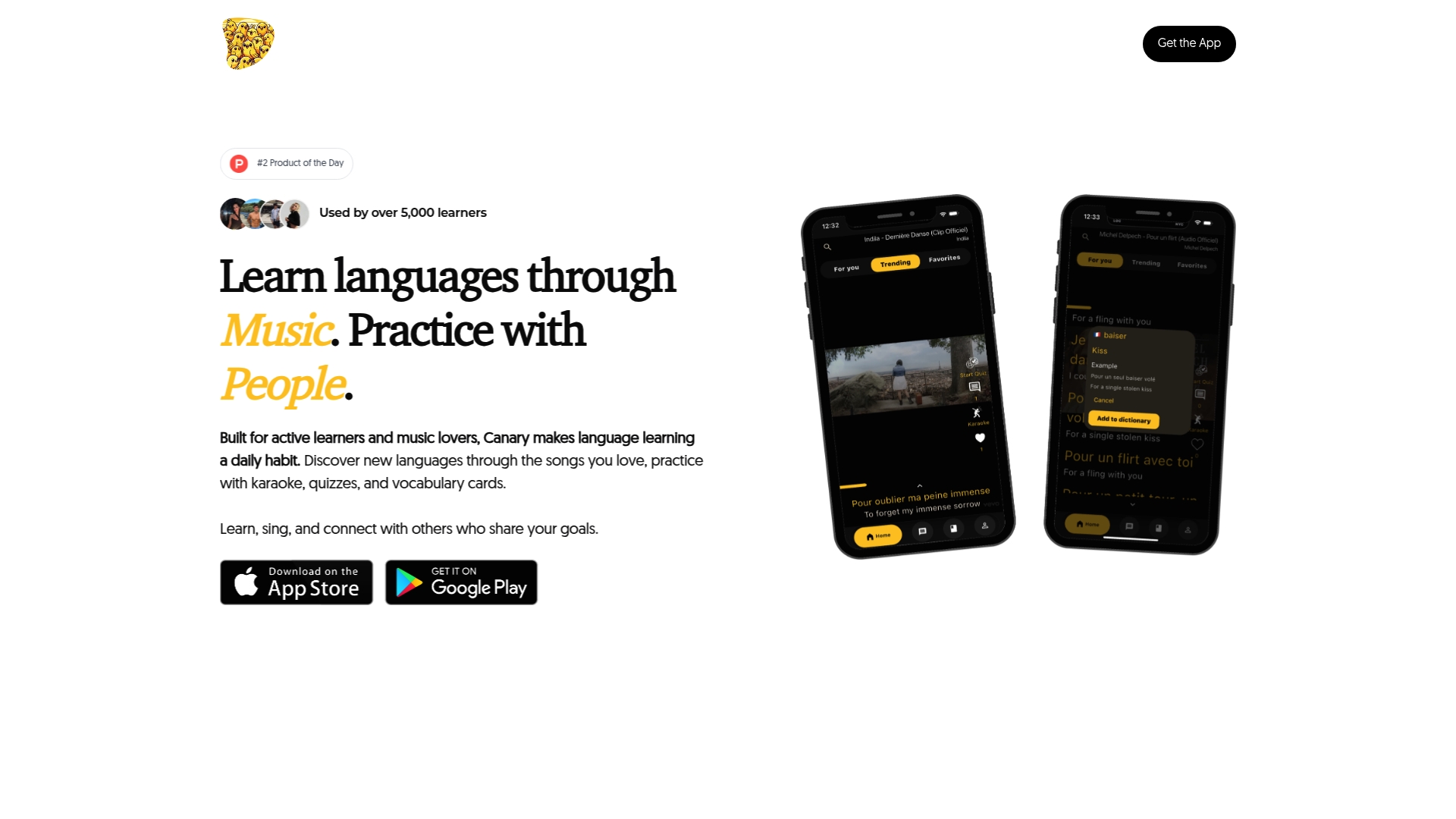
Join a vibrant community where you can practice with international learners who share your passion for music-driven language mastery. Our language learning workflow for beginners walks you through personalized song selections matched to your current level, while our karaoke features let you practice pronunciation in a fun, low-pressure environment. Experience social language learning music mastery that keeps you motivated through daily challenges and peer interaction. Start your musical language journey with Canary today and discover how enjoyable effective learning can be.
Frequently asked questions
How effective is song-based language learning for beginners?
Song-based learning activates multiple brain areas simultaneously, creating stronger memory connections than traditional textbook methods. Research shows beginners retain vocabulary 25 to 40% better when learning through music compared to flashcard-only approaches. The combination of rhythm, melody, and emotional engagement reduces language anxiety while making practice sessions feel like entertainment rather than work.
What types of songs are best for language learning?
Slow-paced songs with clear pronunciation and simple vocabulary work best for absolute beginners. Look for children’s songs, folk music, or acoustic ballads that emphasize lyrics over complex instrumentation. Intermediate learners benefit from pop songs with moderate tempos and more varied grammar structures, while advanced students can tackle rap or fast-paced genres that challenge listening comprehension.
Can technology improve my song-based language learning experience?
Technology dramatically enhances learning efficiency through phonetic guides, instant translations, and spaced repetition systems. Platforms offering synchronized lyrics with audio playback help you connect sounds to written words accurately. Apps incorporating spaced repetition can improve vocabulary retention by up to 40% compared to random review schedules, ensuring words move into permanent memory storage.
How do I overcome pronunciation difficulties when learning with songs?
Start by slowing playback speed to 75% and practice small segments repeatedly before attempting full-speed singing. Use phonetic transcriptions to understand exactly how native speakers position their mouths for challenging sounds. Record yourself regularly and compare against the original, focusing on one difficult sound per practice session rather than trying to perfect everything simultaneously. Mimicry through repeated listening builds muscle memory that eventually produces accurate pronunciation automatically.