TL;DR:
- Quizzes enhance language acquisition by promoting active recall, immediate feedback, and spaced repetition, resulting in higher retention. Digital gamified quizzes significantly outperform traditional methods, especially when designed with formative, low-stakes, and varied question formats, fostering engagement and reducing anxiety. Incorporating deliberate pretesting, peer reflection, and frequent short assessments maximizes learning outcomes across proficiency levels.
Quizzes are defined as structured assessment and practice tools that accelerate language acquisition by forcing active recall, delivering immediate feedback, and sustaining learner engagement across every proficiency level. The role of quizzes in language education extends far beyond testing what students already know. Platforms like Kahoot, Quizizz, and Duolingo have demonstrated that quiz-based learning, when designed with clear pedagogical intent, produces measurable gains in vocabulary retention and reduces the anxiety that kills motivation in traditional classrooms. Research confirms that test scores increased from 60% to 94% within a single cycle of quiz-based intervention with elementary language learners. That is not a marginal improvement. It is a signal that the format itself changes how language sticks.
How quizzes improve vocabulary acquisition and long-term retention
The mechanism behind quiz effectiveness is active recall, not passive review. When you retrieve a word from memory under mild pressure, you strengthen the neural pathway connecting the cue to the target. Every correct retrieval makes the next one faster. Every error, when followed by immediate correction, encodes the right answer more deeply than simply reading it would.

Gamified quiz tools amplify this effect at scale. A study measuring university-level learners found effect sizes of eta-squared = 0.23 for vocabulary acquisition and 0.20 for retention when digital gamified quizzes replaced conventional study methods. In behavioral research, an eta-squared above 0.14 is considered a large effect. These numbers mean that gamified quizzes do not just help a little. They produce a fundamentally different learning outcome.
Pretesting adds another layer. Asking learners to guess a word’s meaning before they have been taught it, then showing the correct answer with context, triggers what researchers call the pretesting effect. Effect sizes between 0.18 and 0.67 have been recorded depending on quiz format, with guessing-with-feedback approaches consistently outperforming passive study. The implication for educators is direct: a short guessing exercise before a vocabulary lesson will outperform a vocabulary list handed out before the same lesson.
Engagement is not a soft metric here. Student engagement strongly mediates the positive relationship between quiz participation and vocabulary retention. Behavioral engagement (completing the quiz), emotional engagement (caring about the result), and cognitive engagement (thinking through the answer) must all be present for the full retention benefit to materialize. A quiz that learners click through without thinking produces almost no gain.
Pro Tip: Design at least one question per quiz that requires learners to produce a word in context, not just recognize it. Production tasks engage all three dimensions of engagement simultaneously and produce stronger long-term retention than recognition-only formats.
| Quiz format | Retention mechanism | Typical effect size |
|---|---|---|
| Multiple choice with feedback | Recognition + error correction | Moderate |
| Guessing with feedback (pretesting) | Encoding before instruction | d = 0.18 to 0.67 |
| Gamified digital quiz (Kahoot, Quizizz) | Active recall + motivation | eta-squared = 0.20 to 0.23 |
| Spaced repetition quiz (Duolingo algorithm) | Optimized review timing | High for long-term retention |
What are the best practices for designing quizzes for language learning?
Effective quiz design is not about difficulty. It is about timing, feedback quality, and the emotional environment surrounding the quiz. Formative micro-tasks with feedback cycles consistently outperform high-stakes competitive formats for both cognitive outcomes and learner motivation. The quiz should feel like a conversation between the learner and the material, not a judgment of their ability.
These principles translate into concrete design choices:
- Use immediate feedback on every question. Delayed feedback breaks the connection between the error and the correction. Learners need to see the right answer within seconds of their response.
- Vary question types across a single quiz. Mixing multiple choice, fill-in-the-blank, true/false, and matching tasks prevents pattern recognition from replacing genuine recall.
- Pretest before teaching. A short guessing exercise before new vocabulary is introduced primes memory and increases encoding depth, even when learners have no prior knowledge of the words.
- Limit competitive elements to low-stakes contexts. Leaderboards and time pressure work well for review sessions but can increase anxiety during initial learning phases. Cooperation improves long-term outcomes more reliably than competition alone.
- Build in peer reflection. After a quiz, a two-minute group discussion about which questions were hardest deepens cognitive processing and surfaces misconceptions that individual feedback alone misses.
- Keep quizzes short and frequent. Five to ten questions three times per week outperforms a thirty-question quiz once per week for vocabulary retention. Frequency matters more than volume.
The role of assessments in language education shifts fundamentally when quizzes are treated as learning tools rather than measurement instruments. Educators who make this shift report higher participation rates and fewer requests to skip assessment activities.
Pro Tip: Add one “challenge question” at the end of every quiz that asks learners to use a new word in an original sentence. This single task signals that production, not just recognition, is the goal, and it changes how learners approach the earlier questions.
Digital platforms vs. traditional quiz methods: which works better?
The honest answer is that digital platforms win on almost every measurable dimension for language learning, but traditional methods retain specific advantages that technology cannot fully replicate.
| Dimension | Digital platforms (Kahoot, Quizizz, Duolingo) | Traditional methods (paper, oral) |
|---|---|---|
| Immediate feedback | Automatic, per-question | Delayed, teacher-dependent |
| Spaced repetition | Algorithm-driven | Manual, inconsistent |
| Engagement | High (gamification, visuals, sound) | Variable |
| Anxiety management | Better (anonymous modes available) | Higher in oral formats |
| Data tracking | Detailed (response time, accuracy trends) | Limited |
| Social interaction | Moderate (chat, leaderboards) | High (face-to-face discussion) |
| Pronunciation practice | Limited in most quiz apps | Strong in oral formats |
Digital tools like Duolingo use spaced repetition algorithms that adapt review timing based on response accuracy and speed. This means the platform schedules a word for review at the exact moment forgetting is most likely, which is something no paper-based system can replicate at scale. For vocabulary acquisition specifically, this is a decisive advantage.
Traditional oral quizzes still hold value for pronunciation assessment and spontaneous production. A teacher asking a student to describe a picture in the target language generates speaking data that no multiple-choice platform captures. The strongest programs use both. Digital tools handle vocabulary drilling and spaced review. Oral and written tasks handle production and fluency. Online language learning platforms work best when they complement classroom interaction rather than replace it entirely.
Common challenges when using quizzes in language education
Quiz-induced anxiety is real and measurable, but it is not inevitable. Immediate feedback reduces language anxiety by reframing errors as part of the learning process rather than evidence of failure. The key design choice is making feedback feel informative rather than evaluative. “Here is the correct form and why” lands differently than a red X with no explanation.
Several other challenges appear consistently across classroom and self-study contexts:
- Quiz fatigue sets in when formats never change. Rotating between lyric-based quizzes, image-word matching, and sentence completion tasks keeps the format fresh without reducing the cognitive demand.
- Overreliance on competition creates a two-tier classroom where high performers stay engaged and lower performers disengage. Anonymous participation modes and team-based formats distribute motivation more evenly.
- Shallow processing happens when learners optimize for speed rather than accuracy. Setting minimum response times or requiring written justifications for answers forces deeper engagement.
- Lack of personalization means every learner reviews the same words at the same pace. Platforms with mastery tracking solve this automatically. Teachers without access to such tools can use self-reported confidence ratings to approximate the same effect.
Group classes that incorporate cooperative quiz formats, where pairs or small teams answer together, consistently show lower anxiety scores and higher participation rates than individual competitive formats. The social support changes the emotional context of being wrong.
Key takeaways
Quizzes work in language education because active recall, immediate feedback, and spaced repetition address the three core mechanisms of long-term vocabulary retention simultaneously.
| Point | Details |
|---|---|
| Active recall drives retention | Retrieving words under mild pressure strengthens memory more than passive review. |
| Gamified quizzes produce large effects | Effect sizes of eta-squared = 0.23 confirm gamified tools outperform conventional study. |
| Pretesting accelerates encoding | Guessing before instruction improves recall even with no prior knowledge of the target word. |
| Feedback quality determines anxiety | Immediate, explanatory feedback reframes errors as learning steps and reduces quiz anxiety. |
| Blended delivery is optimal | Digital platforms handle spaced review; oral and production tasks handle fluency and pronunciation. |
Why I think most educators underuse quizzes as learning tools
I have watched educators treat quizzes as the period at the end of a lesson rather than the engine running through it. That framing wastes most of the pedagogical value. The research on quiz-driven vocabulary growth is not subtle. Effect sizes in the 0.20 to 0.67 range are not incremental improvements. They represent a different category of outcome.
What I find most underappreciated is the pretesting effect. Educators routinely introduce vocabulary by handing out a list, then drilling it. Flipping that sequence, asking learners to guess first, then teaching, produces measurably better retention. It costs nothing to implement and requires no technology. Yet I rarely see it used systematically.
The anxiety argument against quizzes also deserves scrutiny. Anxiety comes from high stakes and delayed feedback, not from quizzes themselves. A five-question formative check at the start of class, graded for completion rather than accuracy, with answers discussed immediately, produces almost none of the anxiety associated with traditional tests. The format is not the problem. The stakes and the feedback timing are.
My honest recommendation: treat every quiz as a teaching moment, not a measurement moment. Discuss the hardest questions out loud. Ask learners why a wrong answer seemed right. That conversation, the one that happens after the quiz, is often where the deepest learning occurs.
— Ben
Put quizzes to work with Singwithcanary
Singwithcanary builds quiz-based learning directly into music, which means you practice vocabulary and pronunciation in the same moment, using real song lyrics as the context. The platform’s lyric quizzes for vocabulary learning combine the pretesting effect with spaced repetition, so words you miss come back at the right interval automatically.
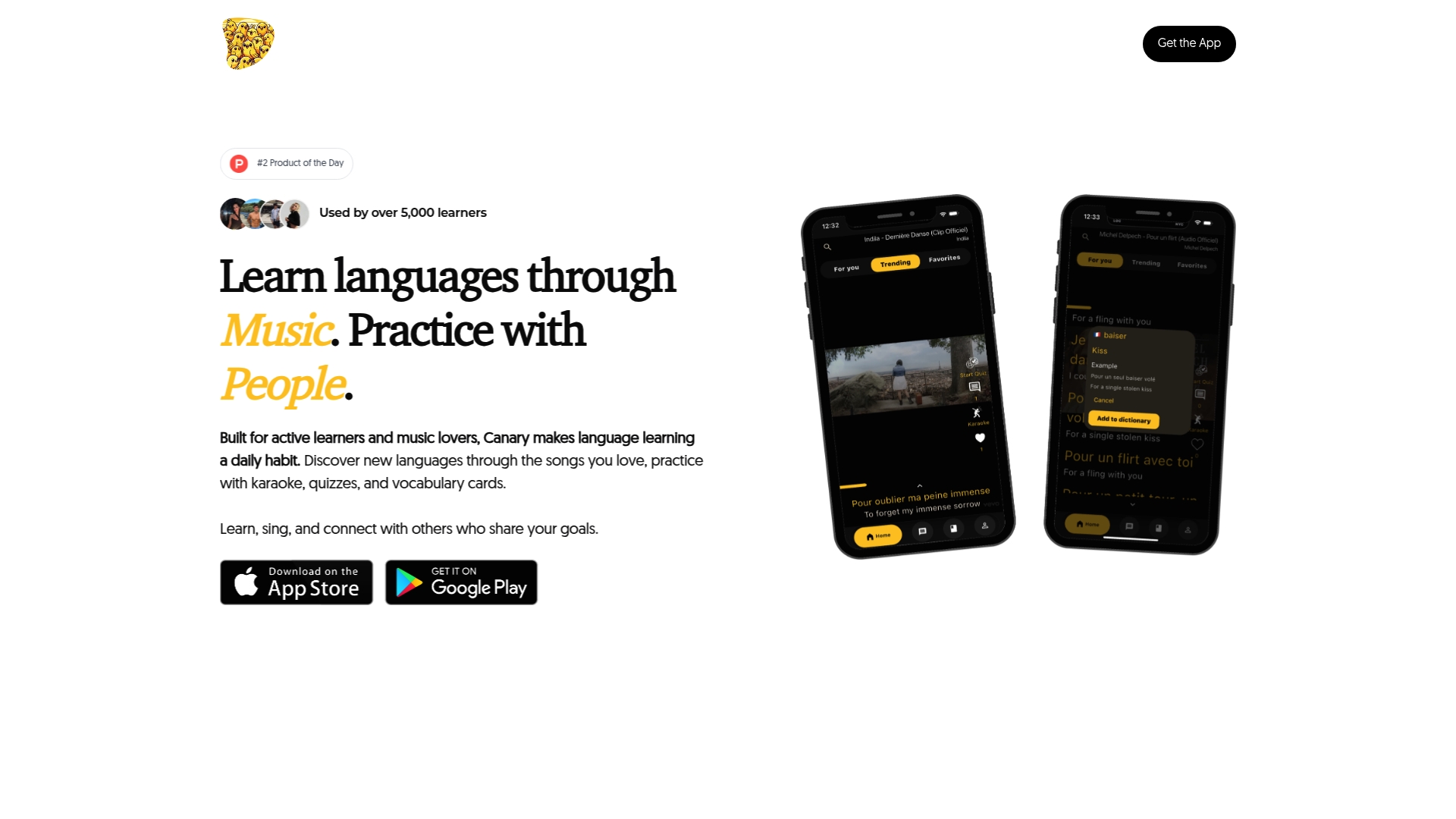
For educators looking to bring this approach into their classrooms, and for learners who want daily practice that actually holds attention, Singwithcanary’s language learning apps offer quiz formats designed around the same evidence base covered in this article. Music makes the context memorable. The quiz makes the vocabulary stick.
FAQ
What is the role of quizzes in language education?
Quizzes serve as active recall tools that force retrieval practice, deliver immediate feedback, and reinforce vocabulary at spaced intervals. Research shows quiz-based interventions can raise test scores from 60% to 94% within a single learning cycle.
Why use quizzes for language retention instead of traditional review?
Quizzes require learners to produce or recognize target language under retrieval conditions, which strengthens memory pathways more effectively than rereading or passive review. Gamified quiz formats show effect sizes up to eta-squared = 0.23 for vocabulary retention.
How do you reduce quiz anxiety in language learners?
Immediate, explanatory feedback reframes errors as learning steps rather than failures, which measurably reduces language anxiety. Using formative quizzes graded for completion rather than accuracy also removes the high-stakes pressure that triggers avoidance behavior.
What quiz formats work best for assessing language skills?
Multiple-choice with feedback, guessing-with-feedback (pretesting), and spaced repetition quizzes each target different memory mechanisms. Mixing formats within a single session produces broader vocabulary coverage and prevents learners from gaming a single question type.
How often should language learners take quizzes?
Short quizzes of five to ten questions taken three or more times per week outperform longer weekly quizzes for long-term retention. Frequency and spacing matter more than the total number of questions reviewed in any single session.