TL;DR:
- Motivation drops during the intermediate plateau as difficulty increases, causing many learners to quit.
- Practicing speaking early and using context-rich learning techniques help overcome common language learning obstacles.
Language acquisition is defined as the process of gaining communicative competence in a new language through exposure, practice, and feedback. The top language learning challenges most learners face are motivation lapses, fear of speaking, vocabulary retention, pronunciation struggles, and limited practice opportunities. Each one has a specific cognitive or emotional root. Knowing what drives each obstacle puts you ahead of most learners who quit without understanding why. Platforms like Singwithcanary, tools like iTalki, and research from BBC Future all point to the same fix: treat language learning as a social activity, not a solo academic grind.

1. Why motivation lapses are the biggest challenge in language acquisition
Motivation peaks early then drops sharply as difficulty rises and progress becomes invisible. This is the intermediate plateau, and it causes more learners to quit than any other single factor.
The plateau feels like failure, but it is actually a sign of progress. Your brain has absorbed the basics and now faces the harder work of internalizing complex patterns. The gap between what you can say and what you want to say widens before it narrows.
Three practical methods keep motivation alive through this phase:
- Set a sprint goal. The sprint method focuses your week on one deadline, one use case, and one output. A concrete target like “order food in Spanish by Friday” beats vague goals like “study more.”
- Use microlearning. Short, frequent sessions improve recall better than long, infrequent marathons. Fifteen minutes daily beats two hours on Sunday.
- Track visible wins. Log new words used in real conversation, not just words studied. Real use creates a sense of momentum.
Pro Tip: Set one weekly output goal, such as writing three sentences to a language partner or recording a 30-second voice message. Completing it proves progress to yourself.
The ego threat is another motivation killer. Your adult identity resists sounding childlike in a new language. Accepting that awkwardness is part of the process, not a sign of failure, is the single fastest way to push through the plateau.
2. How fear of speaking blocks fluency
Fear of speaking reduces working memory and leads to avoidance. Anxious learners speak less, and speaking less directly slows progress. The cycle is self-reinforcing.
Perfectionism is the core driver. Learners wait until they feel “ready,” but readiness comes from speaking, not from more studying. Native speakers make errors regularly and are still understood. Communication payoff matters more than grammatical accuracy.
“Overcoming perfectionism by focusing on communication leads to faster language fluency.” — Science Daily, 2026
Practical techniques to reduce speaking anxiety include:
- Graded exposure. Start with low-stakes settings: talk to yourself, record voice memos, or chat with a language partner online before speaking in public.
- Role-play scenarios. Practice specific situations like asking for directions or ordering coffee before you need them in real life.
- Prioritize useful phrases over grammar rules. Excess focus on grammar accuracy triggers anxiety and reduces speaking output. A bank of ready phrases builds confidence faster.
For learners specifically working on English pronunciation, speaking in public becomes less frightening with structured exposure and targeted coaching. The fear does not disappear on its own. You have to speak your way through it.
3. Vocabulary retention: why words keep slipping away
Vocabulary retention fails when words are learned in isolation. Flashcard apps teach you to recognize a word in a vacuum. Real language use requires you to recall it under pressure, in context, and at speed.
The forgetting curve is the underlying problem. Without review, most new words fade within days. Spaced repetition systems like Anki address this by scheduling reviews at increasing intervals, reinforcing memory just before it fades.
Context-rich learning works better than isolated drilling. Song lyrics embed language more naturally and memorably because they attach words to melody, emotion, and story. Stories and real conversations do the same. Words learned in context stick because your brain stores them with multiple associations.
A realistic review schedule matters as much as the method:
- Review new words within 24 hours of first exposure.
- Review again after three days, then one week, then one month.
- Use each word in a sentence you write yourself before moving on.
- Drop words that never appear in your target content. Not every word is worth your time.
Pro Tip: Limit yourself to one primary learning resource at a time. The “study noise” effect happens when learners collect apps, books, and courses instead of using any one consistently. One focused tool beats five scattered ones.
4. Pronunciation difficulties and how to fix them
Pronunciation is hard because your mouth has spent decades forming sounds that do not exist in your new language. The physiological habits are deeply ingrained. Hearing a new sound and producing it correctly are two separate skills, and both require deliberate practice.
Feedback-driven practice improves pronunciation faster than isolated drills. Knowing you said something wrong is not enough. You need to hear the correct version immediately and attempt it again. AI tutors, accent coaches, and recording yourself all provide this loop.
Cultural nuance matters too. Pronunciation is not just phonetics. Rhythm, stress, and intonation carry meaning. A word said with the wrong stress can confuse a native speaker even if every individual sound is correct.
| Method | Best for | Feedback speed |
|---|---|---|
| AI pronunciation tutor | Individual sound correction | Immediate |
| Accent coach (human) | Intonation and rhythm | Same session |
| Recording yourself | Self-monitoring habits | Delayed (self-review) |
| Song-based practice | Natural rhythm and stress | Immediate (musical cue) |
Practical steps for pronunciation improvement:
- Record yourself daily. Compare your output to a native speaker recording of the same sentence.
- Focus on one sound per week. Trying to fix everything at once produces nothing. One targeted sound, practiced in multiple words, creates real change.
- Use interactive language platforms. Real-time feedback from a platform or a human partner corrects errors before they become habits.
5. Limited practice opportunities and how to create them
Real-time feedback and social use over months or years is the core driver of fluent language acquisition. Studying alone builds knowledge. Speaking with others builds language. The gap between those two outcomes is enormous.
Most learners underestimate how much output they need. Reading and listening are passive. Speaking and writing force your brain to retrieve language under pressure. That retrieval practice is what builds fluency.
Learning with others reduces isolation and increases motivation through social accountability. Group learning also exposes you to natural speech patterns, slang, and cultural context that no textbook captures.
Ways to build daily practice into a realistic schedule:
- Schedule language exchanges. Platforms like iTalki connect you with native speakers for structured conversation practice. Thirty minutes three times a week produces measurable gains.
- Join a language community online. Discord servers, Reddit communities, and social apps create low-pressure environments for written practice.
- Use music as a daily practice tool. Music-infused learning increases engagement and vocabulary acquisition because song lyrics provide context, repetition, and emotional connection simultaneously.
- Set a non-negotiable daily minimum. Ten minutes of active output every day beats one hour twice a week. Consistency builds the neural pathways that make language automatic.
International connections also accelerate fluency by exposing you to regional accents, idioms, and cultural references that classroom learning never covers. The goal is not just to speak the language. The goal is to understand the people who speak it.
Key takeaways
Overcoming the top language learning challenges requires addressing motivation, speaking anxiety, vocabulary retention, pronunciation, and daily practice as separate but connected problems.
| Point | Details |
|---|---|
| Motivation requires structure | Use sprint goals and microlearning to push through the intermediate plateau. |
| Speaking beats studying | Output builds fluency faster than passive input; start speaking before you feel ready. |
| Context anchors vocabulary | Learn words through songs, stories, and conversations, not isolated flashcard drills. |
| Pronunciation needs feedback | Record yourself and use real-time correction to fix sounds before they become habits. |
| Social practice is non-negotiable | Regular interaction with other speakers is the fastest path to real fluency. |
What I’ve learned after watching thousands of learners hit the same walls
The most common mistake I see is treating language learning as a knowledge problem. Learners collect grammar rules, vocabulary lists, and apps as if fluency is something you accumulate. It is not. Fluency is a performance skill. You get better at it by doing it, not by preparing to do it.
The second mistake is waiting for confidence before speaking. Confidence does not come first. It comes after you have spoken badly many times and survived. Every learner I have seen break through their plateau did it by accepting that they would sound wrong for a while. That acceptance is not a mindset trick. It is the actual mechanism of progress.
Music changed how I think about vocabulary. Words in a song are never just words. They carry rhythm, emotion, and cultural weight. When you learn a word through a lyric you love, you do not forget it. That is not an accident. It is how memory works. Singwithcanary is built around exactly this principle, and the learners who use it consistently report faster vocabulary gains and better pronunciation because the context does the heavy lifting.
My practical advice: pick one language challenge from this list that is costing you the most progress right now. Not all five. One. Build one habit around it for three weeks. Then add the next. Stacking small wins is how you build the kind of momentum that actually lasts.
— Ben
How Singwithcanary helps you tackle these challenges
Singwithcanary combines music, karaoke, vocabulary cards, and social practice into one platform built for active learners. Every feature targets a specific obstacle: song-based learning fixes vocabulary retention, real-time singing practice trains pronunciation, and the community connects you with international learners for daily output.
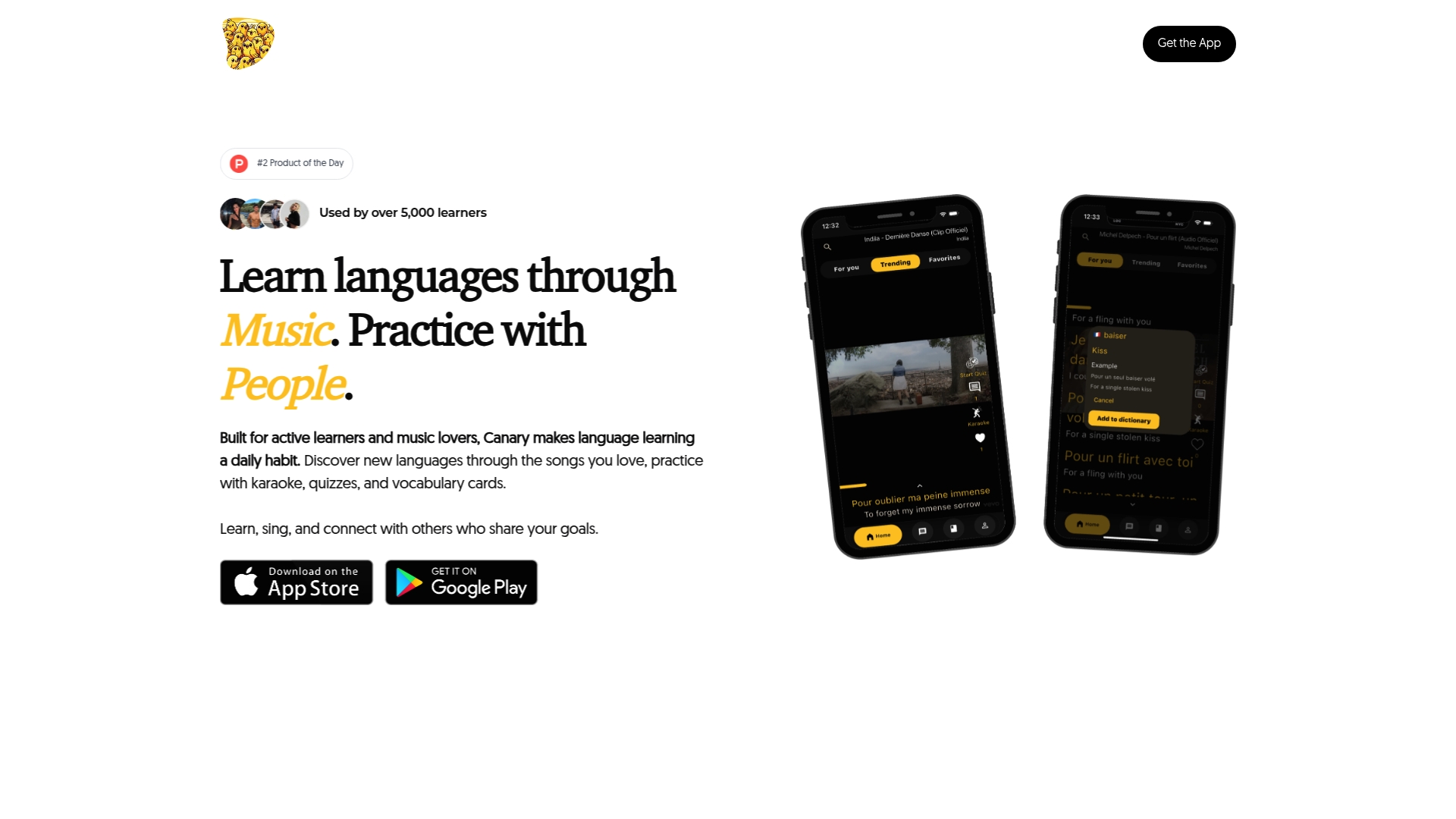
If motivation is your weak point, the weekly song format gives you a fresh, low-pressure reason to practice every day. If pronunciation is the problem, singing along to lyrics with a native speaker’s voice in your ear is one of the most effective feedback loops available. Learn languages with music on Singwithcanary and turn the challenges covered here into a daily habit you actually look forward to.
FAQ
What is the most common language learning challenge?
Motivation loss during the intermediate plateau is the most common obstacle. Progress becomes invisible as difficulty rises, causing many learners to quit before reaching fluency.
How do I stop being afraid to speak a new language?
Prioritize communication over accuracy and start with low-stakes practice like voice memos or online language exchanges. Speaking anxiety decreases with graded exposure, not more studying.
What is the best way to remember new vocabulary?
Learn words in context through songs, stories, or real conversations, then review them using a spaced repetition schedule. Isolated flashcards without context produce fast forgetting.
How much daily practice do I actually need?
Ten to fifteen minutes of active output every day produces better results than longer, infrequent sessions. Consistency builds the neural pathways that make language retrieval automatic.
Does music really help with language learning?
Yes. Lyric-based vocabulary learning embeds words more naturally because melody and emotion create multiple memory associations. Learners who use music-based methods report stronger vocabulary retention and improved pronunciation.