TL;DR:
- Effective language learning playlists combine slow, clear lyrics with cultural context and conversational segments to enhance vocabulary and comprehension. Using targeted playlists at each proficiency level and integrating active review into daily routines significantly accelerates language acquisition. Repeating a small selection of songs deeply fosters neural pathways, making fluency more achievable and sustainable.
Language learning playlists are curated collections of songs, audio tracks, and video content designed to build vocabulary, sharpen pronunciation, and deepen cultural understanding through music. The top language learning playlists work because they combine music-based retention with deliberate exposure, giving you a study tool that fits into any part of your day. Platforms like Spotify, YouTube, and dedicated apps such as Arabify and Skool host some of the most effective options available right now. This guide breaks down what separates the best from the rest and tells you exactly which playlists to use at each level.
1. What makes a top language learning playlist effective?
The best language study playlists share three non-negotiable qualities: clear lyrics at an appropriate difficulty level, cultural relevance, and a mix of song and conversational content. Generic music collections fail learners because they prioritize entertainment over structure. A well-built playlist teaches you something every time you press play.

Songs in effective playlists are typically much slower than natural speech. Arabic songs run 100–120 WPM, compared to conversational Arabic at 180+ WPM. That slower pace gives your ear time to catch individual words, making songs ideal for ear training before you tackle real-speed conversation.
The strongest playlists also follow a narrative arc. Pairing lyrical songs with conversational segments builds both comprehension and speaking ability at the same time. Think of it as a portable lesson: the song introduces vocabulary, and the conversational clip shows you how that vocabulary sounds in real use.
- Clear, slow lyrics at the learner’s current level
- Cultural context woven into song selection, not just grammar drills
- Conversational segments between or after songs
- Thematic grouping so vocabulary clusters around real-life topics
- Repetition across multiple songs to reinforce new words
Pro Tip: Balance passive listening with active study. After three to five songs, pause and write down every word you recognized. That five-minute review locks in far more than another hour of background listening.
2. Beginner playlists: slow songs and simple vocabulary
Beginners need playlists built around slow, clear pronunciation and high-frequency vocabulary. Children’s songs in the target language are underrated here. They use simple grammar, repeat core words constantly, and carry cultural weight that textbooks miss.
For Arabic learners, Arabify’s leveled song catalog is the strongest free resource available. It organizes tracks from beginner to advanced, starting with artists like Fairuz, whose classical Arabic diction is exceptionally clear. Fairuz songs average around 100 WPM, making them ideal for catching every syllable. For Spanish beginners, YouTube channels built around Latin American pop with on-screen lyrics give you pronunciation modeling alongside vocabulary.
Words learned through music are retained 20–30% better than words learned through spoken text alone. That advantage comes from the slower pace, emotional engagement, and repetition built into songs. A beginner who commits to 20 songs in their target language can build a core vocabulary of about 1,000 words, since each song yields roughly 50 new words. That is a meaningful foundation before you ever open a grammar textbook.
Pro Tip: Start with songs you already know in English, then find the same song performed in your target language. Familiar melodies reduce cognitive load and let you focus entirely on the new words.
3. Intermediate playlists: contemporary pop and structured series
Intermediate learners need playlists that push vocabulary beyond survival phrases without overwhelming them. Contemporary pop in the target language works well here because the production quality is high, lyrics are written for native speakers, and the topics cover everyday life.
YouTube series like “English with Thomas” offer curated playlists organized by theme and difficulty. Thomas groups content by mood and activity, so you can pick a playlist for focused study or one for background listening during chores. Curating playlists by theme and mood maintains learner interest and maximizes exposure time during different activities. That is not a minor detail. Motivation is the variable that kills most language learning attempts.
For French intermediate learners, playlists built around artists like Stromae and Angèle use modern slang and natural sentence rhythm. For Mandarin, playlists featuring Jay Chou expose you to tonal patterns in a musical context, which trains your ear in ways that drilling tones in isolation never does. The key at this level is choosing artists who write their own lyrics, since those songs tend to reflect how people actually speak.
4. Advanced playlists and immersion methods
Advanced learners need language acquisition playlists that replicate the density and speed of real conversation. At this level, the goal shifts from vocabulary acquisition to fluency and natural rhythm. Playlists that mix unscripted podcast segments with music tracks are the most effective format.
Playlists serve as portable narratives when they pair songs with conversational content, developing both comprehension and speech production simultaneously. Advanced learners should build playlists that alternate between a song and a two-minute native speaker clip on the same topic. This forces your brain to process the same vocabulary in two different registers.
Flashcard integration takes this further. Linking vocabulary cards to song lyrics creates a feedback loop that significantly improves retention compared to passive listening alone. Tools like Flashcard Lab let you attach specific lyrics to cards, so reviewing vocabulary always connects back to a melody you already know.
“Exposure is exposure. Even background listening with occasional focus builds vital auditory familiarity, and that familiarity is what makes real conversation feel possible.” — Language coach insight via English with Thomas
For accent work at the advanced level, 2D sound motion technology from MyAccentWay maps the physical movement of sounds, giving you a visual reference for pronunciation that music alone cannot provide. Pairing that with lyric-heavy playlists creates a complete accent training system.
5. How to integrate playlists into your daily routine
The most effective language learning audio resources are the ones you actually use every day. Playlists win over textbooks here because they fit into time you are already spending on other things.
Background playlist exposure during mundane tasks reduces frustration and builds auditory familiarity over time. Commuting, cooking, and exercising are all dead time that a well-chosen playlist converts into study time. You do not need to focus intensely. Consistent exposure at low attention still trains your ear.
Here is a practical daily structure that works across all levels:
- Morning commute: Play a thematic playlist in your target language. No active study required.
- Lunch break (10 minutes): Review five to ten words from songs you heard that morning using a spaced repetition app like Anki.
- Evening session (20 minutes): Pick one song, read the lyrics, and look up every word you missed.
- Wind-down: Return to the same playlist from the morning as background audio.
Reviewing three to five new phrases after each focused listening session is the single highest-return habit you can build. Five to ten minutes of review after listening locks in vocabulary that would otherwise fade within 24 hours.
Pro Tip: Use your Spotify listening history to identify which songs you replay most. Those are the songs your brain finds most engaging. Build your active study sessions around them first.
6. Comparison of top multilingual music playlists for learners
| Playlist / Resource | Language(s) | Learner Level | Platform | Content Type |
|---|---|---|---|---|
| Arabify leveled song catalog | Arabic | Beginner to Advanced | Web app | Curated songs by level |
| English with Thomas YouTube series | English | Intermediate to Advanced | YouTube | Thematic video playlists |
| Fairuz classical Arabic collection | Arabic | Beginner | Spotify, YouTube | Slow, clear vocal songs |
| Stromae and Angèle playlists | French | Intermediate | Spotify | Contemporary pop with lyrics |
| Jay Chou Mandarin playlists | Mandarin | Intermediate to Advanced | Spotify, YouTube | Pop with tonal modeling |
| Skool Languages through Music | Multiple | Beginner to Intermediate | Skool platform | Song-based vocabulary courses |
| Spotify history-based custom lists | Any | All levels | Spotify | Personalized song selection |
The table above highlights how cultural context in music varies by resource. Arabify and Skool build cultural knowledge directly into their curation. Spotify-based playlists give you flexibility but require more self-direction to stay on track.
Key takeaways
The most effective language learning playlists combine slow, clear lyrics with cultural context, conversational segments, and active review habits to produce measurable vocabulary gains.
| Point | Details |
|---|---|
| Music slows speech for learners | Songs run at 100–120 WPM versus 180+ WPM in conversation, making lyrics easier to absorb. |
| 20 songs builds 1,000 words | Each song yields roughly 50 new words, making playlists a fast vocabulary tool. |
| Active review multiplies gains | Reviewing five to ten words after each session locks in vocabulary that passive listening alone misses. |
| Match playlist to level | Beginners need slow, clear songs like Fairuz; advanced learners need playlists mixing songs with native speech. |
| Daily routine beats intensity | Short daily playlist sessions during commutes or chores outperform occasional long study blocks. |
Why I stopped treating playlists as background noise
I spent two years treating Spanish playlists as something I put on while doing other things. My listening comprehension improved slowly. The moment I started treating one song per day as a focused study unit, everything accelerated. I would pick a single track, read the lyrics, look up every unfamiliar word, and then listen three more times. That process took 15 minutes. It produced better results than two hours of passive listening ever did.
The learners I have seen make the fastest progress are not the ones with the longest playlists. They are the ones who go deep on a small number of songs and then move on. Repetition is not boring when the song is good. It is how your brain builds the neural pathways that make a language feel natural.
My recommendation for different learner types: if you are analytical, use Arabify or Skool because they give you structure and level guidance. If you are more intuitive, build a Spotify playlist around artists you genuinely enjoy in your target language and let curiosity drive the vocabulary work. Both approaches work. The one you stick with is the one that wins.
The educational benefits of music-based learning go beyond vocabulary. Music teaches you how a language feels, its rhythm, its emotional register, and its cultural assumptions. No grammar book does that.
— Ben
Learn languages with music on Singwithcanary
Playlists are a powerful starting point. Singwithcanary takes that foundation and adds the interactive layer that turns passive listening into active fluency. The platform combines curated song-based learning with karaoke, vocabulary cards, and quizzes built directly around lyrics. You practice pronunciation on real songs, not scripted drills.
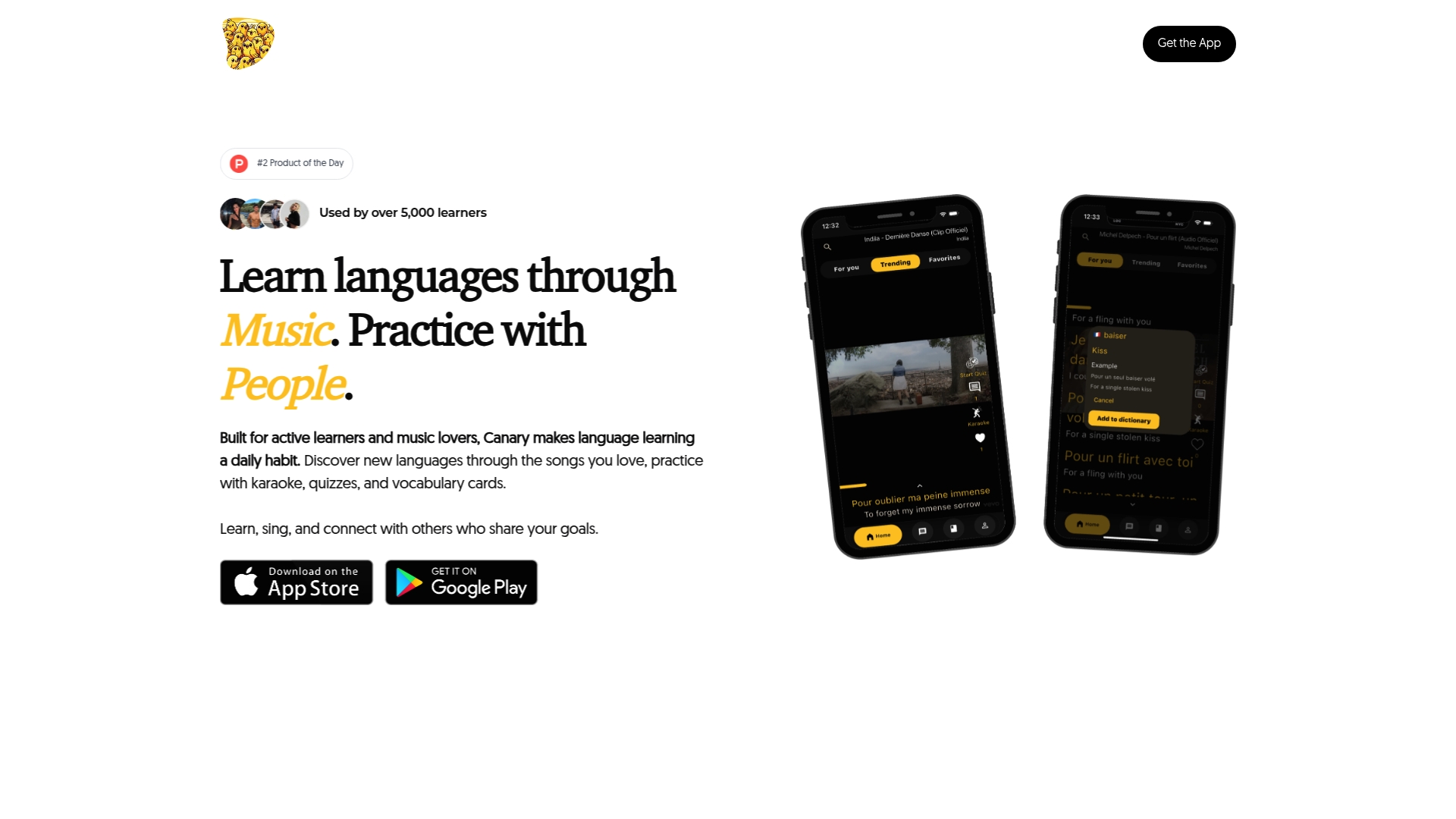
Singwithcanary also connects you with a global community of learners, so you can practice what you hear in songs with real people from the countries where those songs were made. If you are ready to move beyond playlists and start learning languages with music in a structured, social environment, Singwithcanary is built exactly for that. Sign up and explore the song-based resources waiting for you.
FAQ
What are the best language learning playlists for beginners?
Beginners get the most from slow, clear songs with simple vocabulary. Arabify’s leveled Arabic catalog and children’s song playlists on YouTube are strong starting points because they prioritize pronunciation clarity over musical complexity.
How many words can you learn from language learning music?
Each song yields roughly 50 new words, meaning 20 songs can build a core vocabulary of around 1,000 words. That figure includes cultural context, not just isolated definitions.
Do language acquisition playlists work for advanced learners?
Yes, but advanced learners need playlists that mix songs with unscripted native speech. Alternating between a song and a short conversational clip on the same topic forces your brain to process vocabulary in two different registers, which accelerates fluency.
How do I use Spotify for language learning?
Use your Spotify listening history to identify songs you replay most, then build active study sessions around those tracks. Pair the lyrics with vocabulary flashcards to create a retention loop that passive listening alone cannot match.
How long should I listen to language learning playlists each day?
Even 20–30 minutes of daily exposure produces measurable gains over time. Short daily sessions during commutes or chores, combined with a brief review afterward, outperform longer but infrequent study blocks.