TL;DR:
- AI, music, and community trends revolutionize language learning by making it active and social.
- Music-based methods boost motivation, pronunciation, and cultural understanding more than traditional studying.
- Active participation, social practice, and the right apps are essential for effective fluency gains in 2026.
Language learning has a reputation problem. Most people picture flashcard marathons, grammar drills, and textbooks that collect dust. But in 2026, that picture looks nothing like reality for the most effective learners out there. AI, music, and community have collided to create something genuinely exciting: a learning environment where your playlist is your curriculum and your classmates are people from around the world. If you love music and want to speak a new language with real confidence, this guide is built for you.
Table of Contents
- The biggest language learning trends of 2026 at a glance
- Why music-based learning is surging
- From apps to AI: Tools fueling music-driven language learning
- How social and community features accelerate fluency
- What most people miss about music-powered language learning
- Power up your language journey with music social tools
- Frequently asked questions
Key Takeaways
| Point | Details |
|---|---|
| AI and microlearning lead | AI and microlearning now drive personalized, effective language practice. |
| Music boosts motivation | Actively using songs increases retention, fun, and the desire to practice daily. |
| Community accelerates fluency | Combining social tools with song-based activities quickly improves speaking skills. |
| Apps are getting smarter | New apps use lyrics, translation, and AI-generated music for immersive learning. |
The biggest language learning trends of 2026 at a glance
The landscape has shifted fast. A few years ago, language learning meant choosing between a textbook and a gamified app. Today, the options are richer, smarter, and far more social. Understanding which trends are actually worth your time helps you build music habits in 2026 that stick.
Here is a snapshot of the forces reshaping how people learn languages right now:
| Trend | Key benefit | Best for |
|---|---|---|
| AI-powered personalization | Adapts to your pace and weak spots | All learner types |
| Microlearning | Short, focused sessions that fit any schedule | Busy adults |
| Immersive VR/AR | Real-world context without leaving home | Visual learners |
| Song-based learning | Memory, pronunciation, motivation boost | Music enthusiasts |
| Community and social exchange | Fluency through real conversation | Social learners |
| K-pop and J-pop driven study | Cultural immersion with high engagement | Asian language learners |
The rise of Korean and Japanese is one of the most striking shifts. K-pop and anime fandoms are converting passive listeners into active learners at a scale no textbook publisher anticipated. These communities are not just consuming content; they are studying lyrics, mimicking pronunciation, and building vocabulary through the music they already love.
The most impactful trends for music-driven learners include:
- Song-based learning apps with built-in lyric tools and spaced repetition
- AI personalization that adjusts difficulty based on your listening history
- Community challenges like karaoke contests and group shadowing sessions
- Microlearning formats that turn a three-minute song into a focused lesson
- Social playlisting where learners share and study curated tracks together
Studies suggest that learners who use music-integrated or app-based tools practice significantly more consistently than those relying on traditional methods alone. The reason is simple: when practice feels like entertainment, you actually show up for it.
Why music-based learning is surging
There is a reason music gets stuck in your head. Melody, rhythm, and repetition work together to encode information in long-term memory far more effectively than reading a word list. For language learners, that is a massive advantage.

Research consistently shows that active production through singing outperforms passive listening for pronunciation accuracy, idiom acquisition, and sustained motivation. Shadowing a vocalist forces your mouth to form sounds your brain has never attempted. That physical practice is irreplaceable.
Here is how music-based learning compares to traditional study across the factors that matter most:
| Factor | Music-based learning | Traditional study |
|---|---|---|
| Motivation | High, driven by enjoyment | Often low after initial phase |
| Vocabulary recall | Strong via melody and context | Moderate via repetition |
| Pronunciation | Practiced actively through singing | Often neglected or passive |
| Cultural context | Built into every lyric | Rarely addressed |
| Social factor | Naturally collaborative | Typically solo |
The educational value of music goes beyond memory tricks. Songs carry cultural nuance, slang, and emotional register that textbooks rarely capture. When you learn a phrase through a song you love, you also absorb when and how native speakers actually use it.
Platforms like LyricFluent, LingoClip, Canary, and Turtle Tune have built entire learning systems around song-based language benefits, combining lyric display, translation aids, and social features into a single experience.
“Singing a line ten times to get the melody right is the same as drilling pronunciation ten times. The difference is that one feels like work and the other feels like fun.”
Pro Tip: During your next song-based session, mute the audio after the first two listens and try to speak the lyrics aloud from memory. This shadowing technique forces active recall and sharpens pronunciation far faster than passive replay.
From apps to AI: Tools fueling music-driven language learning
Knowing why song-based learning works is one thing. Finding the right tools to make it happen daily is another. The best music apps in 2026 go well beyond displaying lyrics on screen.
LyricFluent, LingoClip, Canary, and Turtle Tune each offer a distinct approach: synchronized lyrics with translation overlays, spaced repetition for vocabulary reinforcement, pronunciation scoring, and social features that connect you with other learners. These tools treat songs as structured lessons, not just background entertainment.
What separates 2026’s leading platforms from older options like Duolingo or Babbel is the integration of AI. AI-generated custom songs can now target your specific vocabulary gaps, wrap new words in catchy melodies, and adjust complexity as you improve. That kind of dynamic, personalized content was unimaginable five years ago.
When choosing a song-based app, look for these four features:
- Lyric synchronization with translation so you understand every word in real time
- Active pronunciation tools that give feedback on your spoken output
- Spaced repetition built into songs so vocabulary sticks beyond the session
- Social or community features that connect you with other learners for practice
If you want a structured path, the song-based learning guide walks you through exactly how to build a daily routine around music.
Pro Tip: Filter your app’s song library by genre and difficulty. Starting with slower ballads in your target language gives you more time to process each word before the next line hits. As your ear improves, move to faster tracks.
How social and community features accelerate fluency
Learning a language alone has a ceiling. You can memorize vocabulary and nail pronunciation in your bedroom, but real fluency requires real interaction. That is where community features change everything.

Pairing active singing with social exchanges accelerates fluency gains in ways that solo study simply cannot replicate. When you perform a karaoke challenge and a native speaker gives you feedback, you get correction, encouragement, and cultural context all at once.
Social and community-based learning is one of 2026’s most dominant trends for good reason. Accountability, peer motivation, and shared enthusiasm keep learners returning daily.
Practices that consistently improve outcomes in community-driven learning include:
- Collaborative playlisting where learners share songs and annotate lyrics together
- Karaoke challenges that make pronunciation practice public and fun
- Group shadowing sessions with learners at similar levels for mutual support
- Multilingual chat threads tied to specific songs or artists
- Peer feedback loops where members review each other’s recorded attempts
Joining music learning communities gives you access to people who share your taste in music and your goal of fluency. That overlap is powerful. You are not just practicing a language; you are bonding over something you both love.
“When music becomes the meeting point, the social barrier drops. Learners stop worrying about making mistakes and start focusing on the song.”
Using song practice for fluency as your daily anchor, combined with community interaction, creates a feedback loop that compounds over weeks and months.
What most people miss about music-powered language learning
Here is the uncomfortable truth: most people who try music-based language learning still treat it passively. They play songs in the background, absorb a few words, and wonder why their speaking hasn’t improved after months.
Passive exposure is not enough. It never was. The real gains come from active participation, and that means singing out loud, making mistakes in front of others, and leaning into the discomfort of sounding imperfect. The learners who progress fastest are not the ones with the best ear. They are the ones willing to perform.
Community amplifies this effect dramatically. When you master lyrics learning alongside other people, you get corrected faster, stay motivated longer, and build the kind of confidence that carries over into real conversations.
“Fluency is a group sport. Songs turn practice into play, and play is how humans learn best at any age.”
The habit loop that works is simple: pick a song, study the lyrics actively, perform it with or for someone else, and get feedback. Repeat daily. That cycle, not passive listening, is what separates learners who plateau from those who break through.
Pro Tip: Schedule one live singing or shadowing session per week with a language partner. Even a five-minute voice note exchange after practicing the same song creates accountability and accelerates your progress more than hours of solo listening.
Power up your language journey with music social tools
Everything covered here points to one conclusion: the most effective language learning in 2026 is active, musical, and social. Knowing the trends is step one. Putting them into practice with the right platform is where real progress begins.
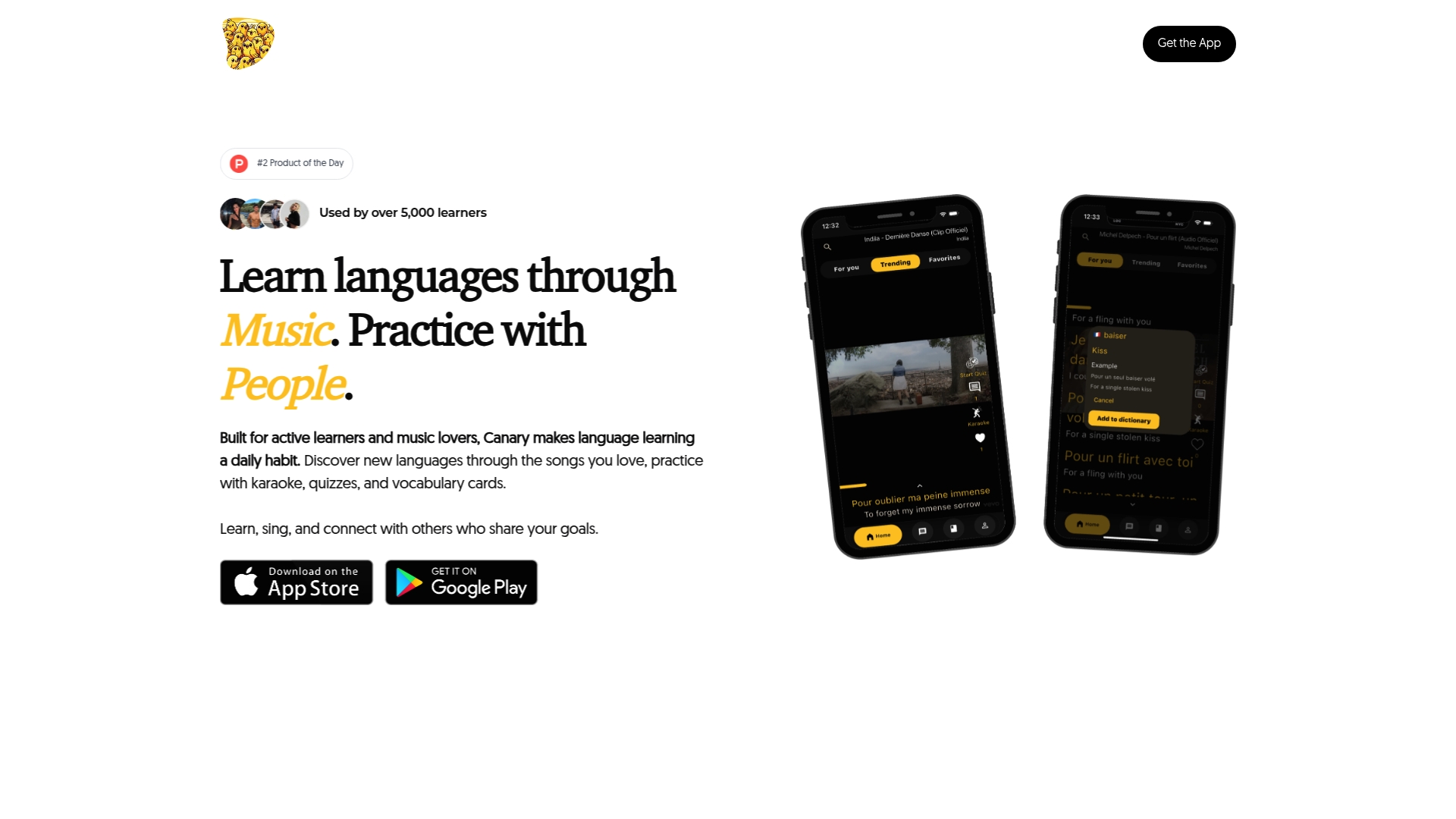
Canary brings all of these elements together in one place. With karaoke-style lyric practice, vocabulary cards, pronunciation tools, and a global community of learners, it embodies exactly what the research supports. Explore the educational benefits of music-based learning, discover top Spanish music tools if Spanish is your target, or simply learn with music and connect with people around the world who share your passion for songs and languages.
Frequently asked questions
What is the biggest language learning trend for 2026?
AI personalization combined with song-based and community learning is the dominant trend, making daily practice more engaging and measurably more effective than traditional methods.
How does music help with language retention?
Songs encode vocabulary through melody and repetition, and active singing or shadowing sharpens pronunciation and idiom use far more effectively than reading or passive listening alone.
Which apps offer song-based language lessons in 2026?
LyricFluent, LingoClip, Canary, and Turtle Tune are top picks, each offering lyric-based lessons, translation tools, and social practice features.
What languages are most popular to learn through music now?
Korean and Japanese lead in 2026 thanks to K-pop and J-pop fandoms, while Spanish and French remain strong choices for music-driven learners worldwide.
Do you have to be a good singer for song-based learning?
Not at all. Active participation through singing or shadowing delivers the benefits regardless of vocal skill, and most learners find their confidence grows naturally with practice.