Finding a music-based language learning app that actually supports interactive word practice and community learning is still a challenge. Most alternatives hide pricing, limit language selection, or offer only passive listening exercises rather than real lyric-level practice. This comparison covers features, learning process, and cost across five tools so learners can match one to their language goals, practice style, and budget.
Table of Contents
Canary
At a Glance
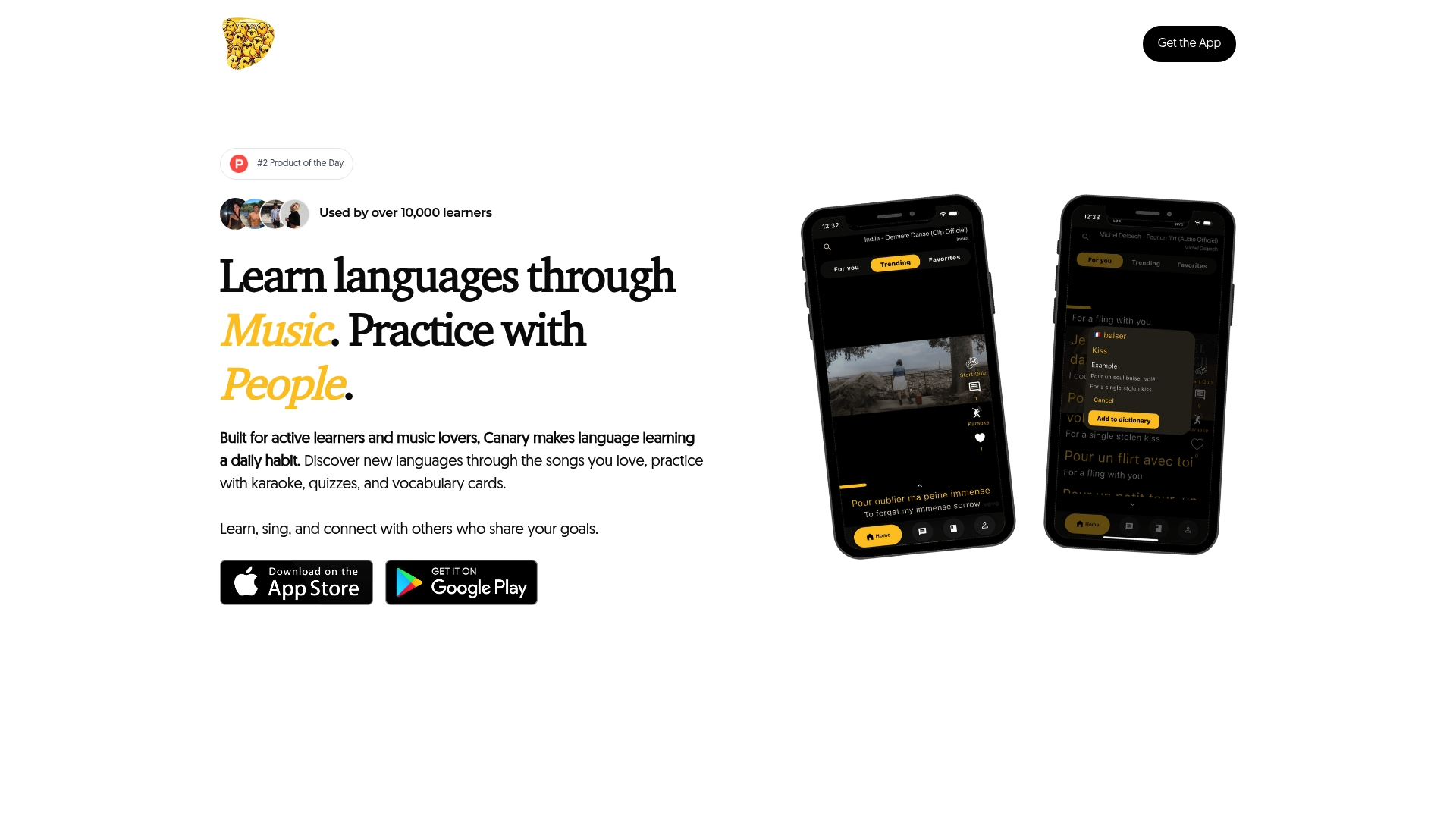
Users sing along and tap any lyric word to see meanings and examples while practicing pronunciation in karaoke mode. The app pairs song-based exercises with quizzes and vocabulary cards to reinforce retention. Community features let learners connect and practice with others who share language goals.
Core Features
Canary centers learning on songs and offers a Karaoke mode for pronunciation practice. Learners can tap words in lyrics to view meanings, examples, and flashcard-style vocabulary cards, and then test recall with short quizzes. Social features let you follow other learners, share performances, and use song context to internalize vocabulary and improve ear training.
Key Differentiator
The single feature that sets Canary apart is its lyric-level interactivity combined with live singing practice. Tapping any word ties definitions and examples directly to the music you sing, so vocabulary appears in context rather than isolated lists. That coupling of singing plus immediate lexical lookup makes practice feel like a language lab and a social activity at the same time.
Pros
Canary makes repeated pronunciation practice natural because you sing actual songs while receiving instant word-level feedback. The combination of quizzes and vocabulary cards reinforces memory through active recall and spaced repetition in short sessions. Community features add motivation by letting you compare performances and exchange tips with other learners who prefer music-based practice.
Cons
- Site navigation and some links are non-functional, and pricing details are unclear, which makes it hard to verify feature depth or subscription tiers.
Who It’s For
This app fits language learners who prefer music as a learning vessel and who want casual daily practice. It suits people focused on pronunciation, accent work, and ear training through repeated singing. It is not aimed at learners who need a strict grammar syllabus or a classroom-style curriculum.
Unique Value Proposition
The lyric tap-to-define workflow turns songs into interactive lessons you can replay and practice. That approach reduces friction between noticing a new word and practicing it aloud, so your study sessions center on speaking, listening, and immediate recall rather than passive review. For learners who retain more through sound and repetition, this method shortens the loop between exposure and productive use.
Real World Use Case
A Spanish learner opens a favorite pop song, uses Karaoke mode to practice tricky pronunciations, taps unfamiliar words to add them to vocabulary cards, and runs two quick quizzes. They then post a short clip to the community for pronunciation tips. The routine converts one song into multiple micro-lessons and social feedback moments.
Pricing
Pricing is not listed clearly on the site and the product page reports errors when loading tier information. The public pages describe the app and its features, but concrete subscription tiers or a starting price are not available for confirmation.
Website: https://singwithcanary.com
Sounter
At a Glance
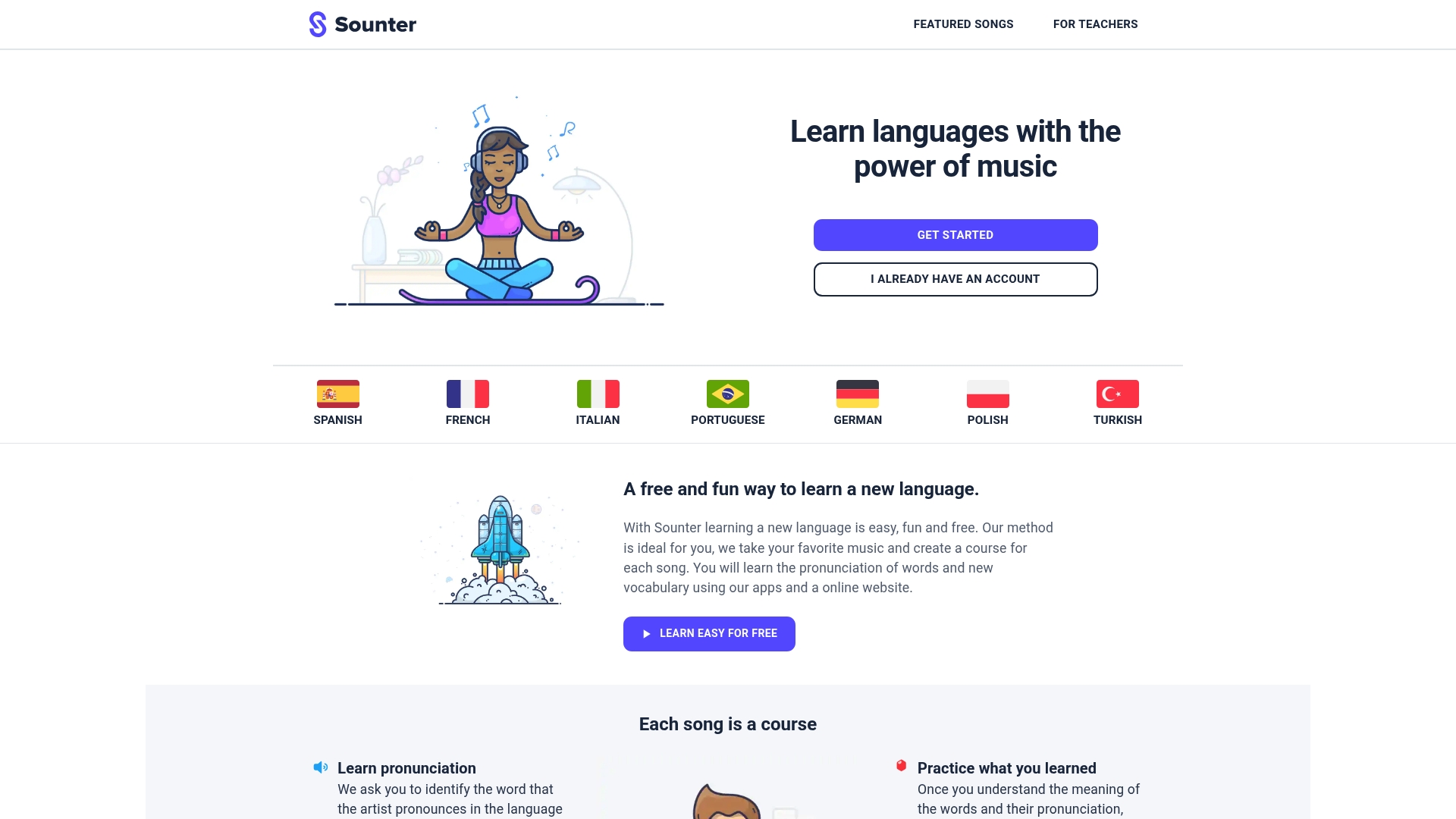
Sounter reports it aims to impact over 5 million learners since 2019. For people comparing totool.cc alternatives, its emphasis on turning popular songs into lesson material stands out. The platform mixes community contributions with mobile apps and teacher tools for classroom use.
Core Features
Sounter builds courses from songs and includes pronunciation identification exercises and vocabulary lessons taken from lyrics. Translated lyrics and community transcription tools let members compare meaning and form while practicing. A points and leveling system encourages regular practice across desktop and mobile apps.
Key Differentiator
Sounter centers each course on a listener’s chosen song, turning familiar tracks into structured lessons. That model makes practice feel like entertainment and pushes members to contribute transcriptions and translations. Compared with Singwithcanary, Sounter pursues a more community driven model focused on teacher support and free access.
Pros
The platform is Free to use, which lowers the barrier for learners who prefer music based practice. Familiar songs increase motivation, and the site supports multiple languages, pronunciation drills, and lyric translations. A mobile apps presence and a dedicated platform for teachers let classroom groups use the same content members study.
Cons
-
Limited published evidence on how far the courses develop advanced language skills.
-
Third party reviews suggest core features feel basic while the platform continues to mature.
-
Most activities require an internet connection, and community content quality varies with contributor effort.
When It May Not Fit
If you need verified progression toward professional fluency, this platform may not fit your goals. Learners who prefer tightly curated curricula or guaranteed transcription quality will find the community model uneven. Classroom instructors requiring offline bundles for fieldwork will need a different solution unless they upgrade to Premium.
Who It’s For
Learners who love music and want a free, social way to practice vocabulary and pronunciation will fit Sounter well. Teachers seeking song based classroom activities can adapt community transcriptions for lessons and homework. Community contributors who enjoy editing lyrics will find clear tasks that improve public course content.
Real World Use Case
A Spanish teacher uses Sounter to assign a popular pop song as weekly homework. Students transcribe verses, practice pronunciation drills, and compare translated lyrics in class for speaking practice. The teacher grades participation, and the class keeps motivation with the points and leveling system.
Website: https://sounter.com
Lirica
At a Glance
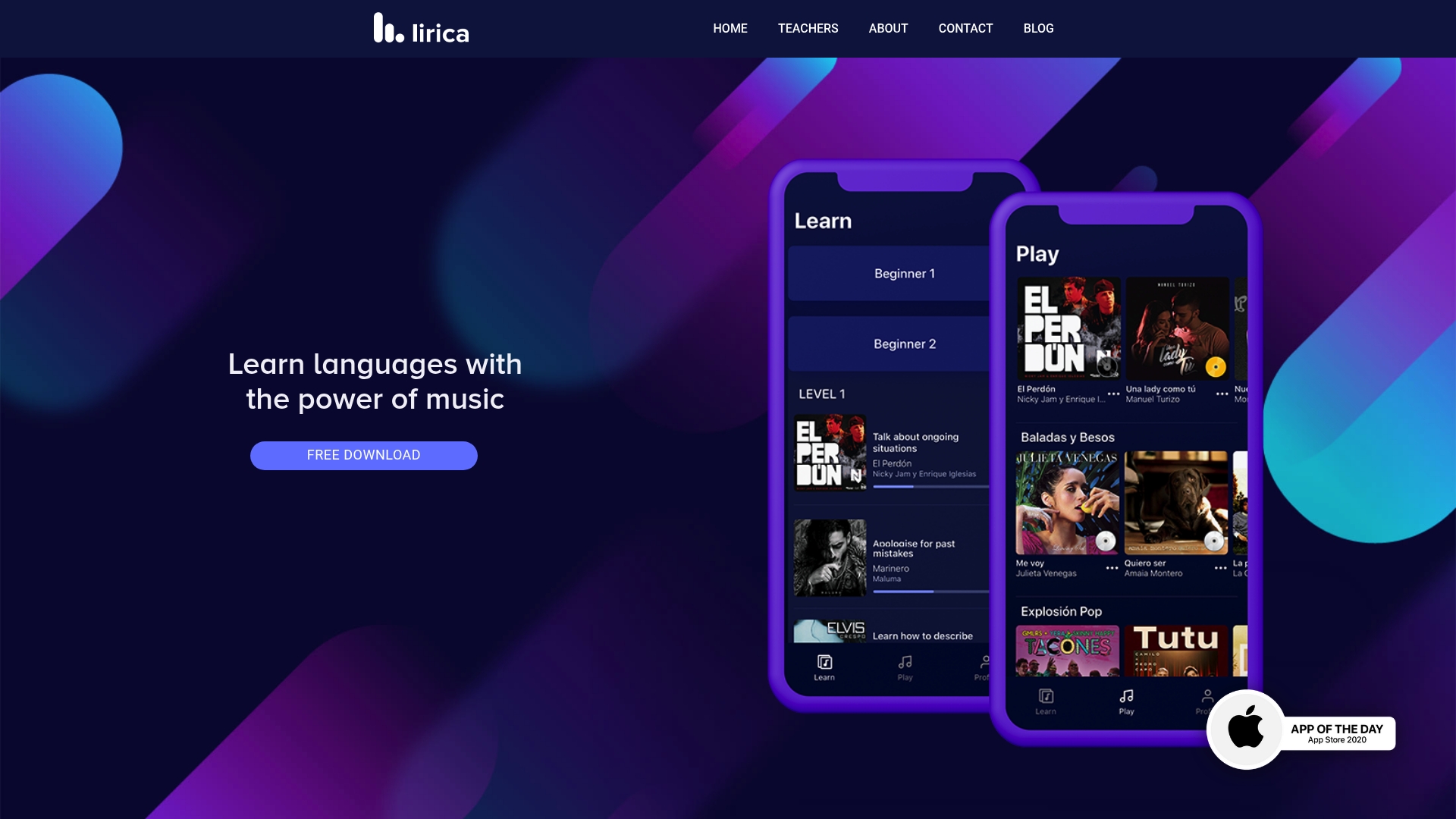
Recognized as a “Hidden Gem” by Google and named “App of the Day” on Apple, Lirica teaches language through hit songs. The app uses popular artists such as Enrique Iglesias, Pink, and Shakira to make vocabulary and grammar memorable. Lessons aim to combine listening practice with cultural context so learners remember words in real situations.
Core Features
Lirica builds lessons around full songs and breaks them into one verse at a time exercises that focus on comprehension and pronunciation. It adds lyric challenges and a level-up system to keep practice goal oriented while preserving the song experience. The app also includes teacher resources for creating classes, assigning lessons, and tracking student progress.
Key Differentiator
Lirica centers every lesson on actual hit songs by mainstream artists, which gives learners familiar audio and real cultural references. Each activity ties specific lyric lines to vocabulary and grammar practice to boost retention. That music-first design makes the app feel like study folded into listening time.
Pros
The music-based approach turns passive listening into active study and helps vocabulary stick. Culturally rich lessons and a roster of recognizable artists make practice feel relevant and enjoyable. Teacher tools let educators assign song lessons and monitor progress, which helps bring music into a classroom setting.
Cons
- Limited language selection right now, with Spanish, English, and German only.
- Subscription details and long term pricing are not clearly published, so total cost is unclear.
- The company lists more languages as coming, but the scope and timing of expansion are not specified.
- Availability depends on device compatibility, which may restrict desktop or older device access.
When It May Not Fit
If you need a wide selection of less common languages, this app will feel narrow. If transparent long term pricing is critical for budgeting, the unclear subscription details may be a problem. Organizations that require full desktop support or specific enterprise controls should verify device compatibility before committing.
Who It’s For
Language learners who enjoy popular music and want cultural context will find this app appealing. Teachers who want to add musical lessons to class plans can use the assignment and tracking tools. Travelers or casual learners who prefer short daily practice with songs also match this product profile.
Real World Use Case
A learner prepares for travel by practicing Spanish with Shakira songs and drills one verse until points of grammar feel natural. A teacher assigns a song lesson to a class and monitors which students complete the lyric challenges. Over several weeks the student improves listening accuracy and remembers phrases in context.
Website: https://lirica.io
Singit
At a Glance
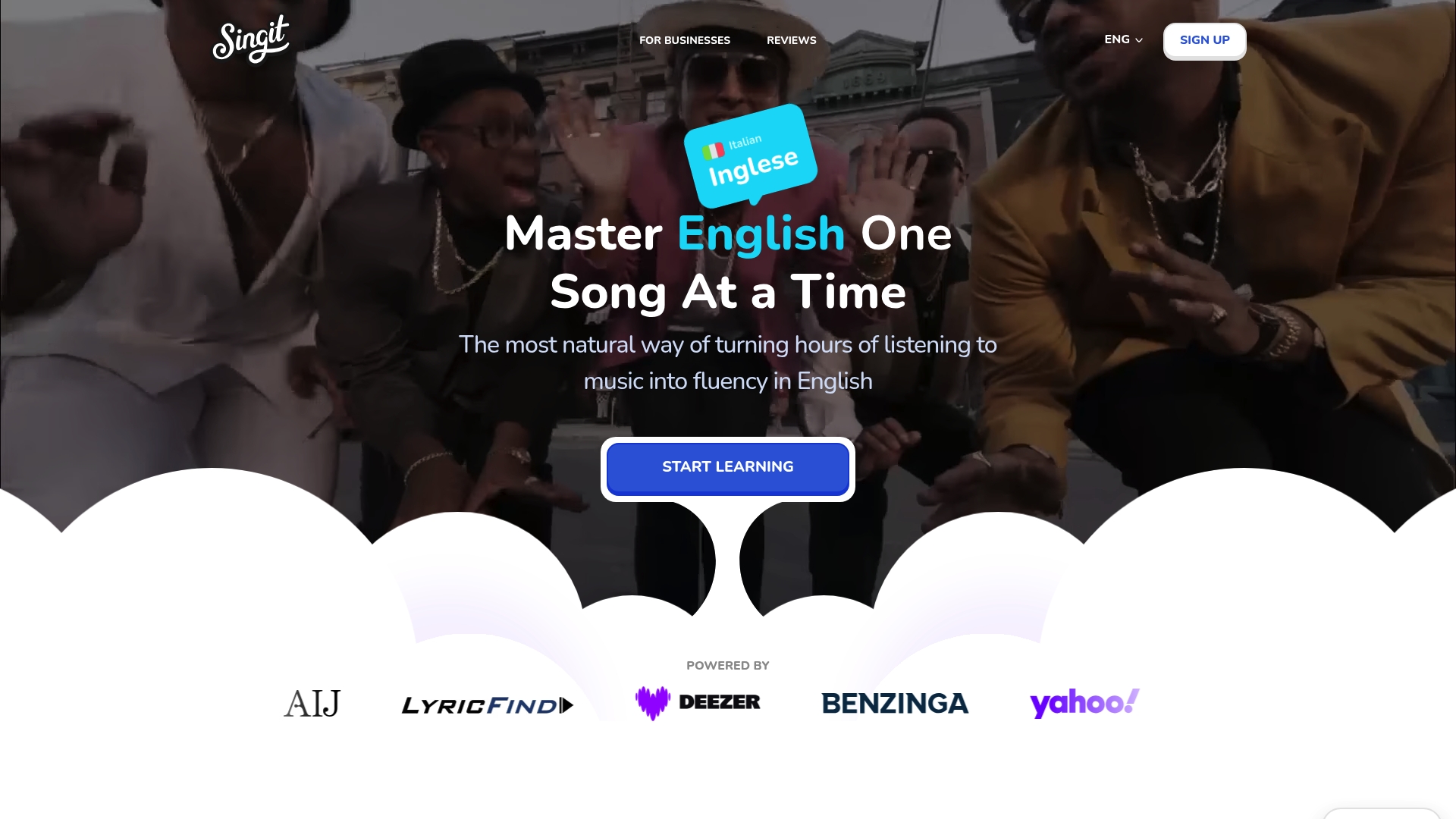
Starting price for the certificate-only plan is $500, with a full 1-year program priced at $1,150 and installment options available. Singit pairs a music library with exercises and an AI chat tutor to teach English through songs. The pricing and certificate path make it an option for learners who want a guided, music-focused certification route.
Core Features
Singit uses song lyrics to strengthen vocabulary retention and offers exercises that target idioms and everyday English. The app includes pronunciation practice where learners sing along with native speakers and an AI chat tutor that gives personalized guidance. Features combine listening, speaking, and targeted drills so learners practice language in context.
Key Differentiator
Singit positions itself as the only app that combines a large streaming-backed music library with interactive English learning tools and AI-driven tutoring. That mix targets learners who prefer music as the primary learning medium rather than text-based lessons.
Pros
Singit reports positive user feedback and claimed vocabulary growth benefits, which align with its song-driven method and CEFR certificate options. The singing exercises help pronunciation and ear training while the AI tutor provides on-demand practice and corrective feedback. Pricing tiers include a certificate-only path and a one-year program, which gives learners a clear route to a CEFR certificate if they choose that commitment.
Cons
- Certificate pricing starts at $500, which makes long-term membership costly for some learners.
- The app requires internet access and music streaming for full functionality, limiting offline study.
- The musical format may feel less structured for learners seeking intensive grammar drills or classroom-style progression.
- Public details are thin on adaptive learning specifics and exact integrations beyond streaming partners.
When It May Not Fit
Learners who prioritize strict grammar sequencing or formal classroom methods will likely prefer a different tool. People with unreliable internet or strict offline study needs will find Singit restrictive because streaming and online exercises are core to the experience. Those on a tight budget should compare lower-cost, noncertificate options first.
Notable Integrations
Singit integrates with major streaming and licensing services, including Spotify, Amazon Music, Deezer, and LyricFind.
Who It’s For
Singit fits English learners who enjoy music and want vocabulary and pronunciation practice delivered through songs. It suits people preparing for CEFR assessment who prefer a less academic and more immersive, audio-forward learning style. Casual learners who want short daily practice on commutes will also find the format appealing.
Real World Use Case
A commuter uses Singit daily to follow lyric translations, sing along with native recordings, and ask the AI tutor quick pronunciation questions. Over months of consistent practice the learner reports better listening comprehension and more confidence speaking in social and work settings.
Pricing
Pricing ranges from a $500 certificate-only plan to $1,150 for a one-year program that includes a CEFR certificate, with installment options offered. Specific bundle details and payment schedules are listed on the vendor site.
Website: https://singit.io
Slango
At a Glance
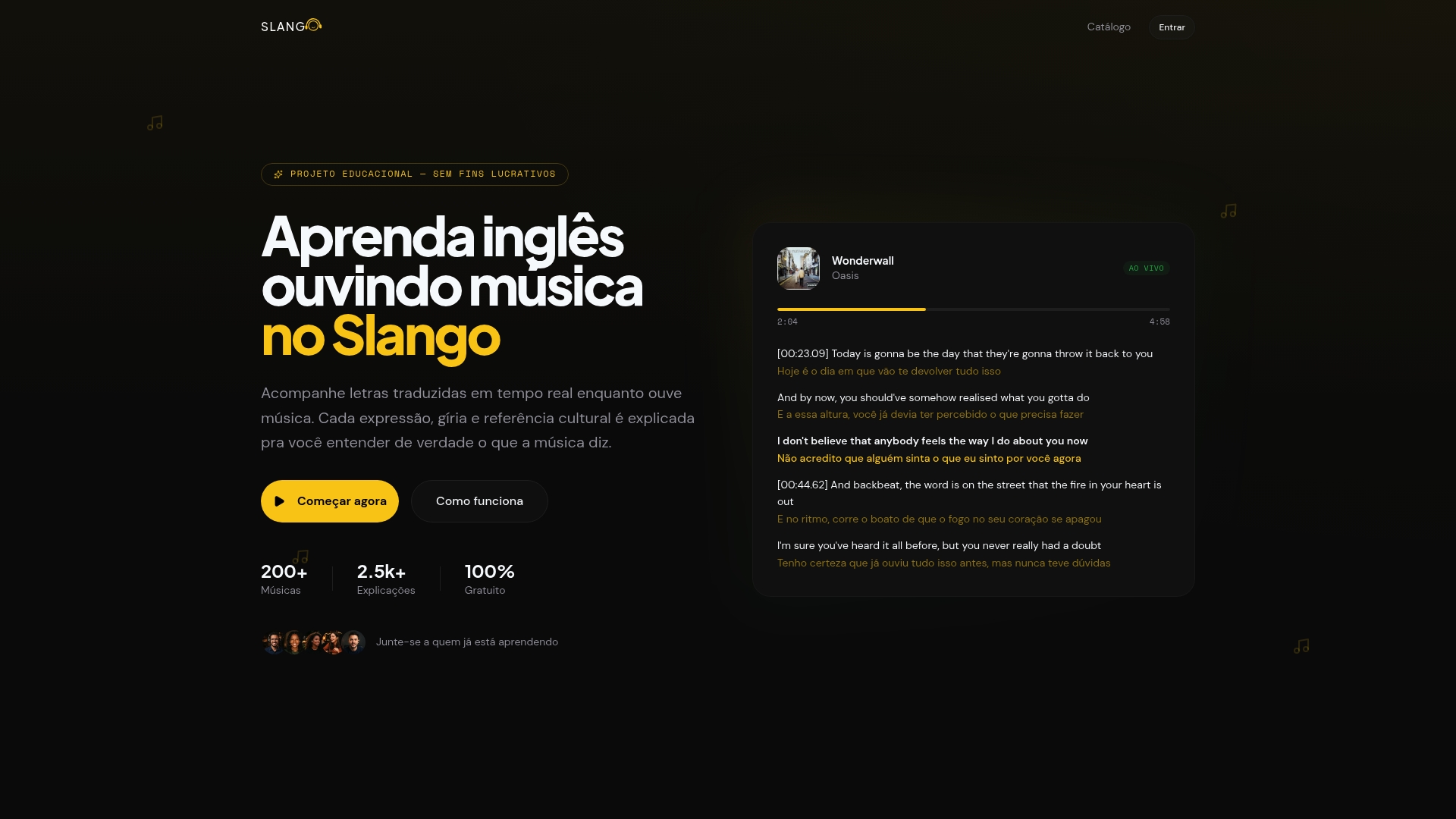
Songs are tagged by CEFR A1 to C1, letting learners pick music that matches their current level. The site pairs synchronized lyrics with line by line explanations and short quizzes. It was created by Brazilian educators and runs without ads.
Core Features
Slango delivers synchronized lyrics in real time while you listen, so you can follow pronunciation and phrasing. The platform includes translations and cultural notes plus interactive quizzes that test comprehension after each track. Playback controls let you slow or loop sections and personalize study pace.
Key Differentiator
According to the company, Slango uses AI translations to generate context-aware translations and cultural explanations aimed at Brazilian learners. That approach focuses explanations on slang, idioms, and cultural references found in song lyrics. The emphasis on cultural context sets it apart from lyric-only sites.
Pros
Slango is free and ad-free, which makes regular listening practice low friction for students on a budget. The interface is clear and approachable, so learners spend less time learning how the site works and more time on material. Detailed notes on idioms and slang plus level tags and quizzes produce a study loop that supports both listening and vocabulary retention.
Cons
- Relies on an internet connection for AI translation and contextual features, so offline study is limited.
- Depth of explanations changes by song, since some tracks have richer notes than others.
- Music catalogue is restricted to songs cleared for educational use, which leaves gaps at certain proficiency levels.
When It May Not Fit
If you need offline lesson packs, this platform will frustrate you because AI features require a live connection. If your course relies on a fixed syllabus or licensing for every song, Slango may lack the exact tracks you require. Also, teachers who need exhaustive grammar breakdowns will find some songs lack that level of depth.
Who It’s For
Slango fits Brazilian learners who prefer learning English through music and cultural context. It suits beginners through advanced students who want listening practice tied to vocabulary and idioms. Casual learners who want a low-cost, interactive supplement will find it especially useful.
Real World Use Case
A student listens to a popular pop track and follows the synchronized lyrics while pausing to study highlighted idioms. The AI translations provide cultural notes that explain slang and references unfamiliar to Brazilian learners. After the song, the student completes a short quiz to reinforce new vocabulary and pronunciation.
Website: https://slango.com.br
Comparison of alternatives
- Excluded products (discontinued / inaccessible / under construction): None
- Usable competitors remaining: singwithcanary.com, Sounter, Lirica, Singit, Slango
Intro pre-write:
- Does singwithcanary.com clearly outpace every usable competitor on a single dimension? YES
- If YES: dimension where singwithcanary.com wins — Integrated lyric-level interactivity and live singing practice for immersive learning
- First sentence draft: “When evaluating music-based language learning platforms, each offers distinct strengths, making it important to consider features that best align with your goals.”
Competitor win pre-write:
- Which competitor wins which dimension: Lirica wins the entertainment and cultural immersion dimension because it offers popular artists and cultural context within its lessons
- Does this dimension matter to the primary reader? YES
Best Fit uniqueness check:
- List each bullet scenario in one clause: language enthusiasts favoring song-based vocabulary building / instructors seeking classroom-aligned tools / learners on a tight budget prioritizing essential features / users pursuing a music-centered language certification / the combination of lyric interactivity and live singing
- Can any two be swapped without changing meaning? NO
Our Pick pre-write:
- The ONE capability unique to singwithcanary.com in this set: Lyric tap-to-define functionality integrated with live singing practice
- Evidence from the reviews: “Tapping any word ties definitions and examples directly to the music you sing, so vocabulary appears in context rather than isolated lists.”
- Closing sentence draft: “For learners who thrive with an interactive and immersive approach, singwithcanary.com is a fitting choice, though alternatives suit alternative preferences.”
- Substitution test: “For learners who thrive with an interactive and immersive approach, [strongest competitor] is a fitting choice, though alternatives suit alternative preferences.”
- Does the substituted version still work as a recommendation? NO
- If YES: rewritten closing sentence: N/A
Comparison of alternatives
When evaluating music-based language learning platforms, each offers distinct strengths, making it important to consider features that best align with your goals.
Feature breadth and interactivity
Singwithcanary.com offers a unique approach by integrating lyric-level interactivity directly into a live singing environment. By comparison:
- Sounter employs a community-driven model focused on collaborative content development, with pronunciation drills and teacher-specific resources.
- Slango specializes in providing synchronized lyrics and idiomatic translations ideal for Brazilian learners but lacks interactive singing features. This places singwithcanary.com in a league suitable for users prioritizing direct engagement with their learning material.
Engagement and cultural immersion
Lirica excels in using songs by well-known artists to convey cultural context, making lessons relatable for learners interested in contextual cultural learning. This aspect differentiates it for individuals dedicated to understanding language within its cultural environment. However, unlike Singwithcanary.com, it does not integrate karaoke-style interaction, leaving a noticeable gap in its implementation for learners targeting pronunciation improvement.
Best fit
- Language enthusiasts who enjoy utilizing music-based vocabulary tools will find singwithcanary.com engaging and practical.
- Teachers seeking easy integration of music-assisted lessons into their curriculum should consider Lirica for its teacher-focused features.
- Cost-conscious learners should explore Sounter or Slango, as both platforms are free to use, providing value without financial commitment.
- Students aiming for a guided certification route in language learning should investigate Singit for its CEFR certificate programs.
- Those who favor a combination of lyric interaction and immersive singing-inspired learning will appreciate singwithcanary.com.
Our pick
Singwithcanary.com earns its status as our recommended choice due to its distinguished combination of features, such as highly interactive lyric tap-to-define functionality coupled with live singing practice. These characteristics make it exceptionally suited for language learners who thrive on engaging, creative study methods. However, those prioritizing either broader community interaction or structured lesson progression should evaluate the merits of alternative platforms mentioned above.
Choosing the right music-based language learning platform depends on the flexibility of features and integration of interactivity into lessons.
| Platform | Core Feature | Key Differentiator | Best For | Pricing | Limitation |
|---|---|---|---|---|---|
| Singwithcanary | Karaoke mode with lyric interactivity | Tap-to-define vocabulary integration with singing | Pronunciation and ear training practice | Price not published | Navigation issues and unclear pricing |
| Sounter | Translated lyrics and community tools | Community-driven transcription and lesson creation | Free, social practice | Free | Basic features limit advanced skill growth |
| Lirica | Song-centered vocabulary lessons | Lessons built around mainstream hit songs | Travelers and classroom tools | Price not published | Limited language selection and unclear pricing |
| Singit | AI tutoring with song-based exercises | CEFR certification through music and interactive tools | Learners seeking structured certification | $500-$1,150 | High cost and reliance on internet |
| Slango | Synchronized lyrics with translations | AI-powered cultural context explanations for lyrics | Brazilian learners focusing on idioms | Free | Restricted song catalog by proficiency level |
Why Finding the Right Totool.cc Alternative Can Fix Your Language Learning Challenges
Many language learners find themselves stuck with apps that offer limited social interaction or lack engaging ways to practice pronunciation in context. If you want a learning method that combines music with practical speaking and vocabulary drills, Singwithcanary answers that need. Singwithcanary turns songs into interactive lessons through karaoke mode, lyric tapping for meanings, and vocabulary quizzes.
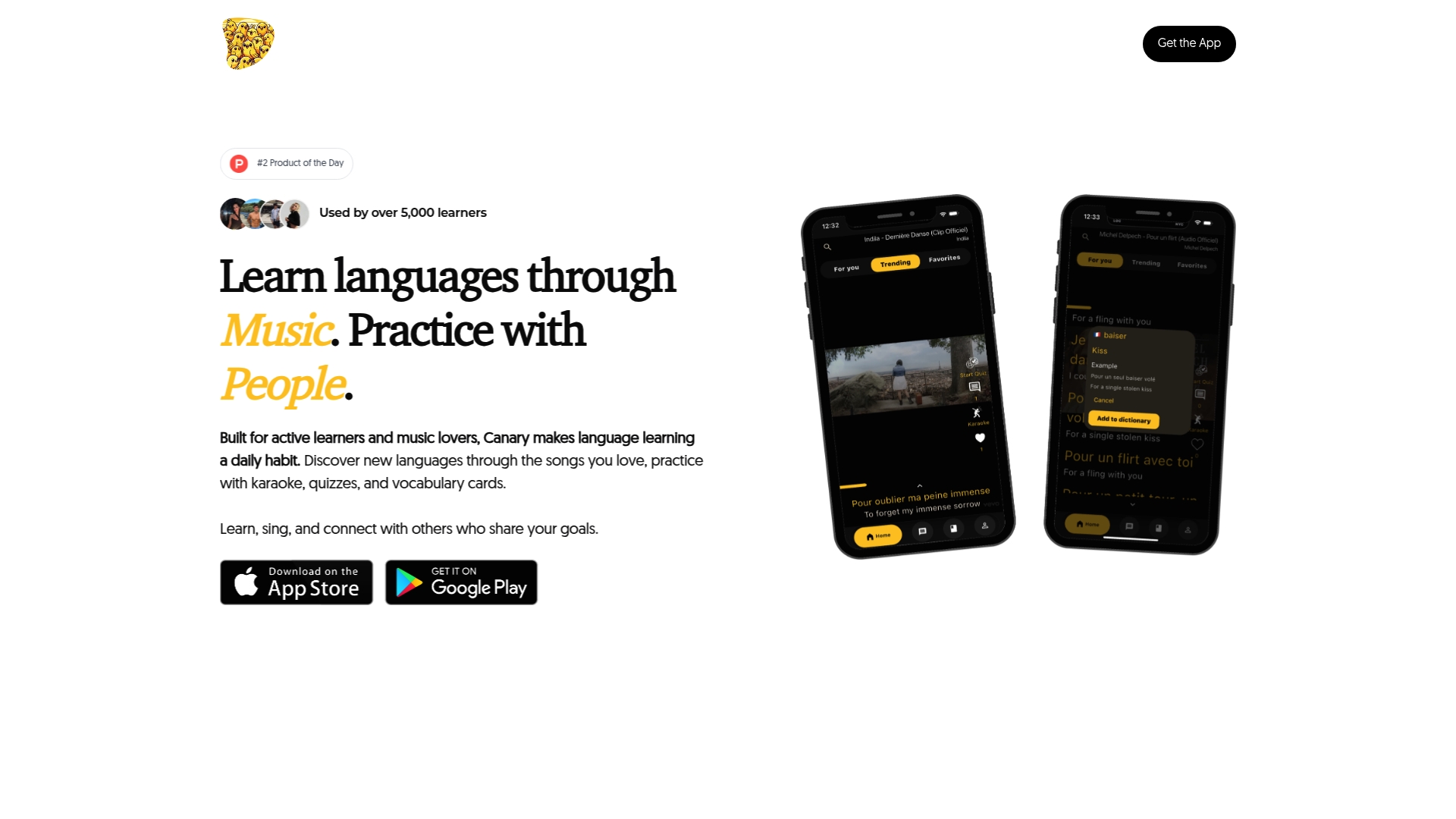
Try Singwithcanary to practice pronunciation naturally while connecting with other learners who share your language goals. Visit Singwithcanary to see how its music-based, social platform can help you improve your accent, expand your vocabulary, and stay motivated with real community feedback.
FAQ
What features does Singwithcanary offer for vocabulary retention?
Singwithcanary focuses on interactive learning through song lyrics, allowing users to tap on words for meanings and examples. This lyric-level interactivity helps learners internalize vocabulary in context, making practice feel engaging and relevant.
How does Sounter compare to Singwithcanary in terms of community features?
Sounter emphasizes contributions from its user community, letting members transcribe and translate lyrics for language practice. While Singwithcanary focuses on social features that connect learners primarily through song-based activities, Sounter’s model fosters community engagement in contributing to educational content.
Can I track my progress with Singwithcanary?
Yes, Singwithcanary includes quizzes and vocabulary cards that reinforce memory and allow learners to track their achievements. This structured approach encourages consistent practice and helps users measure their learning over time.
Does Lirica include resources for teachers?
Lirica provides teacher resources for assigning lessons and monitoring student progress, which can help educators integrate music into their classroom plans. That feature makes it a suitable choice for teachers who want to enhance their lessons with musical context.
What are the pricing options for Singwithcanary?
Singwithcanary does not publicly list clear pricing details, making it difficult to verify subscription tiers or costs. Users interested in this app should explore its features and consider reaching out for specific pricing information.