The five main types of international language exchanges are one-to-one (tandem) partnerships, group conversation clubs and meetups, pen-pal and asynchronous text exchanges, online app-based exchanges, and immersion or study-abroad programs. If you want to build spoken fluency fast, start with a 1:1 tandem partner. If you’re nervous about speaking, a group conversation club lowers the stakes. For writing and grammar, a pen-pal exchange gives you time to think. And if you want the deepest cultural immersion possible, a homestay or study-abroad program accelerates everything.
According to Language Exchange International, practicing with native speakers delivers authentic listening exposure and cultural insight that structured classroom study rarely replicates. The format you choose shapes what you actually improve, so matching the format to your goal matters more than just signing up for whatever is easiest to find.
- 1:1 tandem: Best for speaking fluency, personalized feedback, and rapid confidence gains
- Group clubs/meetups: Best for exposure to accents, low-pressure practice, and social motivation
- Pen-pal/text exchanges: Best for writing, grammar reflection, and flexible schedules
- Online app-based exchanges: Best for convenience, daily habit, and access to global partners
- Immersion/study-abroad: Best for accelerated listening comprehension and cultural competence
Table of Contents
- What is a language exchange, and why does tandem learning work?
- 1. One-to-one tandem partnerships: the fastest path to spoken fluency
- 2. Group language exchanges: conversation clubs, meetups, and language cafés
- 3. Pen pals and asynchronous text exchanges are underrated for grammar
- 4. Online exchanges vs. in-person meetups: which one actually works better?
- 5. Immersion programs, homestays, and study-abroad exchanges
- 6. How to choose the right format for your goals and level
- 7. Practical strategies to get the most from any exchange
- 8. How Singwithcanary fits into your exchange practice
- Key Takeaways
- Why the “just find a partner” advice misses the point
- Singwithcanary makes daily language practice feel like something you want to do
- Useful sources and further reading
What is a language exchange, and why does tandem learning work?
A language exchange is a mutual arrangement between two speakers of different native languages who take turns teaching each other. You speak your partner’s target language; they speak yours. Neither person pays for a tutor. Both people practice. That reciprocity is the core mechanism, and it’s what distinguishes exchanges from classes, apps, or self-study.
The underlying model is called tandem learning, and it rests on three principles: authentic communication, corrective feedback from a native speaker, and low-stakes practice outside a formal classroom. You’re not being graded. You’re not performing for a teacher. You’re having a real conversation with someone who genuinely wants to understand you.
“Language exchanges improve speaking fluency and listening comprehension and can occur in person, online, or via text — the format is flexible, but the mutual teaching relationship is what defines the exchange.” — Wikipedia, Language Exchange
University programs across the United States have formalized this model. As documented in ERIC research on language exchange programs, American universities increasingly pair international and domestic students for structured exchanges that function as a curricular complement to study abroad. The learning outcomes typically targeted include speaking fluency, listening comprehension, vocabulary in context, and, in asynchronous formats, writing accuracy. Understanding how international connections unlock language skills is the first step to choosing the right format.
1. One-to-one tandem partnerships: the fastest path to spoken fluency
The classic 1:1 tandem exchange runs on a 50/50 time split. If your session is 60 minutes, you spend 30 minutes speaking your partner’s native language and 30 minutes speaking yours. Each person takes responsibility for preparing conversation topics, correcting errors in their native language, and giving feedback at the end of their block.
According to practical tandem session guides, the most effective sessions use structured prompts and a clear correction agreement set at the start. Do you want your partner to interrupt every mistake, or collect errors and review them at the end? Deciding that upfront removes the awkwardness that kills early sessions.
Sample 60-minute session plan:
- Warm-up (5 min): casual catch-up in either language
- Target-language block A (25 min): partner A speaks their target language; partner B corrects and responds naturally
- Switch (25 min): partner B speaks their target language; partner A corrects
- Feedback round (5 min): each person shares two or three specific observations and sets one goal for next session
| Format | Setting | Best for | Time commitment | Cost | Typical challenges |
|---|---|---|---|---|---|
| 1:1 tandem | Online or in-person | Speaking fluency, personalized feedback | 1–2 sessions/week, 45–60 min each | Free | Scheduling conflicts, motivation mismatch |
Pros of 1:1 tandem:
- Maximum speaking time per session (no waiting for others to finish)
- Feedback is tailored to your specific errors, not a group average
- Builds a genuine relationship that sustains long-term motivation
- Flexible: you set the topics, pace, and correction style
Cons to plan for:
- Scheduling across time zones is the most common reason exchanges stall
- If goals are mismatched (one person wants grammar drill, the other wants casual chat), sessions drift
- Beginners can feel exposed without the buffer of a group
For step-by-step session ideas, the guide on how to practice speaking with native speakers covers practical templates you can copy directly.
2. Group language exchanges: conversation clubs, meetups, and language cafés
Group exchanges come in several distinct formats, and they serve different learner profiles.
Structured conversation clubs are usually organized by a university language department, a library, or a community center. They run on a set schedule, often with a weekly theme or topic prompt. Attendance is consistent, which helps with accountability.
Informal meetups and language cafés are looser. Think of a coffee shop where 10 people show up, split into small groups by language pair, and rotate every 20 minutes. The energy is social. The learning is real but less targeted.

Speed-language exchanges borrow from speed-dating formats: short timed rounds with a new partner each time. They’re excellent for beginners who want low-stakes repetition and exposure to different accents without committing to one conversation for an hour.
For group language learning ideas that go beyond the standard meetup format, there are structured activities that push fluency faster than open conversation alone.
Who benefits most from group exchanges:
- Learners who feel anxious in 1:1 settings — the group diffuses pressure
- Intermediate learners who want exposure to regional accents and vocabulary variation
- People who struggle with solo motivation and need a social commitment to show up
- Learners preparing for travel who want to practice small-talk scenarios with strangers
When groups are a poor fit: If you’re at a beginner level and the group moves fast, you’ll spend more time listening than speaking. Individual speaking time in a group of eight can drop to under five minutes per session. That’s fine for listening practice, not ideal for fluency building. Groups also vary in quality depending on who shows up that week.
Pro Tip: Volunteer to lead a topic segment at a conversation club. Preparing a 5-minute intro on a subject you know well forces you to pre-load vocabulary and gives you a structured reason to speak first, which breaks the hesitation habit.
3. Pen pals and asynchronous text exchanges are underrated for grammar
Email pen pals, WhatsApp exchanges, and forum-based text chats are the oldest form of language exchange, and they’re still one of the most effective for writing accuracy. The reason is simple: you have time to think. You can look up a word, check a grammar rule, and revise before you send. That deliberate processing builds habits that carry into speaking.
Typical formats:
- Email exchanges (longer, essay-style messages; great for complex topics)
- SMS or WhatsApp chats (shorter, more conversational; closer to real-time)
- Social media language-learning communities (public or semi-public; good for cultural exposure)
- App-based text chats within language exchange platforms
Strengths of asynchronous exchanges:
- No scheduling pressure; you reply when you have time
- Written feedback is easier to review and save than spoken corrections
- Long-form topics (culture, current events, personal stories) come naturally in writing
- Lower anxiety for learners who freeze up in live conversation
Limits to know upfront: Asynchronous text exchanges do almost nothing for speaking fluency or pronunciation. If your goal is to pass a spoken exam or hold a real-time conversation, text exchanges alone won’t get you there. They work best as a complement to spoken practice, not a replacement.
Safety and privacy tips for international text exchanges:
- Use a platform’s internal messaging system before sharing personal contact details
- Never share your home address, workplace, or financial information with a new partner
- Check platform community guidelines before signing up. The Mixxer, run by Dickinson College, is a free community platform that explicitly positions itself as educational and enforces guidelines against non-educational use.
- If you move to WhatsApp or email, use a secondary email address until you trust the person
Pro Tip: Set a weekly word count goal for your text exchange, not just a frequency goal. “I’ll write 200 words in Spanish every Tuesday” is more measurable than “I’ll message my partner this week.”
4. Online exchanges vs. in-person meetups: which one actually works better?
Neither is strictly better. They solve different problems.
Online exchanges, whether through language exchange apps, video calls, or community platforms, give you access to native speakers of almost any language without leaving your city. For learners of less commonly taught languages (Swahili, Catalan, Icelandic), online is often the only practical option. Scheduling is flexible, and many platforms include built-in tools for text correction, vocabulary saving, and session recording.
In-person meetups deliver something online can’t fully replicate: body language, ambient cultural context, and the social energy of a physical room. When you’re sitting across from someone, the conversation feels higher-stakes in a productive way. You can’t mute yourself or type a response. That pressure, used well, accelerates real-time processing.
“The most effective learners tend to combine both: online exchanges for consistent weekly practice and in-person meetups or immersion trips for the cultural and emotional depth that a screen can’t provide.” — Why use interactive language platforms
Practical tradeoffs at a glance:
| Dimension | Online | In-person | Hybrid |
|---|---|---|---|
| Partner access | Global | Local only | Both |
| Scheduling flexibility | High | Moderate | High |
| Cultural immersion depth | Moderate | High | High |
| Technical tools (recording, correction) | Available | Rarely | Partial |
| Cost | Usually free | Low to moderate | Varies |
| Timezone challenge | Yes | No | Partial |
When to go hybrid: Use online tandem sessions for your weekly speaking practice, then attend one in-person meetup or language café per month to recalibrate your ear to real-world accents and social dynamics. If you’re planning a trip or study-abroad program, shift to daily online practice in the two months before you go. That preparation makes the immersion land harder.
For learners exploring language learning apps for practicing with natives, the best tools combine partner matching with structured practice features rather than just a contact directory.
5. Immersion programs, homestays, and study-abroad exchanges
Immersion is a different category entirely. You’re not scheduling a weekly session; you’re living inside the language. Research published by Royal Society Publishing confirms that intensified, prolonged exposure in immersion settings produces measurably larger gains in receptive skills and cultural competence than short-term exchanges.
What these programs typically include:
- A host family or student housing where the target language is used daily
- Formal language classes (often 3–5 hours per day)
- Cultural activities: cooking, local events, excursions, community service
- Informal daily practice: grocery shopping, commuting, socializing
Who benefits most: Learners at an intermediate level or above who already have enough vocabulary to survive daily life in the target language. True beginners often find immersion overwhelming before they have a survival vocabulary base. Advanced learners use immersion to close the gap between textbook fluency and native-speaker naturalness.
Checklist for evaluating a program before you commit:
- Length: short trips (2–4 weeks) build cultural awareness; semester or academic-year programs produce the deepest language gains
- Housing: host family placement gives more language practice than student dorms
- Instruction balance: look for programs that mix formal classes with unstructured community time
- Supervision and safety: accredited programs through U.S. universities carry institutional oversight; independent homestay arrangements require more personal due diligence
- Visa and legal requirements: check U.S. State Department guidelines for your destination country
- Cost range: short immersion trips typically run from a few hundred to a few thousand dollars; semester-abroad programs through U.S. universities vary widely by institution and destination
As documented in ERIC program research, university-organized exchanges function as a structured bridge between classroom learning and full immersion, combining the accountability of a program with the authenticity of real-world language use.
6. How to choose the right format for your goals and level
The right exchange format depends on three things: what you want to improve, how much time you can commit weekly, and your current level. Here’s a direct mapping.
| Goal | Best format | Minimum frequency | Cost range |
|---|---|---|---|
| Spoken fluency | 1:1 tandem | 2x/week, 45–60 min | Free |
| Writing and grammar | Pen-pal/text exchange | 3–4 messages/week | Free |
| Confidence and variety | Group club or meetup | 1x/week | Free to low cost |
| Cultural immersion | Homestay/study-abroad | Full program (weeks to months) | Moderate to high |
| Daily habit + pronunciation | Online app exchange | Daily, 30 min | Free to low cost |
| Exam prep (spoken) | 1:1 tandem + online | 3x/week | Free |
Key questions to ask a potential partner before your first session:
- What is your current level in my language, and what is mine in yours?
- How do you prefer to receive corrections: in the moment or at the end?
- What topics do you want to practice?
- How often can you realistically commit to sessions?
Red flags to watch for:
- No clear goals or plan for sessions (“let’s just chat” every time)
- Consistent last-minute cancellations in the first two weeks
- One partner dominates speaking time without reciprocating
- Pressure to move communication off a platform before trust is established
A good partner relationship feels like a collaboration, not a favor exchange. If it feels one-sided after three sessions, it probably won’t self-correct.
7. Practical strategies to get the most from any exchange
The single biggest predictor of whether an exchange sticks is structure. Open-ended “let’s practice” sessions drift. Sessions with a topic, a time split, and a feedback rule produce measurable progress.
Concrete session formats that work:
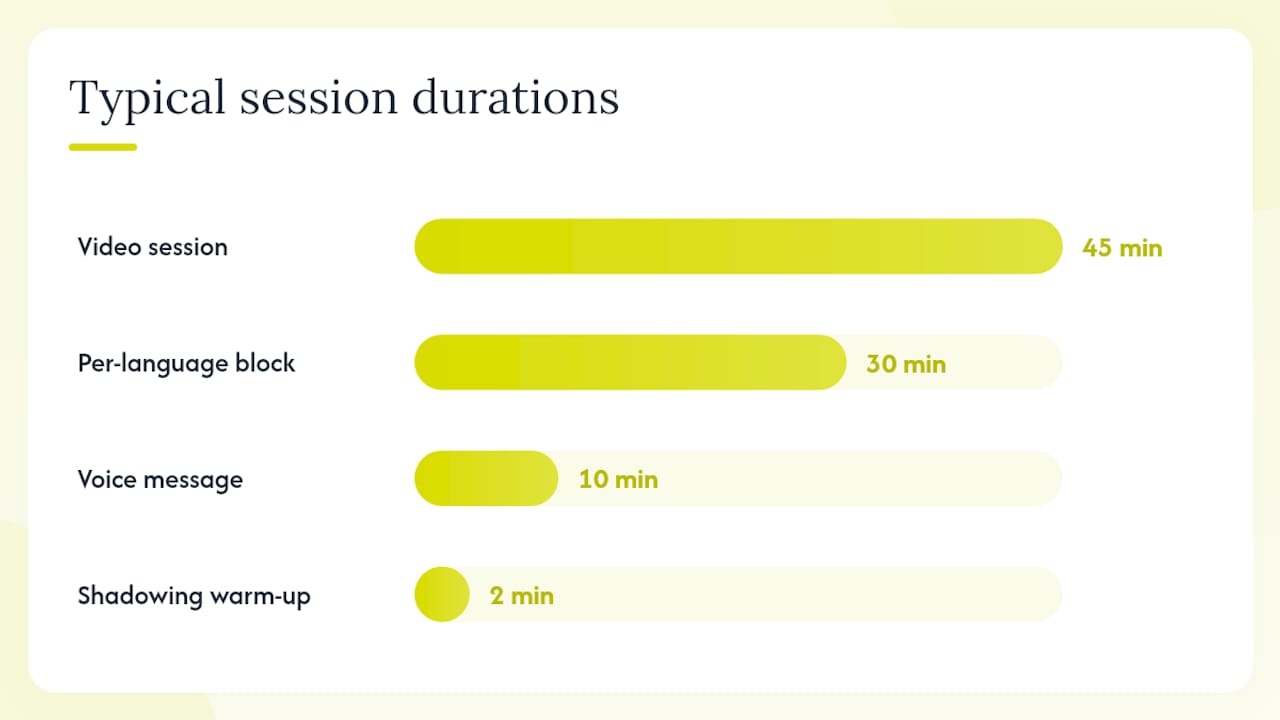
- 30/30 split with topic prompts: Each partner prepares three questions on a shared topic (travel, food, current events). Spend 30 minutes per language. The prompts prevent dead air and push vocabulary into new territory.
- Error log method: Each partner keeps a running note of the other’s recurring mistakes. Review the top three at the end of every session. Patterns become visible within two weeks.
- Shadowing warm-up: Start each session with two minutes of shadowing a short audio clip in your target language. It activates your ear before the conversation begins.
- Weekly SMART goal: “I will use five new food vocabulary words in conversation this week” beats “I want to improve my Spanish.” Specific, measurable, time-bound.
Sample weekly practice plan for a 1:1 tandem:
- Monday: 45-minute video session (30/30 split, topic: work and daily routines)
- Wednesday: 10-minute voice message exchange (asynchronous, topic: something you saw or read)
- Friday: Review error log; set one goal for next week
Common pitfalls and how to fix them:
- Fear of mistakes: Research published on ResearchGate identifies fear of mistakes as a primary barrier to sustained practice. The fix is a social bond, not more grammar study. When you trust your partner, you speak more freely.
- Motivation mismatch: Agree on goals in session one. If your partner wants casual chat and you want exam prep, that’s a mismatch worth naming early.
- Inconsistent frequency: Two short sessions per week outperform one long session per month. Consistency builds the neural pathways; intensity alone doesn’t.
Pro Tip: After your first three sessions with a new partner, send a short message summarizing what you’ve covered and what you want to focus on next. It signals commitment and keeps both of you accountable without a formal contract.
For more language practice tips with natives that go beyond the basics, there are session frameworks specifically designed for learners who want faster progress with real speakers.
8. How Singwithcanary fits into your exchange practice
Singwithcanary occupies a specific and useful niche in the exchange ecosystem: it’s the practice layer between your formal exchange sessions. Most learners have one or two tandem sessions per week. What happens on the other five days determines whether those sessions compound or stall.
Singwithcanary uses song lyrics, karaoke, vocabulary cards, quizzes, and ear training to build the pronunciation and vocabulary base you bring into a live exchange. The music format matters because songs repeat phrases in emotionally memorable contexts, which accelerates retention in ways that flashcard drilling doesn’t.
Three ways Singwithcanary supports exchange goals:
- Community practice: Singwithcanary’s social features connect you with other learners globally, giving you a music-fueled language exchange experience that complements your 1:1 or group sessions.
For learners who want structured Arabic conversation practice alongside their exchange work, the Arabic for Conversation guide from SimplyIslam is a practical partner resource worth bookmarking.
Key Takeaways
The most effective approach to international language exchanges is matching your format to your specific goal, then committing to a consistent weekly schedule rather than occasional intensive sessions.
| Point | Details |
|---|---|
| Format determines what you improve | Tandem builds speaking fluency; pen-pal builds writing; immersion builds cultural competence and listening. |
| Social bonds reduce fear of mistakes | Research shows partner relationships sustain motivation better than solo study or irregular practice. |
| Structure beats open-ended sessions | Time splits, topic prompts, and error logs produce faster progress than unplanned conversation. |
| Hybrid approaches work best | Combine online weekly sessions with occasional in-person meetups for both consistency and cultural depth. |
| Singwithcanary fills the gap between sessions | Song-based vocabulary and pronunciation practice on Singwithcanary keeps daily learning active between tandem or group exchanges. |
Why the “just find a partner” advice misses the point
Most articles on language exchanges stop at “find a native speaker and practice.” That’s like telling someone to get fit by “just exercise.” The format, the structure, and the social dynamic matter as much as the raw hours.
What the research actually shows is that the relationship between partners drives motivation more than the method. Studies on relational motivation in language learning point consistently to one finding: learners who feel a genuine social bond with their practice partner stick with it. Not because the grammar is better, but because they don’t want to let the other person down.
That’s why I’d argue that the first session with any new partner should be spent almost entirely on getting to know each other, not drilling vocabulary. The language practice in session two will be noticeably better because the social foundation is there. Small, consistent interactions built on real connection outperform intensive cramming sessions with a stranger every time. The learners who make the most progress aren’t always the most disciplined; they’re the ones who found a partner they actually like talking to.
Singwithcanary makes daily language practice feel like something you want to do
Most exchange learners hit the same wall: sessions are great, but the days between them go quiet. Singwithcanary is built for exactly that gap. Instead of grinding through flashcard decks, you practice pronunciation and vocabulary through real songs, karaoke, and quizzes that make daily practice feel less like homework.
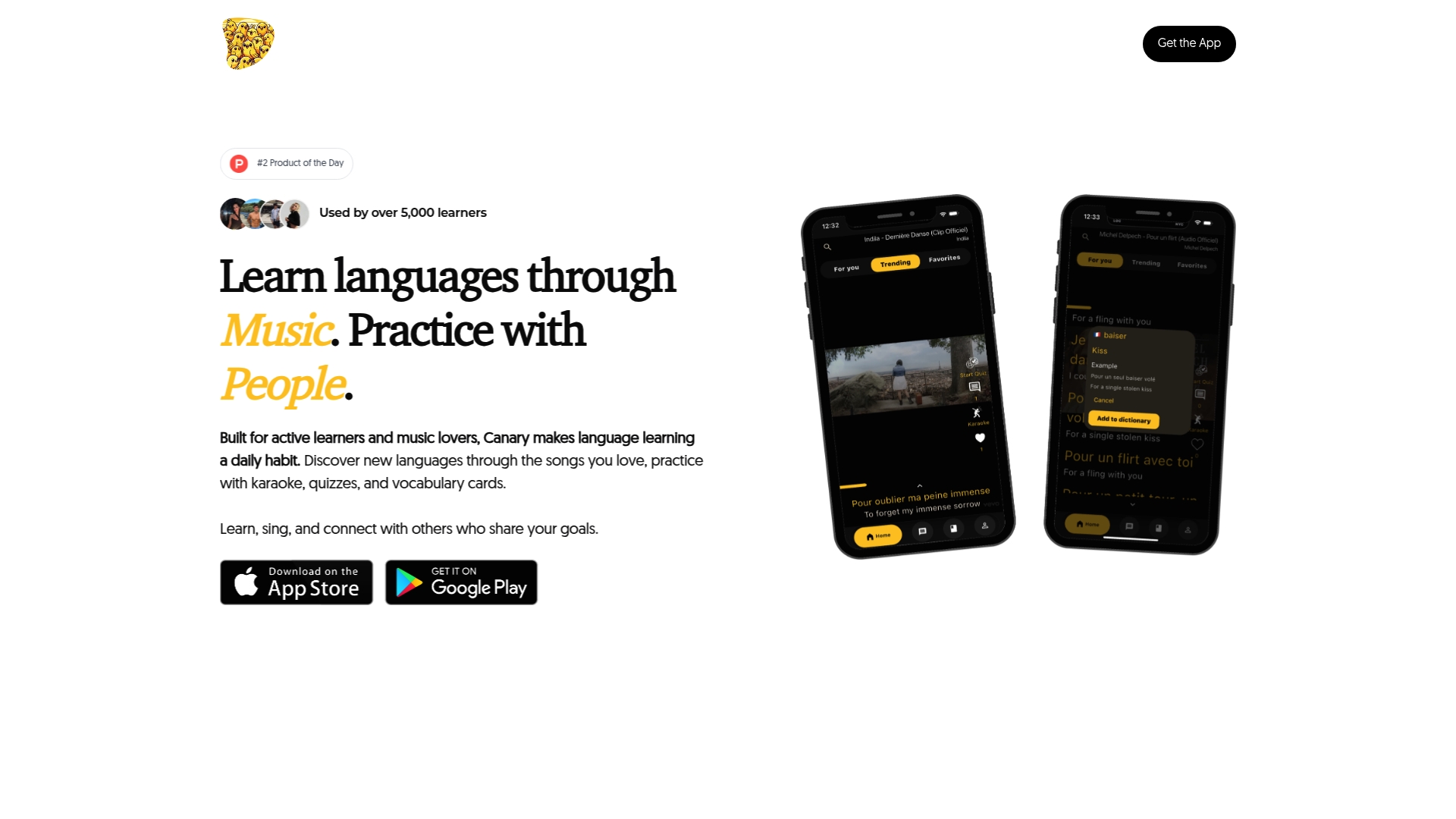
The app connects you with a global community of learners, so you’re never practicing alone. Use the Song of the Week feature to load fresh vocabulary before your next tandem session, or use the ear training tools to sharpen your listening between meetups. Every feature is designed to build the confidence and vocabulary you bring into your live exchanges.
Sign up for Singwithcanary and try the first song today. It takes two minutes to start, and the difference shows up in your next conversation.
Useful sources and further reading
- Language exchange
- How to do a Language Exchange: A Step-by-Step Guide [2026]
- The Benefits of Language Exchange: Why Learning Together Is More Effective — Language Exchange International
- Royal Society Publishing — relevant research on immersive learning and language acquisition
For study-abroad specifics, consult your university’s international programs office or the U.S. State Department’s student travel resources for destination-specific guidance on visas, safety, and program accreditation.