Mastering English pronunciation often feels overwhelming, especially when you’re looking for results that actually show up in real conversations. The usual drills can be repetitive, and it’s easy to lose motivation without concrete progress. If you’ve struggled to find methods that make a lasting difference, you’re not alone.
The good news is that research-backed strategies can truly improve your speech imitation, pronunciation, and confidence—sometimes in ways you might not expect. From engaging with music and karaoke to interactive feedback and social connection, these approaches are practical, enjoyable, and proven to work.
Each method in this list will help you build real skills and see results you can hear. Get ready to discover approaches that turn practice into progress and make English pronunciation feel more natural every day.
Table of Contents
- 1. Immersive Music-Based Learning for Pronunciation
- 2. Karaoke Practice to Boost Speaking Confidence
- 3. Social Interaction with Native Speakers
- 4. Vocabulary Cards from Song Lyrics
- 5. Interactive Quizzes for Real-Time Feedback
- 6. Daily Listening and Practice Habits
Quick Summary
| Takeaway | Explanation |
|---|---|
| 1. Immersive music enhances pronunciation skills. | Engaging your body with music improves motor memory and pronunciation through rhythm and melody. |
| 2. Karaoke fosters confidence in speaking. | Singing in a fun, social setting reduces anxiety and encourages vocal practice without fear of mistakes. |
| 3. Native speaker interactions accelerate learning. | Conversations with native speakers expose you to real language use and boost your confidence in communication. |
| 4. Vocabulary from song lyrics enhances retention. | Learning words in context through lyrics makes them memorable and relevant, improving usage in speech. |
| 5. Daily listening habits build fluency. | Regular exposure to the target language strengthens neural connections, leading to greater proficiency over time. |
1. Immersive Music-Based Learning for Pronunciation
Immersive music-based learning combines melody, rhythm, and bodily movement to transform how you develop pronunciation skills. Unlike traditional repetition drills, this approach engages your whole body and mind in the language acquisition process.
When you sing or perform music in your target language, you’re doing much more than memorizing lyrics. Your vocal cords, breathing patterns, and muscle memory all work together to internalize authentic pronunciation. The rhythm of music naturally guides your speech patterns, helping you adopt the correct intonation and stress patterns native speakers use.
Research demonstrates that embodied music training involving rhythmic and melodic skills through bodily experiences significantly improves speech imitation and pronunciation skills. Embodied music training approaches show that engaging your body in music-based learning accelerates phonological development compared to passive listening methods.
Here’s what makes this method work:
- Muscle memory activation: Physical movements while singing create stronger neural pathways for pronunciation
- Real-time engagement: Your brain processes melody, lyrics, and physical sensation simultaneously
- Natural rhythm reinforcement: Music’s beat naturally trains you to match native speech patterns
- Emotional connection: Enjoying the music you’re learning from increases retention and motivation
You can apply this by selecting songs in your target language that you genuinely enjoy. Start by listening multiple times, then sing along while paying attention to how native speakers pronounce each word. Pay special attention to how your mouth and tongue position changes with different sounds.
The beauty of immersive music learning is that it doesn’t feel like studying. You’re experiencing the language as it naturally sounds, with all its nuances and authentic pronunciation patterns intact. This creates lasting improvements in your accent and overall communication confidence.
Pro tip: _Record yourself singing the same song multiple times over two weeks, then listen to your first and latest recordings back-to-back to hear your pronunciation improvements clearly.
2. Karaoke Practice to Boost Speaking Confidence
Karaoke transforms language learning from a solo, intimidating task into a fun, social activity that builds real speaking confidence. When you sing along to songs in your target language, you’re practicing pronunciation and articulation in a low-pressure environment where mistakes feel natural.
The key to karaoke’s effectiveness lies in how it combines multiple learning channels simultaneously. You hear native speakers, see the lyrics on screen, and produce the sounds yourself all at once. This triple reinforcement accelerates your ability to process and reproduce authentic speech patterns.
Unlike traditional speaking practice, karaoke removes the stigma of making errors. You’re singing, not just talking, so imperfections feel like part of the performance rather than failures. This psychological shift is crucial for building the confidence you need for real conversations.
Karaoke activities enhance your pronunciation and speaking confidence by combining audio, visual, and textual information in ways that motivate learners. The method provides extensive listening and practice opportunities essential for developing speaking proficiency.
Here’s what happens when you use karaoke regularly:
- Vocabulary absorption: Repeated exposure to lyrics builds word recognition and usage naturally
- Prosody mastery: You internalize rhythm, stress, and intonation patterns from native speakers
- Articulation clarity: Singing forces precise mouth and tongue positioning for each sound
- Motivation boost: Enjoyment keeps you practicing longer and more consistently
You can start with karaoke apps designed for language learners that provide instant feedback on your performance. Many include scoring systems and recording features so you can track your improvement over weeks and months.
The magic of karaoke is that it makes speaking practice feel like entertainment, not work. When learning doesn’t feel like studying, you naturally practice more often and retain more information.
Start with songs you already love in your target language. Your emotional connection to the music will carry you through the learning process and make pronunciation practice feel rewarding rather than repetitive.
Pro tip: Record yourself singing the same song weekly and compare recordings across four weeks to spot pronunciation improvements you might otherwise miss.
3. Social Interaction with Native Speakers
Conversing with native speakers transforms language learning from a textbook exercise into real communication. When you interact directly with native speakers, you’re exposed to authentic pronunciation, colloquial expressions, and cultural context that no app can fully replicate.
Native speakers teach you how language actually works in real life. They use idioms, slang, and conversational shortcuts that formal lessons skip over. Beyond vocabulary and grammar, they model the rhythm and flow of natural speech that’s impossible to learn passively.
Social interaction with native speakers significantly reduces language anxiety and increases your perceived proficiency. Research shows that learners with regular access to conversations with native speakers report feeling less nervous and more confident in their abilities. This confidence boost translates directly to better performance when you need to communicate in real situations.
The benefits extend beyond simple confidence building. When you engage socially with native speakers, you achieve superior linguistic progress compared to learners who study alone. The social aspect itself becomes a driving force for language development.
Here’s what happens when you practice with native speakers:
- Immediate feedback: Native speakers naturally correct mistakes through their responses
- Cultural fluency: You learn not just words, but how to use them appropriately in context
- Motivation through connection: Building real relationships gives you reasons to keep learning
- Authentic exposure: You hear natural speech patterns, accents, and conversational flow
You don’t need to travel abroad to access native speakers anymore. Language exchange platforms, conversation partners, and community groups connect you with speakers worldwide. Start with short, regular conversations rather than infrequent long sessions.
The magic happens when learning becomes social. When you’re talking with someone instead of studying material, language acquisition accelerates naturally because communication feels purposeful.
Social contact with native speakers fundamentally shapes language development trajectories, influencing how effectively you acquire the language beyond any other single factor.
Look for communities of language learners in your area or online where you can practice with native speakers who are learning your language in return. This creates mutual benefit and sustained motivation.
Pro tip: Schedule weekly 15-minute conversations with the same native speaker so they can track your progress and provide personalized feedback on your improvement over time.
4. Vocabulary Cards from Song Lyrics
Vocabulary cards created from song lyrics combine spaced repetition with meaningful context. Instead of memorizing isolated words, you learn vocabulary embedded in the actual sentences and emotions where native speakers use them.
Song lyrics are naturally repetitive, which makes them ideal for vocabulary retention. When you hear the same word or phrase multiple times across a song, your brain automatically encodes it more deeply than it would from reading a definition once.
The power of learning from song lyrics lies in embedding words in meaningful musical contexts. Your brain remembers words better when they’re connected to melody, emotion, and story rather than sitting alone on a flashcard.
Here’s why vocabulary cards from lyrics outperform traditional flashcards:
- Contextual meaning: You learn how words actually function in real sentences, not just definitions
- Emotional connection: Music creates associations that stick in memory far longer
- Natural pronunciation: You see the word written and hear it pronounced authentically simultaneously
- Thematic grouping: Songs naturally organize vocabulary around specific topics and themes
Start by choosing a song you enjoy, then extract 5 to 10 new or challenging words from the lyrics. On one side of your card, write the word with a short definition. On the other, include the exact lyric where it appears.
English songs expose learners to high-frequency vocabulary through melodic and repetitive content that reinforces learning naturally. When you review cards while thinking of the song’s melody, you activate multiple memory pathways simultaneously.
Context is the secret to vocabulary that sticks. Words learned in isolation fade quickly, but words tied to music, emotion, and meaning become part of your permanent vocabulary.
The beauty of this method is that you’re using material you already enjoy. You’re not forcing yourself to memorize arbitrary words from a textbook. Instead, you’re capturing vocabulary from authentic sources that genuinely interest you.
Review your cards regularly, but also listen to the song again while reviewing. Let the melody reinforce the words. Over time, you’ll notice these vocabulary items showing up naturally in your speech and writing.
Pro tip: Create cards for only unfamiliar words so you focus your effort on genuine learning rather than reviewing words you already know well.
5. Interactive Quizzes for Real-Time Feedback
Interactive quizzes transform learning from a passive activity into an engaging challenge where you get immediate answers about what you know and what needs work. Real-time feedback is the game changer that separates effective learning from wasted study time.
When you complete a quiz and instantly know which answers were wrong, your brain is primed to learn. You can immediately look up the correct information while the question is still fresh in your mind. This creates a powerful learning loop that traditional study methods simply cannot match.
Real-time feedback allows you to identify exactly where your knowledge gaps are and focus your effort accordingly. Instead of studying randomly and hoping you cover the right material, quizzes give you data about what to prioritize next.
Here’s what makes interactive quizzes so effective for language learning:
- Immediate correction: You learn the right answer while the question is still in your memory
- Motivation through progress: Seeing your score improve over time keeps you engaged
- Retention boost: Testing yourself actually strengthens memory more than passive review
- Targeted practice: Quiz results show exactly which vocabulary or grammar areas need more work
Game-based learning platforms enhance engagement and learning outcomes by providing real-time feedback in language courses. These platforms turn quizzes into something that feels like playing rather than studying.
You can create simple quizzes from your own song lyrics vocabulary or use platforms designed specifically for language learners. The key is choosing quizzes that test vocabulary and grammar in context rather than isolated definitions.
Feedback without delay is feedback that sticks. When learning happens in real-time with immediate correction, your brain retains information far more effectively than with delayed feedback.
Use quizzes regularly as part of your routine, not just as occasional check-ins. Even 10 minutes of focused quiz practice beats an hour of passive review. Track your scores over weeks to see how your knowledge compounds.
Pro tip: Take the same quiz weekly to watch your scores improve, which creates visual proof of progress and keeps motivation high.
6. Daily Listening and Practice Habits
Daily listening habits are the foundation of language fluency. Consistency matters far more than intensity when it comes to language acquisition, and building a sustainable routine transforms casual learning into genuine proficiency.
Your brain needs regular exposure to the target language to rewire itself. Listening daily, even for just 15 minutes, creates neural pathways that passive, occasional study sessions simply cannot build. The repetition embeds sounds, rhythms, and patterns into your long-term memory.
Daily listening practice with active, attentive strategies significantly enhances comprehension and fluency over time. Research shows that consistent listening techniques improve engagement and proficiency, especially when you use diverse materials and intentional focus.
Here’s what makes daily habits work better than cramming:
- Neuroplasticity reinforcement: Your brain adapts faster with consistent, spaced practice
- Habit automaticity: Routines become effortless after a few weeks of repetition
- Reduced anxiety: Regular practice builds confidence gradually rather than through occasional intensive sessions
- Sustainable motivation: Small daily wins feel achievable and keep you engaged long-term
The key is choosing music and listening materials you genuinely enjoy. Extensive listening with self-selected, enjoyable materials encourages fluency development and helps you maintain consistent practice without forcing yourself.
Start with a realistic commitment like listening for 10 to 15 minutes each morning with your coffee or during your commute. Pick songs or podcasts you actually want to hear, not material you feel obligated to study.
Consistency beats intensity every single time. Ten minutes daily for a year produces far better results than three hours once a month.
Track your listening streak on a calendar to visualize your commitment. Seeing consecutive days checked off creates accountability and motivation to keep the chain unbroken.
Pair your listening with simple note-taking. Jot down unfamiliar words or interesting phrases as you hear them. This transforms passive listening into active engagement that accelerates learning.
Pro tip: Set a specific time each day for listening practice, like right after breakfast, so it becomes as automatic as brushing your teeth.
Below is a comprehensive table summarizing the immersive, music-based learning methodologies and strategies for improving pronunciation and language learning as discussed in the article.
| Strategy | Implementation | Benefits and Outcomes |
|---|---|---|
| Immersive Music-Based Learning | Incorporating songs, rhythms, and melodies in language practice to engage both the mind and body. | Enhanced phonological development, improved pronunciation, and natural intonation matching. |
| Karaoke Practice | Using karaoke to perform lyrics in the target language, allowing practice with listening, visual aids, and vocalization together. | Improved speaking confidence, greater accuracy in pronunciation and articulation, and increased enjoyment. |
| Social Interaction with Native Speakers | Engaging in conversations to observe authentic pronunciation, expressions, and contextual usage. | Increased confidence, reduced anxiety, and improved natural fluency and language application. |
| Vocabulary Cards from Song Lyrics | Creating context-based vocabulary cards from favorite lyrics to learn meaningful sentences and proper pronunciation actively. | Better retention, emotional connection, and natural language acquisition through context and repetition. |
| Interactive Quizzes | Regularly completing quizzes focused on real-time feedback for active and targeted language practice. | Identification of knowledge gaps, memory reinforcement, and progress tracking. |
| Daily Listening Habits | Establishing a routine of consistent language exposure through enjoyable and purposeful listening sessions. | Long-term proficiency improvement and sustainable motivation through habit formation. |
Unlock Your Language Potential with Music and Community
The article highlights the challenges language learners face when trying to improve pronunciation, build vocabulary, and gain speaking confidence naturally through music. Many learners struggle with boring drills or passive listening that do not engage their full potential. If you resonate with the need for immersive, enjoyable methods like karaoke practice, song-based vocabulary, and real-time feedback, you are not alone. The key pain points are staying motivated, hearing authentic pronunciation, and practicing consistently in a way that feels fun rather than like work.
Canary is purpose-built to solve exactly these challenges through an innovative platform that brings the power of music and social interaction together. By combining immersive song-based learning with interactive quizzes and vocabulary cards, Canary helps you absorb language in context and improve your accent organically. Thanks to its karaoke features and the vibrant community of international users, you can practice speaking with real people, get instant feedback, and build confidence just like native speakers do. This platform turns language practice into an engaging daily habit instead of a chore.
Discover how music can transform your language journey today at Canary.
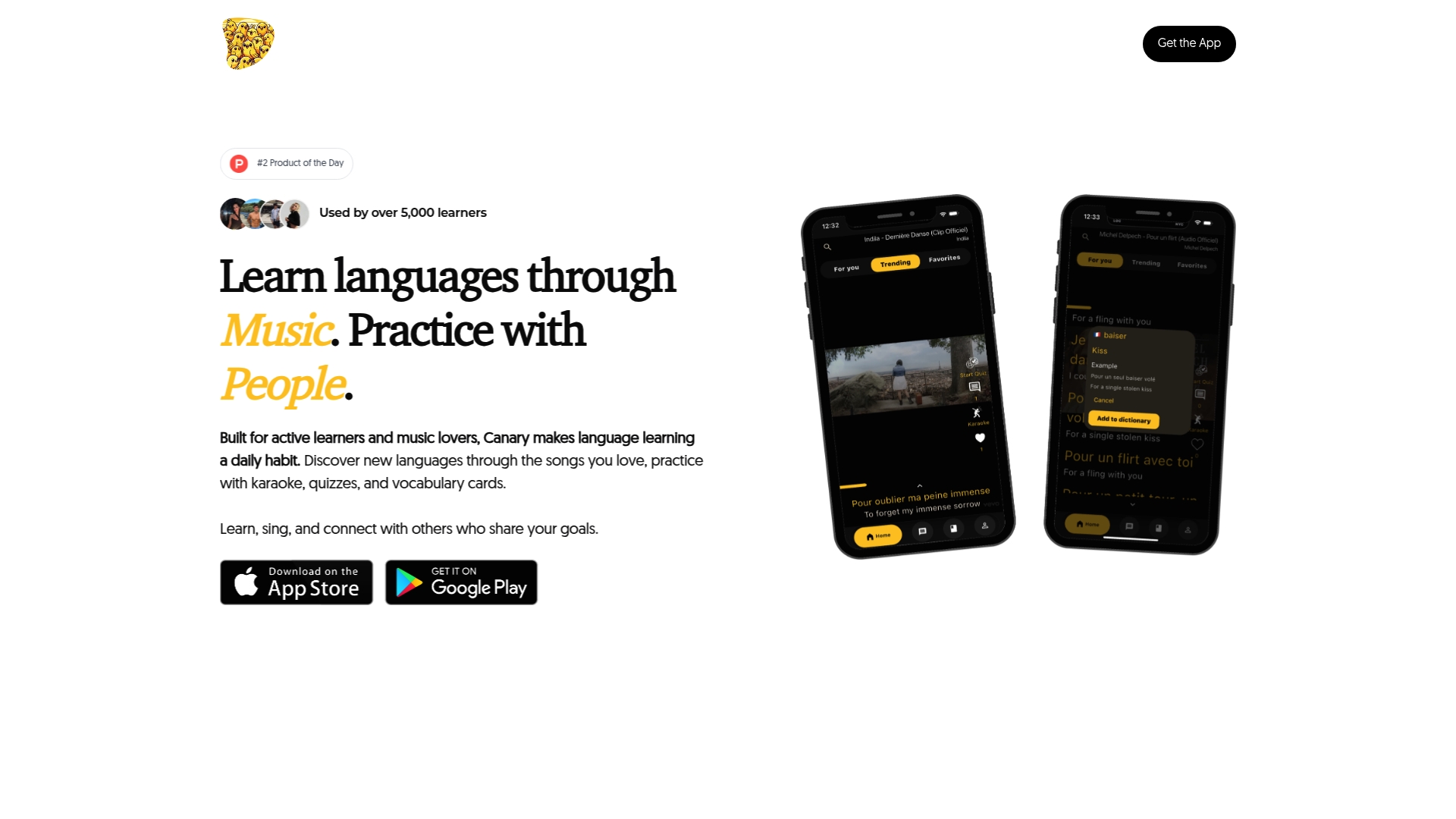
Take the next step toward confident speaking and joyful learning. Visit https://singwithcanary.com now to start singing, practicing, and connecting with other language lovers worldwide. Make your language goals achievable with music that motivates you every day.
Frequently Asked Questions
How can I use immersive music-based learning to improve my pronunciation?
To improve your pronunciation using immersive music-based learning, select songs in your target language that you enjoy. Sing along and pay attention to how native speakers pronounce each word, focusing on the changes in your mouth and tongue positioning.
What are the benefits of karaoke practice for language speaking confidence?
Karaoke practice builds speaking confidence by providing a low-pressure environment to rehearse pronunciation and articulation. To maximize its effectiveness, sing regularly using karaoke apps that offer instant feedback on your performance.
How can I find native speakers for practicing my language skills?
You can find native speakers through language exchange platforms or local community groups where you can engage in conversation. Start with short, regular 15-minute chats to gradually build your confidence and familiarity with natural speech.
What are the best ways to create vocabulary cards from song lyrics?
To create effective vocabulary cards from song lyrics, choose a song you enjoy, extract 5 to 10 new or challenging words, and write them on flashcards. On one side, include the word with a short definition, and on the other, the lyric where it appears for context.
How do interactive quizzes enhance language learning?
Interactive quizzes enhance language learning by providing immediate feedback on your knowledge and pinpointing areas that need improvement. Aim to take regular quizzes, focusing on vocabulary and grammar in context to boost your retention and overall proficiency.
Why is daily listening important for language acquisition?
Daily listening is crucial for language acquisition as it helps build neural pathways needed for fluency and comprehension. Commit to listening for just 10 to 15 minutes each day to embed sounds and patterns deeply into your memory.